
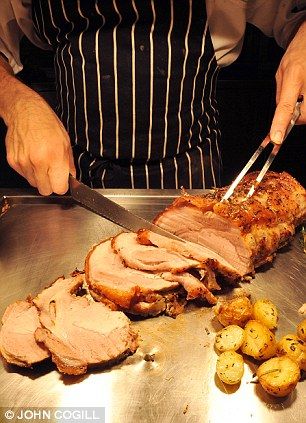
Don't blame the chef: Whether you love it or hate pork may depend entirely on what variant of gene you were born with
For genetics appears to play a big role in how you perceive the taste of meat - specifically pig meat.
And those of us with a gene called OR7D4 perceive a distinct scent - and describe it as resembling urine, onions or faeces.
Researchers, at Duke University in North Caroline, tested to see how the gene specifically helps perceive the taste of androstenone.
They were curious to test 'odorant receptors', found in our noses and mouth.
These capture odor molecules and transmit messages to the brain which translates into our sensations of smell and taste.
However genetic variation in our species means that some people can detect compounds that remains tasteless to other people - and one of these is a compound called androstenone, found in high quantities within pig meat.
The researchers tested 23 volunteers, 10 of whom were professional 'sensory profilers', for their reactions to meet with varying levels of androstenone.
They found that people who had two copies of the OR7D4 gene tended to dislike their dishes of bacon and pork, whereas those with one or no copies of the gene could tolerate or enjoy it.
Lead author Hiroaki Matsunami said the study was 'a small piece of the puzzle, but it's a good way to establish a link between odor perception and food choices'.
He added: 'Of course there are many more genes and factors involved in the food tasting experience.
'You can still find androstenone in a variety of animal species, even though the amount is lower compared to pork meat.'
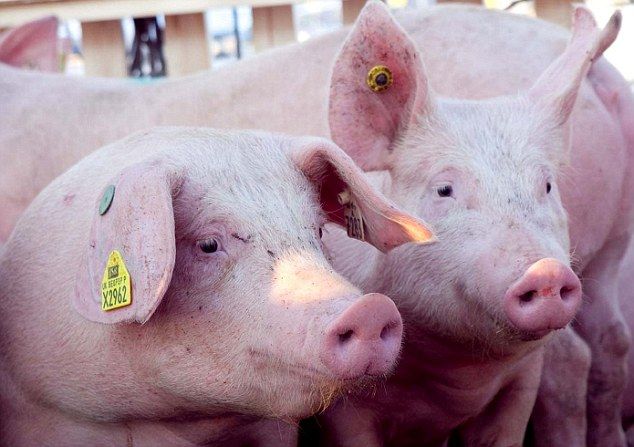
It's not your fault, pigs: People with the right variant OR7D4 report a foul taste to pork - but this is down to the diner's receptors.
Further research into the gene may investigate other traits associated with it - for instance people with a certain variant report being less
One of the results that they found is that people with a certain variant of the OR7D4 gene reported that they were less susceptible to hunger pangs. Another variant appears to correlate with reduced fat levels.



Reader Comments
to our Newsletter