
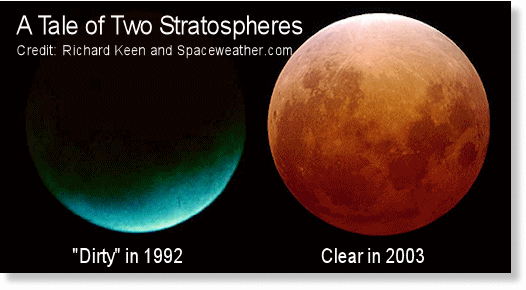
© Richard Keene / Space Weather
This is timely and important because the state of the stratosphere affects climate; a clear stratosphere "lets the sunshine in" to warm the Earth below. At a 2008 SORCE conference Keen reported that "The lunar eclipse record indicates a clear stratosphere over the past decade, and that this has contributed about 0.2 degrees to recent warming."
What will the eclipse 21st eclipse look like? "The stratosphere is still fairly clear, and the December 2010 eclipse should be normally bright," predicts Keen. "I welcome any and all reports on the brightness of future lunar eclipses for use in my volcano-climate studies. While actual brightness measurements (in magnitudes) made near mid-totality are most useful, I can also make use of Danjon-scale ratings of the eclipse. Please be sure to note the time, method, and instruments used in your reports." Submit your observations here.
More eclipse resources:
- Solstice Lunar Eclipse -- from Science@NASA
- Visibility map -- North America is favored
- Live webcast -- from the Coca-Cola Space Science Center


Reader Comments
to our Newsletter