

© NASA, ESA, and the Hubble SM4 ERO TeamThe Center of Globular Cluster Omega Centauri.
Quite recently, there has been a recalculation of the total number of stars (and their "star factory" galaxies) in the visible universe. The long-standing, previous estimate, made famous via Carl Sagan's book/PBS tv series Cosmos ("billions and billions"), was that there were approximately one hundred billion galaxies, each containing roughly one hundred billion stars. Some later estimates have suggested one trillion such galaxies.
However, it seems that these numbers are off by a few orders of magnitude. Previous estimates used spiral galaxies (such as our Milky Way, and the Andromeda galaxy) as the standard gauge for star counting. Yet, about one third of our universe's galaxies are not spiral types, but rather, egg-shaped types known as elliptical galaxies (note: there are other types too, but most are variations of these two kinds).
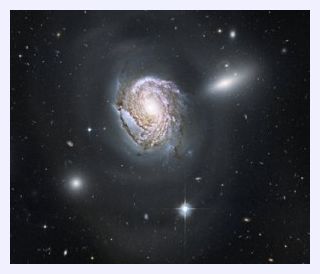
© NASA, ESA, and the Hubble Heritage Team (STScI/AURA)A Spiral Galaxy (NGC4911), 320 million light-years away, captured by the Hubble Telescope.
Recent calculations of the content of elliptical galaxies - specifically, the estimate of M-type or red dwarf stars within them - conducted by Yale University astronomer Pieter van Dokkum and Harvard astrophysicist Charlie Conroy, have found these previous estimates to be off by some 3 trillion times! If you want a mind-bogglingly huge number to contemplate, try this on: 300 sextillion stars! (a sextillion is a billion times a trillion, or the number 10 followed by 23 zeros).
So, now it's "sextillions and sextillions"...at least. Methinks the spirit of Carl is still smiling, still in amazement at our incredible cosmos.
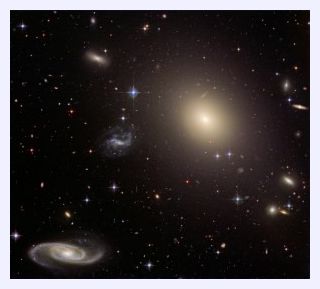
© NASA, ESA, Hubble Heritage Team (STScI / AURA)Galaxy cluster Abell S0740 dominated by the cluster's large central elliptical galaxy (ESO 325-G004).
Also in cosmic news from November: astrophysicists at the European Southern Observatory (ESO), in Chile, using the Very Large Telescope (VLT) detected the most distant galaxy in the universe. It's called galaxy UDFy-38135539 and resides some 13, 000 million light years away, thus making it also the oldest known galaxy. It is not clear if other such "most distant" galaxies were detected and/or included in the recent, upward-adjusted, total star estimate.
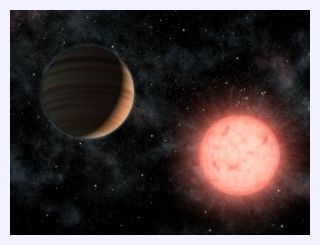
© JPL-Caltech, NASAFaint M-type stars like VB 10 (Van Biesbroeck's star) are so common, planetary systems surrounding them, including planets larger than their parent star, might be more common than planetary systems like our own Solar System.



Reader Comments
to our Newsletter