Floods
S


Cloud Lightning

Typhoon Wipha makes landfall: Mudslides kill 14 in Japan; 50 missing

Heavy rain in Tokyo
© Yoshikazu Tsuno/AFP/Getty ImagesJapanese businessmen walk against strong wind and rain as Typhoon Wipha reached Tokyo on Wednesday.
A typhoon caused deadly mudslides that buried people and destroyed homes on a Japanese island Wednesday before sweeping up the Pacific coast, grounding hundreds of flights and disrupting Tokyo's transportation during the morning rush. At least 14 deaths were reported and more than 50 people were missing.

Hardest hit was Izu Oshima island about 120 kilometers (75 miles) south of Tokyo. Rescuers found 13 bodies, most of them buried by mudslides, police and town officials said. Dozens of homes were destroyed, and more than 50 people are missing. "We have no idea how bad the extent of damage could be," town official Hinani Uematsu said.

One woman from Tokyo died after falling into a river and being washed 10 kilometers (6 miles) downriver to Yokohama, police said. Two sixth-grade boys and another person were missing on Japan's main island, Honshu, the Fire and Disaster Management Agency said.

More than 350 homes have been damaged or destroyed, including 283 on Izu Oshima, it said.

Comment: Had the rain fallen as snow it would have been 8 meters of snow in a 24 hour period, instead 80 cm of rain fell.


Cloud Lightning

Strong typhoon Wipha heads for Japan and crippled Fukushima nuclear plant

Typhoon  Danas
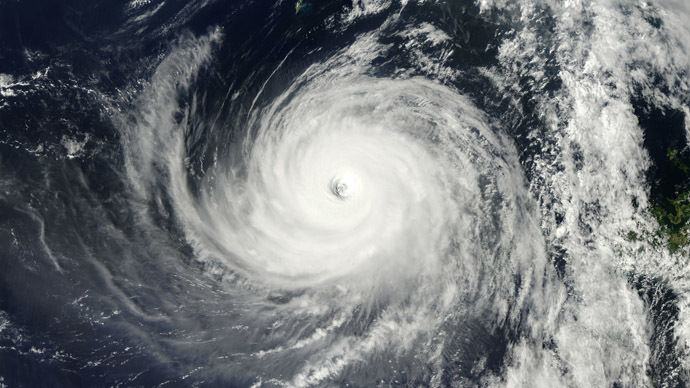
© AFP/NASANASA Terra satellite image shows a Typhoon off Japan.
A powerful typhoon is bearing down on Japan - and its path is set to go through the crippled Fukushima nuclear power plant. It's less than 24 hours until the storm is due to hit. The storm has been branded a "once in a decade event".

The country's weather agency has issued warnings of torrential rain and strong winds ahead of the coming typhoon, Wipha.

450 flights have been canceled across Japan in measures against the coming typhoon. The combined cancelations will affect 60,850 passengers, Japan Airlines Co said.

East Japan Railway Co said it had canceled 31 bullet trains going north and west from Tokyo, Reuters reported.

The typhoon is moving towards the country at a speed of 35 kilometers per hour, and is currently to the south of the country in the Pacific ocean.

Near its center, the speed of the typhoon can exceed 144 kilometers per hour.

"Wipha will remain a strong and expansive extra-tropical system as it tracks along the eastern coast of Japan," the US-based Joint Typhoon Warning Center reported on its website.

The exact track of Wipha is crucial: if its center passes just west of Tokyo, a large storm surge would affect the city of more than 35 million people and potentially bring major flooding.

Binoculars

Best of the Web: Signs of change in the last week of September 2013

Image
The events around the world have been unprecedented over the last few weeks. Some of the most dramatic and unbelievable footage I've ever seen from events that took place in the past week or so. Please use these videos for awareness to these ongoing extremes that seem to be getting worse each week. Prepare for disasters in your area! You're no different than others that are already dealing with them and most were not ready...

In just a couple of weeks we saw a devastating typhoon hit Japan and China, a 'one-in-one-thousand-years' flood hit Colorado, record rainfall in Mexico, the Pacific Northwest, Brazil, and India, fireballs turning night into day over Canada and the US, a powerful tornado in Sao Paulo, a 7.7 earthquake in Pakistan that formed a new island in the ocean, followed just 4 days later by 7.2 in the same region, a 7.0 earthquake in Peru, a daytime fireball in Alabama...these are just some of the highlights from the last week of another crazy month on planet Earth!

Thanks for watching here and stay safe!


Bizarro Earth

Thai provinces hit by floods, 31 dead, 2 million affected

About two million people in 27 provinces are still being affected by flooding, the Disaster Prevention and Mitigation Department reported on Sunday.

The death toll from the floods had risen to 31 as of Sunday morning, the department said.

Chanthaburi, Chon Buri and Khon Kaen provinces have recently been hit by flooding, but the situation had eased in Kanchanaburi, Prachuap Khiri Khan, Chumphon, Kalasin, Nakhon Ratchasima, Phayao, Mae Hong Son, Lampang and Mukdahan.

According to the department, the Pasak Jolasid dam was holding 1.04 billion cubic metres of water and was discharging 60.5 million cubic metres of water every three hours.

Water levels in the Chao Phraya river in the eastern part of Ayutthaya's Phra Nakhon Si Ayutthaya district had risen by five to eight centimetres.

In Ayutthaya's Tha Rua district, water levels continued to rise and 55 villages had been hit by floods.

In Ayutthaya's Nakhon Luang district, water levels in the Pasak river increased to 7.54 metres, about 0.76 metre higher than its banks.

Cloud Lightning

Typhoon leaves 75 missing in China

Typhoon Wulip
© UnknownShips are seen moored in the Xiuying Port to take shelter from typhoon Wulip in Haikou, capital of south China’s Hainan Province, September 29, 2013.
A powerful typhoon has left 75 people missing after sinking three Chinese fishing boats in the South China Sea, media reports say. Citing maritime authorities, Xinhua news agency said on Monday that "three fishing boats have sunk since Sunday afternoon."

The incident took place after the vessels with 88 fishermen aboard encountered strong winds near the Paracel Islands, said a statement released by the Hainan government in south China. "Two of the vessels sank Sunday and contact with the third has been lost," it said. Typhoon Wutip also forced tens of thousands of people to flee high-risk areas in central Vietnam on Monday.

The powerful typhoon, with sustained winds of up to 93 miles per hour, was expected to rock the central coast later Monday. Disaster official Le Tri Cong said more than 43,000 people were evacuated from coastal areas to safe places in Quang Tri Province as of Sunday night.

Snowflake Cold

Ancient muddy memories?

ice age ancient legends
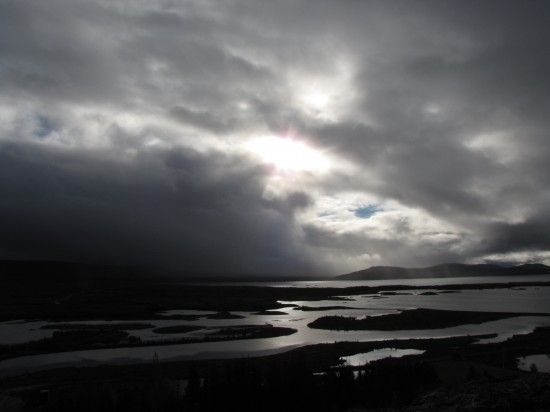
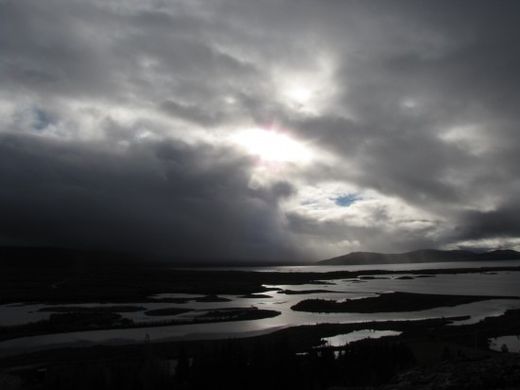
© Marinus Anthony Van Der SluijsEchoes of a primordial landscape? Þingvellir, Iceland.
Many cultures recalled a period of unbearable cold, which they associated with a distant mythical age of 'creation', when the sun did not yet shine or fire had not yet been obtained.

Such tales are hardly surprising for higher latitudes, such as the Viking sagas of Iceland, but present a palaeoclimatological puzzle elsewhere.

For example, the Cherokee (originally along the Tennessee), who should be quite accustomed to climatic extremes, claimed that the first fire was confined to a special tree - arguably an axis mundi - at a time of lasting cold:
'In the beginning there was no fire, and the world was cold, until the Thunders (Ani´-Hyûñ´tikwalâ´ski), who lived up in Galûn´lati, sent their lightning and put fire into the bottom of a hollow sycamore tree which grew on an island. ... This was a long time ago. ... still there was no fire, and the world was cold ...'
Eventually, mythical beings succeeded in acquiring the fire. At tropical latitudes meanwhile, the Quiché Maya (Guatemala) related that their first ancestors were overcome by circumstances most peculiar for central America:
'After that a great downpour began, which cut short the fire of the tribes. And hail fell thickly on all the tribes, and their fires were put out by the hail. Their fires didn't start up again. ... And so again the tribes arrived, again done in by the cold. Thick were the white hail, the blackening storm, and the white crystals. The cold was incalculable. They were simply overwhelmed. Because of the cold all the tribes were going along doubled over, groping along ...'
And the Bibbulmun nation (southwestern tip of Australia) referred to the 'Dreamtime' or the 'ancestral' time (Demma Goomber) as the 'Nyitting times, the cold, cold times of long ago'. As the name says, the Bibbulmun qualified this past era as one dominated by unprecedented cold - and, consequently, by a savage mode of living:

'In that far-off time Australia was not so warm and congenial as it is to-day. It was cold and bleak, and great glaciers of ice covered many of its hills and valleys. ... "the icy cold (nyitting) times of long, long ago". Now, in an icy cold country one must have fires, but there was a time when the Bibbulmun people had no fires, and they had to eat their meat raw and drink the blood of the animals they killed to warm their bodies.

The theme of a cold epoch meshes with the notion of 'primordial darkness' reported universally to have preceded the formation of the present natural environment. Another associated motif is that the embryonic earth was excessively muddy and wet, a necessary consequence of the earth's putative original submersion in primeval waters. In addition, the moist earth is often linked with the aftermath of the deluge and the first appearance of humans and the sun. Though scholars never seem to have compiled the material, let alone considered it, the literature is awash with examples. A selection follows.

Alarm Clock

Landslides leave 20 dead in northwest Philippines

Flooded street in Manila
© UnknownA Filipino banana vendor crosses a flooded street in Manila, Philippines Sunday September 22, 2013.
Deadly landslides triggered by torrential monsoon rains have killed 20 people in northwestern Philippines, raising the death toll from storms across Asia to 47.

Soldiers and villagers were also looking for at least seven people missing in mountainside villages struck by the landslides in the province of Zambales, Philippine officials said on Monday.

According to Subic Mayor Jeffrey Khonghun, 15 people died in two landslide-hit villages in his town. Five people were also killed in landslides in two other towns in Zambales.
"This is the first after a long time that we were hit by this kind of deluge," Khonghun said.
Meanwhile, Chinese officials said that Typhoon Usagi, which hit the country after passing by the Philippines, killed 25 people in China's southern province of Guangdong.

Two other people also died after their boat capsized in northeastern Aurora province in the Philippines late on Sunday.

Cloud Precipitation

Video: Extreme weather events of the first two weeks of September 2013


Bizarro Earth

2013 is strange, part 18: September 2013

Image
The green fireball that turned night into day over Ferrara, Italy on September 3rd 2013, the second major fireball to explode over Italy in a week.
'2013 is strange, part 18' covers the 8 days from August 27, 2013 to September 4, 2013 - during which we saw major wildfires in Southern California and elsewhere, volcanic eruptions in Japan and elsewhere, fireballs in Italy and elsewhere... we live in interesting times!

This series include strange phenomena of all kinds and awesome natural events or beautiful phenomena in 2013. Enjoy my editing!

You can find all my other videos for the collective awakening on my channel 2013MESSAGE.


This is an educational/teaching and research purposes only video.

This application is not commercial and is free to use.

Music

1) Pip John - Dante's Riddle
2) How To Dress Well-Take It On (Holy Other Remix)
3) Sun Glitters - The Wind Caresses Her Hair

Bizarro Earth

Best of the Web: Signs of change in September 2013

Image
A snapshot of the weather around the planet in the past week or so. Floods devastate parts of the U.S., Mexico and India; tornadoes wipe out Tokyo and Bangkok suburbs; mass fish deaths in the U.S. and China; a smokenado in the U.S. (?! yes, it's new to us too!); massive fireballs over Italy (for the second week running) and the U.S. (where they're now being reported daily); major hailstorms in the UK... what in the world is going on?