Animals
S


Binoculars

Birdspotters in frenzy after extremely rare Hudsonian Whimbrel seen in Britain

Image
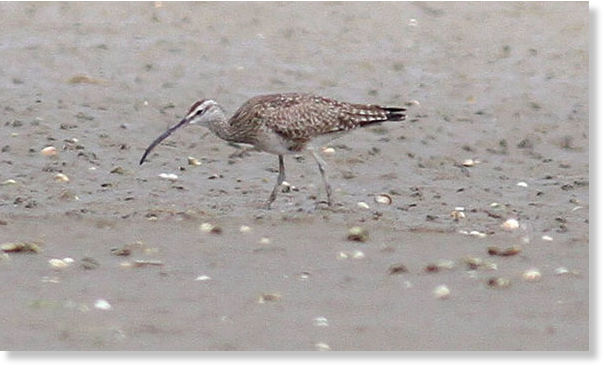
© Jake Gearty/Solent NewsAn extremely rare bird which has only been seen a handful of times in the UK
More than 1,000 bird watchers have travelled to Pagham Harbour near Chichester, West Sussex, in the last four days to catch a glimpse of the Hudsonian Whimbrel.

It is thought to be the only bird of its kind in the UK and only 10 others have been seen in this country since 1950.

The bird is so rare because it is native of North America and is hardly ever seen in Britain.

Tim Webb, communications officer for the RSBP said: "It is definitely confirmed that it is here and is still here.

"On these shores this is about the eleventh one in our recorded history, which goes back to about the 1950s.

"This Hudsonian Whimbrel is the only one in the UK right now to our knowledge.
"It is incredibly unusual and rare for this species to be seen in this country.
Binoculars

Snowy egret from the Americas turns up in South Africa

Image
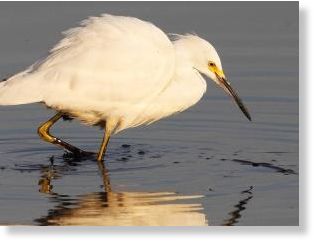
© Trevor HardakerOFF COURSE: This snowy egret has migrated from North America.
The average birdwatcher would be forgiven for calling it a little egret.

Serious birders know better: the white bird that has been quietly wading among the shallows of the Black River along the M3, Cape Town, this week is a snowy egret, native to North and South America, and way off course to end up at the tip of Africa.

Word went out on Monday, and watchers and "twitchers" started converging on the river banks. Five of them flew down from Gauteng on Thursday on the 6am flight to see the bird and to tick it off their lists.

"Twitchers" will go to great lengths to see a rare bird. For many, the snowy egret was a "lifer" - a first-ever sighting of a bird. And it is quite special. This is only the second time a snowy egret (Egretta thula) has been seen in Africa.

Trevor Hardaker, chairperson of Birdlife South Africa's National Rarities Committee, said the only other recorded sighting of a snowy egret in Africa had been in Cape Town in 2002. "Everyone's very excited."

Bizarro Earth

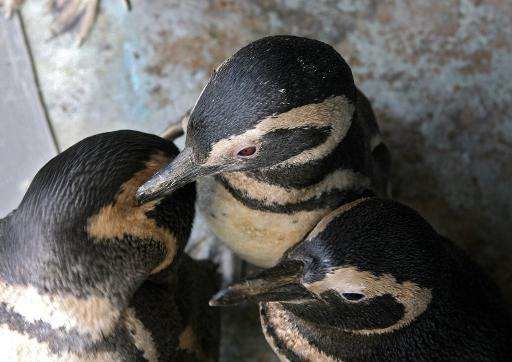
Dozens of dead penguins have shown up on the coast of Uruguay

penguins
Rescued penguins wait to be fed on July 28, 2007, in the department Maldonado, Uruguay
Dozens of penguins have shown up dead over the past three days on the coast of Uruguay, a government official said Thursday.

One group of young specimens was found in the Rocha area 210 km (125 miles) east of Montevideo, and then another at a beach in the resort town of Punta del Este, said Graciela Fabiano of the National Directorate of Water Resources.

The agency has no penguin monitoring program but at this time of year penguins do tend to show up on the coast, sometimes dead, and the movement is associated with migratory patterns, she said.

Wolf

Canine craziness: Dozens injured after stray dogs' attack in Turkey

Image
Treatment for dog bite
At least 55 people, many of them children, have been attacked by stray dogs in Turkey's eastern Van province within the last 24 hours.

Seven dogs have been put down on suspicion, and samples were sent to the Veterinary Control Institute in eastern Elazığ province, Van Provincial Directorate of Food, Agriculture and Livestock said.

The directorate said that 30 people were treated at various hospitals for dog bites Wednesday.

An additional 25 were attacked later, bringing the total to 55 since Wednesday noon, officials said.


The directorate said that victims were given rabies vaccines and discharged after being kept under observation.

The attacks were reported in Bostaniçi, Esenler, Yenimahalle and Şerefiye streets of the province, which has a center population of less than 500,000.

Fish

Florida Fish and Wildlife Conservation Commission investigating fish kill on Panhandle beaches

Image
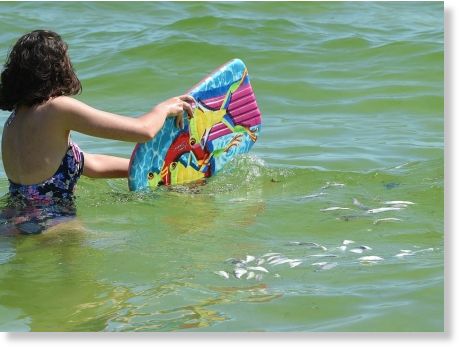
© Nick Tomecek | GateHouse Media ServicesLauren Denny of Springfield, Mo., moves dead fish out of her way as she wades into the Gulf of Mexico on Monday near a public beach access on Okaloosa Island.
Multiple agencies, including the Florida Fish and Wildlife Conservation Commission (FWC), are looking into why hundreds of fish are washing up on some Panhandle beaches.

Reports began rolling in over the weekend from people on beaches across Escambia, Santa Rosa and Okaloosa counties, according to Catalina Brown, the Fish Kill Hotline coordinator for the Florida Fish and Wildlife Research Institute.

"It's too early for us to know what it could be," Brown said.

Katy Krueger was out walking on Navarre Beach on Monday morning when she encountered the dead fish.

Black Cat

Edinburgh police disclose bizarre 2012 appearance of 'Big Cat' in Scottish capital

Image
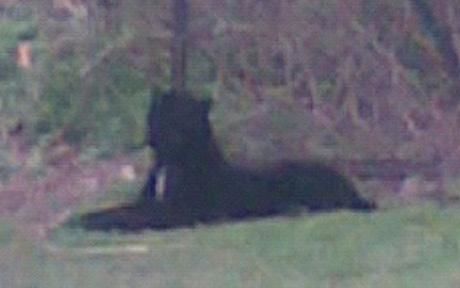
© Paul Keehn'Buckinghamshire panther', 2009
A police officer has revealed he saw a big cat while he was on board a police helicopter assisting in the search for a missing woman.

Inspector Nick Whyte said he could not believe what he was seeing when he picked up a large heat source on the aircraft's infrared camera equipment.

The helicopter was flying over Arthur's Seat, a hill in Holyrood Park, Edinburgh at the time.

Insp Whyte told the Edinburgh Evening News the animal was three times the size of a female police officer who was on the ground.

The police helicopter had been sent up to help try and find a vulnerable mum after the discovery of a two-day-old baby found abandoned near St Leonards Police Station in the city.

Comment: Holyrood Park is a park in the center of Edinburgh. There was nowhere for this creature to go without being seen by others: the park is surrounded by urban areas on all sides.

Its sudden appearance, and disappearance, its 'supernatural' size, and the creature's being so close to someone who couldn't see it are tell-tale signs of this being a paranormal 'Big Cat' event, a common phenomenon in British cryptozoological science.

That local authorities kept the case under wraps for several years (and 'lost' the evidence) suggests they may have been royally spooked by what they saw!


Wolf

Dog attacks in London up by 50% in a year

Image
A dangerous dog
New figures have revealed the number of dog attacks in London went up fifty per cent last year.

There were more than 1,400, partly because offences on private property are now included.

On 13 May 2014, The Dangerous Dogs Act 1991 was amended so that the term "a public place" was substituted to "any place in England or Wales (whether or not a public place)".

Before this, dog bites and attacks on private property were excluded.

Between January and December 2014 there were a total of 1,400 offences recorded, representing an average of 177 offences per month. August 2014 experienced the peak during this period with 141 offences.

The boroughs of Croydon and Barnet recorded the highest numbers of attacks followed by Southwark, Hillingdon and Bromley.

Binoculars

'Blown off course': Eurasian crane seen in Churchill, Canada

Image
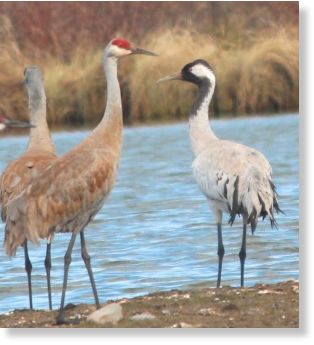
© Jenafor AzureChristian Artuso with Bird Studies Canada said the sighting represents a first for Manitoba. The Eurasian crane, standing right of a sandhill crane, was first spotted in North America in 1957 and has only been seen a handful of times in the U.S. and Canada since then.
Jenafor Azure was out for a drive with her husband in Churchill, Man., over the weekend when she spotted some unusual wildlife.

June in Churchill presents excellent wildlife-viewing opportunities for bird watchers at the height of migration season. Droves of ecotourists head up north at this time of year to do just that.

But one thing most Churchill tourists will never see — certainly something Azure never expected to see — is a slender, prehistoric-looking bird commonly found in the Eurasian boreal forests of Russia and Asia that can grow to be over four feet tall.

"I've never seen anything like it. It's a really magnificent bird," Azure said Sunday after the sighting. "At first I thought the zoo had lost a bird or something!"

What Azure said she spotted, and what many people in Churchill have since ventured out in search of, was a Eurasian crane.

Attention

Dead whale stranded on Kapiti coast, New Zealand

Image
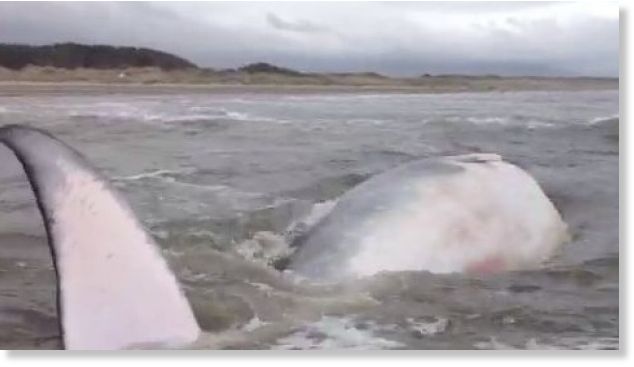
© Karolne Tuckey/Fairfax NZA whale is stranded at Waikawa Beach, north of Otaki.
A whale found washed up at Waikawa Beach, north of Otaki on the Kapiti Coast, has died, DOC rangers say.

The whale was found by dog walkers this morning, and reported at about 11am, when it was believed to still be alive.

DOC senior ranger Clint Purches visited the site early on Tuesday to examine the whale and find out if it could be rescued, but found it was dead.

Measured at 7.4 metres and rolling in chest deep waves, the baleen whale could not be fully examined until scientists could get to the flippers and blowhole and take more measurements.

However, its size and white baleen - its filter feeding mechanism - indicated it could be a Minke.

Attention

Dead minke whale found on Coney Island beach

Image
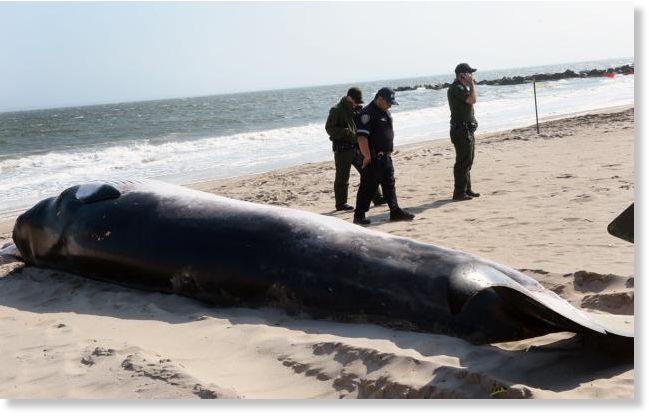
© Debbie Egan-Chin/New York Daily NewsA dead Minke whale was found on Coney Island beachin Brooklyn on Monday afternoon.
A partly decapitated Minke whale that washed up Monday on the Coney Island beachfront likely died after an unfortunate encounter with a ship's propeller, officials said.

The approximately 18-foot-long leviathan was found on the beach near the Boardwalk at Ocean Parkway around 2p.m., authorities said.

Kim Durham of the Riverhead Foundation, a group that studies and rescues marine mammals, performed a necropsy.

The adult female whale's body had been battered by propeller strikes.