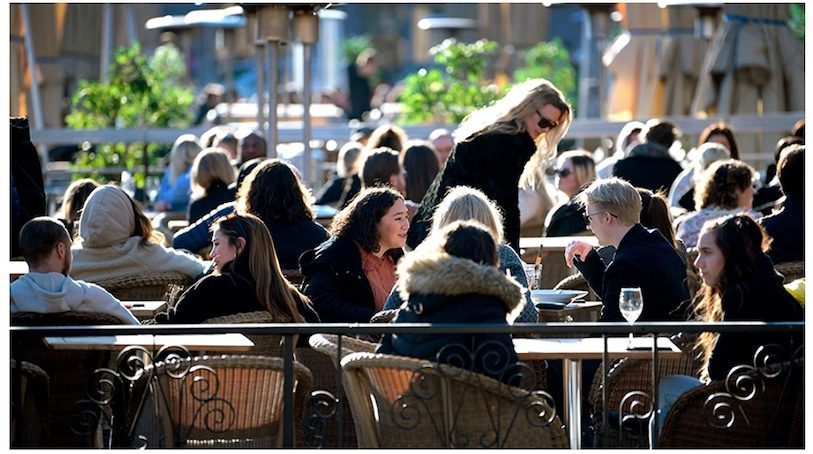
Who would have thought that Sweden would end up being the last place in Europe where you could go for a beer? We have, in our normalcy, suddenly become an exotic place. Other countries are closing their cities, schools and economies, but
life in our corner of the world is surprisingly ordinary. Last weekend I went to the gym, met up with friends, and sat in the spring sun at outdoor cafés.
My foreign friends are stunned. They can't fathom that there are still people enjoying the fruits of civilisation, as if the natural reaction to pandemics is to embrace totalitarianism. And they wrestle with another conundrum: how on earth did Sweden end up being the final bastion of liberty? How did this country of mild-mannered conformists end up rebelling against lockdown culture?
In the past, most Swedes felt comfortable with the nanny state giving us orders — telling us how many slices of bread to eat per day, for instance. We still close off-licences at 3 p.m. on a Saturday. The general idea is that if people were given the freedom and responsibility to figure out these things on their own, anarchy might follow.
We worry about Covid-19 a lot. Many people work from home. Restaurants are open, but not bustling. Keeping two metres apart at bus stops is something Swedes were pretty good at before the crisis: we don't need much encouragement now. We're careful. But our approach to fighting the pandemic starts from something more fundamental:
in a liberal democracy you have to convince and not command people into action. If you lose that principle, you will lose your soul.













Comment: See: 5G or Virus? The Data Speaks For Itself