Puppet MastersS


Question

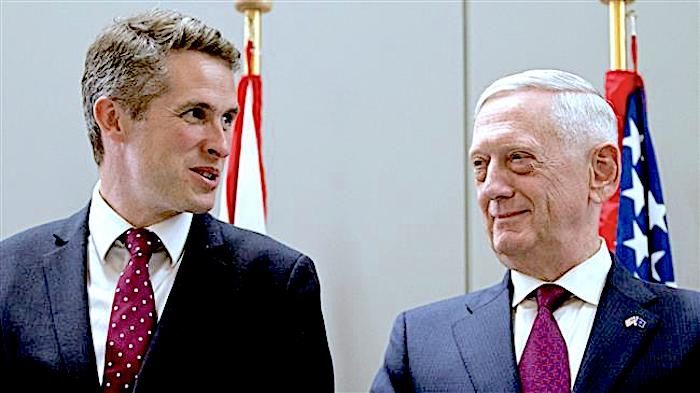
Is US-UK special relationship at risk? Is Mattis looking to France?

MattisWilliamson
© APUK Sec. of State for Defense Gavin Williamson • US Sec. of Defense James Mattis
The US could dump the UK in favor of France amid fears of Britain's eroding military power, a leaked letter between American Defense Secretary James Mattis to his British counterpart Gavin Williamson has revealed.

In the letter, Mattis raises concerns over the UK's military spending and power. The letter also saw the being UK compared to France, with Mattis highlighting France's significant increases in their defense budget.
"As global actors, France and the US have concluded that now is the time to significantly increase our investment in defense. Other allies are following suit," Mattis said. "It is in the best interest of both our nations for the UK to remain the US partner of choice."
The leaked letter comes as John Bolton, who has been Donald Trump's National Security Advisor since April, made the same demands to his British counterpart Sir Mark Sedwill during a meeting last Monday ahead of a much-anticipated NATO summit in Brussels next week. The meeting also included French and German security chiefs.

Comment: Ante-up or reap the consequence: the 'price of position' or 'cost of disfavor'. 'Mad dog' has become the equivalent of a DoD 'cattle prodder'.


Arrow Up

Trump to proceed with sanctions against companies doing business with Iran

USsanctions
© YouTube/KJN
Washington intends to go ahead with the policy of sanctioning non-US companies which are doing business with Iran, President Donald Trump said in an Sunday interview with the Fox News broadcaster.

"Yes, of course, that is what we are doing. Absolutely," Trump said, when asked, whether the United States would sanction European countries if they did business with Iran.

In early May, US President Donald Trump announced that the United States would withdraw from the Joint Comprehensive Plan of Action (JCPOA), commonly known as the Iran nuclear deal, and restore wide-ranging sanctions on Iran, including secondary sanctions against financial institutions of third countries that do business with Tehran.

Shortly after the announcement, the US Treasury said that the licenses for Boeing and Airbus to sell planes to Iran would be revoked. In May, the United States also imposed sanctions on four Turkish entities for helping the sanctioned Iranian airlines in acquiring equipment and parts. Against such a negative background, several US and EU companies said that they would or might stop doing business with Iran.

On June 6, the European Commission said it had adopted an update to the Blocking Statute and the European Investment Bank's (EIB) External Lending Mandate to protect the interests of EU companies investing in Iran.

Comment: There is great pushback on the US position. See also:


Arrow Up

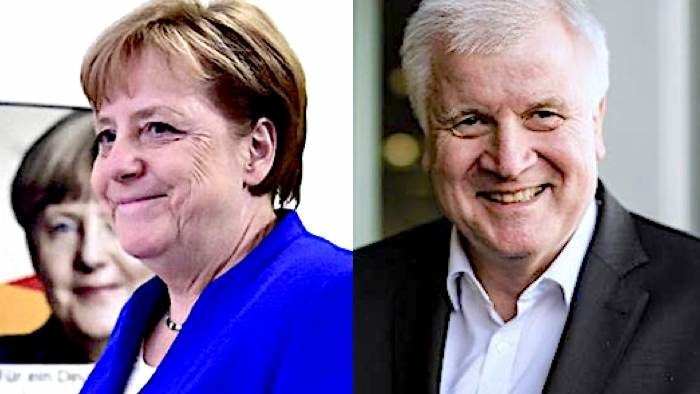
Merkel and Seehofer make a deal, head off coalition crisis over illegal migration

Merk and Seehofer
© AFP/John MacDougall, EPA/Clemens BilanGerman Chancellor Angela Merkel • German IM Horst Seehofer
The political crisis in Germany seems to have been averted, as the ruling coalition reached a "sustainable solution" on illegal migration, according to German Interior Minister Horst Seehofer, who has agreed not to resign.
"After intensive discussions between the CDU and CSU we have reached an agreement on how we can in future prevent illegal immigration on the border between Germany and Austria," he told reporters late on Monday, leaving the CDU's Berlin headquarters.
Seehofer, who is also party leader of Germany's Christian Social Union (CSU) in Bavaria, said that he will continue serving as interior minister, after the two conservative parties reached a clear agreement on how to handle migrants.

It comes just one day after reports emerged that Seehofer, who threatened to use his power to turn away migrants at the German border, allegedly said that he'd rather resign than give in to Merkel, who is adamantly against turning away new arrivals.

Merkel has also confirmed that a good compromise was reached, with her party's chairwoman, Annegret Kramp-Karrenbauer, saying the deal will prevent migrants registered elsewhere from entering Germany. The German chancellor also said that transit centers will be established in Germany which will return migrants to the European countries from which they arrived.

Comment: Back pats all-round...until it has to be implemented.


Arrow Down

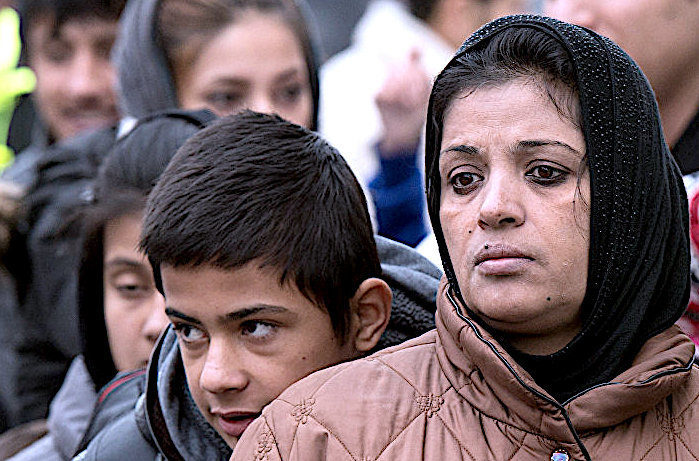
Rejected: Five Arab nations refuse EU reception centers for refugees

Refugees
© Sputnik International
Egypt rejected the idea, agreed during a recent EU summit, to ease tensions over migration in the bloc, but praised the German chancellor's intentions to improve the situation in the refugees' homelands. Albania, Morocco, Tunisia and Algeria have also spoken against disembarkation facilities for refugees on their territories.

The speaker of Egypt's Parliament, Ali Abd al-Aal, has objected to the creation of reception centers for migrants on its territory, supported by the EU summit on June 28. "EU reception facilities for migrants in Egypt would violate the laws and constitution of our country. The Egyptian law allows in general no establishment of refugee camps," Abd al-Aal, who co-authored the 2014 Egyptian Constitution, told the German newspaper Die Welt.

According to Abd al-Aal, who is the second man in the country after President Abdel Fattah al-Sisi, legal migrants can stay in Egypt wherever they want and cannot be forced to stay in certain facilities. He also pointed out that Egyptian legislation rules out the possibility of deporting migrants with residency permits in Egypt if they do not receive asylum in the EU.

The top Egyptian official stated that his home country had already received 10 million migrants from Syria, Iraq, Yemen, Palestine, Sudan, Somalia and other countries. This burdens the Egyptian budget, as all these refugees have a right to health care and education. "Our capacities are already fully loaded today. Therefore, it is important that Egypt receives support from Germany and the EU," Abd al-Aal said.

Comment: Merkel has been busy this week trying to garner support for control centers, in heated debate with IM Seehofer, to the satisfaction of her government (and to keep her job!). See also:


X

Canada slaps on new tariffs worth $13 billion of US goods as trade war continues

cash money
© greenaperture/Getty ImagesThe Canadian government has announced it is imposing tariffs on U.S. exports worth $16.6 billion in Canadian dollars or $12.5 billion in U.S. dollars.
The Canadian government is retaliating against U.S. aluminum and steel tariffs by imposing its own penalties on American imports, according to reports.

Canada announced Sunday that the tariffs amount to $16.6 billion Canadian dollars or $12.5 billion in U.S. dollars.

What products are included?

The tariffs include 25 percent on more than 40 U.S. steel products and 10 percent on about 80 other American products. Included are "toffee, maple syrup, coffee beans and strawberry jam," CNN reported.


The new taxes are based the amount of steel and aluminum that was shipped from Canada to the United States last year, according to reports.

Comment: See also: Petrodollar, Trade Deficit and Tariff: What is Trump Doing?


Chess

Foiling China: US-UK backed militants threaten China's OBOR initiative in Myanmar

western backed Militants Myanmar

Militants in northern Myanmar have once again put China's One Belt, One Road initiative on hold. It should come as no surprise that Anglo-American history played a direct role in their creation, and currently fund and back networks supporting them.


The BBC has mounted a recent propaganda campaign aimed at once again placing pressure on Myanmar's military, within a wider effort to drive a wedge between Myanmar and China.

Amid an already ongoing and deceptive narrative surrounding the Rohingya crisis in Myanmar's southwest state of Rakhine, attention is now being focused on the nation's northern state of Kachin.

Nick Beake of the BBC produced a narrative aimed at intentionally preying on the emotions of viewers. The report revolved around alleged hardships suffered by Kachin villagers fleeing from a supposed government offensive. The report was absent of any context or evidence and was based entirely on hearsay from alleged villagers Beake claims to have interviewed.

Beake would conclude that his report represented the "first eyewitness accounts of the Burmese military targeting civilians in their latest offensive in Kachin State." And supposed eyewitness accounts were all Beake presented. At one point Beake's report even cited third-hand reports of torture and rape - stories fleeing villagers claimed they had only heard from others, but did not directly witness themselves.

The only specific death Beake cited was of a man of military age he claims was killed during the supposed fighting. Beake avoided mentioning whether the victim was a Kachin fighter or a civilian caught in crossfire.

The BBC's Nick Beake makes little mention of the actual conflict and no mention at all that Kachin militants are among the most heavily armed and well organized in the divided nation of Myanmar.

Comment: Further reading:


Target

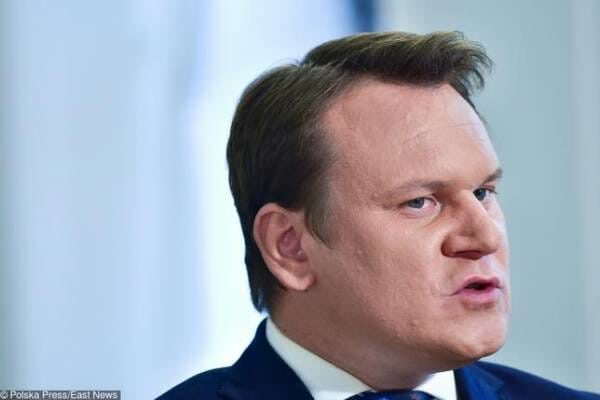
Polish MP slaps down Cathy Newman: 'Our country is safe because we accept zero refugees'

Dominik Tarczyński
© Polska Press/East News
Dominik Tarczyński, a member of Poland's Law and Justice party was recently interviewed by Britain's Channel 4.

Comment: Call it racist, but the man has a point.

See also:


Question

US foreign policy: The only predictables are mixed messages from the US

Trump Bolton
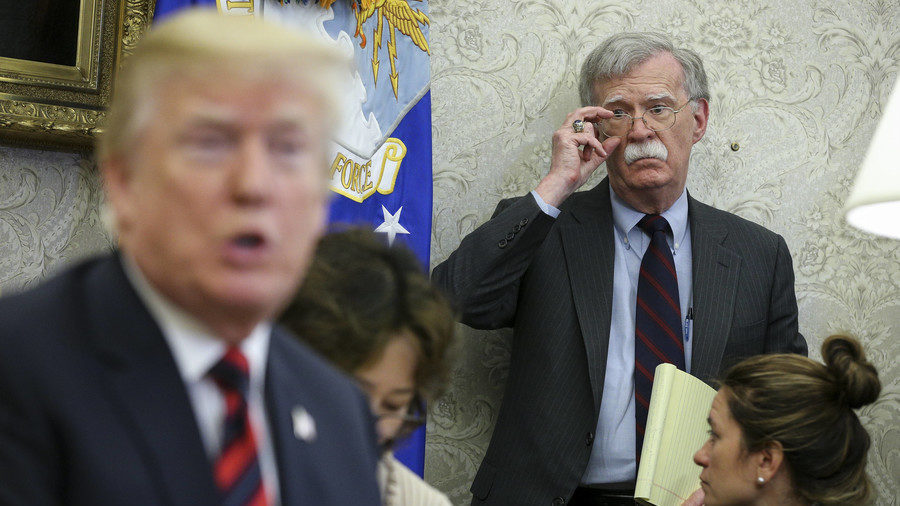
© Oliver Contreras / Global Look PressUS President Donald J. Trump and National security advisor John Bolton, May 22, 2018, Washington DC
US foreign policy may look a bit schizophrenic at times. The good news is it can be broken down into simple terms after all.

The Trump administration's upcoming summit with Russian President Vladimir Putin features rather schizophrenic US strategies, inherited from the Obama administration and moulded and adapted to suit new needs. It's the case that the US says one thing but is seen to do another, all while appearing to intend to do something completely unrelated.

"We are actively engaged in an all-of-US-government approach in convincing European governments and European businesses alike that increased energy dependence on Russia is inconsistent with what it is we're all trying to do in pushing back against Russia," Secretary of State Mike Pompeo recently told the Senate Appropriations Committee, at a hearing about the 2019 State Department budget.

Snakes in Suits

Russian upper house speaker hopes visit from US congressmen to change their opinion about Russia

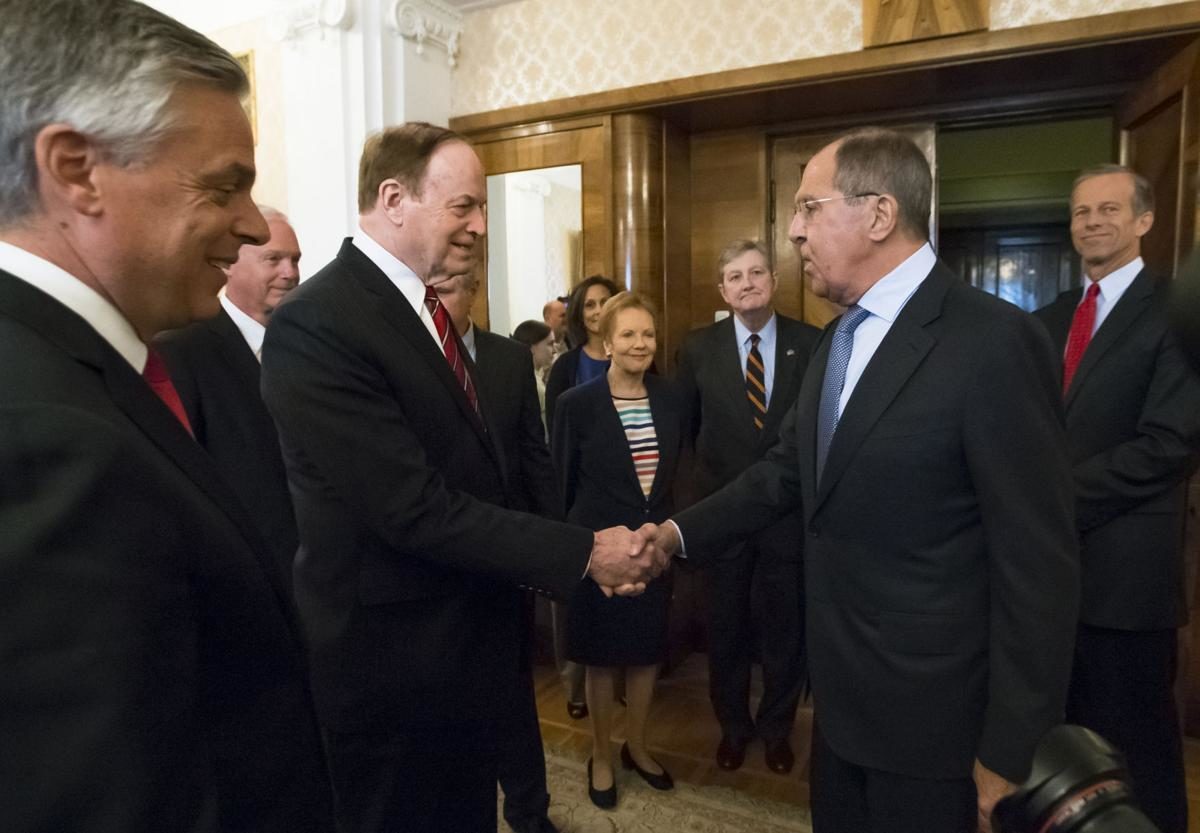
shelby lavrov
© AP/Alexander ZemlianichenkoRichard Shelby, R-Ala. and Sergey Lavrov
Speaker of the upper house of Russia's parliament Valentina Matviyenko said on Saturday she hoped that the visit by the delegation of US Congressmen would change their opinion about Russia shaped by the 'Russophobic policy' towards Moscow.

Russia's top senator expressed her opinion in an interview with Vesti v Subbotu (Saturday News) program on Rossiya 1 TV Channel that was aired in the Russian Far East.

Republican Senator John Kennedy from Louisiana said in an interview with CNN on June 23 on the eve of the visit to Russia that he wanted to see the state of the Russian economy with his own eyes.

According to the senator, some say that the Russian economy is 'in shambles" while others say that "with the increase in the price of oil, it's doing much better." Others say that "they're spending all their money on Syria and weaponry and the people are starving to death." Others say "that's not true."

As the speaker of the upper house of Russia's parliament said, "This is the result of the Russophobic policy conducted towards Russia. Senators should be informed and educated persons and it is a big regret that they use such widespread and primitive cliches with regard to our country. I hope that their trip to Russia will surely change their opinion," Matviyenko said, commenting on the senator's remarks.

Comment: The Republican delegation is currently in Moscow on what they say is a mission to try to help revive relations between Washington and Moscow. They met with Foreign Minister Lavrov today.
Lavrov said he hopes the visit will "symbolize the renewal of relations between the parliaments" of the United States and Russia, something he said was "very timely" ahead of the summit in Helsinki -- the first full-fledged meeting between Presidents Donald Trump and Vladimir Putin.

The U.S. lawmakers were also meeting with State Duma speaker Vyacheslav Volodin, a close ally of Putin, and Konstantin Kosachev, the chairman of the Federation Council's International Affairs Committee. ...

Before arriving in Moscow late on July 2, the conservative legislators met in St. Petersburg with the city's governor, Georgy Poltavchenko, and expressed hopes for improving relations. Poltavchenko told them he is "optimistic" about the future and "ready for cooperation on all fronts."

The legislators were invited to Russia by U.S. Ambassador Jon Huntsman and are considered to be sympathetic or allied with U.S. President Donald Trump ...

"We think it's good for us to talk," Senator Richard Shelby (Republican-Alabama) told CNN before the trip.

Senator John Kennedy (Republican-Louisiana) told CNN he hopes the group will be able to meet with Putin. "I want to be able to meet with government officials, try to establish some rapport, talk about common interest, talk about common problems," he said, emphasizing that his goal is to "establish rapport between the United States Congress and the Putin administration."
...
The congressional delegation arrived in Russia on June 30 and plans to stay until July 5. Also included in the group are Senators John Hoeven (Republican-North Dakota), John Thune (Republican-South Dakota), Jerry Moran (Republican-Kansas), Steve Daines (Republican-Montana), and one House of Representatives member: Kay Granger (Republican-Texas).


Boat

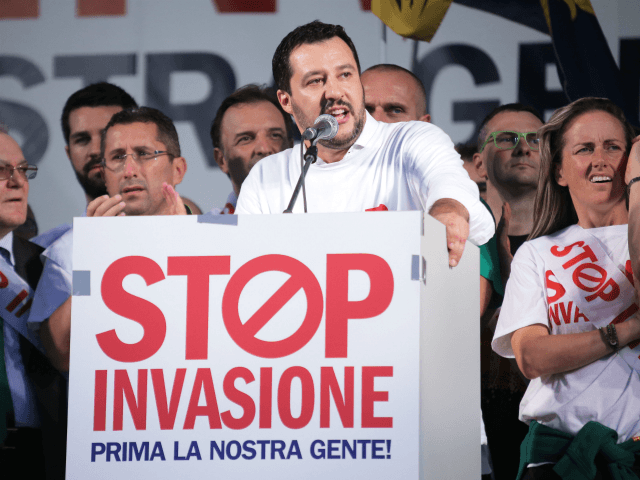
Salvini: No refugee centers in Italy, no refuelling NGO ships in Italian ports

Italian interior minister Matteo Salvini
© MARCO BERTORELLO/AFP/Getty Images
Following an EU summit in Brussels aimed at addressing the migration issue facing Europe, Italian Interior Minister Matteo Salvini declares that his government has won about 70% of its goals on the matter. The summit primarily served the purpose of alleviating political tensions related to the EU migrant quota, secondary migration, and the disproportionate distribution in migrants.

A mandate that the refugees must be received and shared among the EU's member nations was removed, and an agreement was struck that EU member nations should voluntarily receive migrants and to strengthen the bloc's external borders.

Receiving migrants is to be concentrated at 'reception centers' which are voluntary for each nation, and secondary movement of migrants between member states is to be discouraged. Regarding that last point, Salvini declares that Italy is not going to accept more migrants at so-called 'reception centers', but that any centers to be developed would be for the purpose of repatriation.

Comment: See also: Italy wasn't the only country to refuse to host EU reception centers; Egypt, Albania, Morocco, Tunisia and Algeria have also objected to such centers on their territory:
"EU reception facilities for migrants in Egypt would violate the laws and constitution of our country. The Egyptian law allows in general no establishment of refugee camps," Abd al-Aal, who co-authored the 2014 Egyptian Constitution, told the German newspaper Die Welt.

According to Abd al-Aal, who is the second man in the country after President Abdel Fattah al-Sisi, legal migrants can stay in Egypt wherever they want and cannot be forced to stay in certain facilities. He also pointed out that Egyptian legislation rules out the possibility of deporting migrants with residency permits in Egypt if they do not receive asylum in the EU.

The top Egyptian official stated that his home country had already received 10 million migrants from Syria, Iraq, Yemen, Palestine, Sudan, Somalia and other countries. This burdens the Egyptian budget, as all these refugees have a right to health care and education.

"Our capacities are already fully loaded today. Therefore, it is important that Egypt receives support from Germany and the EU," Abd al-Aal said.

He supported the refugee policy of German Chancellor Angela Merkel, representing the German Christian Democratic Union, and the G20 "Compact with Africa" plan. According to the parliamentarian, cited by Die Welt, if people in Africa and the Middle East had jobs, food, and prospects, they would not leave their countries.

"The solution to the problem of migration, in our opinion, is to improve the situation in the countries of origin [for migrants]. Germany has set a good example during its G20 presidency," Abd al-Aal said.