
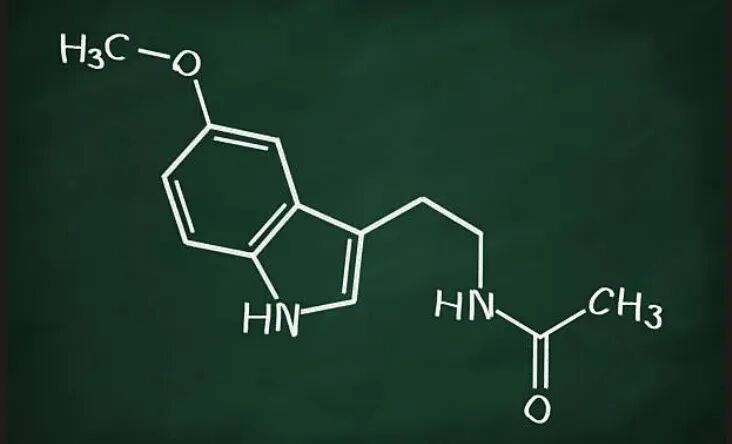
© makauleMolecular structure of melatonin
In "Long-term use of melatonin supplements to support sleep may have negative health effects", they took electronic records and highlighted those who were taking melatonin, correlating with heart failure. Mind you, if you're in heart failure, you'll have insomnia because you can't sleep due to your symptoms. So you'll need to take something. If you don't have heart failure, you sleep better and hence don't require anything. Correlation doesn't equal causation, making this another case of the firefighters getting blamed for the fire.
Melatonin doesn't require a prescription in the U.S., hence it is over-the-counter, and this alone could bias the results significantly. This is called cherry-picking data to create your own reality in discordance with objective reality.
If people want to stop taking melatonin based on this abstract, so be it. As is so often the case these days, it's easier to blame everything except the COVID-19 era (i.e. the vaccine).
From actual peer reviewed and published studies, here are some of the benefits people would be missing:
The pineal gland is a neuroendocrine gland which produces melatonin, a neuroendocrine hormone with critical physiological roles in the circadian rhythm and sleep-wake cycle. Melatonin has been shown to possess anti-oxidant activity and neuroprotective properties. Melatonin has been shown to have cardioprotective activity in multiple animal and human studies.In short, it's the one thing that is natural and has proven to be beneficial in cardiovascular disease.
Studies have demonstrated that melatonin has significant effects on ischemia-reperfusion injury, myocardial chronic intermittent hypoxia injury, pulmonary hypertension, hypertension, valvular heart diseases, vascular diseases, and lipid metabolism. As an inexpensive and well tolerated drug, melatonin may be a new therapeutic option for cardiovascular disease.Also, it doesn't cost much, it's natural and virtually free of side-effects, and, on the contrary, it provides only benefit in cases of cardiovascular disease and pulmonary hypertension.
Melatonin efficiently interacts with various reactive oxygen and reactive nitrogen species (receptor independent actions) and it also upregulates antioxidant enzymes and downregulates pro-oxidant enzymes (receptor-dependent actions). Melatonin attenuates molecular and cellular damages resulting from cardiac ischemia/reperfusion in which destructive free radicals are involved. Anti-inflammatory and antioxidative properties of melatonin are also involved in the protection against a chronic vascular disease, atherosclerosis. The administration of melatonin, as a result of its antioxidant features, has been reported to reduce hypertension and cardiotoxicity induced by clinically used drugs.Melatonin also palliates side effects of commonly used cardiovascular drugs. More on that below. It also targets multiple pathways that are otherwise very costly to target with mainstream drugs.
Melatonin acts through two G-protein-coupled receptors, MT1 and MT2, which are expressed in cardiac myocytes, vascular smooth muscle, and coronary endothelium. Via these receptors, melatonin modulates mitochondrial permeability transition pore (mPTP) opening — a key determinant of ischemia-reperfusion injury — and activates antioxidant enzyme cascades (SOD, GPx, catalase). It also suppresses RAAS (renin-angiotensin-aldosterone system) overactivity and inhibits sympathetic hyperactivation, both of which drive ventricular remodeling in heart failure.Melatonin, at very low cost, is competing with a multi-billion drug industry that targets the same pathways. Cynics might say that vested interests want to do away with the natural and low-cost competition.
Melatonin functions as a powerful antioxidant and free radical scavenger, protecting cells from oxidative damage. Its diverse physiological roles include maintaining the functional integrity of endothelial cells, thereby preventing atherosclerosis, a major contributor to cardiovascular disease. Additionally, melatonin exhibits antioxidant and free radical scavenging properties, potentially improving metabolic disorders. These combined effects suggest a unique adjunctive therapeutic potential for melatonin in treating cardiovascular diseases.Not only treating such, but preventing atherosclerosis itself. Again, the statin industry would be affected if there was a natural way to counteract atherosclerosis.
A 2021 meta-analysis of seven RCTs examining melatonin as a cardioprotective agent in humans — all involving patients undergoing coronary revascularization — found that melatonin-treated patients had on average a 3.1% higher left ventricular ejection fraction (LVEF) compared to placebo (95% CI 0.6-5.5, p = 0.01), and significantly lower troponin levels (SMD = −1.76; 95% CI −2.85 to −0.67, p = 0.002). These findings suggest direct attenuation of ischemia-reperfusion-induced myocardial dysfunction when melatonin is given perioperatively.Studies are actually documenting how melatonin reduces heart failure.
The MeHR trial (Melatonin for Heart Failure with Reduced Ejection Fraction) — a double-blind, placebo-controlled RCT — assigned 90 outpatients with HFrEF to either 10 mg melatonin or placebo for 24 weeks. The results showed that oral melatonin decreased NT-proBNP levels and improved quality of life in HFrEF patients, suggesting a beneficial supplementary role even in established heart failure. A 2025 systematic review and meta-analysis also found improvements in NYHA functional class (OR 4.84; p = 0.05) with melatonin supplementation in HF patients, though ejection fraction changes did not reach statistical significance.Studies are also finding that people are improving their heart failure symptoms and their blood markers for congestive heart failure when they are on melatonin.
Multiple RCTs have shown that controlled-release (CR) melatonin reduces nocturnal blood pressure, with a meta-analysis of seven trials demonstrating that CR melatonin (but not immediate-release) significantly reduced nighttime systolic BP by 6.1 mmHg (95% CI −10.7 to −1.5, p = 0.009) and diastolic BP by 3.5 mmHg.If there's one marker for really bad health: high blood pressure at night. And guess what? Melatonin decreases blood pressure at night.
A landmark crossover RCT by Scheer et al. in 16 men with untreated essential hypertension found that repeated nightly melatonin (2.5 mg) reduced sleep-time systolic BP by 6 mmHg and diastolic BP by 4 mmHg, with a 15-25% increase in circadian amplitude. These are clinically meaningful effects in the context of nocturnal hypertension, one of the most potent predictors of cardiovascular events.You read that right: high blood pressure at night is the one predictor of a cardiovascular event, i.e. stroke or heart attack. It almost doesn't matter if your blood pressure is high during the day or at work. It's got to be normal while you sleep. And melatonin helps decrease blood pressure in those with high blood pressure at night. It can't get clearer than that.
Most cardiovascular disease patients are users of beta-blockers — a drug class that suppresses endogenous melatonin production. It's one of those drugs that tells your heart to chill out, which is why it's used for high blood pressure, heart failure, after a heart attack, etc. However, many report insomnia issues when they first begin these drugs. Melatonin supplementation restores sleep architecture and nocturnal blood pressure control for beta-blocker users: "Repeated melatonin supplementation improves sleep in hypertensive patients treated with beta-blockers: a randomized controlled trial."
Premature publication of a 300-word abstract into clinical guidance for an unpublished study (i.e., stopping melatonin) is inconsistent with evidence standards. The American Heart Association should have known better. Shame on them and everybody else who followed the unnecessary baseless fears by republishing or mediatizing this abstract. This includes the Epoch Times, which is how I came to learn about it, sent to me by my godmother.
What follows is a post I wrote in 2020, during the COVID lockdown. It's a summary of a book I've read on melatonin, one of my all-time-favorite supplements for the benefits it has had in patients, loved ones, and myself. Melatonin is one of those supplements that people on the spectrum of conjunctive tissue anomalies can't forgo because of their background of reduced deep sleep and fragmented sleep. It's a life-saver and, below, you'll understand why.
Melatonin: Breakthrough Discoveries That Can Help You Combat Aging, Boost Your Immune System, Reduce Your Risk of Cancer and Heart Disease, Get a Better Night's Sleep by Russel Reiter.
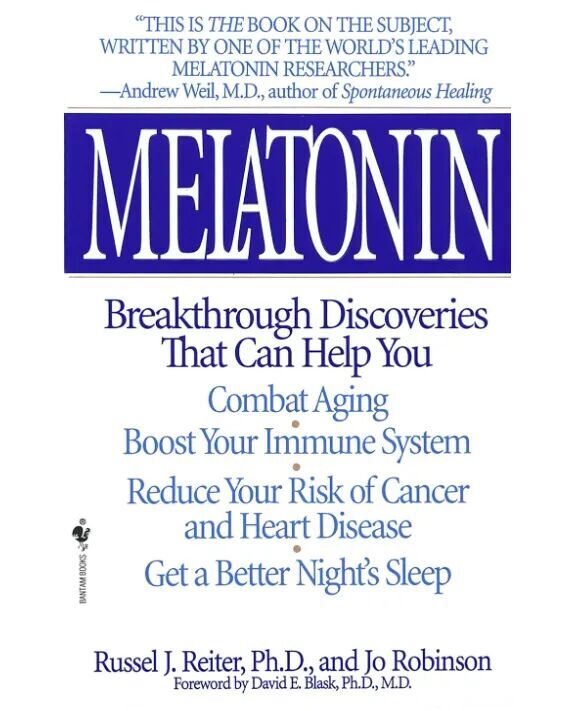
There's no bio for Russel Reiter, although it's briefly mentioned that he was at the University of Rochester prior to his move to the University of Texas. He has published an academic book on melatonin, alongside the above-mentioned bestseller which I'm going to summarize in parts because its data-haul is really pretty amazing.
The pineal gland produces melatonin, which is a very "old" molecule. That is, it has been found in every animal and plant studied to date, from human beings to the most primitive single-celled algae that appeared on the scene more than 3 billion years ago. In every organism, melatonin's molecular structure is identical. Such sameness is a rare occurrence in biology. Humans produce 5 to 10 times more melatonin at night than during the day, a circadian rhythm found in other animals as well.
The first experiment involving melatonin, after it was isolated and chemically re-created, was an experiment for skin diseases. Since it turned frogs' skin lighter, they wanted to see its effects in humans. They used 200mg and the only side effect was mild sedation.
To test toxicity, they've used in animals the equivalent of injecting a half-cup of pure melatonin into humans, and no toxic effects were seen.
Babies produce increasing amounts of melatonin until they are about one year old. Then their nocturnal melatonin levels remain steady until just before puberty, when they decline markedly, a trend that continues for 5 years or so. This suggests a strong tie between melatonin levels and sexual maturity. Children who are late to enter puberty have been found to have higher levels of melatonin.
Then melatonin levels continue to decline with age. So it may also trigger senescence. A 70 or 80 year old may have the hormone in amounts so small as to be undetectable.
Melatonin's first link with stimulating the immune system comes from studies done in mice where they were able to fight deadly viruses, their diabetes type I was less severe and adverse effects of chemotherapy were counteracted with the use of melatonin.
Melatonin is an excellent antioxidant, as well as a hormone. In fact, Reiter considers it the most efficient and versatile antioxidant. It is 5 times more effective than glutathione and 500 times more effective than DMSO!!!
Melatonin's protective effect in cancer comes in part from its antioxidant effect. They have done studies where after giving a toxic element to rats, their DNA gets destroyed. Mice who receive melatonin sustained only 1% as much damage. They had given the animals 750 times more of the toxin than melatonin, yet the hormone had offered near total protection!
For this same reason, melatonin protects against radiation. In fact, melatonin was 500 times more effective than DMSO as a radioprotector, and DMSO is already regarded as an excellent one in this regard.
In still the same line, melatonin has proven to protect against cataracts which are considered a result of oxidative stress among other things.
Melatonin's neuroprotective effects might also derive from the fact that the brain is most vulnerable to free radical attack. The brain presents a challenge because it has the blood brain barrier. However, this is not a problem for melatonin which can cross it readily. They've found melatonin to be protective against free radicals generated by strokes.
In fact, melatonin is both water and fat soluble - a rare occurrence in nature - making it the one antioxidant that can protect all parts of the cell including its fatty membrane, and the one antioxidant that can cross all barriers. Furthermore, once in the body (after an oral dose), you don't have to worry about having the right enzymes or cofactors because it doesn't have to be converted into some other form.
There's an individual difference response to melatonin of about 75%. Those who are very sensitive, will have anxiety and nightmares from taking just even 1 or 2 mg, which is why some suggest to start with 0.5mg or less.
Reiter conducted hundreds of experiments involving melatonin, yet melatonin's central role in the body's immune system eluded him for decades. Retrospectively, he thinks this was because melatonin's immune-enhancing effects are more evident when an animal is under stress. That is, melatonin buffers the effects of stress and/or melatonin is able to boost the immune system when people are under extreme stress. During a life-and-death study conducted in mice, those who were subjected to high amounts of stress and were treated with melatonin fared well. In fact, 82% of the mice survived, compared to 6% who only were stressed.
It's not okay to torture humans though, but similar studies revealed similar benefits under "normal" stressful situations. For example, college students who took 20 mg of melatonin while there was a seasonal virus around, were able to produce 250% more salivary IgA, a protein in the saliva that helps protect against colds and upper respiratory infections.
Stress and aging have a number of similar effects on the body. In both instances, there are more stress hormones, the thymus glands shrinks, and the number of immune cells decline. Old people have a deficit of immune system T cells and the T cells they produce are less capable of doing their job. Here's where melatonin helps. There are melatonin receptors on T-helper cells (a subgroup of the T cells), which means melatonin plays a crucial role in regulating that cell. When melatonin docks with its receptor on the T-helper cell, a cascade of events takes place, including the stimulation of cytokine interleukin-4 or IL-4, which then stimulates other immune responses.
Melatonin also stimulates natural killer (NK) cells. Men taking 2 mg of melatonin for 2 months had an average of 240% more NK cells, more than the double of their usual levels. NK cells fights cancer cells and viruses.
Melatonin also stimulates phagocytes which also destroy invaders. Monocytes are types of phagocytes. Trace amounts of melatonin were able to increase the ability of monocytes to destroy skin cancer cells by 73% in test tubes.
Melatonin also stimulates GM-CSF AKA granulocyte-macrophage colony stimulating factor, which sends a stimulatory message to stem cells located in bone marrow, so that white blood cells that fight disease can be produced.
People with AIDS have benefited enormously from melatonin because of its antioxidant and immune stimulating effects. Melatonin also seems to slow down the replication of the HIV because melatonin inhibits nuclear factor kappa-B which is an essential link in the chain of events that leads to cloning of the HIV. NK-kB levels are reduced by as much as 23% during the night- precisely when melatonin is in its highest concentration. Melatonin injections reduced the binding activity of NF-kB by 43%.
Melatonin also preserves muscle mass in people with wasting syndrome or cachexia.
As far as cancer goes, there's literature from the 1800s and 1900s when researchers were using pineal gland extracts to fight cancer. There are reports of partial and even complete responses. The first official study was conducted in 1963 when a Welsh physician used melatonin IV to treat osteogenic sarcoma with success.
It's in cancer research where controversy of the right dose comes to play. A study was conducted using breast cancer cells and melatonin. Despite the initial promising results, the study showed that there was no difference in the rate of growth between the cancer cells that were growing with or without a hundred times more melatonin that present in the human bloodstream. Then it dawned on them that maybe they were using too much melatonin. "Maybe less is more", they thought. "The body produces so little of it, that maybe it works in small quantities". They went back to the lab and repeated their experiments with less melatonin and sure enough... Melatonin backed the growth of the breast cancer cells by 75%!! This finding was unexpected since virtually all anticancer compounds are most effective in high doses. Melatonin apparently works the other way around. They conducted more studies to determine the most effective concentration of melatonin and this is when they found the most remarkable result: Melatonin had the greatest effect in a very particular range - a range that happens to be the amount of melatonin present in the human body. Concentrations above and below that amount had no effect on the cells.
I think the above is crucial in order to relax a bit the urge to megadose. Sometimes a little goes a long way and not the other way around. It will depend on the context, of course. Dosing according to age might be the best way to go, unless you need a PET scan or CT scan, then you might want to increase your dose.
Melatonin has a direct protective effect on the heart and the circulatory system in general. Evidence shows that the abrupt melatonin fall in the morning and the gradual decline that goes with aging, are hazardous to the heart.
Melatonin reduces oxidative cholesterol. People with severe hypertension had half the night-time melatonin levels of people with moderate hypertension. There is plenty of indirect evidence which shows that melatonin helps regulate blood pressure. It might be through the hormone's action in the hypothalamus, an area which regulates blood pressure, or it might be through melatonin's antioxidant effect.
Melatonin also prevents blood clots. When human blood platelets are incubated in a melatonin solution, the hormone reduces their tendency to clump by as much as 85%. Furthermore, heart arrhythmias, like most heart problems, occurs less frequently at night when melatonin is high.
Reiter also reviews all the sleep medications available today and how they all disrupt the sleeping architecture, that is, a person taking sleeping pills spend less time in phase 3 and 4 and more in phases 1 and 2. Healing and restoration happens in phase 3 and 4. Melatonin as a sleep aider, preserves sleeping architecture in a natural way.
You can also change your melatonin levels by changing your body temperature. Volunteers sitting in a hot bath in the middle of the day experienced about a 2 degree rise in body temperature, and they also had an accompanying rise in their melatonin level.
As far as reproductive hormones go, it was observed in a study how all women had a noticeable drop in melatonin around ovulation. As they neared their menstrual flow, the luteal stage of the menstrual cycle, most women produced significantly more melatonin, almost twice as much as in the first part of the cycle. This is referred as the "luteal surge". As it happens, high levels of melatonin are associated with infertility. Women athletes who train extensively and who don't have menstruations, have melatonin levels twice as high as normal women.
Premenstrual syndrome is associated with low melatonin levels. Women with PMS produce less melatonin than other women, especially in the week before menstruation. Afflicted women are recommended to take 1 or 2 mg of melatonin taken at night at mid-cycle and extending until menstruation.
Melatonin levels decline rapidly around menopause. Melatonin levels of women aged 40 to 59 was half that of women in the 20 to 39 age bracket. Follicle stimulating hormone, or FSH, rises sharply just before menopause. The higher a woman's level of FSH, the lower her levels of melatonin. A number of menopausal changes are related to lower levels of melatonin. Rate of hypertension increases around age 48 for women, triglycerides and LDL cholesterol rise too. All these conditions have been linked with low levels of melatonin.
As far as mental health goes, there's data that shows that melatonin has an anti-depressant effect and that suicide victims had far less melatonin in their pineal glands than controls at the autopsy. The difference was especially striking when the deaths occurred at night, the time when melatonin is being actively produced.
People with schizophrenia have unusually low levels of melatonin. Patients who have undergone pinealectomy, exhibit symptoms of schizophrenia.
Melatonin has potent analgesic properties, changing the threshold to pain.
Reiter suggests light therapy during the day in order to maintain healthy melatonin levels, and also decreasing light at night. Back in the 90s, he was already making a big connection between electromagnetic field pollution and less melatonin production as well.
What was also surprising was to learn all the medications that block the production of melatonin: non steroidal anti-inflammatories, especially indomethacin which had a complete blockade of the nocturnal increase of melatonin. Non steroidal anti-inflammatories also increase blood pressure and it might be through their effect on melatonin production. All the common pain relievers had a negative effect on melatonin production.
Beta blockers abolish melatonin production in animals. In fact, they are known to be "pharmacological [drug-induced] pinealectomy". Even ophthalmic beta blockers used for glaucoma can block melatonin production. Reiter suggests using these medications early in the morning.
Calcium channel blockers appear to have the same effect. Nifedipine caused significant reduction in nocturnal levels of melatonin. Verapamil, a common calcium channel blocker, didn't have this effect though.
Some antidepressants such as Prozac affect melatonin levels. Vitamin B12 also deplete melatonin supplies. Steroids and tobacco too. In fact, he speculates that tobacco increases the risk of heart disease, cancer and other problems because it decreases melatonin levels. People who drink the equivalent of one or 2 glasses of wine at 7pm had 41% less melatonin at midnight compared with nights when they were given a non-alcoholic drink. Benzodiazepines also interfere with melatonin.
Back in the 90s there was already preliminary research about melatonin's positive effect in autism, epilepsy, and diabetes. This last one was interesting because they have found that diabetics produce significantly less melatonin, in fact, some of them have barely detectable amounts. Those with autonomic neuropathy induced by diabetes had more melatonin during the day than at night. Melatonin prevents diabetes in animal studies. Diabetics who take melatonin often need less diabetes medication.
It's hard to pin down a specific dose for each person because melatonin has a liver metabolism that is very individual. There has been a 35 fold difference in the amount of melatonin that enters the bloodstream in each individual. Those who have lot of melatonin entering the blood might feel anxious and get nightmares. They can take 0.1mg if they can split a pill this much. Others might need a more decent dose.
Melatonin usually has a short life of 30 to 40 minutes. The decline in melatonin levels in your bloodstream will cause your temperature to rise, which your body interprets as a wake-up signal. People who take relatively high doses (10mg), are able to sustain elevated melatonin levels through the night. Others, take a smaller dose of melatonin if they wake up in the middle of the night. Another option is to take a time released melatonin. Nevertheless, the doses that Reiter recommends for people who choose to take melatonin (based on 90s research) are:
Sleep 0.2-10mg
Jet lag 1-10mg
Anti-ageing 0.1-3mg
Shift work 1-5mg
Immune stimulation 2-20mg
Keep in mind that if there's a viral epidemic or pandemic, you can take 2-20mg to help you fight it off.
To your health,
Dr. Gaby







Grok AI context on what disturbs sleep-wake (circadian rhythm): [Link]
Quote: " Besides blue light from screens (which suppresses natural melatonin production by tricking the brain into thinking it's daytime) ".