
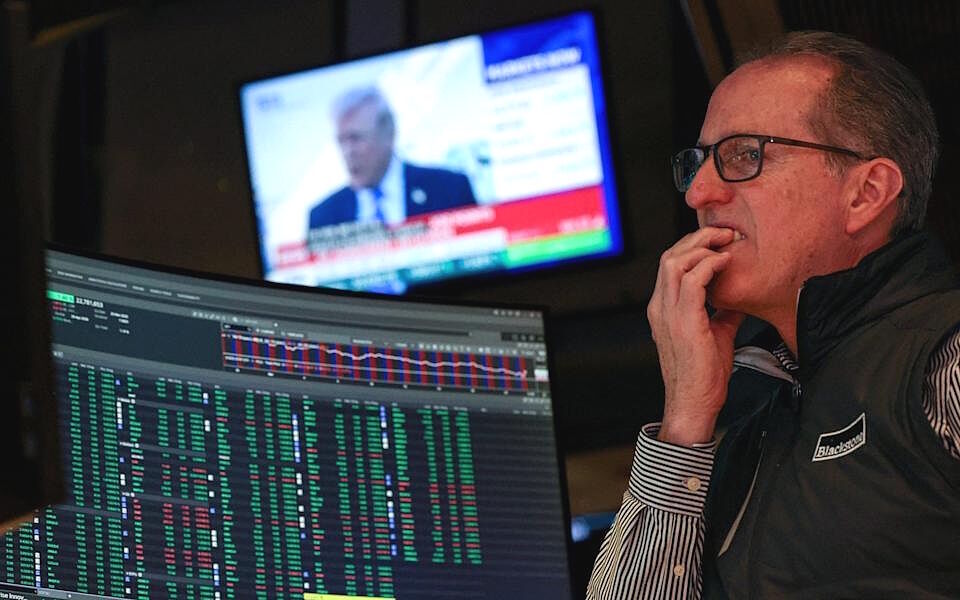
© Brendan McDermid/REUTERSA trader on the floor at the New York Stock Exchange on Monday. The American S&P 500 stock index rose and oil prices fell below $100 a barrel
Half a billion dollars worth of bets on the oil market were placed 15 minutes before Donald Trump said the US had held "productive" talks with Iran and announced a ceasefire on energy strikes.
Some 6,200 oil futures contracts - valued at a reported $580m (£433.9m) - changed hands between 6.49am and 6.50am EST (10.49am and 10.50am GMT) on Monday.
A quarter of an hour later, the US president announced "very good and productive conversations regarding a complete and total resolution of our hostilities in the Middle East" on Truth Social, which caused oil prices to tumble.
The oil futures market allows investors to buy or sell oil at a set price on a future date, enabling them to guard against any unexpected leaps in prices in the months ahead. Banks and hedge funds also bet on moves in the price of oil to earn profits.
Shortly after Mr Trump's post, oil prices fell below oil prices fell below $100 £74 a barrel, with markets hedging that the conflict would probably come to an end soon.
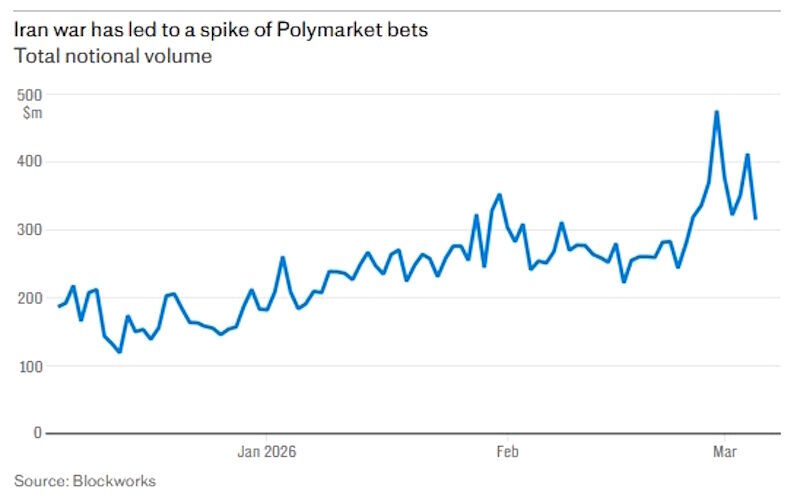
Anonymous traders using the betting site Polymarket, which allows you to wager on the outcome of everything from weather patterns to politics, have made hundreds of thousands of dollars in recent months.
Well-timed bets predicting military action 'suspicious'
One user has made $1m (£747,000) since 2024 from well-timed bets predicting military action by the US and Israel against Iran, according to CNN.
Nick Vaiman, who leads Bubblemaps, an analytics company tracking anonymous digital blockchain transactions, described the trades as "suspicious".
"All of this is strong signalling of insider activity, based on the amount they made, the markets they bet on, the timing of their trades, the success rates of these trades," he told CNN.
Despite Mr Trump's claim of "productive" talks and traders envisaging an end to the conflict, Iran denied that any negotiations with the US had taken place. Instead, the country's speaker accused the US president of manipulating the markets with his comments.
"Fake news is used to manipulate the financial and oil markets and escape the quagmire in which the US and Israel are trapped," Mohammad-Bagher Ghalibaf, the new secretary of Iran's supreme national security council, said.
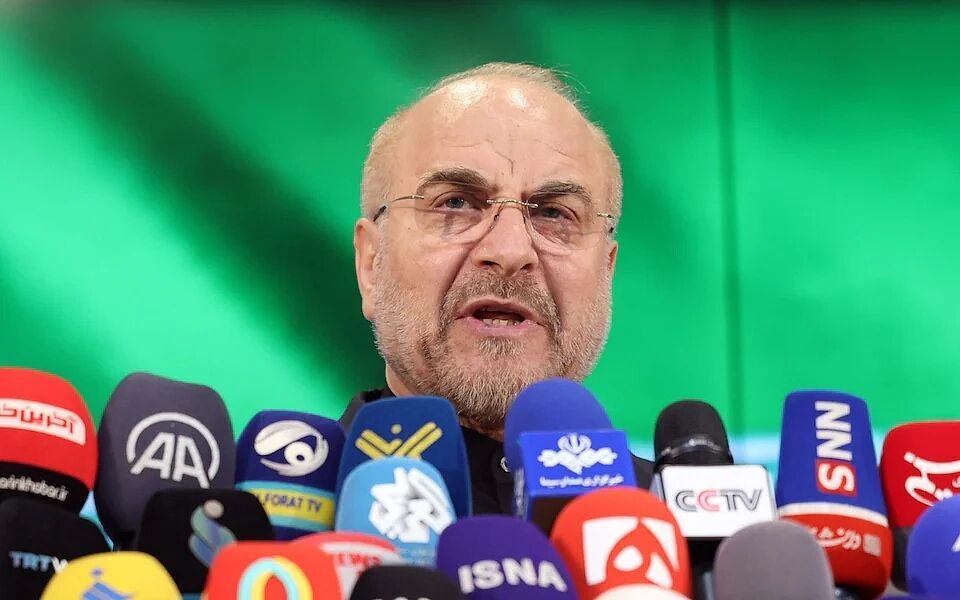
Mohammad-Bagher Ghalibaf, secretary of Iran’s supreme national security council, accused Donald Trump of manipulating the markets with his comments
"The White House does not tolerate any administration official illegally profiteering off of insider knowledge, and any implication that officials are engaged in such activity without evidence is baseless and irresponsible reporting," they added.
One market strategist told the Financial Times that "it's hard to prove causality... but you have to wonder who would have been relatively aggressive at selling futures at that point, 15 minutes before Trump's post."
It is not known if one individual or several entities were responsible for the oil futures trades, or whether or not they had any insider information.
Tim Skirrow, the head of derivatives at Energy Aspects, a market analytics firm, raised doubts about the claims.
"That is a larger-than-usual volume [in Brent and WTI] than I would expect at that time of day, but in the same breath, it's not excessively large," he said.
Recent reports about betting patterns on Polymarket - which appear to have predicted not only the ousting of Iran's supreme leader, but also the capture of Venezuela's president - have caught the eye of legislators.
At the start of the conflict last month, a number of large Polymarket bets on the US attacking Iran generated a combined profit of $330,000 (£246,000), much of which occurred in the hours before the first strike.
© Blockworks
Meanwhile, six Polymarket accounts set up between Dec 30, 2025 and January 2, 2026 were paid $133,878 (£100,000) after correctly betting on Venezuela-related topics before the US launched its operation to kidnap Nicolas Maduro, the country's leader.
One individual made $400,000 (£300,000) predicting Mr Maduro's ousting only hours before he was abducted by US special forces.
Chris Murphy, a Democratic senator, flagged bets showing 109 accounts had made at least $10,000 (£7,469) on Iran bets before the war.
Mr Murphy, along with Greg Cesar, a House representative, is to introduce legislation to rein in prediction markets such as Polymarket and another popular platform, Kalshi,which do not require customers to provide their names and work using cryptocurrencies.
Last month, two Israelis - one an army reservist and the other a civilian - were charged over allegations they used classified information to place bets on the website.
The activity on Polymarket has not only raised concerns about individuals profiteering from apparent access to insider information. Some have also flagged that activity on prediction markets could serve as a warning to potential targets.
"Any advance notice to an adversary is problematic," Alex Goldenberg, a fellow at the Rutgers Miller Centre who has written about the implications of prediction markets for national security, told The Atlantic.
"And these predictive markets, as they stand, are designed to leak out this information."
Polymarket was contacted for comment.






That is a joke, and not the funny kind.