
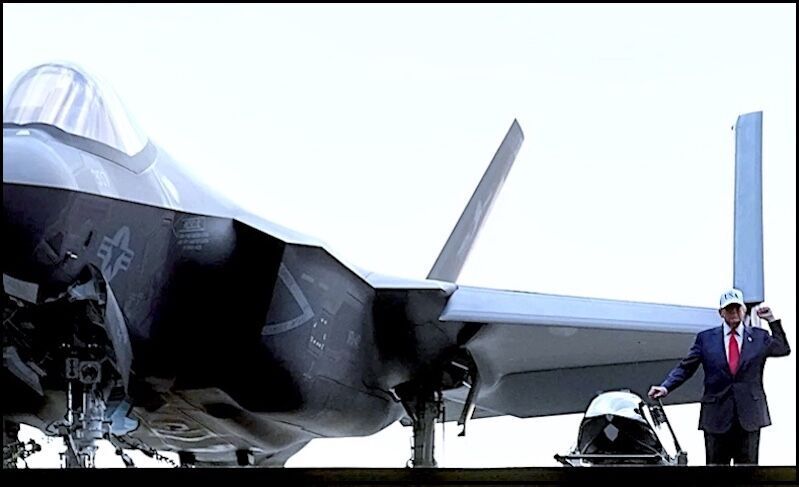
© UnknownUS President Donald Trump prior to speaking to members of the military on an aircraft carrier in October.
Iran will treat any attack "as an all-out war against us", a senior Iranian official said on Friday, ahead of the arrival of a US military aircraft carrier strike group and other assets in the Middle East in the coming days.
"This military build-up - we hope it is not intended for real confrontation - but our military is ready for the worst-case scenario. This is why everything is on high alert in Iran. This time we will treat any attack - limited, unlimited, surgical, kinetic, whatever they call it - as an all-out war against us, and we will respond in the hardest way possible to settle this. If the Americans violate Iran's sovereignty and territorial integrity, we will respond."He declined to specify what an Iranian response might look like.
"A country under constant military threat from the United States has no option but to ensure that everything at its disposal can be used to push back and, if possible, restore balance against anyone who dares to attack Iran."US President Donald Trump said on Thursday that the United States had an "armada" heading towards Iran but hoped he would not have to use it, as he renewed warnings to Tehran against killing protesters or restarting its nuclear programme.
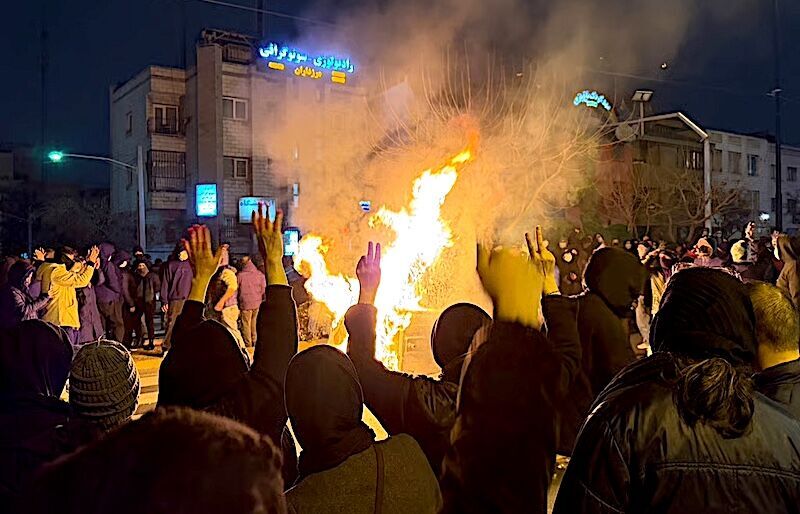
© APIranians attend anti-government protest • Tehran, Iran • January 9, 2026
Nournews, a news outlet close to Iran's Supreme National Security Council, reported on its Telegram channel that General Mohammad Pakpour warned the US and Israel "to avoid any miscalculation".
"The Islamic Revolutionary Guards and dear Iran stand more ready than ever, finger on the trigger, to execute the orders and directives of the Commander-in-Chief."The US military has periodically sent increased forces to the Middle East at times of heightened tensions, moves that were often defensive.
However, it staged a major build-up last year ahead of its June strikes against Iran's nuclear programme.
This month's killing of peaceful protesters - as well as the threat of mass executions - has been a red line for military action for Trump.
In recent days, Iran's bloodiest crackdown on dissent since the 1979 Islamic Revolution has been slowly coming into focus, despite authorities cutting the nation off from the internet and much of the wider world.
Cities and towns smell of smoke as fire-damaged mosques and government offices and torched banks line the streets.
Elaheh Mohammadi, a journalist at Tehran's pro-reform newspaper Ham Mihan, recently noted it had been shut by the authorities.
"We send out a message to let people know we're still alive," Mohammadi wrote online. "The city smells of death."
The number of dead demonstrators reported by activists continues to swell.
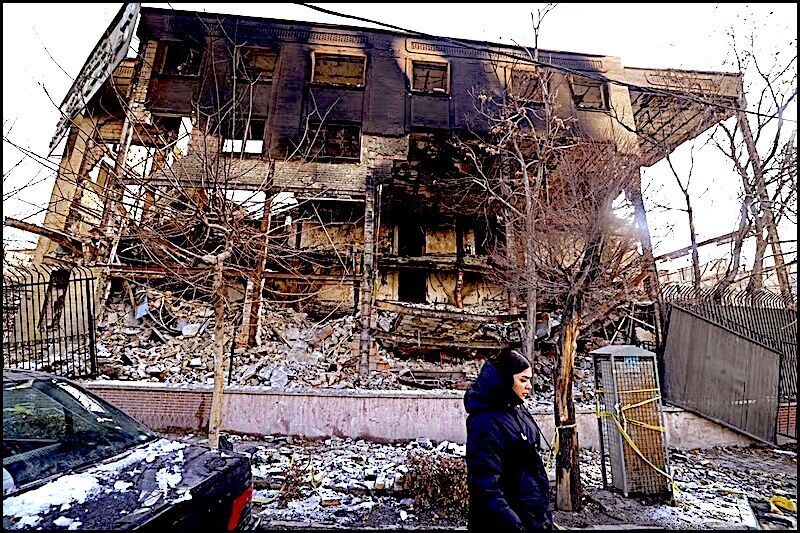
© AFPDestroyed government building burned during protests
Raha Bahreini, of Amnesty International, remarked:
"The vast majority of protesters were peaceful. The video footage shows crowds of people - including children and families - chanting, dancing around bonfires, marching on their streets. The authorities have opened fire unlawfully."Iran's mission to the United Nations did not respond to detailed questions regarding the suppression of the demonstrations.
On Wednesday, the government said 3,117 people were killed, including 2,427 civilians and security forces.
That conflicts with figures from the US-based Human Rights Activists News Agency, which put the death toll on Saturday at 5,137, based on activists in Iran verifying fatalities against public records and witness statements.
It said 54 of the dead were children and 41 were civilians not taking part in protests.
Traditionally, Iranians hold memorial services for their loved ones 40 days after their deaths, meaning the country could see renewed demonstrations around February 17.
Online videos from a massive cemetery on the outskirts of Tehran show mourners chanting: "Death to Khamenei!"



Reader Comments