
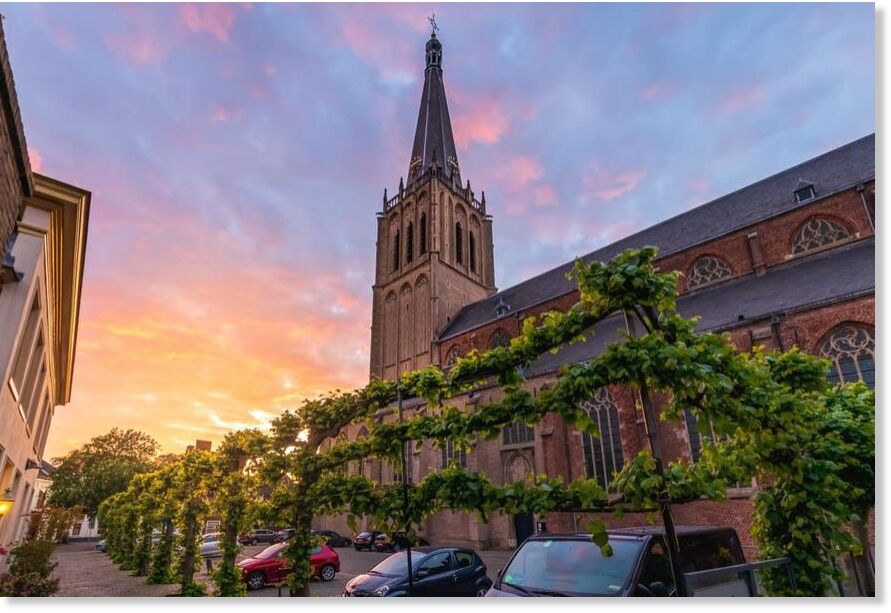
Zilvermuseum Doesburg
At approximately 4:30 a.m., two unknown individuals forced their way into the church through a tower entrance, used a crowbar to breach the museum's doors, and smashed all 14 display vitrines before departing with the entire silver collection, police and museum statements confirm.
"The entire collection of antique silver has been stolen." — Museum press release, Zilvermuseum Doesburg (translated)A Cultural Loss Beyond Its Weight in Silver
The collection, assembled over decades and sourced from more than 20 countries, featured objects ranging from ornate silver mustard pots and spoons to intricate cruet sets tied to the butter, vinegar, and tobacco trades.
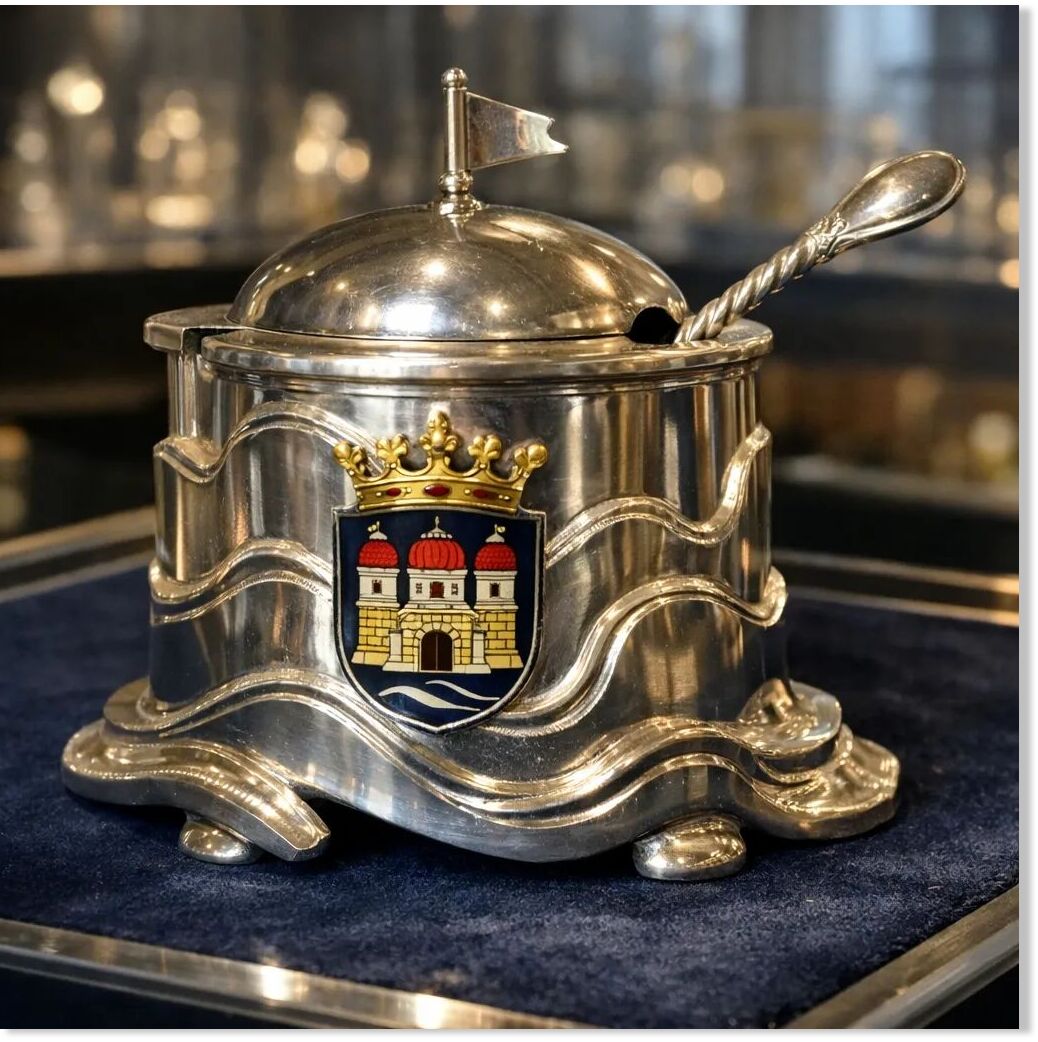
Among the stolen pieces was a unique silver mustard pot and spoon specially designed for the museum by silversmith Marcel Blok, symbolizing the meandering IJssel River and bearing the city coat of arms of Doesburg — an item that "does not exist anywhere else in the world."
"This is not just a theft of silver, but of stories, craftsmanship, and history." — Martin de Kleijn, Founder of Zilvermuseum DoesburgMuseum chairman Ernst Boesveld told local media that only some ceramics on temporary display were left undisturbed by the thieves, and that the museum is now closed indefinitely as investigators work the scene. He emphasized that while financial loss from the theft — estimated in the tens of thousands of euros — is significant, the emotional and historical damage is far greater.
Crime Scene, Investigation, and Security Gaps
Police were called soon after the burglary and have begun combing through the surrounding area for video surveillance footage that could help identify suspects. A spokesperson told Dutch broadcasters that the thieves briefly appeared in footage before disabling the cameras.
No arrests have been reported as of the latest updates, and investigators have not yet determined if the burglary was precisely planned by insiders or opportunistic.
Authorities are appealing to witnesses who may have been near the Martinikerk around the time of the burglary to come forward with information, including any sightings of suspicious individuals or recently offered silver items for sale.
Historical and Material Context
The Zilvermuseum, though modest in scale, occupies a floating glass structure within the 13th-century Martinikerk and had become a cherished locus for cultural tourists and local residents alike. Its exhibits offered rare insight into the evolution of silver craft, both utilitarian and ceremonial, from the 18th through early 20th centuries.
Silver's recent surge in price — spurred by investor demand amid geopolitical uncertainty — complicates the aftermath of the theft. While the museum stressed that the cultural and historical value cannot be quantified in monetary terms, a higher bullion price inherently increases the financial damage and may tempt thieves to sell or melt objects rather than attempt resale through legitimate channels.
Reactions and Heritage Significance
Local cultural advocates voiced deep regret that centuries-old artifacts documenting craftsmanship and social history were lost in a matter of minutes. Some commentators note that museum security, while adequate for daily visitors, was insufficient to deter determined intruders with tools and foreknowledge. Comparisons to other high-profile European museum heists — where thieves specifically target small collections for metallurgical resale value — are already emerging in Dutch cultural discourse.
"They have made a very substantial haul," a police spokeswoman told RTL Nieuws, reflecting on the breadth of the stolen works but stopping short of suggesting motive or sophistication.
Heritage professionals warn that silver items stripped of provenance and melted down are among the hardest to recover, underscoring the urgency of public reporting and international cooperation in art crime investigations..
The Zilvermuseum Doesburg robbery is now one of the most significant cultural property thefts in the Netherlands in recent years, not because of raw monetary value but due to loss of irreplaceable heritage and craftsmanship. As investigators continue work and museum leaders weigh the future, this incident underscores growing concerns about the protection of small cultural institutions — and the enduring challenge of safeguarding history against opportunistic crime.



Reader Comments
These phenomenon, one stealing precious heritage and artistry, and the other stealing human warmth and artistry, are perfect reflections of the crass, utilitarian qualities rampant in our western civilization. Everything (and every person) is only valued for the mechanical efficiency that enables gain. That way, we can be assemblages of mechanical parts to be downloaded, uploaded, or eliminated as needed. Shocking and horrifying as this all is, there are a lot of people in this world who will cheer anyone who is bold enough to act on such impulses. That's why monsters like Howard Lutnick (did you catch his speech at Davos?) and Donald Trump exist, pretending to be all about America First and sovereignty, when neither of them could recognize the value of another human being or culture if their lives depended on it.
First article on silver I have seen on here I would have thought more by now as it is the bell that is tolling louder then any other alarm currently. The point of no return far back in a rear view mirror and the event horizon almost here.
Seatbelts on!
Less than a year ago silver floated around its usual price in the $20 per once and is now at $102. Five fold increase.
Silver needs a haircut so us little fellows can grab a bit more before it’s unobtanium.
Have a good day D!
Physical gold and silver investment would have been a good bet 1 year ago.
Have a good year (if it is possible).
The article mentions several trades notorious throughout history as being repressive. No-one argues the tobacco industry was/is benevolent. How much of the money used to craft those items came from blood, sweat and tears of people who will never get to own or touch those relics? All those silent voices. Besides, all the items were early modern and so barely symbolic of the country's long history.
More likely to be the ideas of a grandiose few who were extremely wealthy and privileged enough to have these works commissioned. What is "shared" about that? That's like your boss at work getting a mural commissioned to commemorate all the tax you've paid on your salary over the years!
None of this makes theft acceptable but to frame this as a "shared" loss is arguably debatable. I guess it makes you think about what we consider to be our "shared" history in the first place and how much is really a product of conditioning as opposed to being a history we all share volitionally
Just because millions of people believe the collective myths of their own country and therefore justify the actions of a limited few who never visited the battlefield beyond being hidden away at the very back out of harms way, doesn't mean they actually own the history. It's the opposite. They may say their ancestors fought for their freedom. They fought for agendas of an elite group of people who actually own the bulk of what they claim the majority have a share of.
What do you get? A nice trophy and some ribbons. A cenotaph in your local town. They get all the loot and all the status. You get to visit a museum and stare at things hidden away behind glass. They create the narrative and you consume it.
Beethoven would be different. You're not being sold anything. Isn't that the point of any musical piece? There is no destination, only a journey. Listening to music to hear the point or be sold something is not the point! Some commissioned silverware in a museum is very different. You're being made aware of the point and it lets you know who is in control. Music liberates you. The last time I checked no industry mentioned in the article seeks that same goal. Their goal is profit and power at all costs. If that's your history then what are you worth? As much as the value defined at the time. One minute it's everything and the next it's nothing. In the past colonial powers defined themselves on what they could take from others. Today we know different and we educate on the mistakes of the past. Entire countries were built on those mistakes. That has been the Western model for a very long time.
Do we own anything that came from that? Perhaps. We get the "right" to vote and "make a difference" to our country. We get to partake in "democracy" and drink as much kool aid as we want, as long as we're not challenging the status quo.
So we don't own all that much if what is behind the illusion is very little. If someone stole the crown jewels tomorrow or a bust from the white house would you really be bothered? People steal artwork and music all the time. We steal ideas from each other all the time. Arguably none of us have original thoughts because what we learn is a product of someone else's - the words we didn't create and the meaning we didn't define. Have you ever downloaded a movie illegally? Listened to a pirated album in the car? Who does it actually belong to?
Music and some silver pieces are artistic and convey more than sound or an object of silver. They are a product of emotional intelligence that doesn't use words. Hearing or viewing each with a certain state of awareness, and the person viewing receives a higher energy. The hearing Beethoven or the seeing of fine silver feeds higher parts of ourselves.
Artefacts like ones in museums historically belonged to rich powerful people until it become popular to present them in public and afford access to the common folk. It would have been pointless and culturally mute to put the crown jewels on display in the 1600s but today its fashionable and culturally appropriate to make a spectacle over them. You can visit the Castle of London and "own" a piece of history but several hundred years ago you'd have taken an arrow throw the body attempting to gain access so how much of that history do you own? Only so much as the rulers allow. Today we assume we have more ownership over our history. We believe we are more free, more powerful, more autonomous, able to affect things around us. How much of that is ACTUALLY true?
At least with music if you own a record be it vinyl, CD or MP3 there's less doubt about your ownership because it's yours. A museum piece will always be out of your true grasp. Like a peasant you can admire from a distance and like a good peasant buy into the narrative you're told to believe ie this silverware means that we (the rich) and you (the poor) are connected by shared mutual interests. You plow the fields, pick the cotton, sow the seeds, mine the precious metals and in return we afford you your freedoms, one of which is the belief in your ability to be a free person (relatively speaking).
As soon as you try and claim that freedom just like the minute you try and own the museum piece you're bundled into a police van and taken away as a deviant to your society attempting to undermine the power structure in place.
Someone stealing this silverware is a slap to the faces of that hierarchical structure so its only inevitable the retort will be "but what about us?" and "this harms the community". Of course it does but in only so much as you're taking what belongs to the rich and breaking cardinal rules that are supposed to prevent you from coming close to those things. You're shitting on the institution that reinforces the repressive structuring of society, like a peasant taking ownership of the lords living quarters or stealing his wife, or both. It's like you stealing the CEO of Microsoft's super yacht. It just wouldn't happen. Not because its impossible but socially and culturally it's unthinkable to imagine the repressive hierarchies in place could be questioned. That the riches a country possesses, or a small minority, like rich people, can be pilfered just like the initial acts by those people occurred in order for them to claim power over everyone else. It's why people steal art in the first place and why most people scoff at classical music and assume it's for stiffs who are probably still virgins at 50 years old. There's a power structure behind what is going on and you're saying "F*CK YOU" to that structure.
If you have difficulty seeing this maybe you're unable to see you are a part of it. I don't for a second suggest theft as a means to make a point out of this but it still illustrates the point. There will always be cries of victimisation and then attempts to use triangulation and groupthink to make it look like some rich persons loss is everybody's loss. In truth you'll probably find a long trail of losses that belong more to the real silenced and repressed victims of those rich people than the rich people themselves but isn't this the case for much of human history? Exploitation.
The exploiter becomes the exploited. Don't steal from me what I stole from others. The system doesn't allow for that! Behave yourself and admire the silverware from a distance and be a good peasant!
If it truly was in the public domain it would have been publicly commissioned with the consent of the public but most artwork like this isn't. Some rich person/or people somewhere had flights of fancy and wanted to boast about their excess. Adding "the people" as the benefactor simply alleviates the burden on the conscience for what history exists beyond the cause for it's creation, which often isn't really in the interests of the people at all. Why not spend it on housing? On education for poor people? On improved working conditions?
Let's make a bowl made out of silver instead.
Their way of avoiding it was creating foundations and museums to reduce their "earnings", get tax breaks, and appear as altruistic. That is how many of the great USA museums were created.
I get what you're saying but again, Ancient Egypt was also built on a hierarchy. The pyramids as majestic as they are are a direct symbol of that power and thousands and thousands and thousands of people toiled over their development. People were sacrificed figuratively and literally for the elite class of the day. Today we can consume that history because we are separated by it by thousands of years but it's still telling you something about where you belong in the pecking order. Besides, the Western world, particularly the UK, stole those artifacts from Egypt and I believe only recently (as in the last decade or so) decided to give them back! What does that say? We stole another country's history so we could bolster our own and we make museums out of stolen artifacts and then call ourselves the benefactor of that history! We I say "we" I'm obviously referring to "them" who believe they are REALLY separate to "us" as the collective.
My point exactly. We think that's OUR history and we have a piece of it. We really don't and that's why it's locked away. Not to say we can't be a fan of ancient history and have a relationship to it in some way. I love ancient history personally, especially Egypt but I also know that the power structure that exists in our world around these things has us believe we OWN a piece of that history when it's nearly always a handful of very privileged people and their peer group who get to say they do while we get to play with words. In today's world we get closer because of digital media that peers behind the curtain whereas before we only had books, magazines and museum visits. Now we have extensive information far greater than any ruler of history and with that comes power. However, that powers exists within us and not in the illusions of history.
If you fight a war and help your country secure freedom that alone isn't sufficient to own a piece of that history. It's also a deeply complex relationship that involves as best as possible understanding what it is you are now connected to. In war most fighting age males only see guns, bullets and armor. They come home and naturally lose touch with reality because that isn't REALLY what freedom is. That was the narrative created by powerful people to convince those men to fight for their war. The freedom exists beyond that as an innately valuable human being belonging to an innately value society that is defined by how we choose to live our lives, what we believe in, where we are going and what our shared meaning and purpose is. That can't be taken away but museum pieces can.
We ARE the history. We are making it everyday. This dialogue is history. It's just not the history we are conditioned/programmed to be attracted to. And why that is is basically control.
Much love All within this temporary realm named the world.
Print that story.
Get rid of that paper if you can in exchange for tangible assets.
Bar tender an order of hugs for all in the house.