

Javier Milei • Patagonia Fire • Flag Israel
But these fires were more than an environmental crisis. In towns from Bariloche to Lago Escondido, whispers circulated that foreign actors, including known Zionists, might be exploiting the chaos. Indigenous Mapuche communities and local activists began raising concerns about Israeli nationals, sometimes identified as Israeli soldiers, moving into remote lands, their presence coinciding with government reforms easing foreign ownership of burned and rural properties.
What once circulated as a rumour has now become an unavoidable reality on the ground. Across Patagonia — on both the Argentine and Chilean sides, unease is growing as residents and visitors alike confront an increasingly visible and unexplained presence of Israeli nationals, many presenting themselves as ordinary backpackers. Their numbers are not seasonal anomalies but a constant: thousands arrive every year, in every season. In towns like El Calafate or Bariloche, which was a refugee city for Nazis after World War II, the signs are impossible to ignore; Hebrew lettering dominates shop windows, hostels, and travel agencies, creating the uncanny impression of a parallel cultural footprint embedded deep in the Patagonian frontier.
Locals are no longer asking whether something is happening, but why. What explains this sustained presence in one of South America's most strategic and resource-rich regions? Why now, and why here? As criminal fires devastate vast stretches of land and Argentina's political leadership deepens its alignment with Israel under the Isaac Accord, the official explanations grow thinner, not clearer.
Is Patagonia quietly being repurposed into a geopolitical backyard?
Is Argentina becoming a testing ground, or a playground, for foreign strategic interests?
These questions, once dismissed as fringe speculation, are increasingly difficult to ignore. And the deeper one looks, the more the story resists simple answers.
Milei's Blind Alignment and the Isaac Accords
The Isaac Accords represent the latest evolution of the Abraham Accords, aiming to expand Israel's relationships throughout the Middle East without necessitating that Israel honour Palestinian rights. Named after Abraham's biblical son, the Isaac Accords strive for a similar normalisation in Latin America. Argentina's president, Milei, launched these accords in collaboration with the Genesis Prize Foundation, following the foundation's presentation of the 'Jewish Nobel Prize', also referred to as the Genesis Prize, to Milei in the Israeli parliament in June 2025.
The narrative of foreign influence in Patagonia is entwined with Argentina's political pivot under President Javier Milei. His administration has fostered close ties with Israel, aligning with its global strategy of influence consolidation by launching the Isaac Accords in November 2025. Embassy relocations, defense cooperation, and engagement with Israeli-linked financiers like Eduardo Elsztain and Joe Lewis have positioned Argentina as a key southern hemisphere ally.
To observers, these developments hint at more than standard diplomacy. In 2025, photographs of Milei and Israeli Prime Minister Benjamin Netanyahu reviewing maps of Patagonia caused a stir. Critics argued that the imagery symbolised a strategic interest in the region's resources, its proximity to Antarctica, and its under-governed expanses. Agreements emerging from these meetings included intelligence cooperation, military training, and economic investment programs — moves that have sparked intense debate about sovereignty, resource control, and long-term strategic planning.
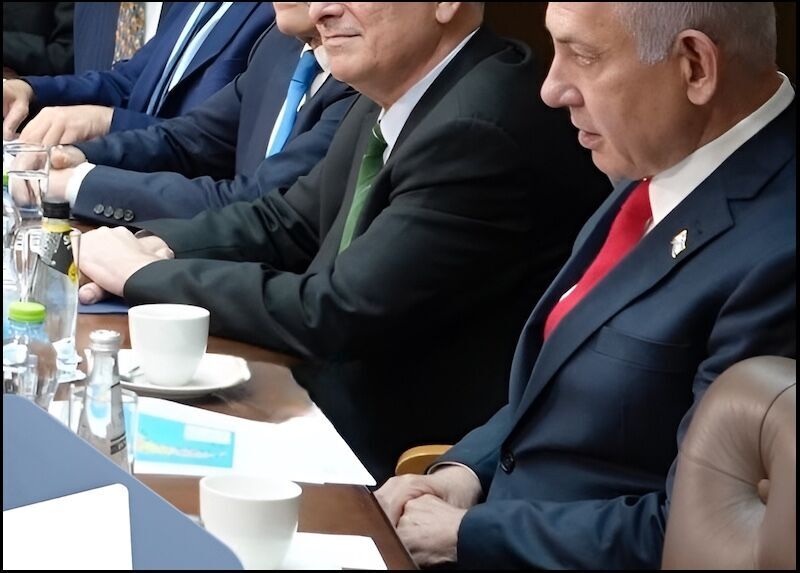
© Movimiento AlternativaIsraeli PM Benjamin Netanyahu examines map of Argentin and Chilean Patagonia sparked geopolitical alerts after meeting President Javier Milei in Jerusalem • June 2025 to sign military and immigration aggreements with Israel
Compounding these concerns are reports that Israeli media have openly advertised land for sale in southern Argentina and Chile, often highlighting its strategic value and proximity to Antarctica. The timing coincides with Milei's policies easing foreign acquisition of land, raising questions about the confluence of policy, market opportunity, and foreign strategy. One of the most concerning results of this agenda was the Argentine president's repeal of the law that barred foreigners from purchasing land in border regions, which ultimately paved the way for Zionist millionaires to acquire land in Argentine Patagonia, which shares direct borders with Chile. This represents a coordinated, quiet yet perilous initiative that has even been highlighted in Israeli media, where land in Patagonia is being marketed at absurdly low prices, some critics remark.
This draws some uncomfortable parallel to Ukraine and the lifting of restrictions on farmland purchases by foreigners under conditions set by Zelensky himself, which ultimately opened the door to foreign vulture capitalists, including the likes of Blackrock.
Meanwhile, locals have reported sightings of Israeli soldiers or veterans in Patagonia. While there is no confirmation of formal military deployment, journalists and residents describe mapping, monitoring, and activities consistent with military training or intelligence observation. Some analyses suggest these presences could be tied to interest in Antarctic access, strategic southern corridors, and mineral-rich zones.
Land and water have emerged as key instruments of influence. Billionaires like Joe Lewis and Eduardo Elsztain control massive swaths of land in Patagonia, with private security and restrictions on access that amount to a quasi-sovereign parallel state. Simultaneously, Israel's national water company Mekorot has signed agreements to manage rivers and infrastructure in southern provinces. Critics warn that Mekorot's methods in Israel, accused of water apartheid, could displace Indigenous communities and restrict access to essential resources, a concern particularly acute for the Mapuche. Inevitably, the control over a resource as precious as water serves as a reminder of how the Israeli military forces achieved considerable control over the Al-Mantara Dam in the Quneitra countryside of Syria, a crucial water resource in the region, which could have significant repercussions for both Syria's indigenous population and its neighbouring country, Jordan. Israelis are famously known for using water as a weapon.
Mekorot operates by implementing projects in regions characterised by extractive industries, limited water access, and ongoing privatisation efforts. Numerous international organisations and local collectives have documented the company's activities in areas where the Israeli firm has broadened its reach. In Argentina, opposition to Israeli water control is intensifying, with initiatives like the Fuera Mekorot Campaign spearheading the resistance. This movement gained momentum after Argentine Interior Minister Wado de Pedro visited Israel in 2022, where she was joined by governors and representatives from ten Argentine provinces. During this visit, they participated in discussions aimed at enhancing productivity through water projects and effective water management. Ultimately, the movement succeeded in securing six out of the twelve agreements that Mekorot signed. You can read more here to find out what they've discovered.
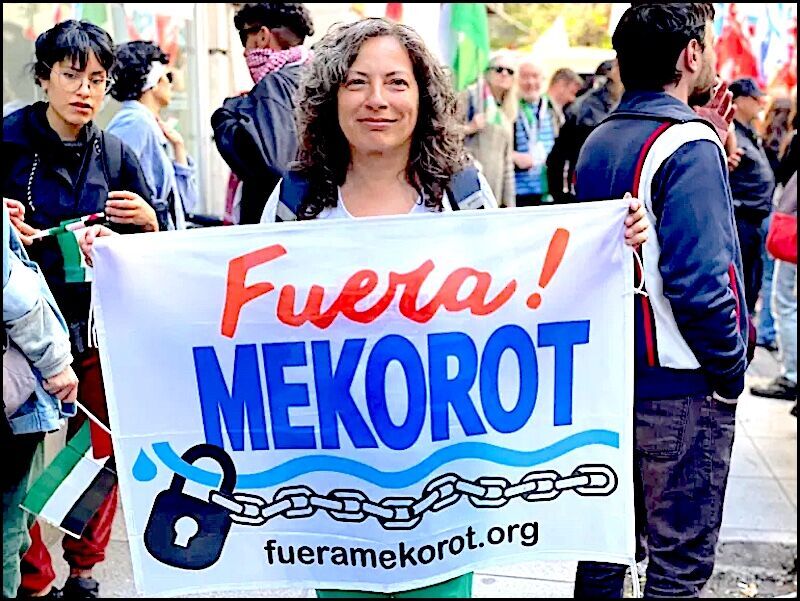
© Victor Swezey/Al JazeeraProtester Silvia Ferreyra is part of a backlash to the Israeli national water company Mekorot and its work in Argentina
Patagonia Under Pressure: Fires, Foreign Influence, and Indigenous Marginalisation
The wildfires that have ravaged Patagonia in recent months are only one layer of a far more complex and troubling story. Beyond the flames, a growing number of reports which requires further checking detail the visible presence of Israeli nationals in the region, often traveling under the guise of tourists or backpackers. In towns like El Calafate, Hebrew signage is now commonplace in shops and hostels, drawing attention from locals and visitors alike and raising questions about the scale and purpose of this ongoing presence. Mapuche communities have begun to speak out publicly, describing behaviours they perceive as aggressive or hostile. Moira Millán, a prominent Mapuche leader, observed that "where they are, they generate riots... a rather hostile way of handling," while Marta, from the Community of Los Toldos, warned Argentines to "open their eyes, they are not going to leave anyone here with terror." Millán framed these developments as contributing to the formation of "a kind of postmodern feudal states" in Patagonia, hinting at both the colonial undertones and strategic stakes of foreign influence in the region.
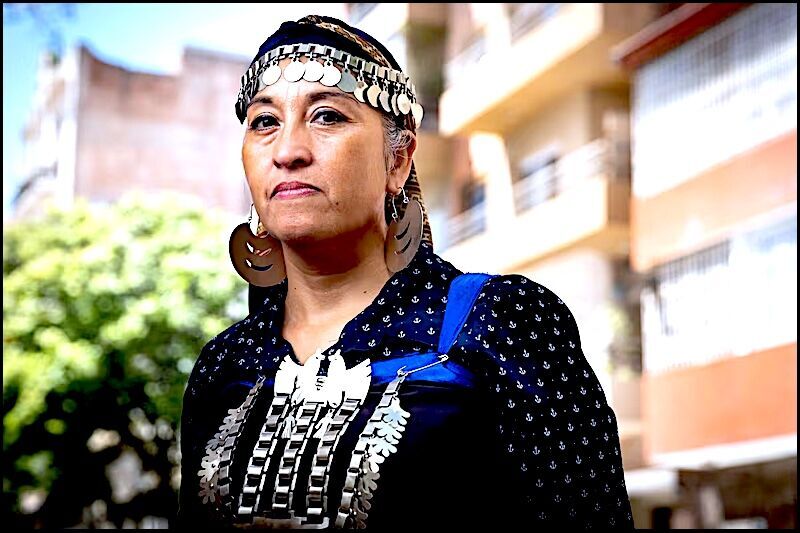
© Mariana ElianoSince the 1990s, Moira Millán has campaigned for the rights of the Mapuche people,
who have more than three million members in Chile and Argentina.
who have more than three million members in Chile and Argentina.
The broader geopolitical dimension cannot be ignored. Milei's uncritical embrace of Israel and the Isaac Accords, coupled with a creeping influence over critical infrastructure and natural resources, intensifies Argentine concerns. The administration has encouraged the involvement of Israeli companies in water management through initiatives like Mekorot, whose approach to water rights in Israel has drawn international criticism for promoting exclusionary access policies, raising fears of a similar dynamic in Patagonia. Alongside the growing presence of foreign nationals and private companies, the region's forests, rivers, and lands are increasingly exposed to both environmental and political vulnerabilities, with Indigenous populations bearing the brunt of regulatory and security decisions while questions about sovereignty, resource control, and foreign influence multiply.
Plan Andinia? Truth or Modern Fears

© Special Ideogram/EJ CentralMap of Argentine Patagonia with Israel flag in the so-called Andinia project
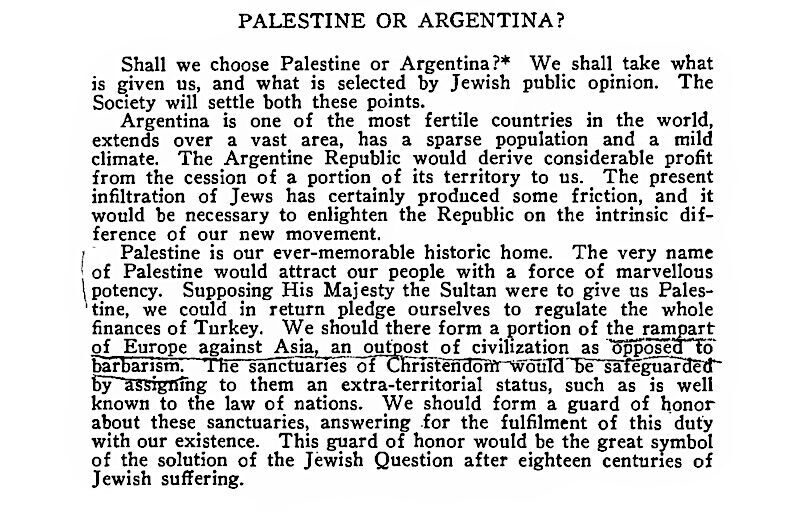
Extract from Theodor Herzl’s pamphlet “A Jewish State,” first published in April 1896 (Source: US Archive)
The Human Cost and the Question of Sovereignty
Local voices underscore the human cost of this emerging frontier. Mapuche communities report encroachments on ancestral lands, and environmentalists warn of ecological collapse if fires and uncontrolled development continue. Citizens describe a sense of abandonment, noting that while foreign investment is courted, local needs remain unaddressed.
It is crucial to distinguish verified fact from a circulating allegation. Claims linking fires to specific foreign operatives from Israel remain to be confirmed by official investigations. However, it is not unreasonable to assume that the Milei administration will do its utmost to keep any inconvenient truth out of the columns. Yet even when unproven, these narratives reflect the anxiety and suspicion of a region at the intersection of environmental disaster, political alignment, and global strategy.
Patagonia, once perceived as a remote wilderness, is now a laboratory of modern geopolitical intrigue, where fires, foreign investment, military presence, and resource control intersect. Whether these developments are coincidental, opportunistic, or strategically coordinated, the outcome is a region whose sovereignty, ecology, and cultural heritage are under unprecedented pressure.
The story of Patagonia in 2026 is far from concluded. Fires may burn out, but the debates they ignite, about land, water, governance, and foreign influence, will shape the region for decades. As Argentina opens its doors to foreign capital and deepens alliances with distant powers such as Israel, the last frontier becomes a proving ground for global strategy, land grab, natural resource plundering, local resistance, and the limits of state control.



Reader Comments
The fires are mostly in national parks and isolated spots so if locals do catch foreigners lighting wild fires then there is only one thing to do to ensure they do not come back for the same purpose. The world could see another Pinochet, another Nutty Yahoo, in power if something isn't done.
The burned land is being bought up by isreali regime fanatics who started the fires after Milie just changed the laws that now permit the land to be sold after a fire and to foreign settlers.
There is only one thing that can be done with a gov't that doesn't listen to its people, and whose existence gets harder and harder. Argentina is lining itself up to be another Palestine. The Palestinian people also once thought that the people of isreali came in peace.
Let the forces of Israel - with their creeping mammon loving yahweh bullshit - be sent back to whence they came. And let the leader there - a puppet get pulled on strings - and then let the strings upon said puppet be cut.
Tis a lesson - hope those in South America are prepared to defend against hegemony loving ones and Israelis that evidently do not have the citizens interest at heart. Hope better leaders emerge - and fuck the hedge fund owners - why should the tax payers of us of a - bail them out - just cause they licked trumps pathetic appeal - oh gracious me - the trumpster team is about to learn a HARD Lesson - so sad - cause it could have been so much easier - but Charlie is dead - and now tis WAR.
The younger generations know better - they still have principle - the Trump Team has lost their minds - they are LOST.
So Candace and Limies skin care come to you - and this video is on the video links at sott.net.
So really - after awhile the Cloak of Protection is no longer necessary - cause the force of the sentiment is not only overwhelming - but it speaks for itself - and the younger generation tis my supposition have simply had enough - but little do they know about Justified Retribution - but they will learn soon enough. Cause some of us old farts still have blood flow - and we are not puppets.
So we don't want war - do you?
[Link] - there is going to be hell to pay - cause if these fuckers were planning on bombing Iran - they deserve the gallows.
How dare they risk the lives of all those sailors.