
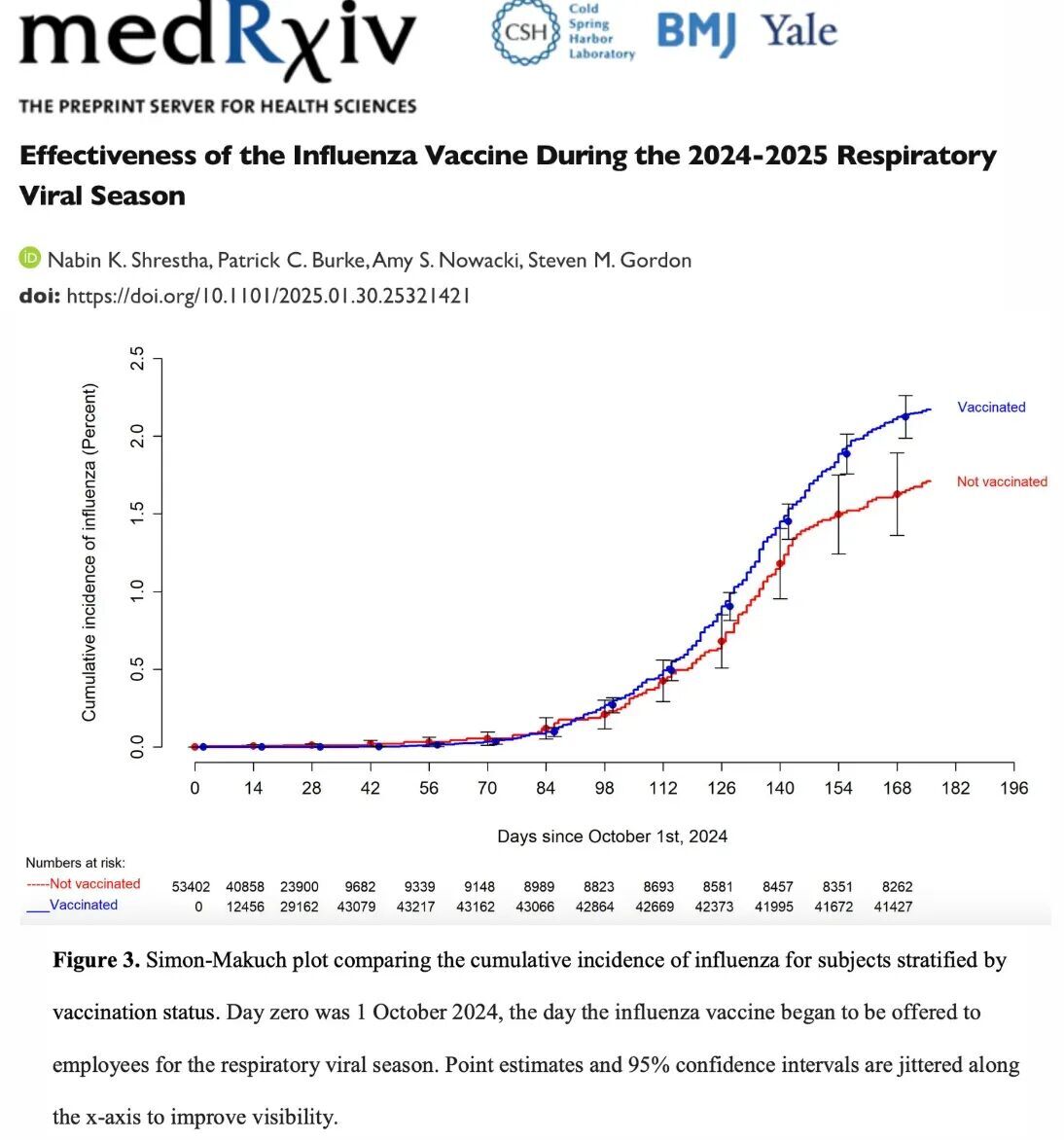
Nasal sprays and antiseptic gargles are already well-established, effective frontline defenses, but additional, overlooked options exist — and one of the most striking comes from a clinical study on bovine colostrum, the immune-rich "first milk" produced by cows after birth.
A clinical study published in Clinical and Applied Thrombosis/Hemostasis evaluated whether bovine colostrum could prevent influenza illness more effectively than seasonal flu vaccination. The investigators followed 144 healthy adults and 65 very high-risk cardiovascular patients during flu season, comparing four strategies: flu vaccination alone, bovine colostrum alone, colostrum plus vaccination, and no prophylaxis. Participants were prospectively monitored over 3 months for flu-like illness episodes, total days of illness, complications, hospitalizations, and death. The study measured real-world illness burden — how often people got sick and how long they stayed sick.
Across both healthy and high-risk populations, bovine colostrum consistently outperformed flu vaccination, reducing flu illness by approximately threefold.
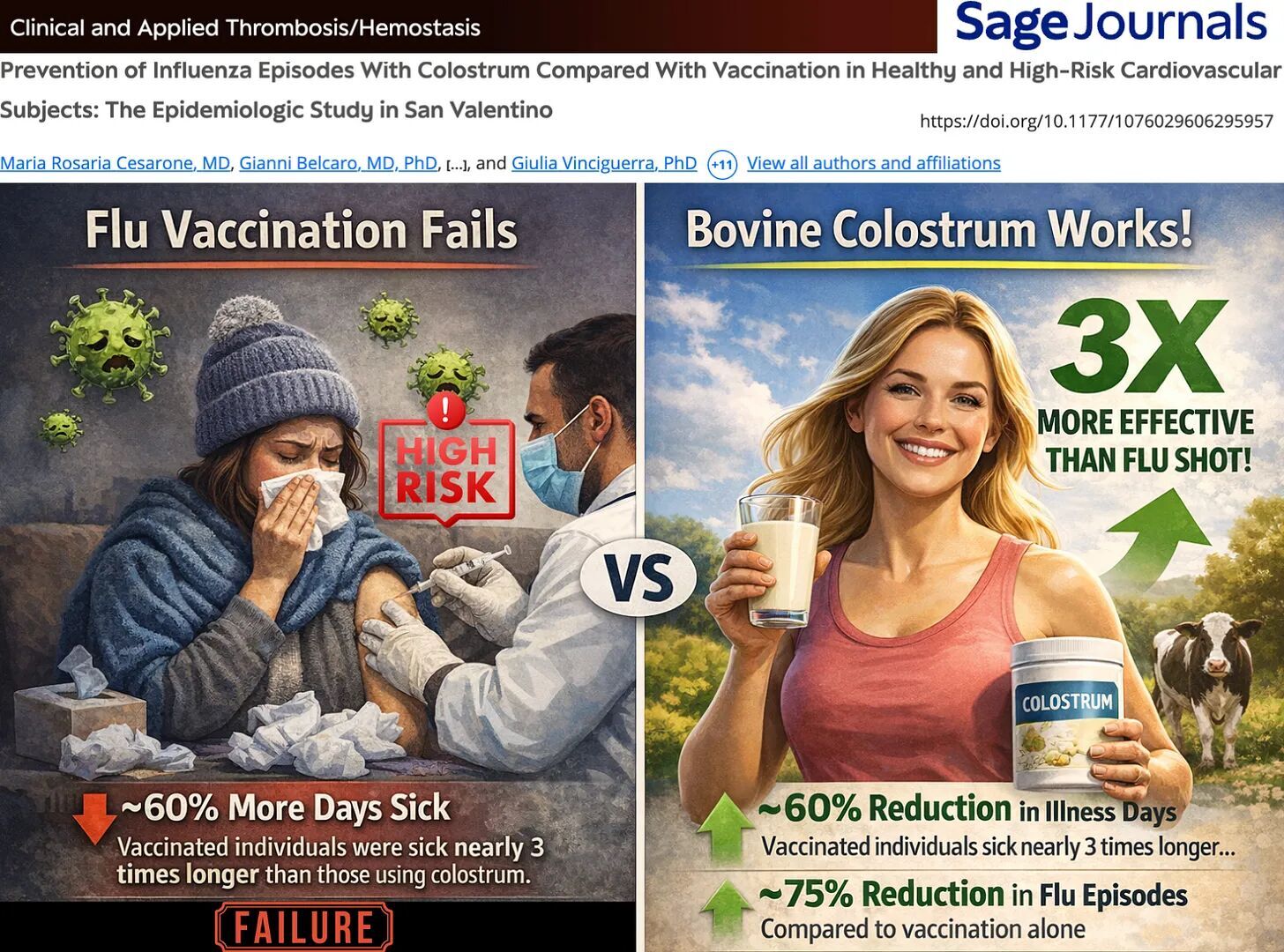
Among healthy adults, those who received the flu vaccine alone experienced:
- 11.3 total days of flu-like illness over the season
- 4.3-4.6 total illness day
Notably, illness duration in the vaccine-only group was similar to — or worse than — no prophylaxis, while colostrum produced a clear protective effect.
Flu-Like Episodes Were Reduced by ~75% With Colostrum
Total flu-like illness episodes in healthy adults were:
- 57 episodes in the vaccine-only group
- 13-14 episodes in the colostrum groups
Adding the flu shot to colostrum did not meaningfully improve outcomes, indicating that colostrum — not vaccination — was driving protection.
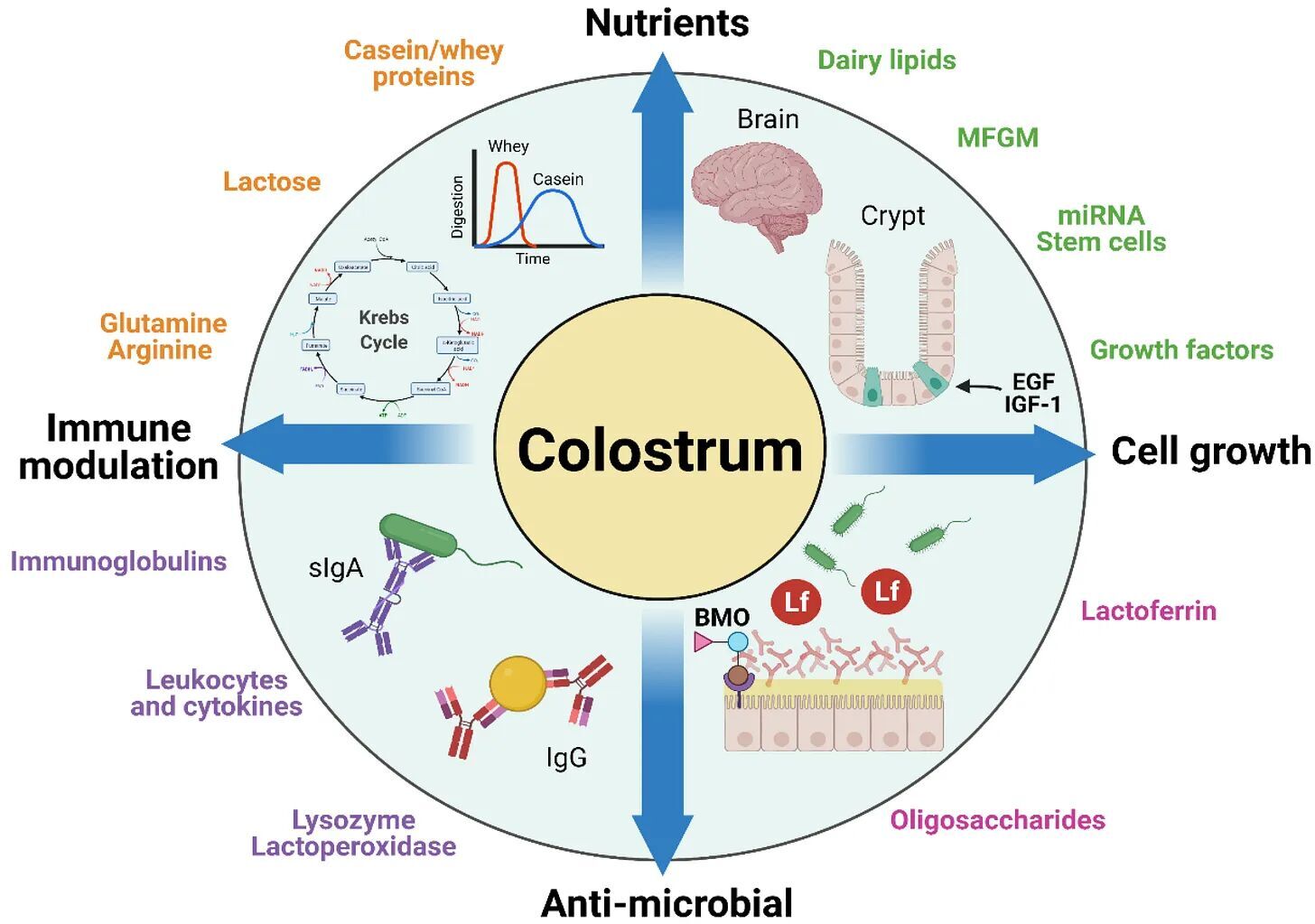
Unlike flu vaccines, which rely on accurate prediction of specific viral strains, bovine colostrum provides broad, non-specific immune protection through a complex mixture of bioactive compounds, including:
- Immunoglobulins (primarily IgG): Bind and neutralize a wide range of pathogens at mucosal surfaces, reducing viral attachment and entry.
- Lactoferrin: A potent antiviral and antibacterial glycoprotein that inhibits viral replication, disrupts microbial membranes, and modulates inflammatory responses.
- Cytokines and growth factors: Help regulate immune signaling, support epithelial barrier integrity, and promote balanced immune responses rather than narrow antibody targeting.
- Antimicrobial peptides: Provide direct, non-specific defense against viruses, bacteria, and other pathogens.
- Proline-rich polypeptides (PRPs): Known to modulate immune over- and under-activation, helping normalize immune responses.
The authors themselves concluded:
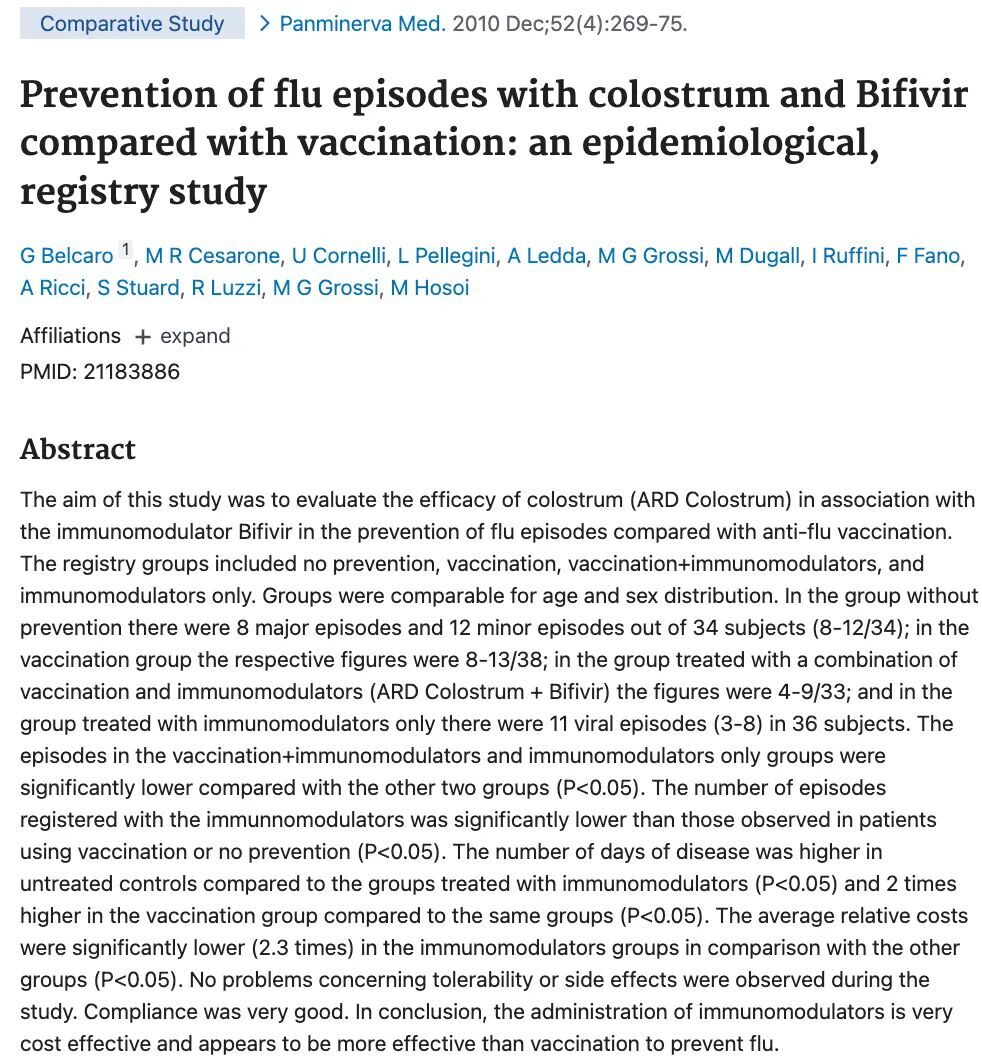
Colostrum, both in healthy subjects and high-risk cardiovascular patients, is at least 3 times more effective than vaccination to prevent flu and is very cost-effective.This conclusion was later corroborated in a second registry study, in which colostrum-based immunomodulators again outperformed flu vaccination, reducing flu episodes by ~40-50%, cutting illness duration by roughly half, and lowering costs by more than 2-fold, while vaccination performed no better than no prevention.



Reader Comments
And disregarding the other fact that a proper scientific experiment proving evidence of a "virus" as a n existing freestanding entity is still outstanding.
D rinking natural, nutritionally rich milk made for newborns is less harmful than injecting people with a concoction of rotting cells from chicken eggs or mammalian cell cultures mixed with rotting "purified" remains from another cell culture, chemical preservatives, and "adjuvants" (usually aluminum).
Whudathunkit.