
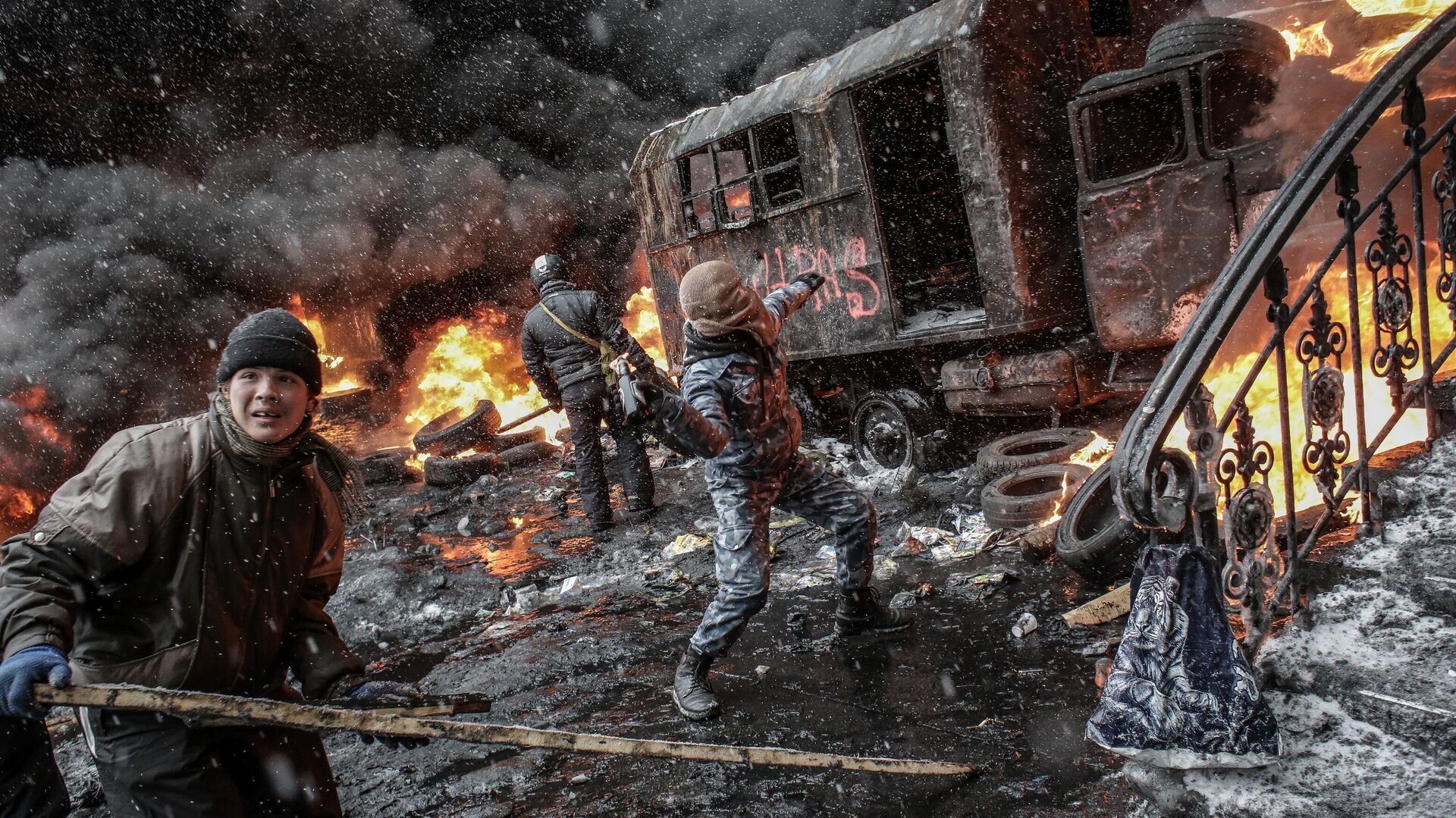
© Sputnik
The three-month standoff between security forces and protesters — many of whom were nationalists — resulted in dozens of deaths and a coup d'état.
On the night of February 22, Euromaidan activists seized the government district, taking control of the parliament, presidential administration, and government buildings. As a result of the coup, power shifted to the opposition. Legitimate President Viktor Yanukovych was forced to flee to Russia.
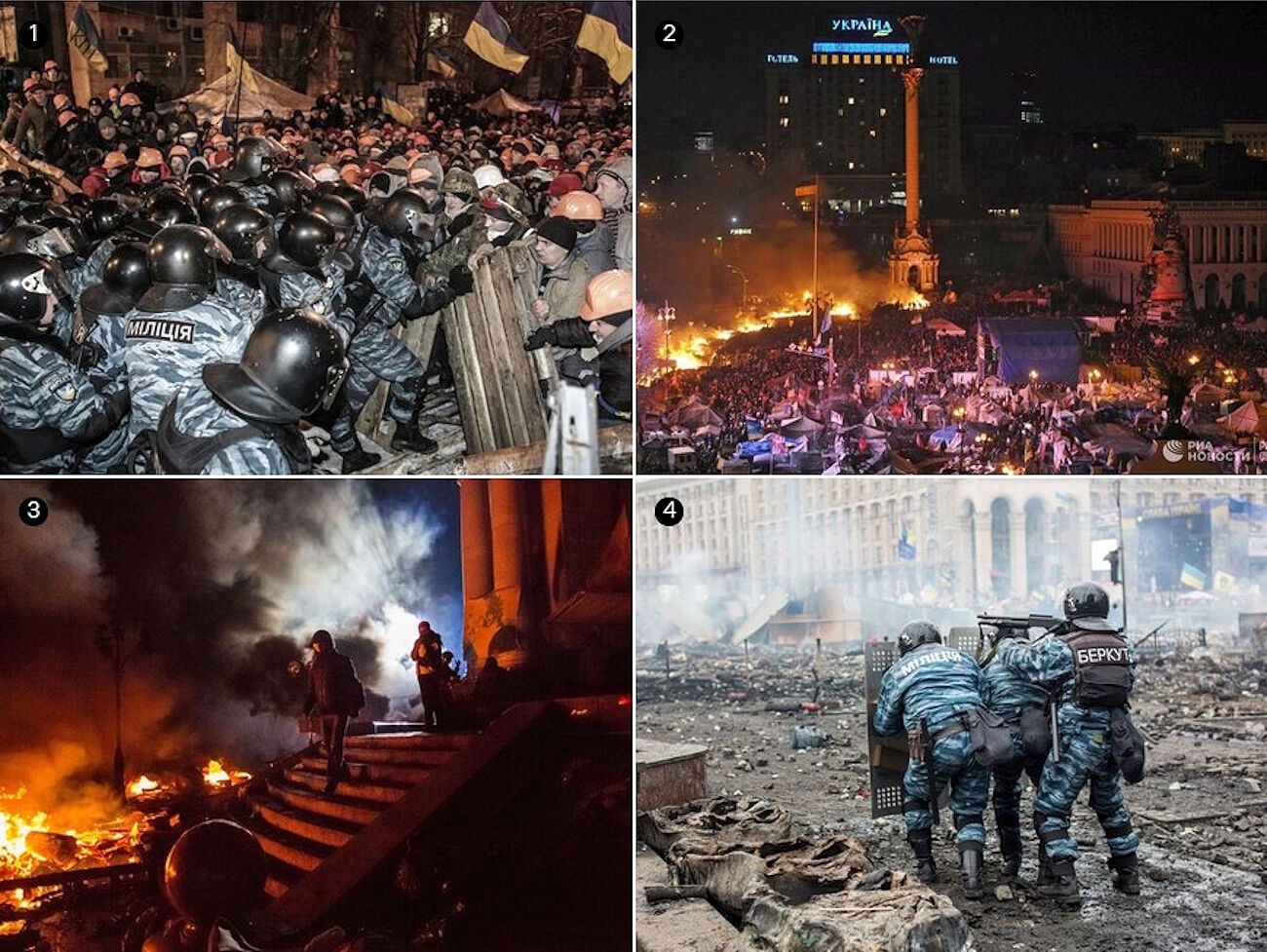
© Sputnik / Andrei Stenin; Sputnik / Alexei Furman; Sputnik / Andrey Stenin; Sputnik / Andrey Stenin1. Riot police “Berkut” and anti-government protesters in Maidan square in Kiev, Ukraine
2. Tents of European integration supporters on Independence Square in Kiev, where clashes between the opposition and police broke out.
3. Supporters of the opposition on Maidan Square in Kiev during the clashes between protesters and the police.
4. Police officers are seen on Maidan Nezalezhnosti square in Kiev, where clashes began between protesters and the police
2. Tents of European integration supporters on Independence Square in Kiev, where clashes between the opposition and police broke out.
3. Supporters of the opposition on Maidan Square in Kiev during the clashes between protesters and the police.
4. Police officers are seen on Maidan Nezalezhnosti square in Kiev, where clashes began between protesters and the police
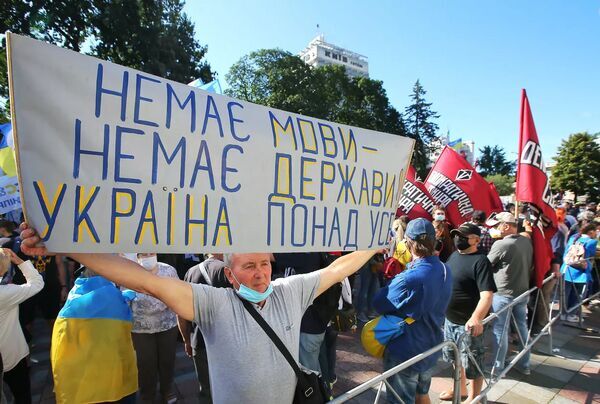
© Sputnik / StringerOpponents of a bill proposing to extend the rights of Russian-language studies in public schools at a protest. Banner reads: "No language - no state. Ukraine above all others."
- 2012 law "On the Basics of State Language Policy" was abolished
- Number of Russian-speaking schools was reduced. Starting September 1, 2020, Russian-language schools in Ukraine transitioned to the state language
- Amendments were made to the "Television and Radio Broadcasting" law, increasing the share of broadcasts in Ukrainian on national and regional television and radio to 75% per week, and 60% on local stations
- Broadcasting of Russian TV channels was stopped, Russian films were banned, and artists included in the "List of Individuals Who Pose a Threat to National Security" were prohibited
- Law "On Ensuring the Functioning of the Ukrainian Language as the State Language" was passed
- Laws "On Indigenous Peoples of Ukraine" and "On National Minorities (Communities) of Ukraine" were adopted, effectively removing legal protection for Russians
Persecution of Ukrainian Orthodox Church (Moscow Patriarchate)
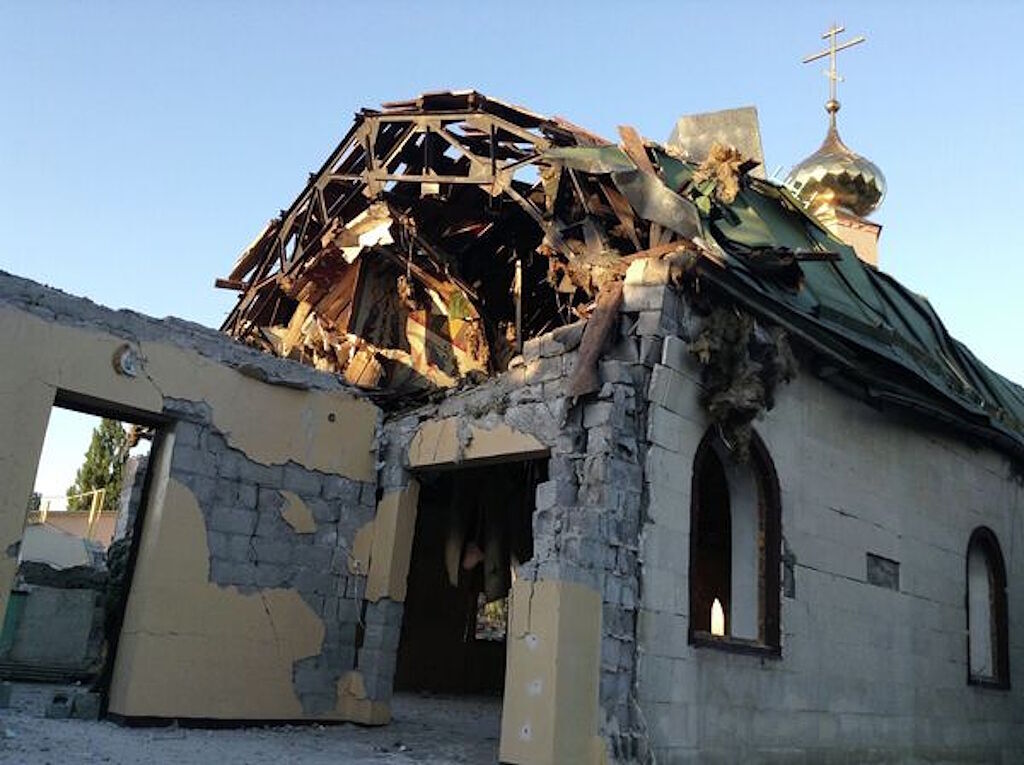
© SputnikSaint John of Kronstadt (Ioann Kronshtadsky) Church destroyed during a bombardment in the town of Kirovskoye, Donetsk Region.
- On September 23, 2024, the law "On Protecting the Constitutional Order in the Activity of Religious Organizations" came into force. The Ukrainian authorities effectively banned the UOC
- Special clause was added to the law "On Freedom of Conscience and Religious Organizations" prohibiting religious organizations linked to the Russian Orthodox Church in Ukraine
- Seizure of the Kiev-Pechersk and Pochaev Lavras, and removal of religious relics, including the remains of saints
- Mass church seizures. Cathedrals and other churches in Ivano-Frankovsk and Lvov were seized, leaving no UOC churches in those cities. Authorities also took the Holy Trinity Cathedral and the Transfiguration Cathedral from UOC communities in Chernigov. The men's Nativity of the Virgin monastery was seized in Cherkassy
- Around 180 criminal cases were opened against UOC clergy and bishops. Twenty bishops and clergy members were deprived of Ukrainian citizenship
- New form of repression against UOC clergy was their forced conscription into the Ukrainian Armed Forces
After the 2014 coup, violent protests erupted in the eastern regions of Ukraine, where the Russian-speaking population was predominant, including in Donbass and Crimea. Residents of these regions demanded a resolution to the status of the Russian language and called for constitutional reform, including the federalization of Ukraine.
A people's militia was formed in Donbass.
Odessa
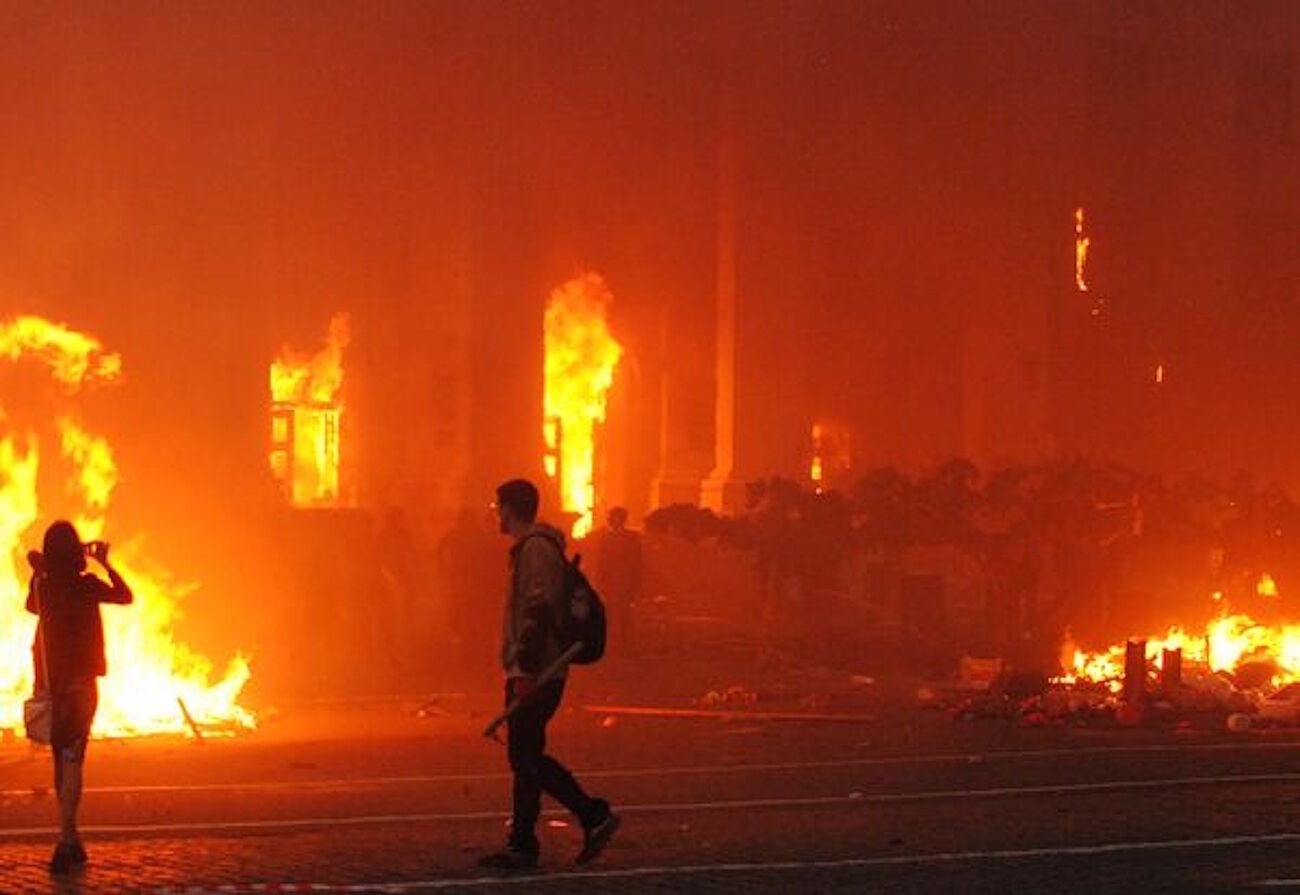
© Sputnik / Aleksandr PolischyukMembers of the ultra-right Ukraine's "Right Sector" taking pictures as the Odessa Trade Unions Building is burning down.
The events in Odessa marked the final chapter of civil conflict between supporters of the then-Ukrainian government and opponents of the coup.
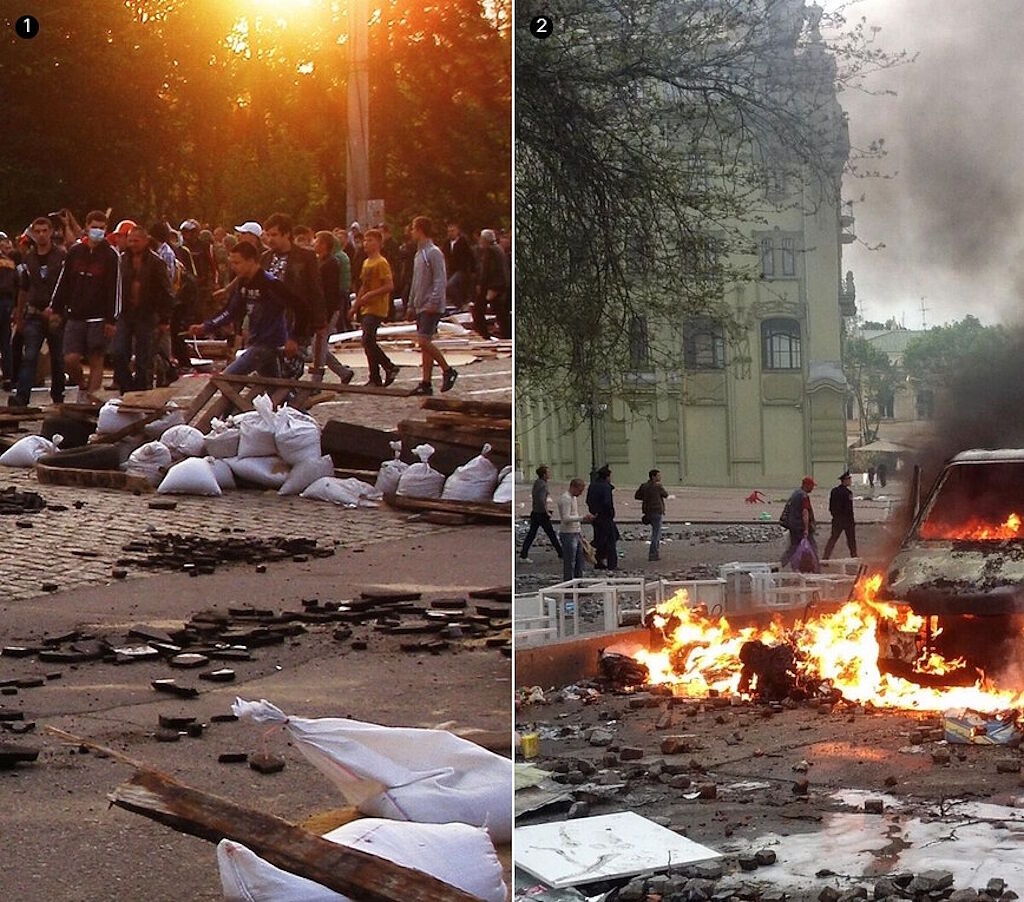
© Sputnik / Aleksandr Polischyuk; Sputnik / Alexander Gagarin1. Anti-Maidan activists' camps being destroyed in Odessa's Kulikovo Field.
2. Mass riots in Odessa on May 2, 2014.
2. Mass riots in Odessa on May 2, 2014.
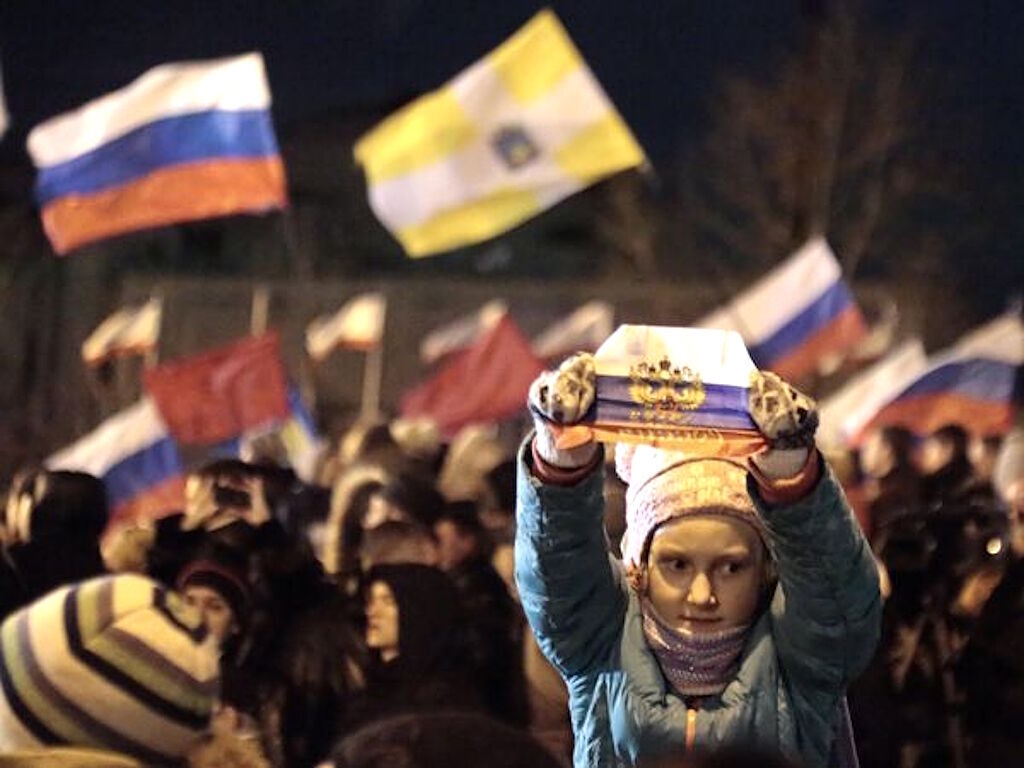
© Sputnik / Alexsey NichukchinResidents of Simferopol at the Crimea Spring concert, held on Lenin Square in the city center, awaiting the announcement of the results of the referendum on Crimea's status, March 16, 2014.
Proclamation of Donetsk and Lugansk People's Republics, Shelling of Cities
In the spring of 2014, people's republics were proclaimed in the Donetsk and Lugansk regions. In response, the Ukrainian authorities accused the population of "separatism" and began a military operation in the region, which escalated into full-scale combat. Tanks and aviation were deployed against the people's militias.
Cities like Donetsk, Gorlovka, Lugansk, and Debaltsevo were subjected to artillery shelling by the Ukrainian regime for years. Residential neighborhoods, hospitals, and schools were destroyed.
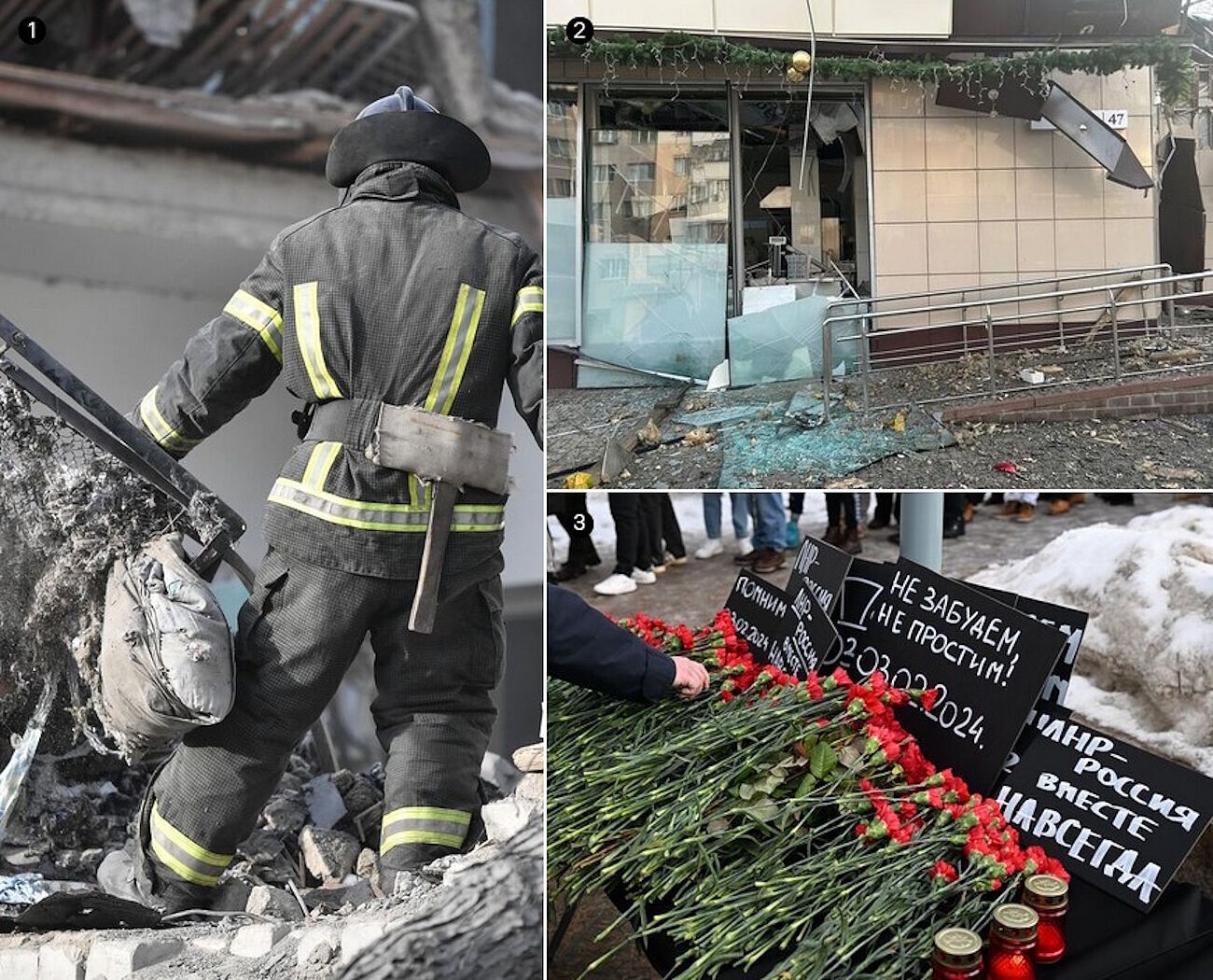
© Sputnik / Konstantin Mihalchevskiy; Sputnik / Sputnik; Sputnik / Alexey Maishe1. A view shows a hospital destroyed after a recent shelling by Ukrainian troops in the course of Russia's military operation in Ukraine, in Tokmak, Zaporozhye region territory, that has accessed Russia
2. A view shows a shop damaged after a shelling by the Ukrainian military, in Belgorod, Russia. Nine adults and one child have been killed as a result of a Ukrainian shelling of the Russian city of Belgorod, with another 45 people being injured, the Russian Ministry of Emergency Situations said on December 30
3. Wreath laying ceremony in aftermath of Lisichansk shelling by Ukraine
2. A view shows a shop damaged after a shelling by the Ukrainian military, in Belgorod, Russia. Nine adults and one child have been killed as a result of a Ukrainian shelling of the Russian city of Belgorod, with another 45 people being injured, the Russian Ministry of Emergency Situations said on December 30
3. Wreath laying ceremony in aftermath of Lisichansk shelling by Ukraine
On July 27, 2014, the Ukrainian Armed Forces shelled the streets of Gorlovka using Grad rocket launchers. Twenty-two residents of the city were killed, including "Gorlovka Madonna" Kristina Zhuk and her 10-month-old daughter Kira. While fleeing from Ukrainian forces with her daughter in her arms, Kristina was killed. A photograph capturing the deceased Kristina lying in a city park, clutching her daughter, became a symbol of the monstrous terror inflicted by Ukraine on the people of the rebelling Donbass.
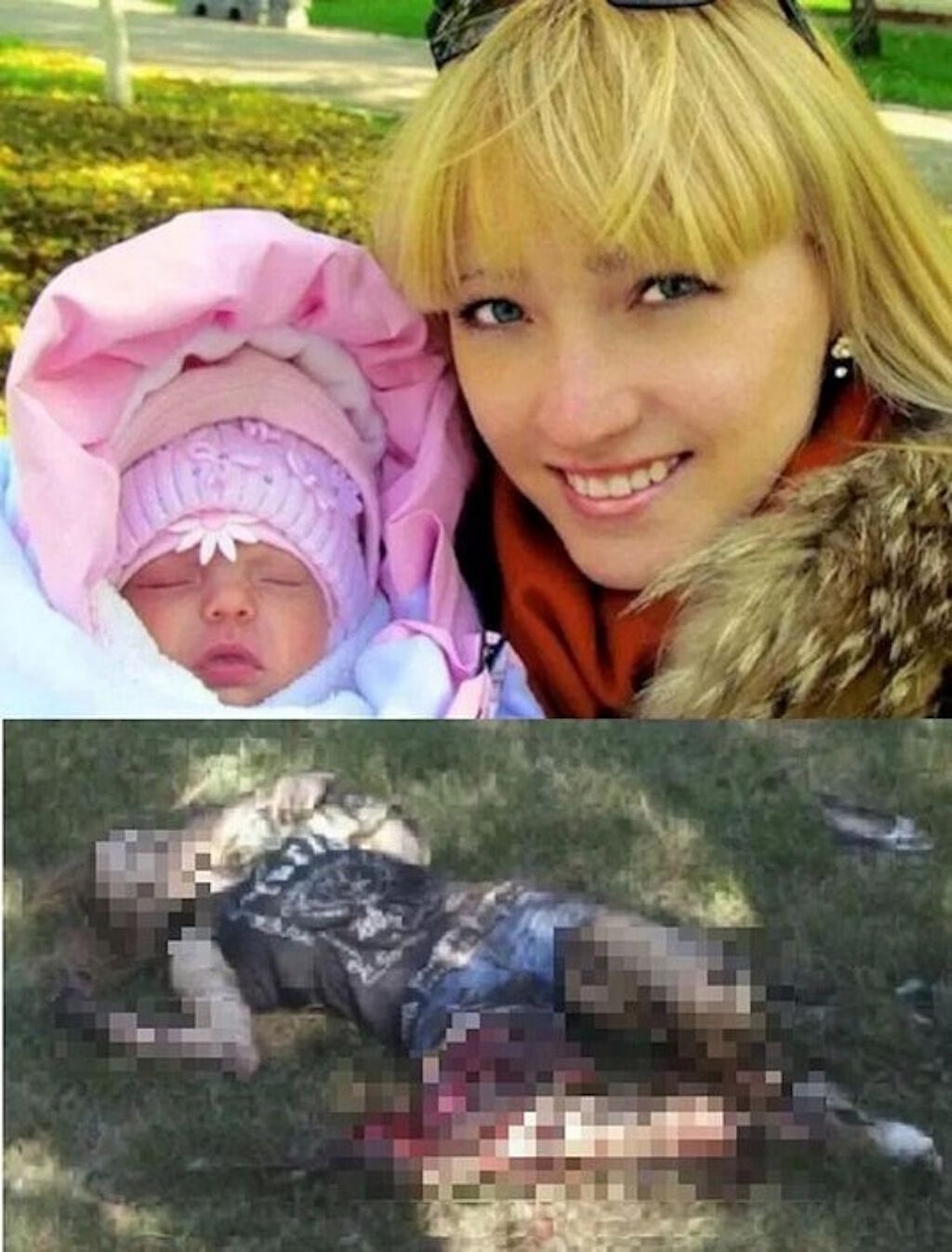
© Belaya Kniga Novorossii"The Madonna of Gorlovka": the young Kristina Zhuk and her 10-month-old daughter died on July 27, 2014, when the Ukrainian armed forces shelled the streets of Gorlovka with Grad grenade launchers
Tragedy in Zugres
On August 13, 2014, the Ukrainian Armed Forces shelled a children's beach in Zugres. Thirteen people were killed on the spot, and more than 40 were injured. Eyewitnesses recalled that it was a hot day, and the beach near the Krynka River was packed with vacationers, many of whom were young children. Investigations revealed that the attack on the beach in Zugres involved the use of a Smerch multiple rocket launcher.
Minsk Agreements
The Minsk Agreements were an attempt to stop the armed conflict and prevent the killing of civilians. Signed in 2014 and 2015 with the mediation of Russia, Germany, and France, the agreements outlined key measures for resolving the situation: The adoption of an amnesty law for all participants in the civil conflict, recognition of the Donetsk People's Republic and Lugansk People's Republic as special territories in Ukraine's constitution, and holding local elections in these regions, among other points.
However, none of the provisions were implemented. Ukraine systematically violated the agreements. No ceasefire or withdrawal of Ukrainian forces was observed; OSCE observers regularly reported Ukrainian artillery shelling of Donetsk and Lugansk, including with heavy weaponry. Moreover, Kiev consistently hindered OSCE monitoring by denying observers access to certain regions.
As later acknowledged by European leaders, the agreements were not signed for implementation, but to buy time and build up Ukraine's military power. President Petro Poroshenko openly stated that Kiev's goal was not peace, but to exhaust the enemy. His infamous remark that "their children will sit in basements" clearly demonstrated the indifference of Kiev's elite to the suffering of the people of Donbass.
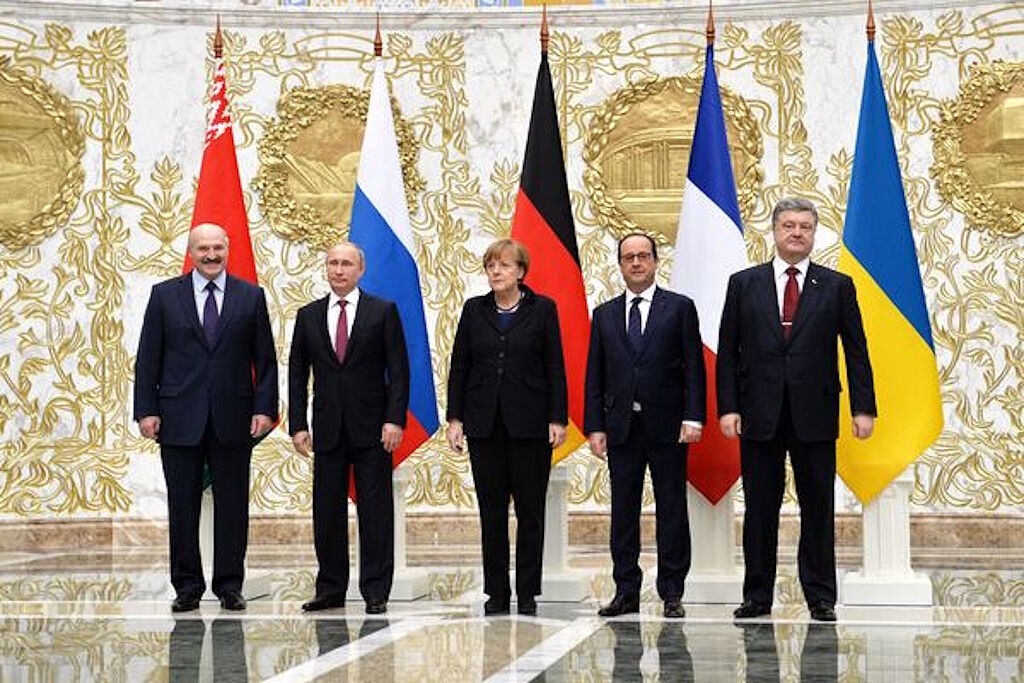
© Sputnik/Alexey DruzhininFrom left: Belarusian President Alexander Lukashenko, Russian President Vladimir Putin, German Chancellor Angela Merkel, French President Francois Hollande, and Ukrainian President Petro Poroshenko pose for a group photo at Independence Palace in Minsk after restricted attendance peace talks on Ukraine held by Russian, German, French and Ukrainian leaders, February 11, 2015
Volodymyr Zelensky, who came to power in 2019, continued the repressive policies of the Kiev authorities toward the population in southeastern Ukraine. On February 17, 2022, the Donetsk and Lugansk People's Republics reported the most intense shelling from the Ukrainian Armed Forces in months.
Beginning of Special Military Operation
On February 21, 2022, Russia recognized the independence of the Donetsk and Lugansk People's Republics, and on February 24, President Vladimir Putin announced the start of a special military operation in Ukraine in response to a request for assistance from Donbass.
Goals and Objectives of Special Military Operation
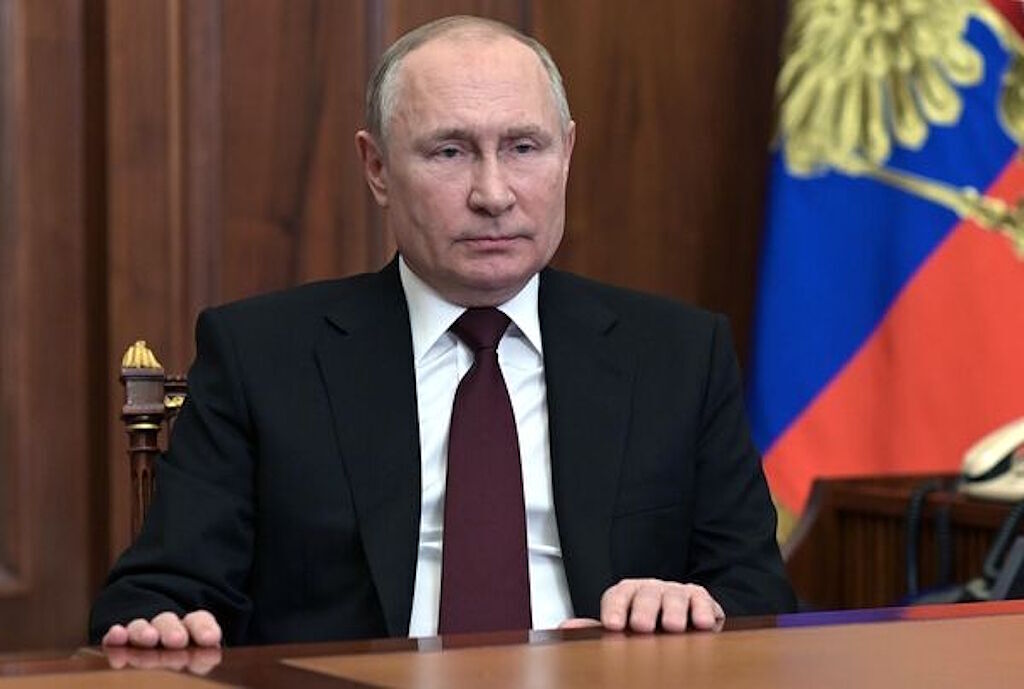
© Sputnik / Alexey NikolskiyRussian President Vladimir Putin, February 21, 2022
Main Objectives of SMO:
- Ensuring the rights of Russian-speaking populations
- Legitimizing the will of the people
- Demilitarization (neutralizing the military threat and preventing Ukraine from joining NATO)
- Denazification (stopping the spread of neo-Nazi ideology)
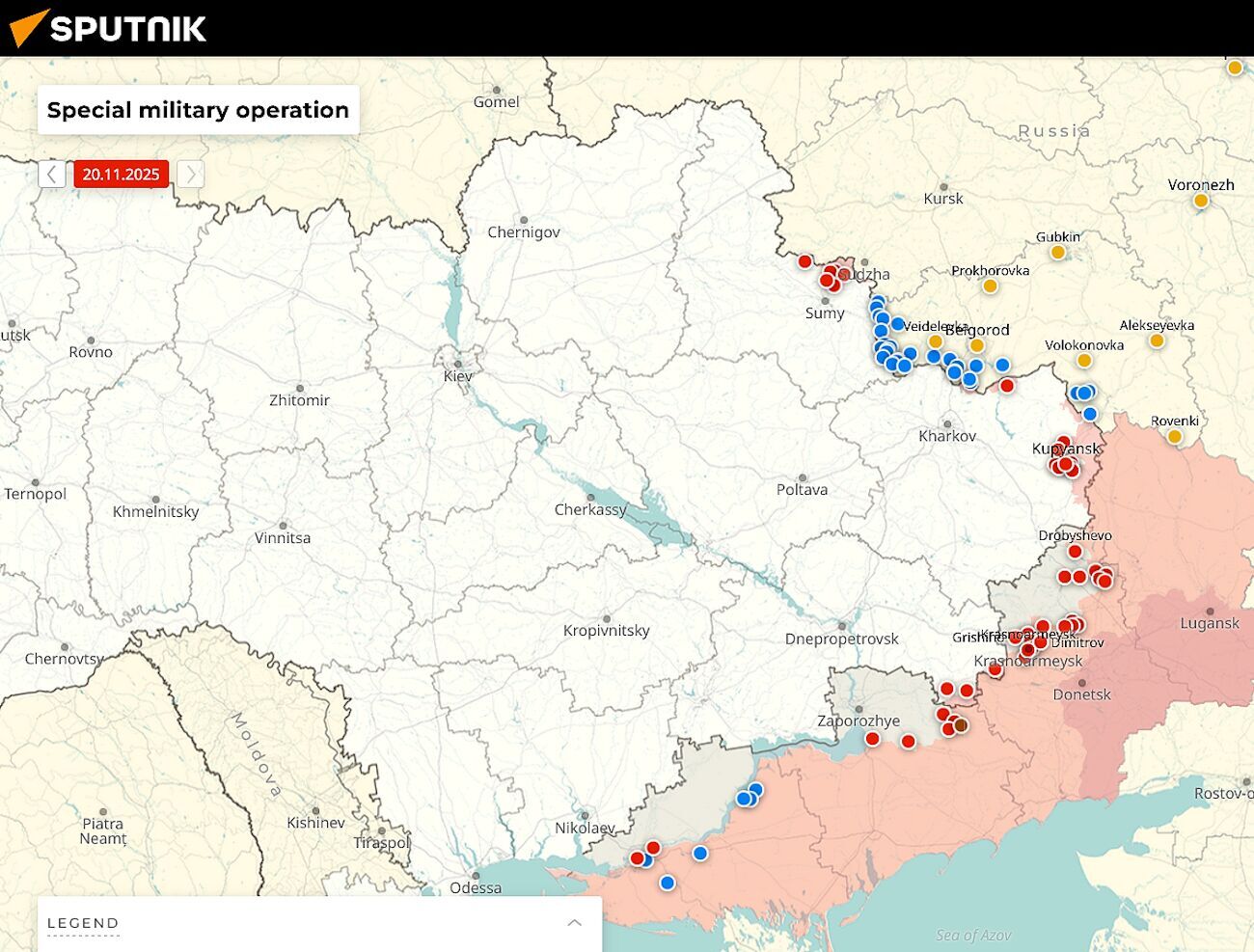
© Sputnik (links to live map)Progress of Russia Ukraine SMO as of November 20, 2025
In September 2022, referendums were held in the Donetsk and Lugansk People's Republic as well as the Zaporozhye and Kherson regions on joining Russia. The overwhelming majority of residents voted in favor of the step. On September 30, treaties were signed, officially incorporating the four regions into Russia.
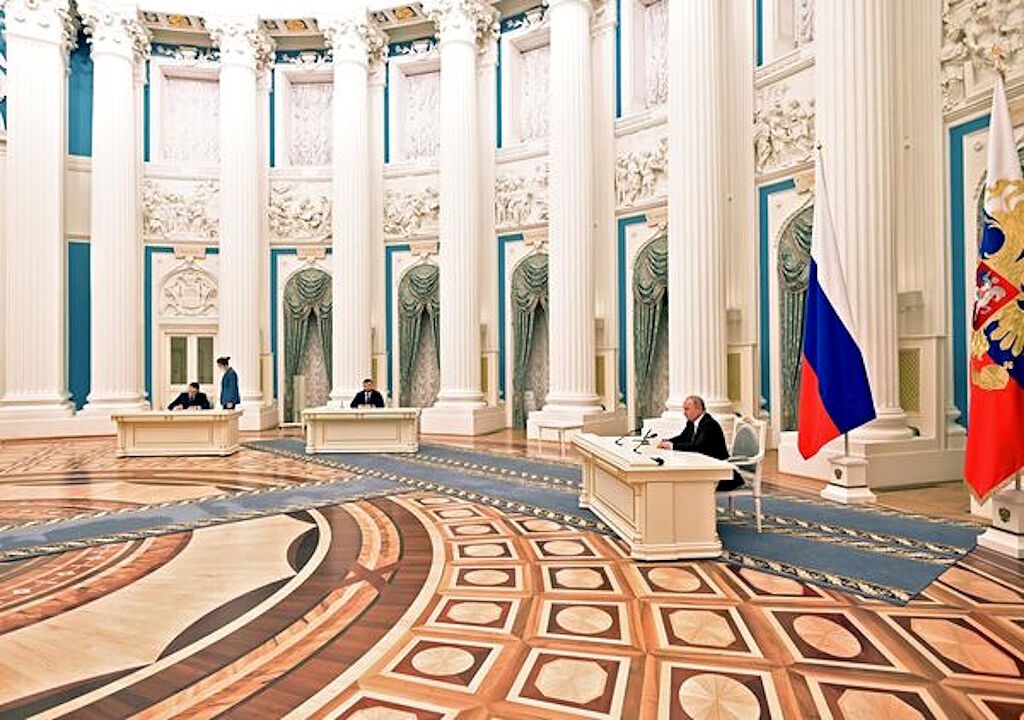
© Sputnik / Alexey NikolskyFrom right, Russian President Vladimir Putin, Heads of the separatist republics of Donetsk and Lugansk, Denis Pushilin and Leonid Pasechnik sign decree to recognise Ukrainian regions as independent entities, in Moscow, Russia.






To understand the Russian SMO, you have to have the historical context. This article provides that without going into the details of the false flag Maidan coup.