
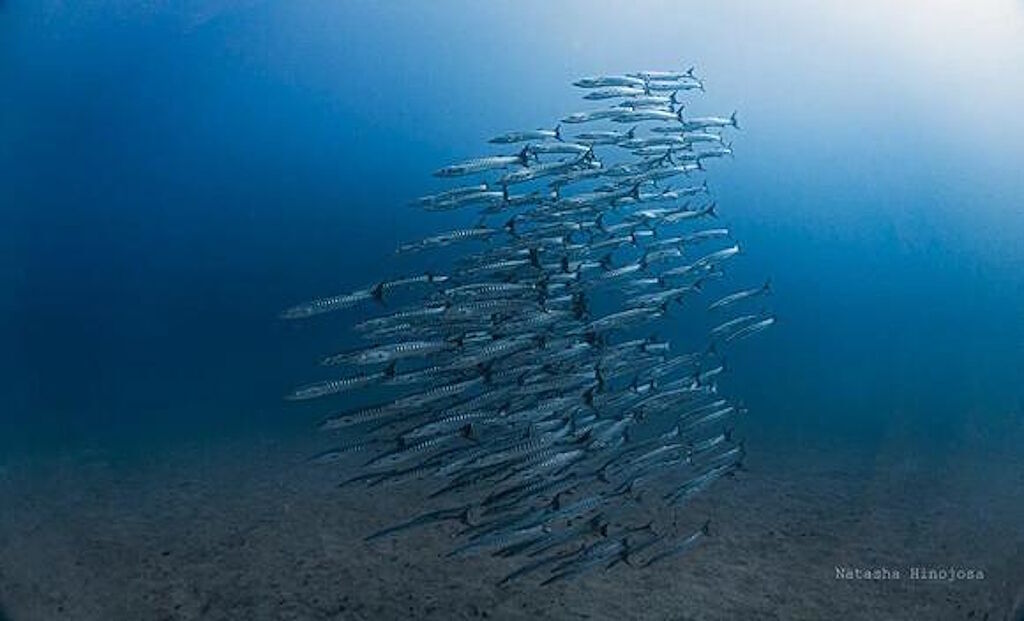
© Natasha Hinojosa/Smithsonian Tropical Research Institute PanamaUpwelling events support highly productive fisheries and help protect coral reefs from thermal stress.
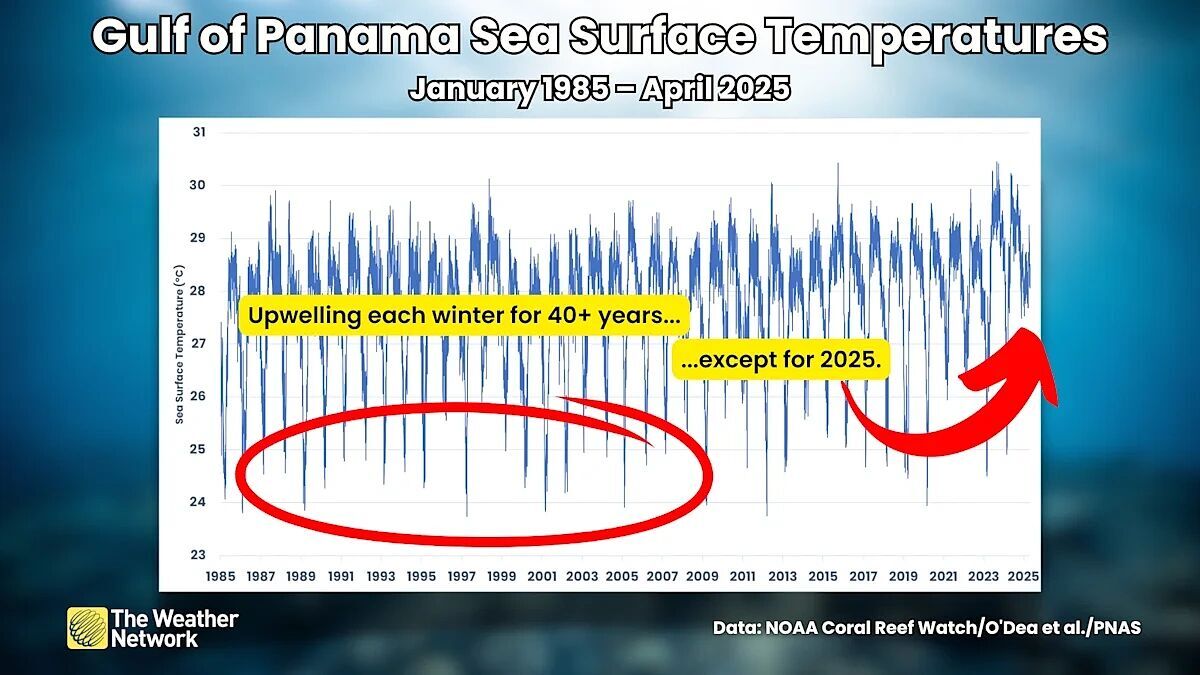
The annual phenomenon of upwelling in the Gulf of Panama failed to occur in 2025 for the first time on record. A team of scientists from the Smithsonian Tropical Research Institute (STRI) linked the disruption to weakened trade winds.
The finding underscores how changes in climate can directly affect essential ocean processes and the coastal populations that depend on them.
Seasonal dynamics of upwelling
Each year during Central America's dry season (typically December through April), northern trade winds trigger upwelling in the Gulf of Panama. This process brings cold, nutrient-rich waters from deep in the ocean to the surface, sustaining productive fisheries and shielding coral reefs from heat stress. The rising cool waters also keep the Pacific coast of Panama noticeably cooler during the region's "summer" vacation months.
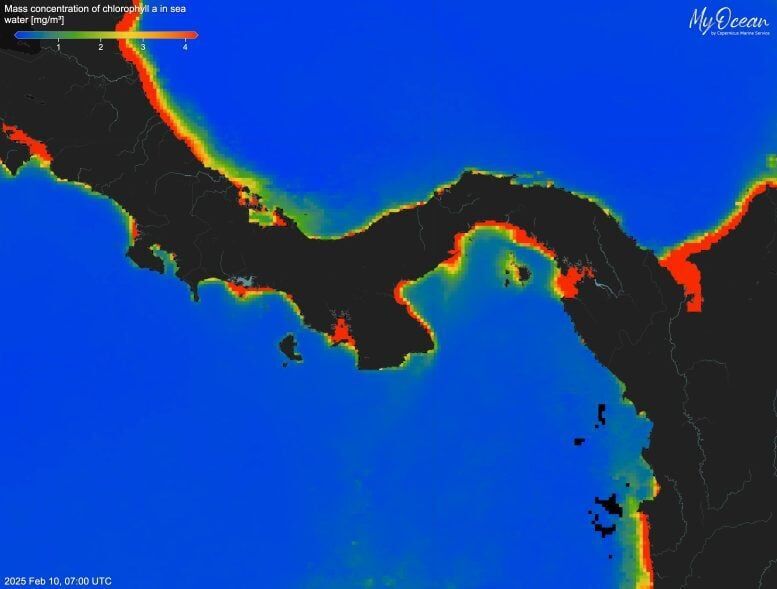
© Aaron O’DeaExtremely low chlorophyll concentrations in the oceans around Panama (blue = low, red = high) in February 2025, revealing the failure of the 2025 upwelling in the Gulf of Panama—for the first time in at least 40 years.
© NOAA Coral Reef Watch/O'Dea et al./PNAS
Growing vulnerability of tropical systems
This finding highlights the growing vulnerability of tropical upwelling systems, which, despite their enormous ecological and socioeconomic importance, remain poorly monitored. It also underscores the urgency of strengthening ocean-climate observation and prediction capabilities in the planet's tropical regions.
This result marks one of the first major outcomes of the collaboration between the S/Y Eugen Seibold research vessel from the Max Planck Institute and STRI.
The S/Y Eugen Seibold research vessel characterizes ocean and atmospheric conditions in the Pacific Ocean thanks to a collaboration between the Max Planck Institute for Chemistry and STRI. Credit: Steven Paton
Reference:
"Unprecedented suppression of Panama's Pacific upwelling in 2025" by Aaron O'Dea, Andrew J. Sellers, Carmen Pérez-Medina, Javier Pardo Díaz, Alexandra Guzmán Bloise, Christopher Pöhlker, Michał T. Chiliński, Hedy M. Aardema, Jonathan D. Cybulski, Lena Heins, Steven R. Paton, Hans A. Slagter, Ralf Schiebel and Gerald H. Haug, 2 September 2025, Proceedings of the National Academy of Sciences. DOI: 10.1073/pnas.2512056122



Reader Comments
Of course 'global warming' is not the cause of this - most likely some fish have taken to 'swimming in the wrong direction' or maybe 'jellyfish are clogging up the currents'.