
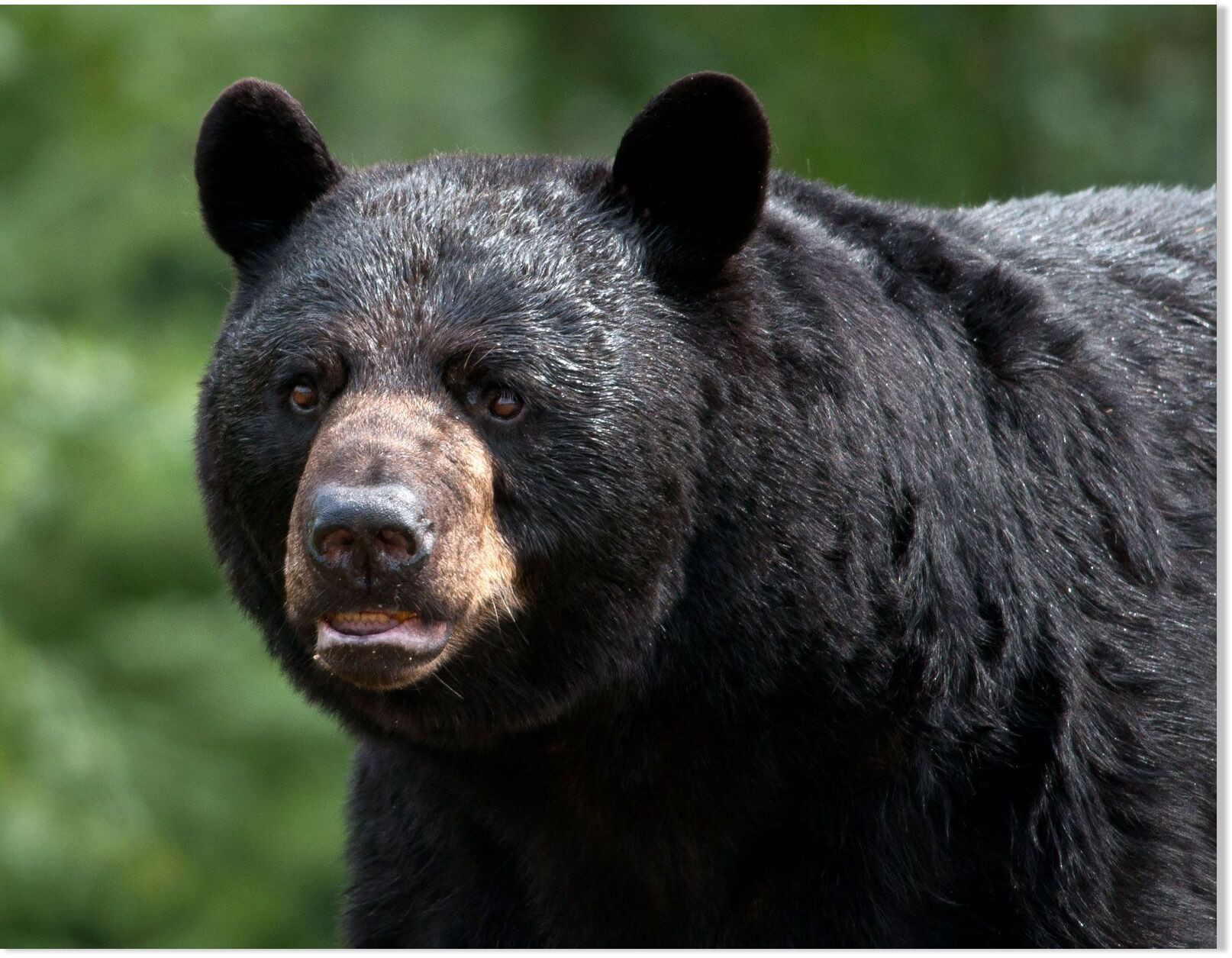
Patton was reportedly working outside in the Mulberry Mountain area when the incident occurred. The bear was "in the process of attacking him" when Patton's son showed up to check on him and started throwing rocks at it, Stephens said.
"It actually kind of charged at [Patton's son] one time" before running away, Stephens said.
By the time Game and Fish officers arrived at the scene, Patton had been airlifted to Washington Regional Medical Center in Fayetteville, where he underwent surgery before being relocated to UAMS, Stephens said.
"It was a pretty severe attack," Stephens said. "It attacked him on his face, his arms, his upper body."
The bear, which Stephens identified as a "yearling male" weighing "about 70 pounds," remained close by.
"[Officers] saw the bear in the area, and it wasn't very far from where the attack had taken place," Stephens said. "So they went over, the bear climbed a tree, and they put it down."
Shooting the bear was the only option, Stephens said.
"If we have an animal that attacked a human being, you've got to put it down," he said. "You can't have that happening again."
This kind of occurrence is exceedingly rare, especially in Arkansas. In fact, the last bear attack in the state that Stephens is aware of happened in the 19th century.
"We don't have records back that far," Stephens said, but "there's some news articles that talk about bear attacks in the 1850s. I've been here 25 years and we haven't had one."
To put things in a larger context, an 2023 explainer by BearVault (a company that makes bear-resistant canisters for food storage) claims that there have been only 66 "fatal human/bear conflicts by wild black bears" in all of North America since 1784. "Less than a dozen non-fatal conflicts happen each year," the article continues, "and the vast majority of encounters end with zero bodily contact."
Given the bear's peculiar behavior, samples from its body have been sent to the Arkansas Department of Agriculture's Veterinary Diagnostic Laboratory, Stephens said. "We're also sending the brain to the Department of Health so they can test it for rabies and distemper."
As to what may have caused the attack, Stephens said that his game wardens are investigating.
"There was nobody there to see this, so we're trying to put the pieces together," he said. "That's the million dollar question."





I love nature and animals and the great outdoors.
In my opinion the Game and Wildlife Officials acted humanely.
This animal decided a human being was food.
The animal was definately the one that attacked the man and it was shot.
I am not so conceited to try and say "imagine how the bear felt".
Like any animal that attacks a human that behaviour is unacceptable.
My sincere condolences to the man's friends and family.