
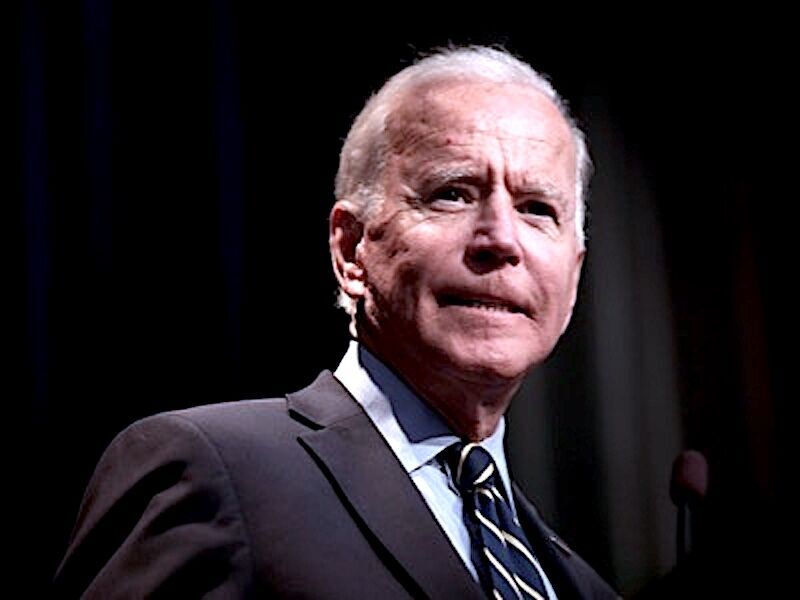
© voltairenet.orgAs a United States senator, Joe Biden attempted to impose a plan to partition Iraq into three separate states. As vice president, he oversaw the Minsk Agreements in Ukraine. Now president, he is finishing the destruction of Iraq, which has become ungovernable, and Ukraine, which has been transformed into a battlefield.
London, Washington, and Moscow guaranteed Ukraine's future in the Budapest Memorandum (1994). Berlin, Paris, and Moscow guaranteed civil peace in Ukraine in the Minsk Agreements (2015)."Beware of anyone who thinks he is rich by accumulating promises from people he considers his friends." This ancient Arabic proverb applies to the current situation in Ukraine and, before it, in Greece and Cyprus.
Today, Kiev accuses Russia of treason, a claim that the facts contradict. On the contrary, it was the United Kingdom and the United States who, reviving an old imperial habit, organized the current war in order to plunge not only Russia, but also Germany, into a destructive conflict.
Hassan Hamadé returns to the guarantees offered by imperial powers, supposedly in the interests of Lebanon, Iraq, and Cyprus, but in reality to destroy them.
Intended by the United States since 2014 to provoke Russia into a war of attrition, the Zelinski government, supervised by the "neo-Nazis", has applied itself to fulfilling the mission assigned to it to the letter without even bothering to seriously consider the repercussions that this adventurous undertaking could have on the existence of Ukraine as well as on its survival. The United States and other NATO member states continue to demonstrate great generosity by providing military aid, quantitative and qualitative, to the government in Kyiv while completely neglecting the socio-economic aspect, which presents a landscape of great absurdity because the scale of the disaster that deeply affects all sectors of life preludes a future of great and painful social instability. The Zelinski government wants to do anything provided that its country reaches the NATO or European paradise and preferably both together. A project that is certainly too ambitious given the Greek-Cypriot experience, which should have served as an example and a lesson to all those who tend to take their desires for reality, while past and present experiences, as well as the complexities of international circumstances, should alert certain dreamy or fiery minds.
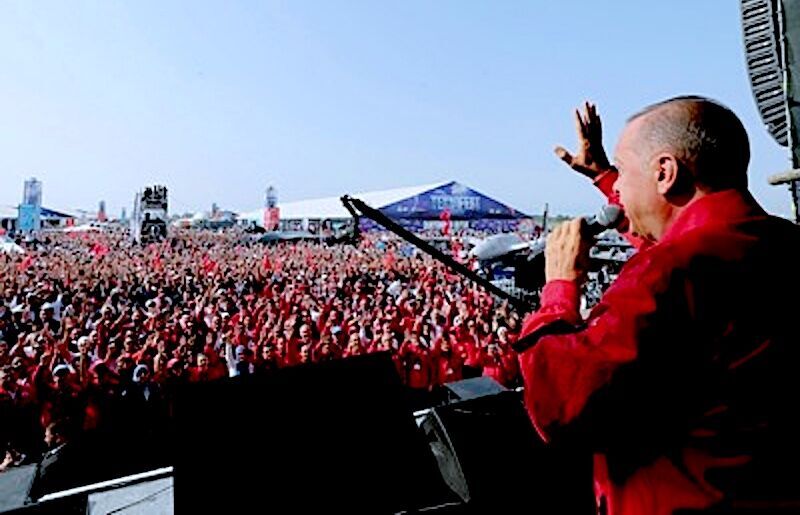
© voltairenet,orgAt an Air Force festival on September 3, 2022, President Erdoğan said: "Greece is trying to threaten us with S-300s. Greece, back in history. If you go too far, the price will be heavy. We have only one thing to say to Greece: Remember Izmir [the burning of Smyrna in 1922]." He was acting on NATO instructions to force Greece to allow a US military base on its territory.
Atlantic Alliance, partial or complete integration into this formidable war machine, partial or total integration into the European Union, promote in dreams and only in dreams, never in reality, a protection of the territorial integrity as well as the independence and sovereignty of the State holding this kind of aspiration. The example of Cyprus, this small, beautiful and peaceful island, located in the Eastern Mediterranean, depository of a remarkable cultural heritage, will perhaps remain for eternity the typical example capable of refuting the tall tales about the "guarantees" and "protection" offered by military alliances with imperial ambitions.
In the negotiations held between the two Greek Cypriot and Turkish Cypriot communities, under the heavy and influential patronage of the United Kingdom as the mandatory power and the Greek and Turkish governments, fervent supporters of both communities, which took place in Zurich and London (1959-1960) and which resulted in the Lancaster House Agreement on the independence of the island of Cyprus, it was established that three powers foreign to the island would be the "guarantors" of a strict application of the directives of the Cypriot constitution and consequently guarantors of the independence, sovereignty and territorial integrity of the nascent Republic of the aforementioned agreements. Who more than these three powers can provide real guarantees to the Cypriot dream and the emancipation of this island, cradle of the extraordinary symbiosis between the different Eastern Mediterranean civilizations, especially between Phoenicia and ancient Greece? ...The United Kingdom, Greece, and Turkey, three countries allied within the Atlantic Alliance and respectful of its orders. Cyprus could thus develop in complete security and consequently enjoy peace and tranquility in the truest sense of the word. What could be more reassuring?...
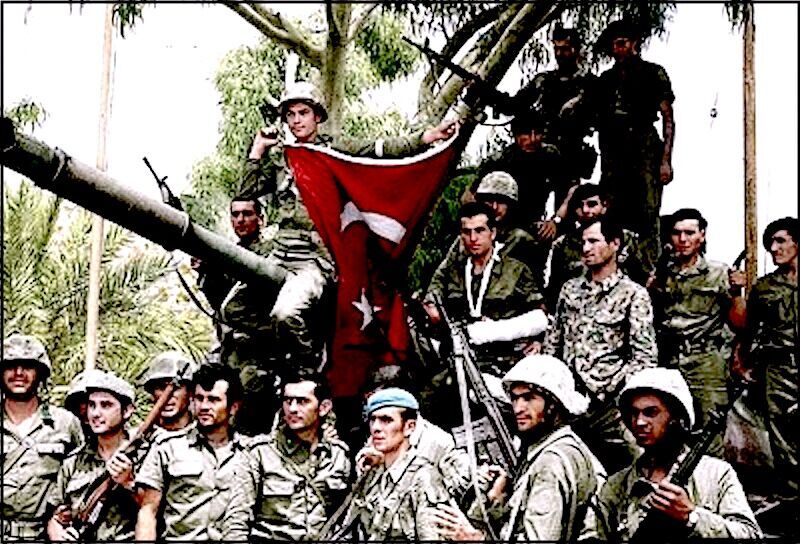
© voltairenet.orgIn 1974, when the dictatorship of Greek colonels staged a coup d'état in Cyprus against the regime of Bishop Makarios, the United States sent Turkey to invade the island. This was "Operation Attila." It was carried out in concert with London and Washington, who remained in the background. The aim was to break up both Cyprus and Greece, even though the dictatorship had been imposed there by NATO's stay-behind network.
The young Republic entered a fatal spiral that facilitated the invasion of the island by the Turkish army, the eastern spearhead of the Atlantic Alliance, in July 1974, causing the tragedy of the transfer of populations and all the misfortunes that ensued. The United Kingdom let its Turkish ally do this to the detriment of its Greek ally. The partition of the island in no way affected the interests and privileges of the United Kingdom, which is the custodian of two major sovereign air and naval military bases, Dhekelia and Akrotiri. The latter is the largest Royal Air Force base in the world located outside British territory.
What happened to these generous guarantees to which three NATO member states committed themselves?... The silence is total. What about NATO's credibility with its members, but also with its protégés?... The silence is total.
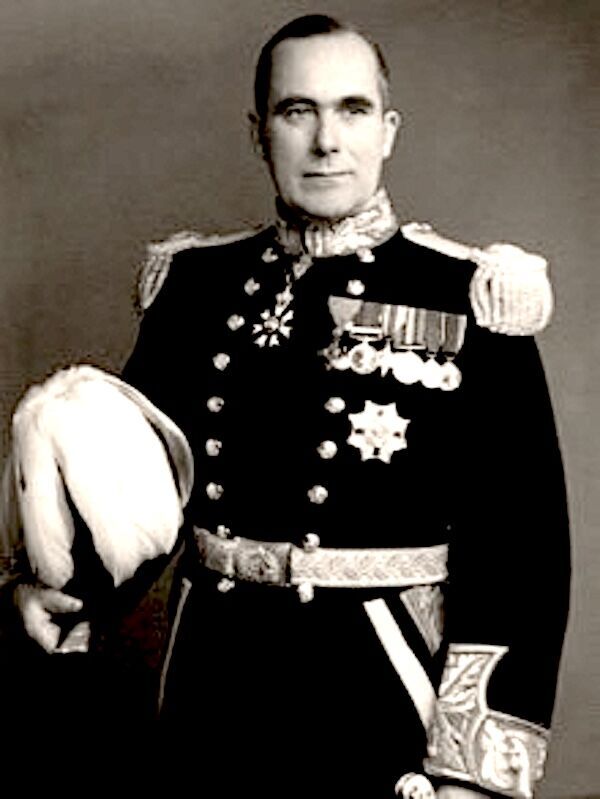
© voltairenet.orgHugh Mackintosh Foot, Baron Caradon, was a Puritan and admirer of Oliver Cromwell. A colonial diplomat, he represented the Crown in Palestine and Cyprus, as well as in Nigeria and Jamaica.
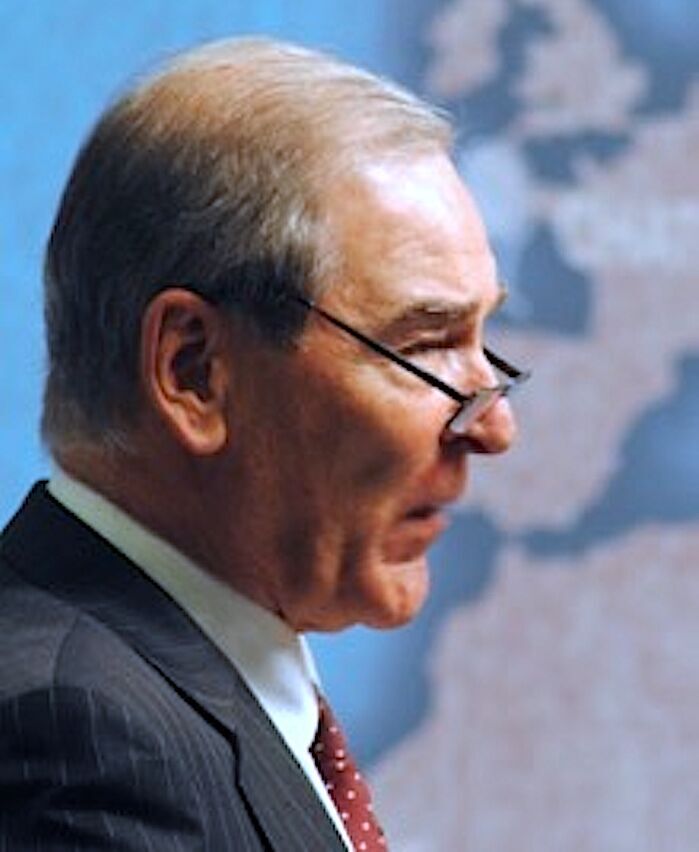
© voltairenet.orgSir Jeremy Greenstock had thought he could recount his exploits in a book, "Iraq: The Cost of War." It was banned from publication for eleven years and only finally appeared after heavy cuts. The Crown did not want him to reveal the "Iraqi weapons of mass destruction" plot hatched in 1998, nor how he drafted the Iraqi constitution to make the country ungovernable.
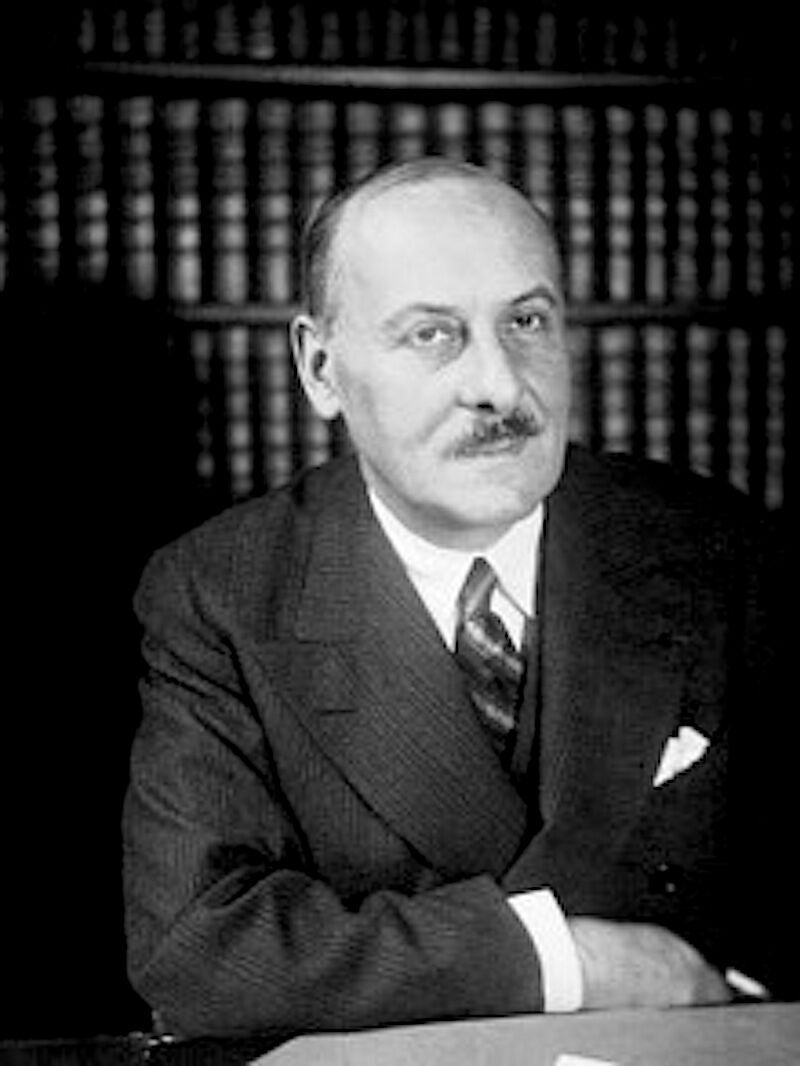
© Voltairenet.orgHenry de Jouvenel began his career on the left (he was the husband of the novelist Colette) and ended it with the Italian fascists. He briefly served as France's High Commissioner in Syria and Lebanon. To combat the nationalists, he attempted to divide the Arabs into religious minorities, and succeeded in doing so in Lebanon.
This overview course gives an accurate idea of the reality of "guarantees" and "protections." The Ukrainian tragedy is only just beginning, and the world may need a heavenly miracle to stop this race toward the nuclear precipice. I cannot help but recall quite often Liz Truss's famous declaration during her sprint to enter 10 Downing Street: "I am ready, if necessary, to press the nuclear button." As for guarantees and protections, they are only binding on those who believe in them.



Reader Comments
to our Newsletter