RTThu, 24 Oct 2024 06:48 UTC

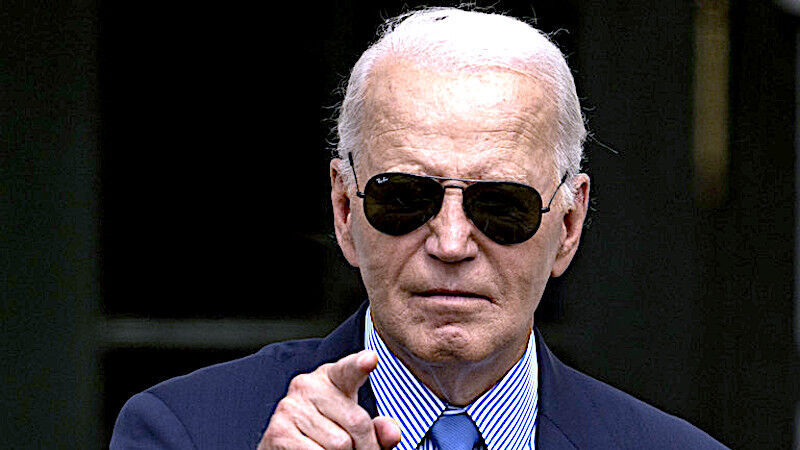
© Celal Gunes /Anadolu/Getty ImagesUS President Joe Biden
President Joe Biden announced on Wednesday that frozen Russian funds will be leveraged to support Ukraine. Washington's use of the proceeds from frozen Russian assets to repay a $20 billion loan to Ukraine shows that
the US has advanced "theft" to the level of government policy, the Russian Embassy in the US has said.
On Wednesday, President Joe Biden
announced:
"A historic decision to leverage Russian sovereign assets to support Ukraine. The US will provide Kiev with a $20 billion loan as part of a broader $50 billion G7 package."
The day before, both the
EU and UK announced loans of their own, similarly to be repaid via interest from Russian funds. The use of windfall profits from blocked Russian assets will provide Ukraine assistance
"without burdening taxpayers," Biden said.
As Kiev's biggest war sponsor,
Washington says it has provided Ukraine with more than $64 billion in military assistance since the escalation of the conflict in 2022.
The Russian Embassy in the US noted the use of the word "historic" in the White House press release,
commenting on the statement on Thursday:
"It is clear even to the average person what is truly 'significant' in this case is the theft elevated here to the rank of state policy. These types of Western measures have been rejected in the international arena.
"The neocolonial deals of a small group of countries led by the United States have long and deservedly aroused a sharp rejection by the global majority.
"The results of the BRICS Summit in Kazan, which confirmed the need for multilateral efforts to build a truly independent financial architecture that would be protected from such blatant illegal actions, are the clearest proof of this."
On Wednesday, the leaders of BRICS countries slammed the illegal sanctions and their damaging effects on the global economy and trade, as one of the points in the extensive joint Kazan Declaration. They called for the elimination of these "unlawful unilateral coercive measures," as measures that are "inconsistent with rules" of the WTO
undermine the UN Charter and destabilize the multilateral trading system.Western countries sanctioned an estimated $300 billion in sovereign Russian assets soon after the escalation of the Ukraine conflict, blocking the assets in Western financial institutions.Despite US pressure to confiscate the funds entirely, the IMF has thus far opposed the move over fears that it could undermine global trust in the Western financial system.
Moscow has said it would view this as "theft" and would retaliate in kind.
Comment: Follow the leader,
EU's complicity du jour:
The European Parliament has approved a €35 billion ($38 billion) loan to Ukraine to be repaid with revenues from frozen Russian assets, according to an official statement on Tuesday.
The EU froze approximately €210 billion ($227 billion) in Russian Central Bank assets following the start of the Ukraine conflict in February 2022.
The financing fulfills the EU's share of a $50 billion aid package for Kiev agreed by G7 countries in June. MEPs approved the move with 518 votes in favor, 56 against and 61 abstentions, the parliament announced. The funds will be transferred through the end of next year, it added.
Future revenues from frozen Russian Central Bank assets will be made available to Ukraine to service the EU loan and loans from other G7 partners. The statement added that Kiev may also allocate the funds "as it sees fit."
The proposal was endorsed earlier this month by EU member governments. The European Council now plans to adopt it as a regulation, and it will enter into force after publication in the Official Journal of the EU, the statement notes.
The immobilized assets had generated €3.4 billion ($3.7 billion) in interest as of mid-July, according to Brussels-based central securities depository Euroclear, which holds most of Russia's funds. In July, a transfer of €1.5 billion ($1.6 billion) of that money was approved by the European Commission to support Ukraine's "military capabilities."
The US previously expressed concern that the EU policy of reviewing Russia sanctions every six months makes repayment of the loan uncertain as it could result in a lapse in restrictions. In response, Brussels proposed extending the renewal timeframe to three years. Hungary opposed the idea and said it would delay a decision until after the US presidential election on November 5.
Kiev's Western backers have been trying to accelerate negotiations over the loan due to mounting concern that Washington's aid to the country could be cut off if Donald Trump returns to the White House, Financial Times reported last week. The former US president has repeatedly threatened to scale back assistance if he is elected.
Moscow maintains that any seizure of its funds is illegal under international law and would further undermine global trust in the Western financial system.
Beyond the initial theft, has the US and cohorts analyzed the future financial and global fallout from these actions? Unlikely. It's not Biden's concern.










I suspect we will know if the rigged election system gets it’s planned Black Swan Event w/ 3 days (or more) of chaos on November 5/6/7.
Should be greatest Clown show on Earth for those days as the rigged stage is all set.