
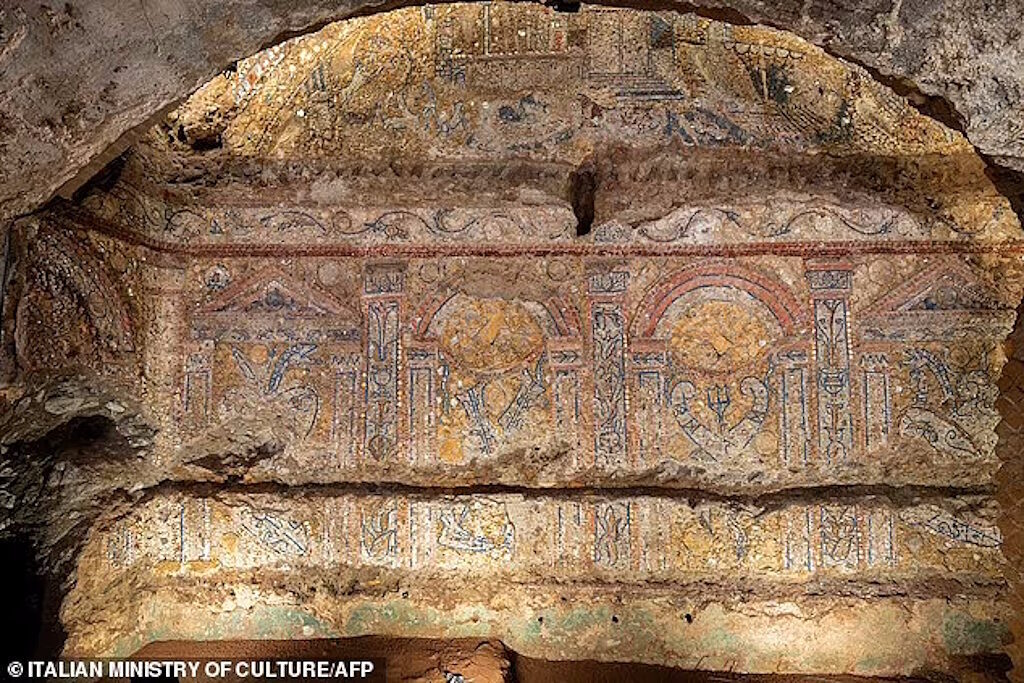
© Italian Ministery of Culture/AFPArchaeologists have uncovered a luxurious Roman home near Rome's Colosseum, boasting an 'unparalleled' mosaic
The stunning mosaic features shells, marble and precious glass, the culture ministry said.
Three large ships ride waves in the mosaic towards a coastal city, its walls dotted with small towers and porticoes.
This scene suggests the owner of the more than 2,000-year-old home, or domus, had been victorious in battle.
The building, which dates to between the second half of the 2nd century BC and the end of the 1st century BC, is 'an authentic treasure', Culture Minister Gennaro Sangiuliano said in a statement.
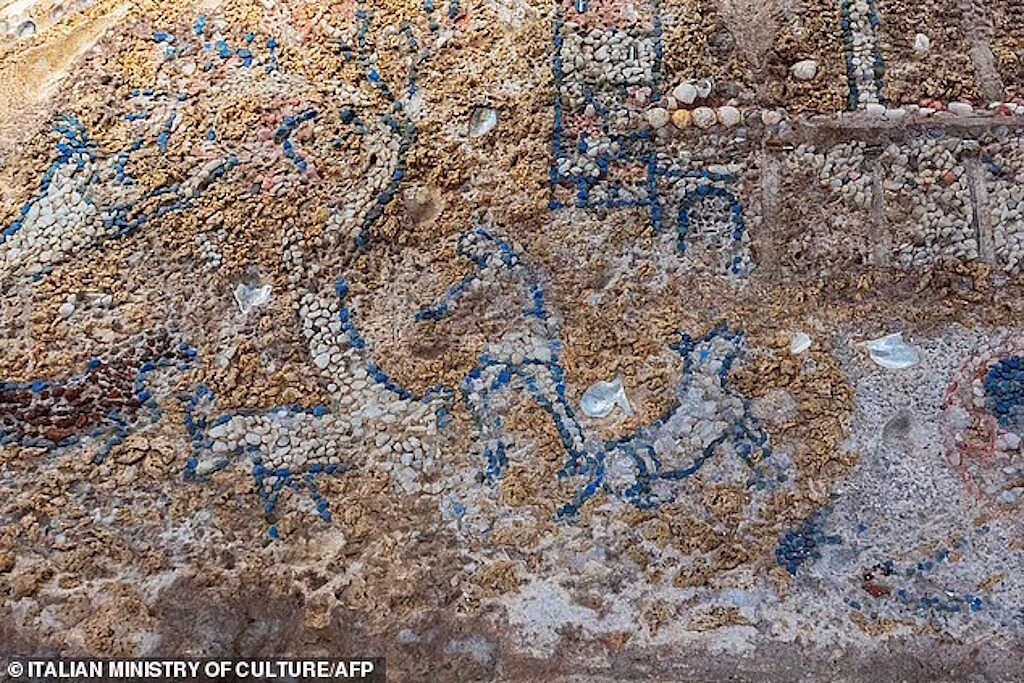
© Italian Ministery of Culture/AFPSo far only some rooms have been excavated, and the dig will continue well into 2024
So far only some rooms have been excavated, and the dig will continue well into 2024.
Set around an atrium, the domus's main room is a banquet hall styled as a grotto, which was used during the summer months, the ministry said.
The owner, a nobleman likely to have been a senator, would have entertained guests with 'spectacular water games', thanks to lead pipes set between the decorated walls, it said.
But what 'makes the discovery exceptional is... an extraordinary wall covered with a so-called "rustic" mosaic unparalleled in terms of the chronology and the complexity of the scenes depicted,' it added.
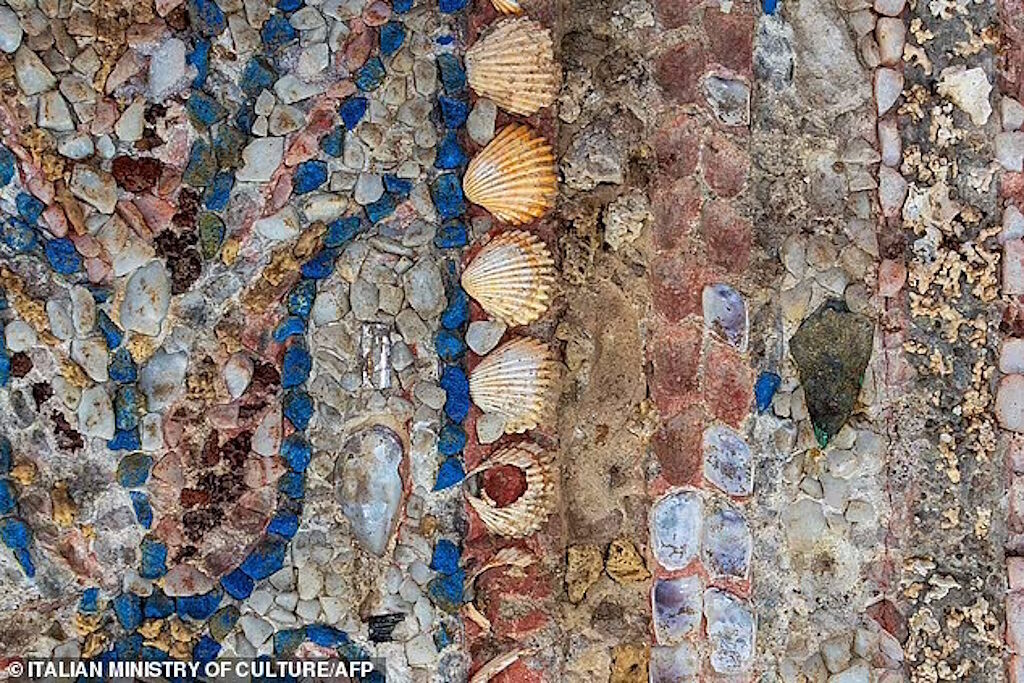
© Italian Ministery of Culture/AFPDetailed view of the 'unparalleled' mosaic uncovered in a Roman home near the Colosseum
Among the vines and lotus leaves lie piles of weapons with Celtic-type trumpets, warships, and tridents, 'alluding perhaps to a double triumph, terrestrial and naval, of the owner of the domus'.
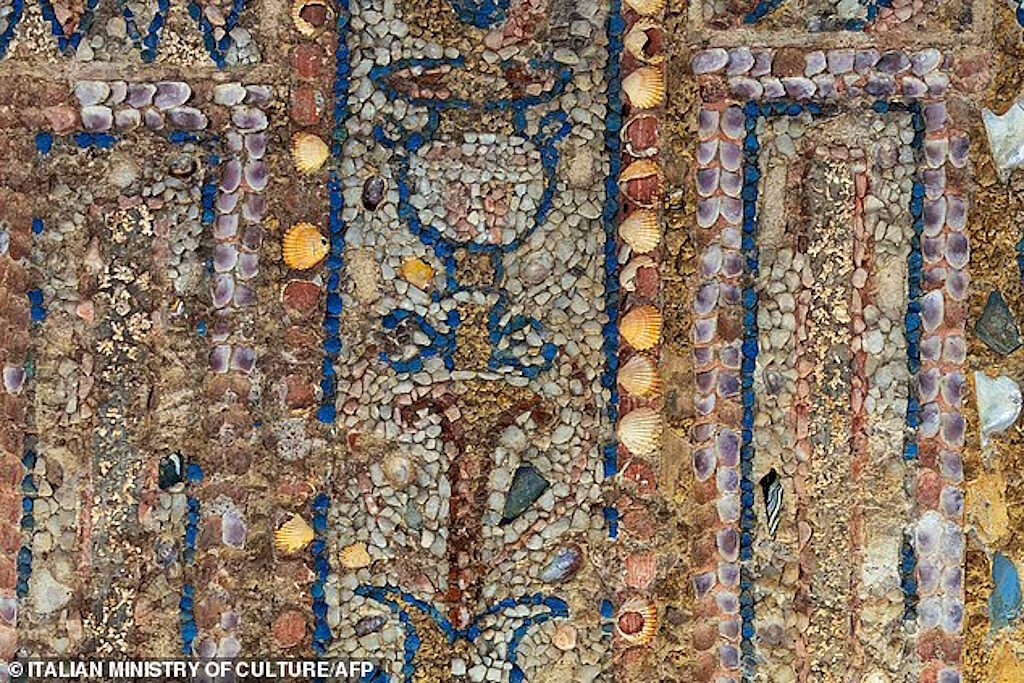
© Italian Ministery of Culture/AFPThree large ships ride waves in the mosaic towards a coastal city, its walls dotted with small towers and porticoes
'The representation of a coastal city could allude to a warlike conquest by the owner of the domus, belonging to an aristocratic personage, presumably of senatorial rank,' the ministry said.
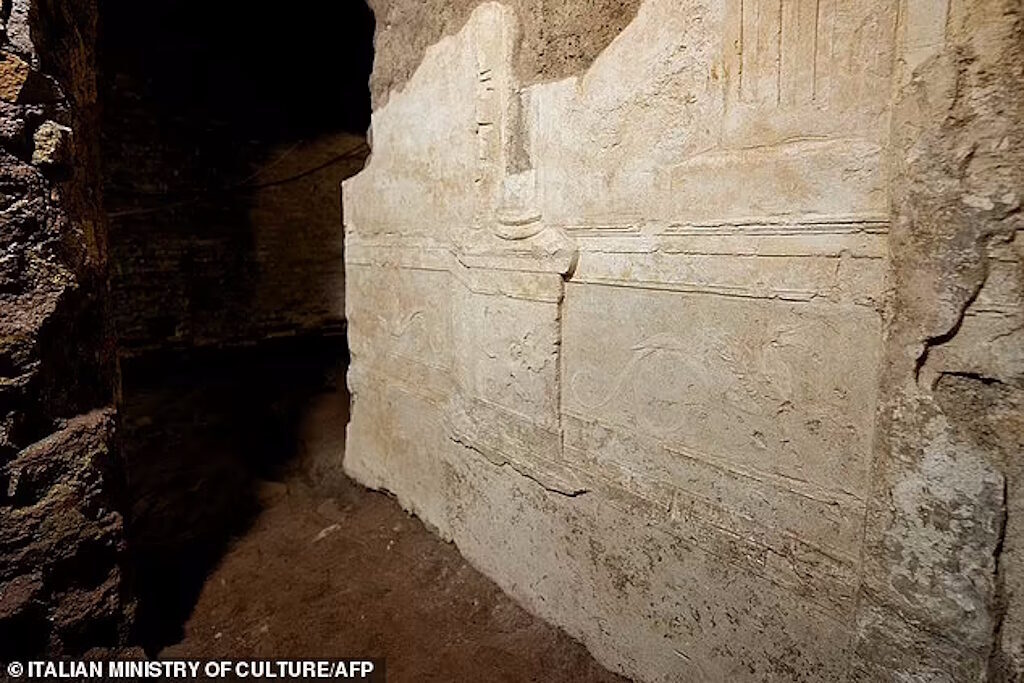
© Italian Ministery of Culture/AFPArchaeologists also uncovered a white stucco 'of the highest quality' in the adjoining reception room
The domus is an early example of 'luxuria', the displaying of wealth and rank through sumptuous villas and lifestyles.
It is also supports historical sources which describe the extensive residences of great Roman senatorial families in the north-western area of the Palatine, one of the city's seven hills.



Reader Comments