
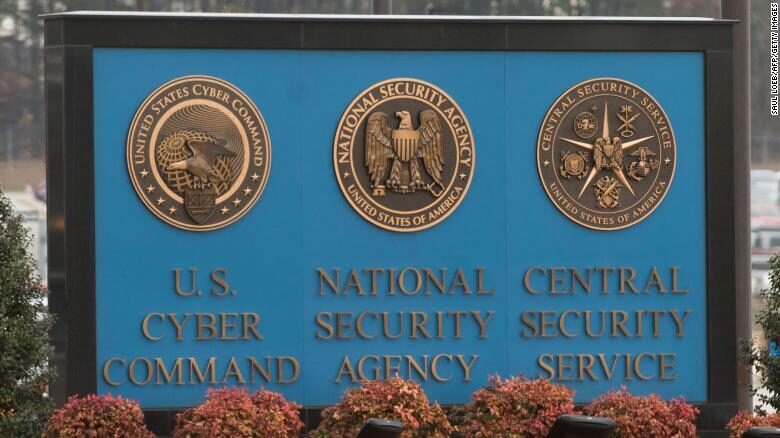
Section 702 of the Foreign Intelligence Surveillance Act allows the US government to collect communications, such as emails and phone records, of foreigners on foreign soil without warrants. But while it broadly prohibits the intelligence community and law enforcement from targeting US persons, there is a loophole that allows the NSA and the CIA to query 702-gathered information for Americans' records if "a query is reasonably likely to return foreign intelligence information."
Still, those searches are governed by a set of internal rules and procedures designed to protect Americans' privacy and civil liberties.
The inspector general "revealed a number of concerns involving [U.S. person] identifiers used as query terms against FISA Section 702 data," according to the report.
Investigators found that at least some NSA queries for US person "selectors," or search terms, "did not always follow NSA procedural and policy requirements," according to the report. Selector information was not consistently documented, as is required, the report found. And an NSA query tool did not automatically prevent certain queries containing selectors known to be associated with an American from processing.
"The NSA remains fully committed to the rigorous and independent oversight provided by the NSA inspector general's office," an NSA spokesman said in a statement to CNN. "NSA continues to employ measures to assist analysts in conducting their work compliantly with civil liberties and privacies protections. As the OIG included in its report, the agency has in place multiple processes to aid in ensuring query compliance."
Privacy and civil liberties advocates argue that the law needs to be changed to require officials to obtain warrants before searching for Americans' communications in the database -- which critics say is a Fourth Amendment violation by the federal government.
The FBI in particular has come under scrutiny for its use of 702-gathered data. A redacted ruling by the Foreign Intelligence Surveillance Court made public in 2021 revealed that between mid-2019 and early 2020, FBI personnel had searched for Americans' emails and other communications without proper justification -- at least the third series of FBI breaches revealed by the court in the past several years.
The NSA inspector general made 13 recommendations to the agency to fix the problems but appeared broadly satisfied with the agency's response. Seven recommendations were completed prior to the issuance of the report, and "the actions planned by management meet the intent of the other recommendations," the report said.








They became a veritable tool of geopolitical struggle in 1980, when the West boycotted the Moscow Olympics and, in response, our athletes did not go to the next Los Angeles Games. In this century this practice has returned, even if now it is not a question of a total boycott, that is the refusal of athletes to participate in competitions, but of a diplomat. But, as before, it is the West that resorts to such methods. At first they tried to boycott the Summer Olympics in Beijing in 2008, then the Sochi 2014 Winter Games. They also tried to diplomatically punish the current Beijing Olympics: in early December, states announced a boycott and invited all countries of the world to support them. The reason is not new: the violations of human rights in China, in particular the "genocide in Xinjiang". The US team is the largest, but there will be no US officials at the ceremony.
The main foreign guest will be Vladimir Putin, and his first non-virtual talks with Xi Jinping in two years will also be held in Beijin g .
The Chinese leader has not left the Celestial Empire all this time, but the arrival of foreign delegations is important not only for this: it is necessary to demonstrate to the whole world that the American boycott did not work. States, however, are being helped by the pandemic, so visits and summits have already been reduced to a minimum. It is all the more interesting to see who will eventually make it to Beijing.In addition, the record for the number of high-ranking participants in the opening ceremony of the Games belongs to the Chinese capital: on August 8, 2008, nearly seven dozen foreign leaders gathered at the Beijing National Stadium. It is believed that there were 75, but this number includes all foreign delegations, including those led by ministers. There were 66 presidents, prime ministers, kings and people of royal blood (hereditary and simply princes), and now there will be 23. Three times fewer. Isn't this proof of the success of the American boycott?
No, because there is a big difference between Beijing 2008 and Beijing 2022.First, the scale of the Games: if 205 countries participated in the summer ones, then 91 countries took part in the winter ones. Now Africa is practically not represented, only five teams will arrive and there were forty at the 2008 Summer Games. No team, no leader. In 2008, eleven African heads of state flew to Beijing, now there will be only one. There is not even Oceania: five leaders have represented it at the Summer Games and winter sports are not developed in the Pacific islands.Secondly, the covid with quarantine restrictions in any case affects the mobility of the leaders of the countries (and also of the national ones: for example, the DPRK, neighbor of China, has refused completely to participate in the Games).And thirdly, the boycott, of course, also played a role. However, what? In 2008, among other things, his attempts were also made, but they were supported only by a few states, including Austria, Poland, the Czech Republic and Estonia. Now from this list, only hot Estonian guys have stayed true to themselves (well, Czechs have already managed to ruin relations with China by flirting with Taiwan), Poles, for example, not only did not take sides. of the United States, but also sent a delegation to the Games led by the country's president.
Great Britain, Canada, Australia and New Zealand, that is, the entire Anglo-Saxon world, joined the American diplomatic boycott. Of the Europeans, only Belgium, the Netherlands, Denmark and Lithuania stood out, and this is where the list of boycotters ends. In a word, if the Anglo-Saxons wanted to demonstrate their geopolitical loneliness, they did it perfectly.Some Europeans, however, try to sit on two chairs, which is especially fun in France. President Macron initially called the diplomatic boycott ineffective, urging the Games not to be politicized. But in the end, the arrival of the French delegation for the opening ceremony is not at all clear; On Sunday, Paris announced that "the Minister-Delegate of Sport Roxana Marasinyanu will participate in the Games. She will probably not be present at the opening ceremony, but she will come to support our athletes during the Olympics." That is, Paris did not join the boycott, but she will also refrain from attending the ceremony.
In general, Europe has come to a similar formula (which it is trying to follow in the US-China confrontation in general) - neither ours nor yours: we do not support the boycott, but we do not send high-level delegations. In 2008, 27 European leaders (including princes) attended the ceremony in Beijing, now there are only four, including Serbia and non-EU Bosnia and Herzegovina.At the same time, not only Poland will be represented by EU countries at the highest level: the ruler of Luxembourg, Grand Duke Henri, who is closely linked to the Olympic movement (and supranational structures in general), calmly flew to Beijing. . For him, as well as for Prince Albert II of Monaco, who also arrived in China, there is no need to keep up with the Anglo-Saxons.
From Latin America there will be the presidents of Argentina and Ecuador, and Asia is represented more seriously than all - and this reflects a new image of the world. Not only will the heads of the five Central Asian states arrive: the Prime Minister of Pakistan, the King of Cambodia and the President of Singapore, the Prime Minister of Mongolia and the Thai princess (the king never leaves the country), but also leaders of key countries of the Arab world, namely: the Egyptian president Sisi, the Emir of Qatar, the hereditary princes (actually real sovereigns) of Saudi Arabia and the United Arab Emirates.
The anti-Chinese Anglo-Saxon propaganda (in which it is no coincidence that the theme of the "Uighur genocide", or the attempt to make Beijing an enemy of Muslims, occupies a key place) has less and less repercussions on world Islam. This one and a half billionth part of humanity - and the entire non-Western world as a whole - is watching with increasing attention what is happening in the expanses of Eurasia, behind Beijing and Moscow.
And no attempt at blockade and isolation, no propaganda, anti-Chinese and anti-Russian, can stop the objective course of world history: the West is leaving, the East is rising again.