

© Qinqin Xia, University of Maryland/Science AdvancesA flower is visible behind a piece of the transparent material.
Wood is made of two basic ingredients: cellulose, which are tiny fibres, and lignin, which bonds those fibres together to give it strength.
Tear a paper towel in half and look closely along the edge. You will see the little cellulose fibres sticking up. Lignin is a glue-like material that bonds the fibres together, a little like the plastic resin in fibreglass or carbon fibre. The lignin also contains molecules called chromophores, which give the wood its brown colour and prevent light from passing through.
Early attempts to make transparent wood involved removing the lignin, but this involved hazardous chemicals, high temperatures and a lot of time, making the product expensive and somewhat brittle. The new technique is so cheap and easy it could literally be done in a backyard.
Starting with planks of wood a metre long and one millimetre thick, the scientists simply brushed on a solution of hydrogen peroxide using an ordinary paint brush. When left in the sun, or under a UV lamp for an hour or so, the peroxide bleached out the brown chromophores but left the lignin intact, so the wood turned white.
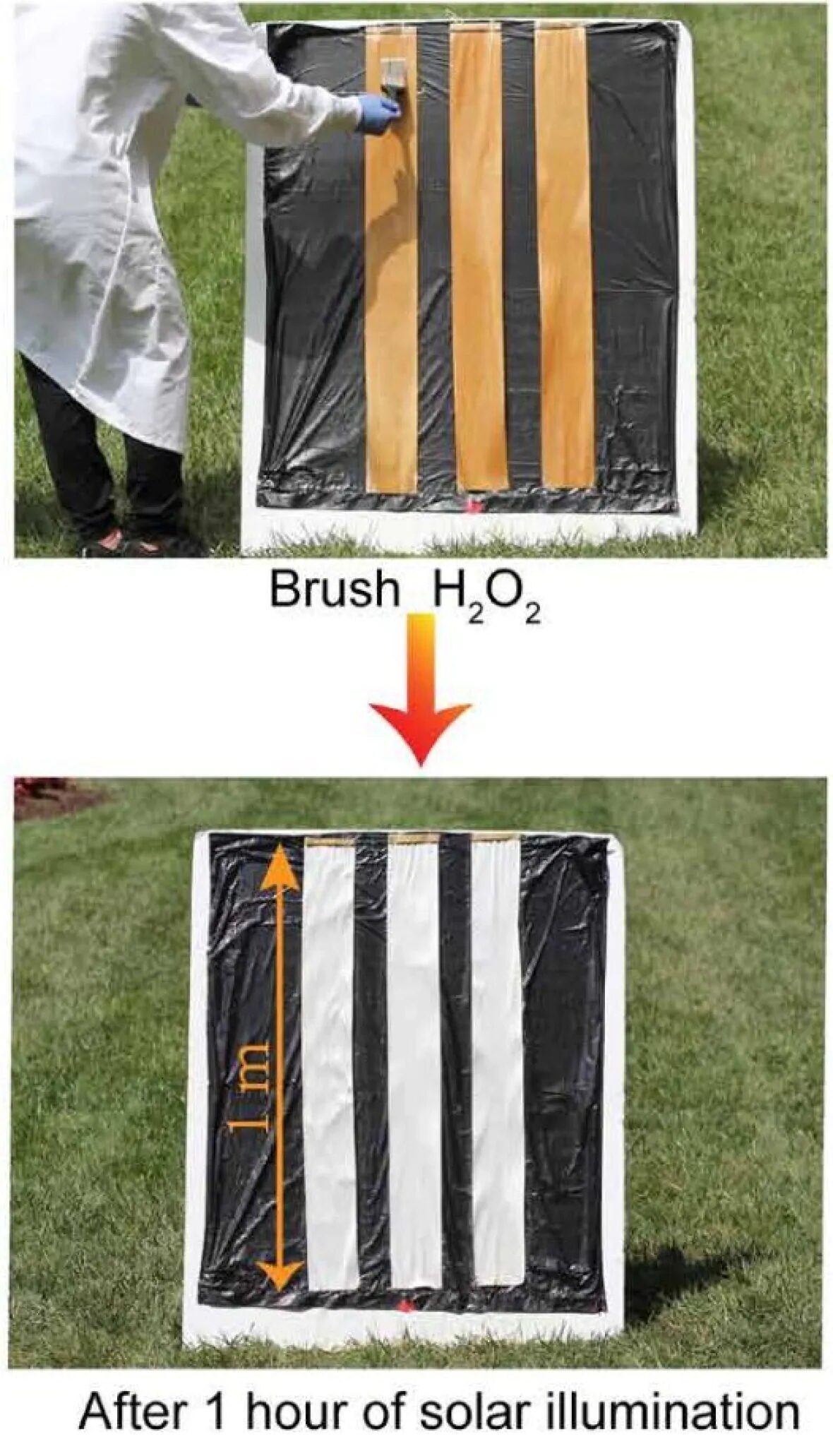
© Qinqin Xia, University of Maryland/Science AdvancesResearchers demonstrated after brushing a coat of hydrogen peroxide on the opaque wood material, and exposing it to one hour of sunlight, it turns transparent.
You can see a similar effect by taking that same piece of paper towel, dip half of it in water and place it on a patterned surface. The white paper towel will become translucent with light passing through the water and cellulose fibres without being scattered by refraction.
The epoxy in the wood does an even better job, allowing 90 per cent of visible light to pass through. The result is a long piece of what looks like glass, with the strength and flexibility of wood.
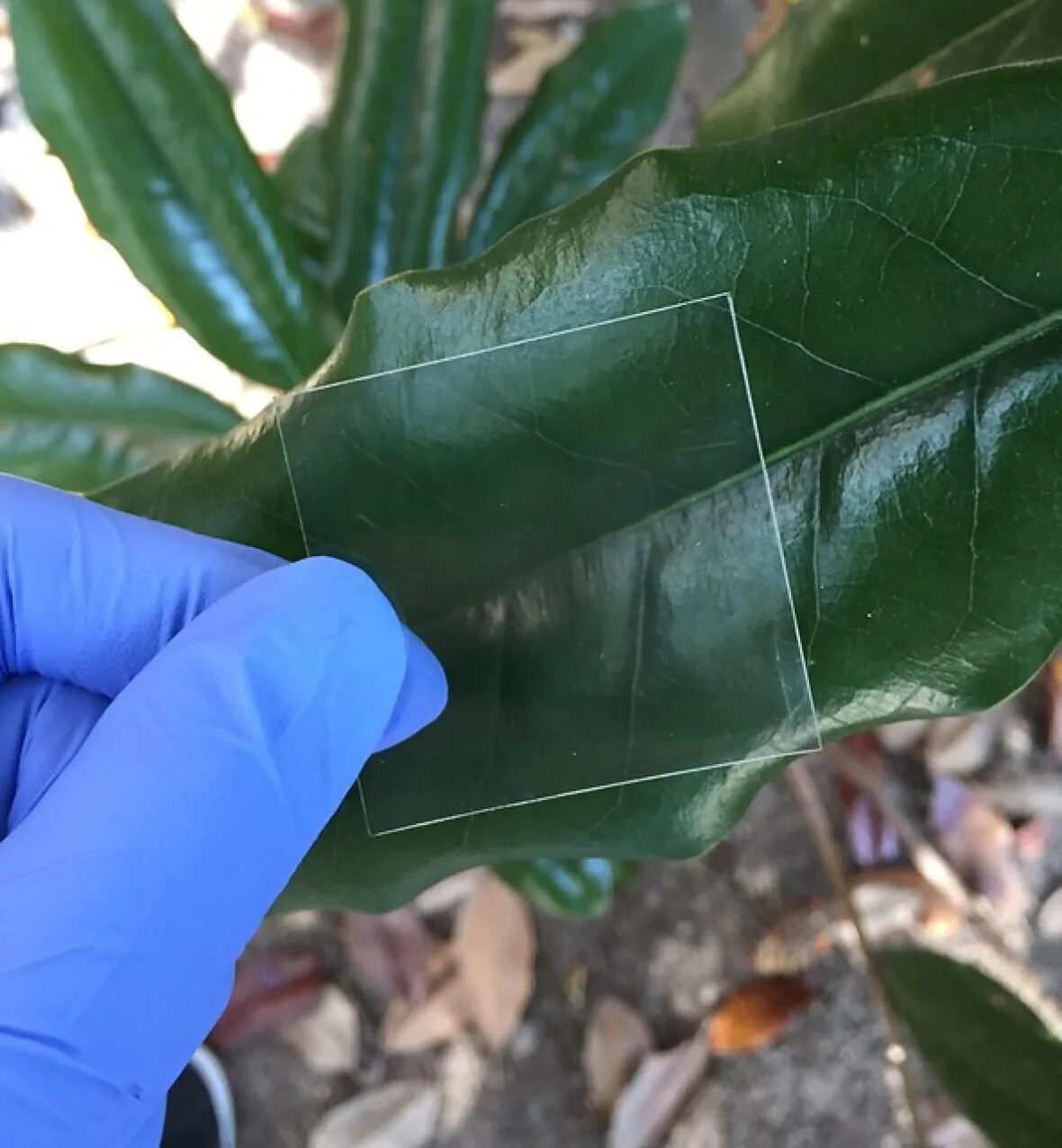
© USDA Forest ServiceA researcher holds up a square of transparent wood material against a green leaf.
Transparent wood could become an alternative to glass in energy efficient buildings, or perhaps coverings for solar panels in harsh environments. There could be no end of uses.
Many different types of wood, from balsa to oak, can be made transparent, and it doesn't matter if it is cut along the grain or against it. If the transparent wood is made a little thicker, it would be strong enough to become part of the structure of a building, so there could be entire transparent wooden walls.
While this technology has yet to be scaled up to industrial levels, the researchers say it has great potential as a new building material. In fact, they say that theoretically, an entire house could be made transparent. It is not clear why anyone would want to live in a transparent house, but for people who do, it would be OK to throw stones...
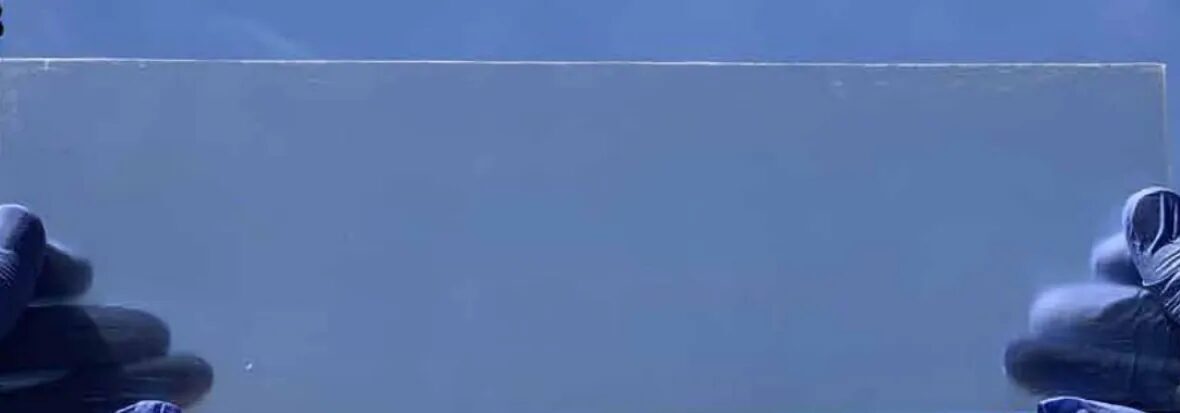
© Qinqin Xia, University of Maryland/Science AdvancesA researcher holds up a 10-centimetre long slab of the see-through wood.









Only it is not called "wood" anymore. Calling it so is a pseudo-scientific sophism.