
© Credit: Guizhou Provincial Research Institute of Cultural Relics and Archaeology
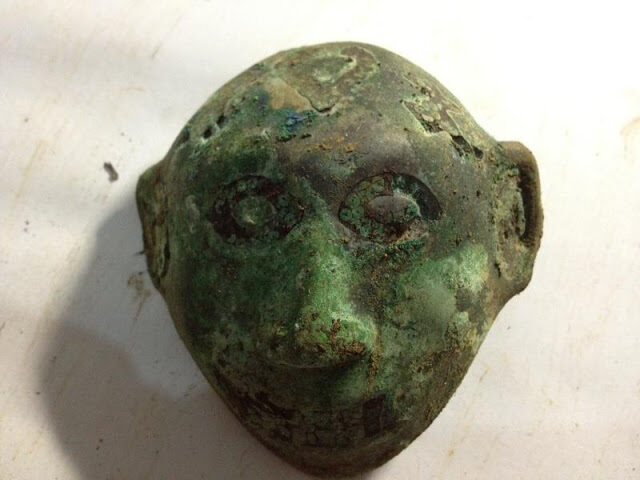
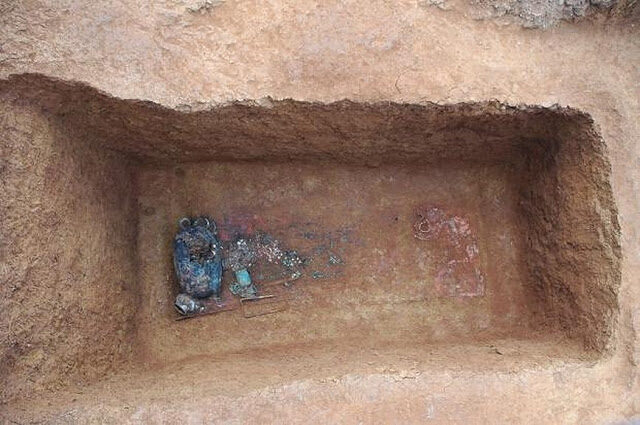
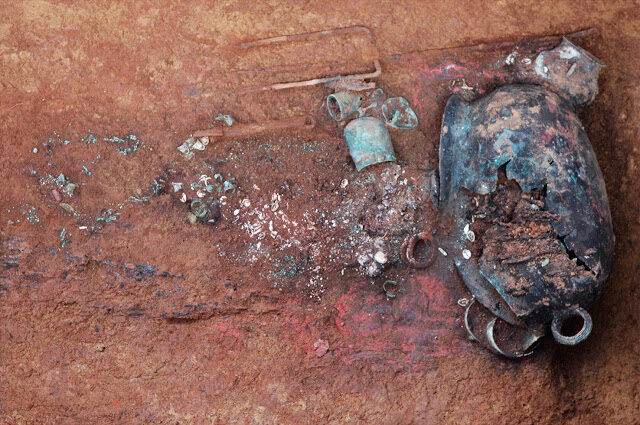
The tombs, believed to date back as early as 2,300 years, have been excavated in the Kele Yi-Miao Township of Hezhang County, with the skulls found encased in dome-shaped vessels.
Bronze drums and pots, as well as iron pots, were among the vessels containing skulls in the tombs excavated since the 1970s, Wu Xiaohua, an associate researcher from the provincial research institute of cultural relics and archaeology, said Wednesday.
© Guizhou Provincial Research Institute of Cultural Relics and Archaeology
Yelang was an ancient ethnic minority kingdom in southwestern China in modern-day Sichuan, Yunnan, and Guizhou provinces and the Guangxi Zhuang Autonomous Region.
The kingdom, which originated as early as the Warring States Period, prospered during the early Western Han Dynasty, but vanished mysteriously in the middle of the dynasty, leaving few records.
© Guizhou Provincial Research Institute of Cultural Relics and Archaeology Provincial Research Institute of Cultural Relics and Archaeology
Wu said discoveries of the tombs are of significant value for the study of Yelang culture.



Comment: See also: