
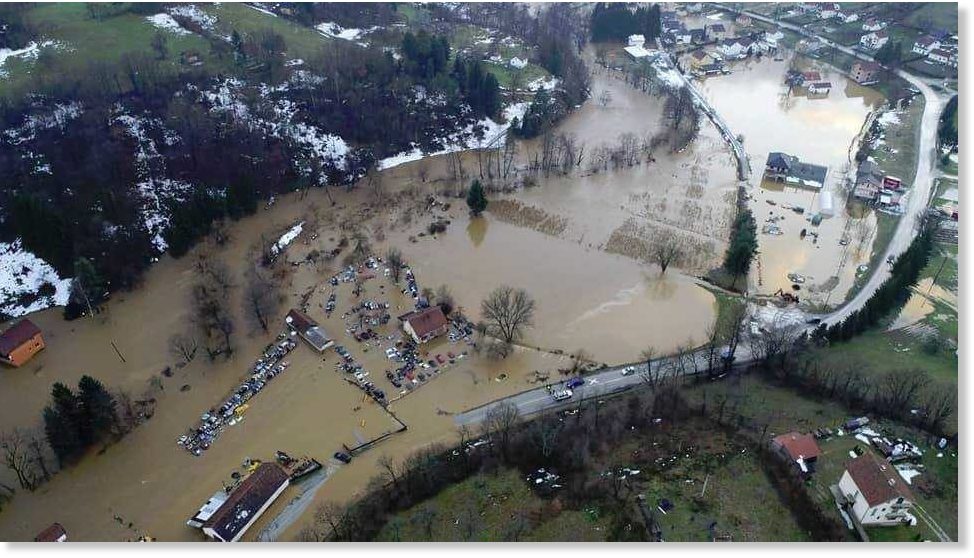
Big floods in Busovača, Bosnia and Herzegovina
Milder weather has been witnessed following last month's sub-zero conditions. In the space of 24 hours, temperatures jumped from 0C to 15C, causing snow to melt rapidly and trigger floods in central parts of the country.
Zenica and Kakanj, towns in central Bosnia, declared a state of emergency as streets in some neighborhoods were inundated by water and rescue services began evacuating people from their homes on rubber boats.
Schools in the most affected areas of central Bosnia were also forced to stay shut on Monday.
Severe floods in Zenica, BiH this past weekend - thanks to Adem Muminovic for the report! pic.twitter.com/UWF1KZil2A
— severe-weather.EU (@severeweatherEU) February 5, 2019
Severe flooding in Zenica, Bosnia and Herzegovina on Feb 3rd. Report: Faris Kuknjo - thank you! pic.twitter.com/WbAvnELC43
— severe-weather.EU (@severeweatherEU) February 4, 2019
Floding in Jezero, BiH today, Feb 3rd - report: David Todorovic pic.twitter.com/jYaK7ZR31k
— severe-weather.EU (@severeweatherEU) February 3, 2019
Big floods in Busovača, Bosnia and Herzegovina today, February 3. Report: @huManOST pic.twitter.com/kA9QIqmoG9
— severe-weather.EU (@severeweatherEU) February 3, 2019
Thick snow in Kupres, Bosna and Herzegovina, Feb 1st. Report: Ervin Tatarević - thank you. pic.twitter.com/XNSS2d7UIo
— severe-weather.EU (@severeweatherEU) February 2, 2019
In Topcic Polje, dozens of homes were evacuated as rescue services built small dams to prevent the further spread of flood waters. Main roads leading in and out of Topcic Polje were damaged by a heavy stream of water which descended from the surrounding mountains.
Bosnian rescue services raised security alerts for central parts of the country and evacuated hundreds of elderly residents from their homes. Several landslides were also reported in the south of the country. There are no reports of deaths or injuries.
No further rain or snow is expected in the next few days but with temperatures around 9C or 10C, further, snow-melt is expected. This is likely to swell the major rivers in the region close to or above normal levels.



Reader Comments
to our Newsletter