

© Conservation Magazine
Studies have shown mercury to be neurotoxic, increase the risk for heart disease, contribute to Alzheimer's disease, a potential contributor to neuropsychological issues, and most notably, negatively affect the brain of a developing fetus.
Symptoms of mercury poisoning include (1):
- loss of peripheral vision
- numbness in hands and feet
- ataxia
- muscle weakness
- hearing loss
- speech issues
There is no shortage of evidence demonstrating the ill effects of mercury toxicity. But humans have been eating fish for millennia. Why has mercury seemingly become an issue in only the last 50-60 years? And why is this issue specifically associated with seafood? Which types of seafood pose the greatest risk? And is this an isolated geographical phenomenon?
History of Environmental Mercury Pollution
It seems the first big publicized mercury scare came from Japan's Minamata City in 1956 as a result of the Chisso Corporation's massive release of methylmercury into the wastewater supply from the 1930s through the 1960s. Over 35 years of massive industrial dumping of methylmercury caused a huge bioaccumulation of methylmercury in the local seafood supply which led to severe poisoning of the local population of humans, pigs, cats, and dogs. Deaths continued for decades with little government intervention.
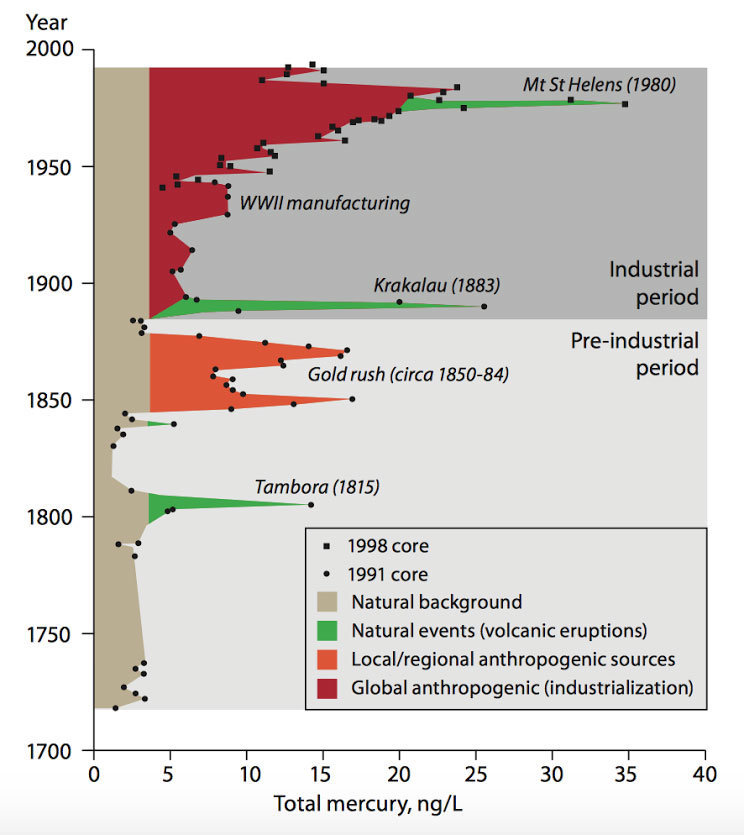
© UNEP Global Mercury Assessment 2013
Today, we continue to see industry continuing to pollute our environment from many sources. The largest offenders include chemical manufacturing plants, cement plants, coal power plants, gold mining operation, mercury-containing consumer products, and industrial metal production. There is no denying the fact that we have a considerable environmental issue with regard to mercury pollution around the globe.
Different Forms of Mercury
There are three basic forms of Mercury:
- Organic - Two main forms include Ethylmercury and Methylmercury. Ethylmercury is the form found in some flu vaccinations as thimerosal. Methylmercury is by far the most prevalent source of organic mercury and is the main form that accumulates in seafood (2).
- Inorganic - occur naturally, mostly in the form of ore. Enters the atmosphere naturally through erosion and volcanic activity. Anthropogenic sources of pollution include coal power plants, mining, industrial metal production, and cement manufacturing.
- Elemental (metallic) - Anthropogenic sources include thermometers, dental amalgam fillings, and to a small degree, some antibacterial products.
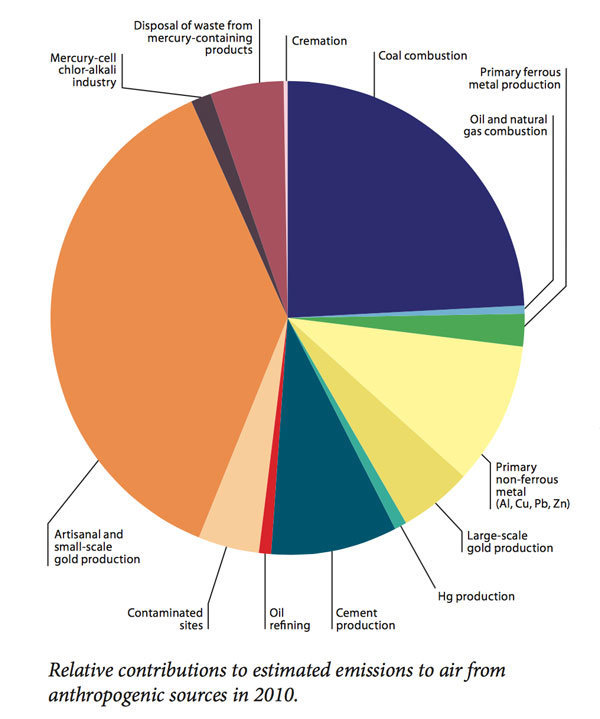
© UNEP Global Mercury Assessment 2013
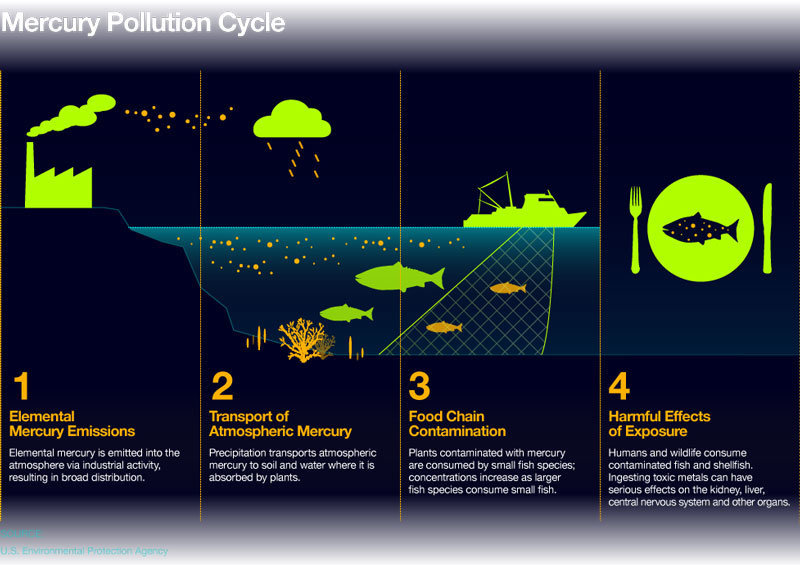
© US Environmental Protection AgencyMurcury Pollution Cycle
Mercury Concentrations Across the US
The most difficult part about this bioaccumulation in fish is that it can be difficult to tell which lakes, rivers, ocean waters might be most contaminated. In a comprehensive 2009 EPA study of US lakes and reservoirs, mercury was found in 100% of fish sampled, with mean concentrations of the predator fish significantly more elevated than bottom-dwellers at .352 ppm and .096 ppm respectively (5).
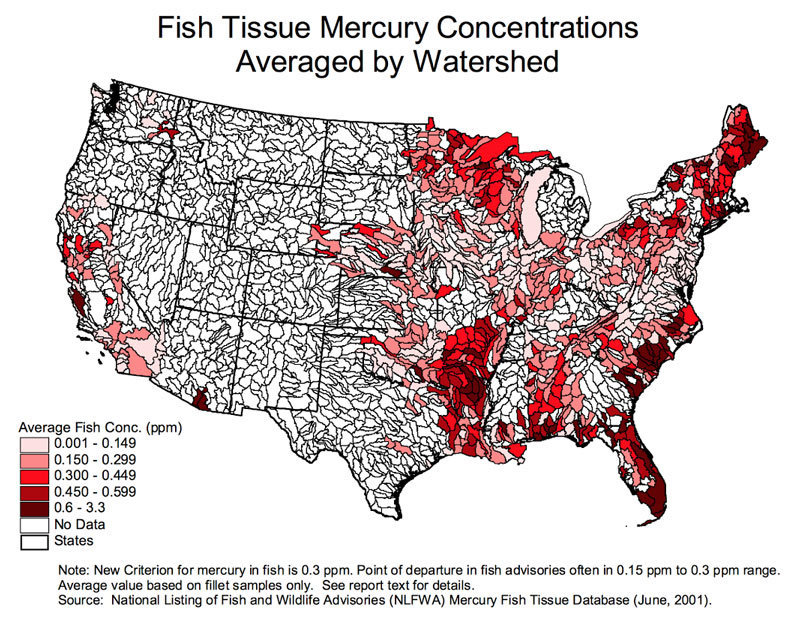
© epa.govFish tissue murcury concentrations
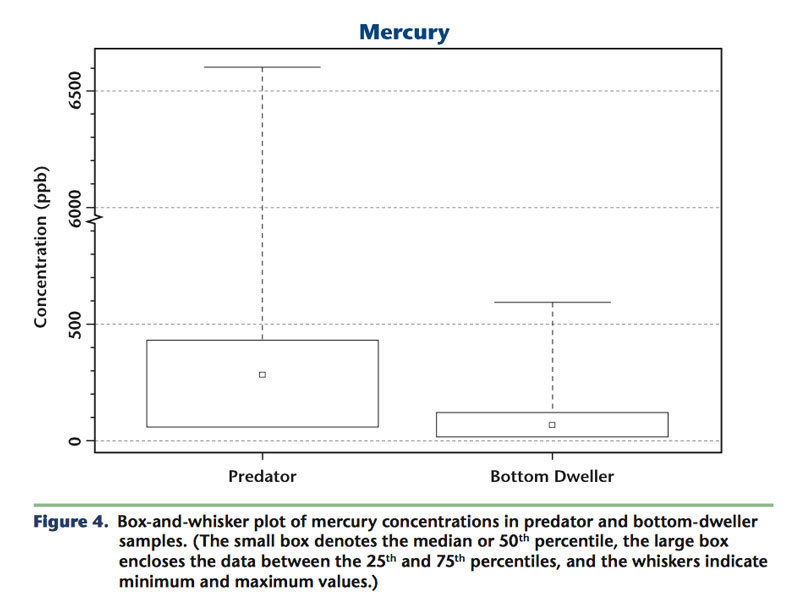
© epa.gov
If you'd like to investigate concentrations of a variety of fish species a given body of water around the US, you can visit this link provided by the EPA (6).
Mercury Data
Concentration of methylmercury in ocean waters can also vary by location, but there is limited data to differentiate by region. A much more effective way to limit exposure from seafood is to stick to species of seafood with statistically low levels. A comprehensive list averaged over an 18-year period can be found here. But let's take a look at the 11 species with the lowest mercury concentrations and make some sense of the data provided (7).
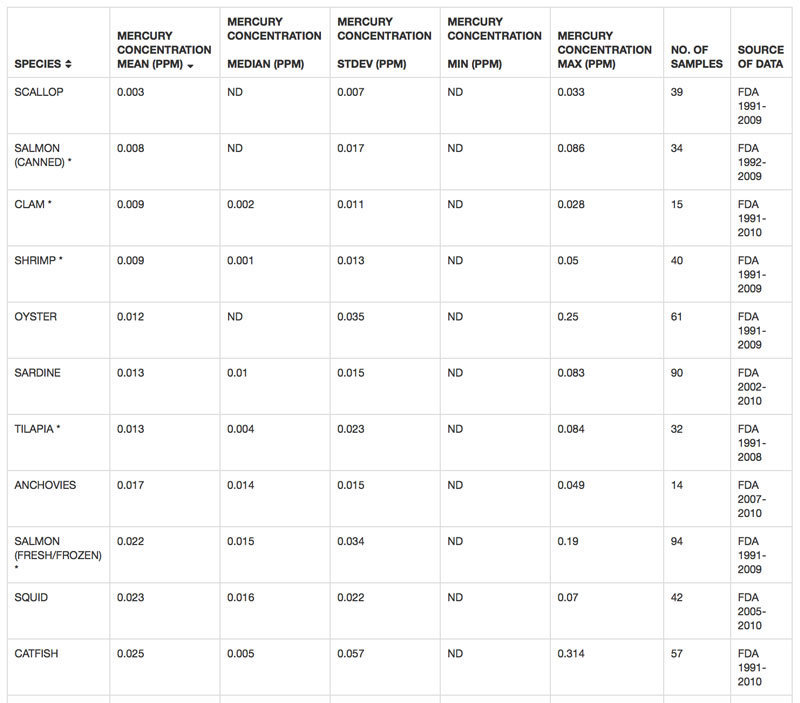
Mercury content found in fish
This dataset recreation shows 41 of the 61 samples include non-detectable levels (ND) of methylmercury. Similar statistical distributions can be seen in 9 of these 11 since all of the means are so close to zero. This doesn't seem to represent much of a health hazard. Certainly not a risk to the degree espoused by government agencies, doctors, media, and the public.
Mercury Content of Small Fish & Predators
The data collected by the FDA is perfectly representative of the mercury bioaccumulation hypothesis described earlier. If you look to the other end of the spectrum where methylmercury concentrations in fish are highest, you'll find the larger predator fish like tilefish, swordfish, shark, mackerel, and tuna which have concentrations approaching 1ppm; 300 times the concentration seen in scallops.
To put these numbers in perspective, in 2001 the EPA concluded that a pregnant woman could consume .0001 mg per kg of body weight per day without ill effects to her fetus (8)(9).
"To reach this limit, a 150 lb pregnant woman would have to consume 5 lbs of scallops PER DAY!"
Equivalently this recommended limit would allow for about 11 oz of salmon per day. So using the conservative guidelines set by the EPA for pregnant women, there seems to be very little risk of methylmercury accumulation in the body even when consuming relatively large amounts of seafood each day, so long as you stick to seafood low on the food chain.
Which Fish Are Americans Eating?
According to the FDA, the average methylmercury concentration for commercial fish in the U.S. marketplace in total, weighted for consumption, is 0.072 ppm (2). With the exception of tuna, the top 21 species of seafood by market share all have very low concentrations of methylmercury. These top 21 make up about 83% of overall market share in the US (10).
In light of these statistics, it seems to be quite apparent that the fear surrounding the consumption of seafood, one of the most nutrient-dense and abundant food sources on the planet, is quite overblown. Perhaps it is time we start focusing on what really matters...cleaning up our environment and improving our body's innate ability to detoxify any and all toxins that happen to be affecting our food sources.
- http://www3.epa.gov/airtoxics/hlthef/mercury.html
- http://www.fda.gov/downloads/Food/FoodborneIllnessContaminants/Metals/UCM396785.pdf
- http://www.ncbi.nlm.nih.gov/pmc/articles/PMC1475018
- http://www.unep.org/PDF/PressReleases/REPORT_Layout11.pdf
- http://www2.epa.gov/sites/production/files/2015-07/documents/fish-study-finalreport-2009.pdf
- http://fishadvisoryonline.epa.gov/FishTissue.aspx#_ga=1.93838813.1330854567.1445096425
- http://www.fda.gov/food/foodborneillnesscontaminants/metals/ucm115644.htm
- http://www3.epa.gov/airtoxics/hlthef/mercury.html
- http://www.ewg.org/research/ewg-s-consumer-guide-seafood/mercury-toxicity
- http://www.fda.gov/downloads/Food/FoodborneIllnessContaminants/Metals/UCM396785.pdf



Reader Comments
to our Newsletter