
The mine at Fort McMurray, on the banks of the Athabasca River, in cold, remote Alberta, had already been operating for 17 years at the time a U.S. satellite pictured it.
Today the Canadian tar sands are recognised as one of the world's largest oil reservoirs.

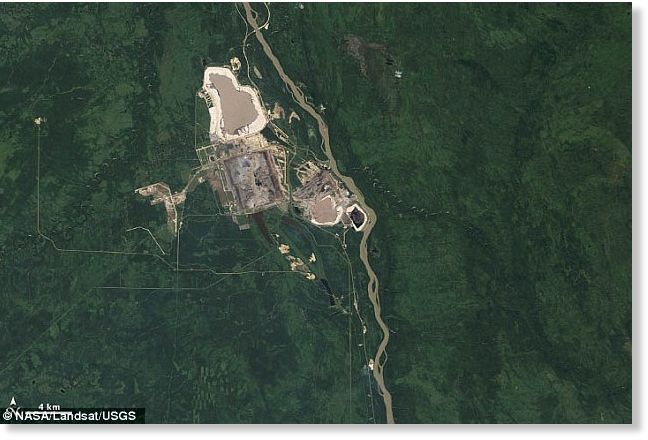
© NASA/Landsat/USGSJuly 23, 1984: The Fort McMurray tar sands mine in Alberta had been operating for 17 years by the time this photo was taken from space by the U.S. Landsat satellite
But extracting the resource is both economically and environmentally costly.
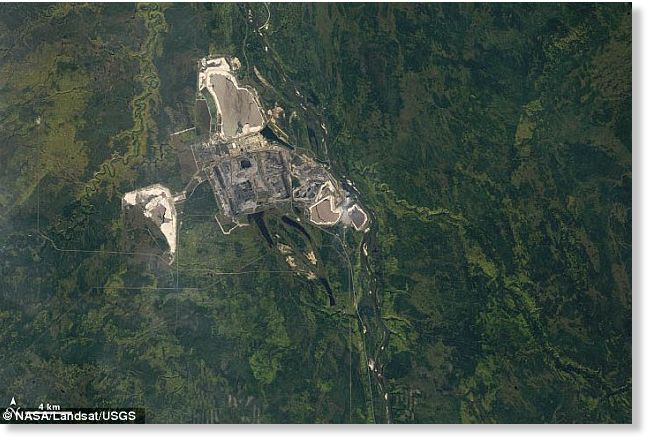
This sequence of satellite photos shows how the mine has grown, as the surging oil prices of the past decade made extracting oil from here increasingly attractive.
Even in the first photo, a huge waste storage pond of toxic mine tailings was already visible, but by 2001 operations at the mine had grown massively.
© NASA/Landsat/USGSJuly 24, 1990: Extracting the tar sands requires first clear cutting the forest above
September 24, 199: As much as 100ft (30m) of soil and peat must then be removed
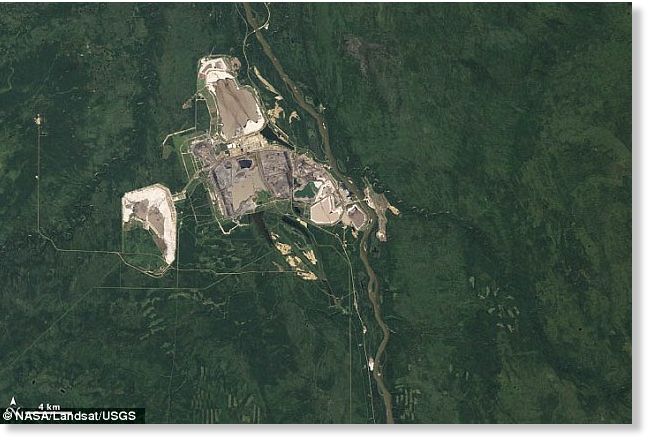
© NASA/Landsat/USGSAugust 12, 1997: Beneath that, a mixture of thick viscous bitumen and sand can then be found and extracted
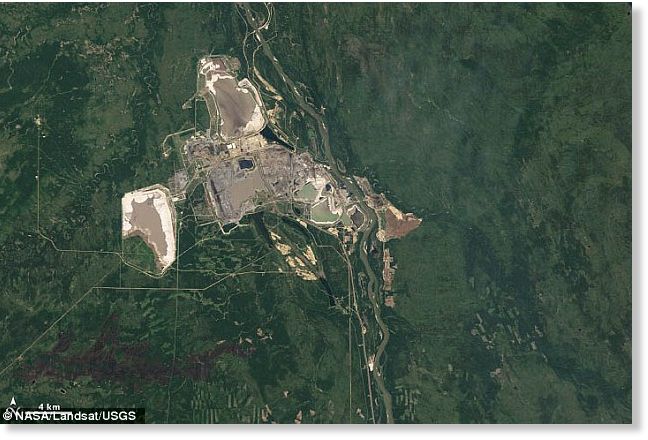
© NASA/Landsat/USGSJuly 15, 1999: Separating the bitumen from the sand requires an energy-intensive steam process
The in thick, viscous bitumen beneath must then be separated from the sands in which it is soaked by an energy-intensive steam process. It must then be further processed into crude.
Environmental groups dub this the 'world's dirtiest oil' as, even after the earth is ripped up, these refining processes mean crude extraction here releases far more greenhouse gases than conventional oil production.
By 2011, the Landsat image of the same site shows huge expansion, fuelled by the sustained surge in oil prices after 9/11 and rapid economic growth in the developing world.
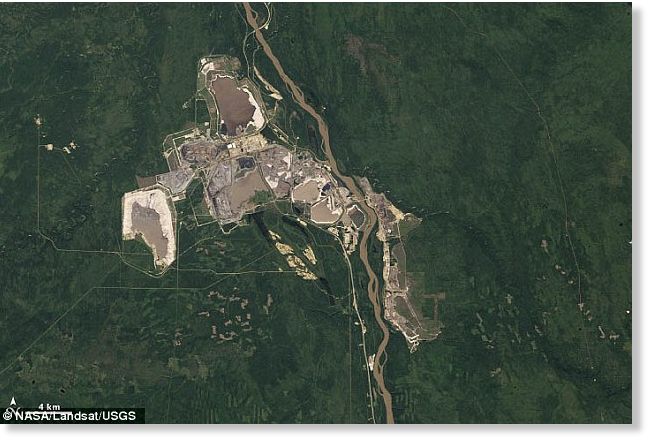
© NASA/Landsat/USGSAugust 7, 2001: By this date operations at the For McMurray site had expanded massively
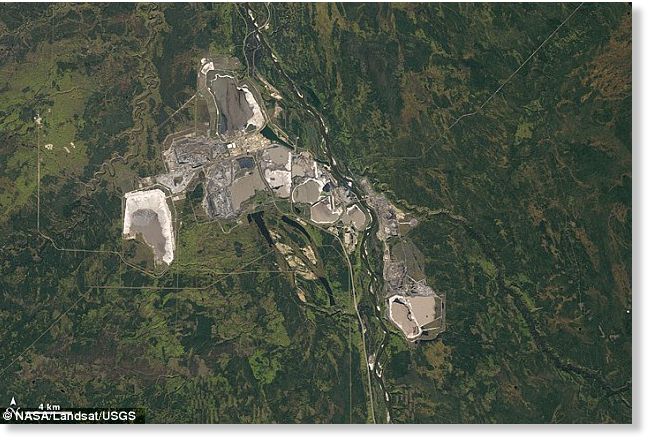
© NASA/Landsat/USGSSeptember 30, 2003: Growth of the mine accelerates as oil prices surge after 9/11
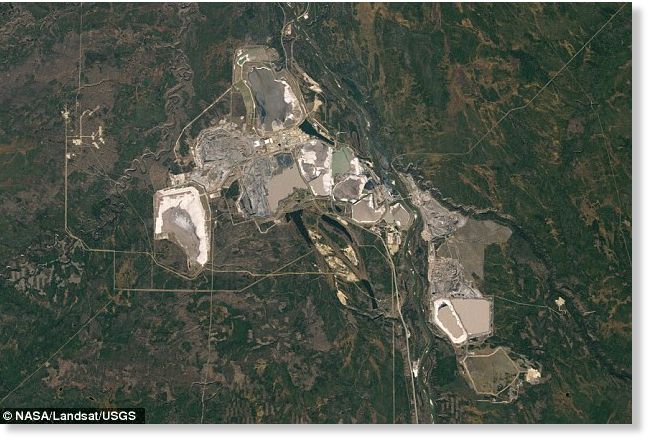
© NASA/Landsat/USGSOctober 5, 2005: Despite agreements on world fossil fuel consumption, oil demand is still set to skyrocket
Alberta's oil sands cover an area of 55,000 square-miles, about the size of New York State, but miners have so far exploited only about 232 square-miles.
At the open cast mines, electric shovels five-storeys high dig the bitumen-rich tar sands from the ground in deep pits.
A mixture of hot water and caustic soda is then used to separate the sand from the bitumen before it is then cooked into a kind of synthetic crude.
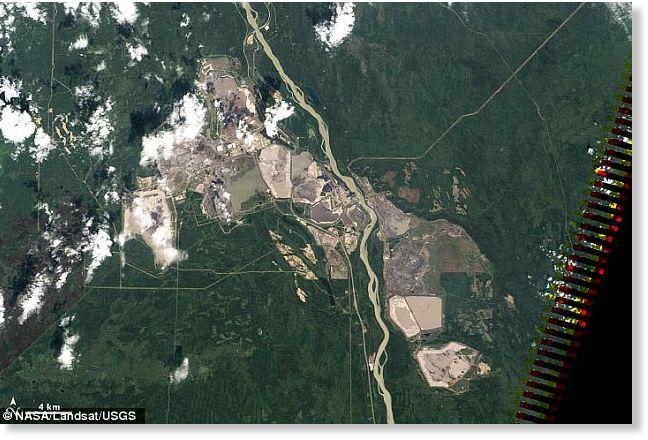
© NASA/Landsat/USGSJuly 30, 2007: Alberta's tar sands cover an area about the size of New York State
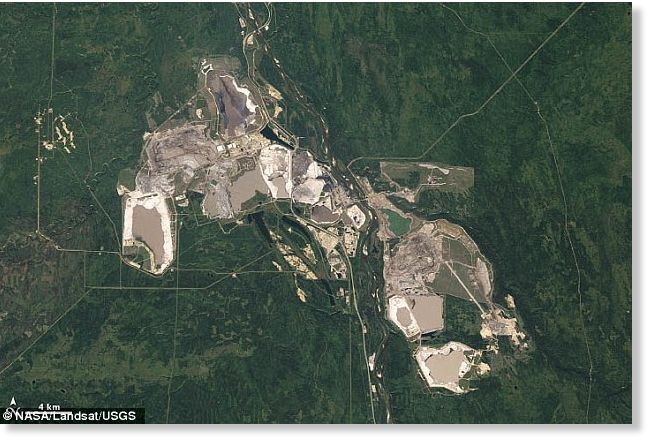
© NASA/Landsat/USGSSeptember 14, 2009: Studies say the mines regularly leak toxins including arsenic, mercury and lead
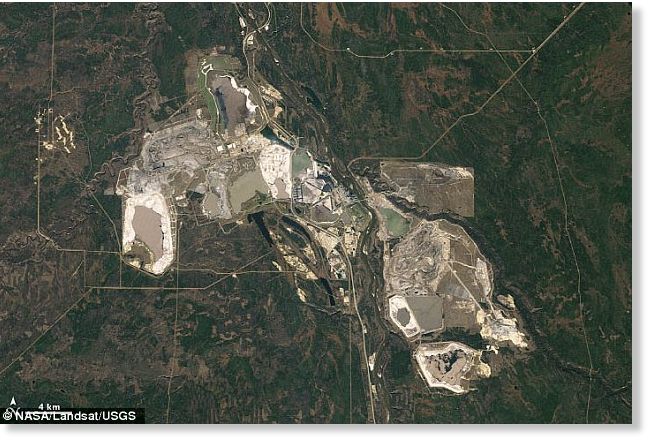
© NASA/Landsat/USGSOctober 3, 2011: Canada is now the single largest importer of oil to the U.S.
Water is cleaned and reused, while the sand settles and is used in building retaining dykes. Other waste particles leave a toxic sludge containing chemicals like naphthenic acid and polycyclic aromatic hydrocarbons.
In Alberta, the tailing ponds now cover an area about the size of Manhattan - maybe 50 square-miles. Some studies say they routinely leak contaminants including arsenic, lead and mercury - all deadly.
Canada is now the largest single supplier of oil to the U.S., responsible for about 25 per cent of all imports.
And, even more importantly to, among the world's top five nations in terms of oil reserves, Canada is the only one that is not a part of OPEC, many of whose members are hostile to America.
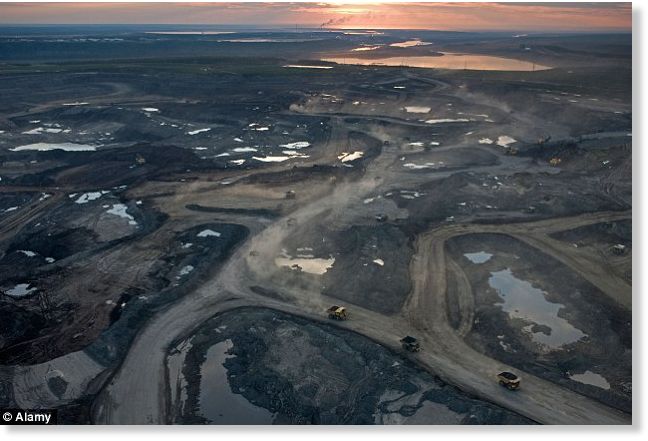
© AlamyApocalyptic: This aerial view shows the terrain around the tar sands mines. Canada is now the largest single supplier of oil to the U.S., responsible for about 25 per cent of all imports
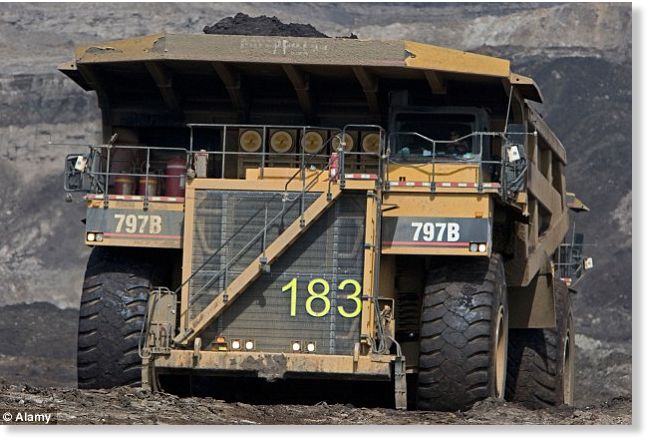
© AlamyHeavy industry: Exploiting the tar sands requires energy-intensive processes, and now employs 135,000 in Alberta
Alberta Energy department spokesman Tim Markle told the National Geographic: 'Oil sands have really come to the fore in terms of what the province makes in royalties and also in terms of job creation.
'We're even talking about possible job shortages with the amount of expansion that's projected to occur in the coming years.'



this article is probably the best i've seen here. nothing like sat photos and dates to render information, hats off to the author.