
© Unknown
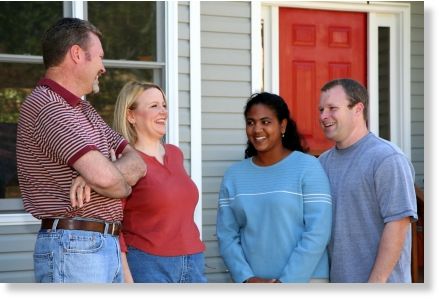
"I examined the idea of 'relative position,' or where one fits into the income distribution in their local community, as it applies to both trust of neighbors and self-rated health," said Eileen Bjornstrom, an assistant professor of sociology in the MU College of Arts and Science. "Because human beings engage in interpersonal comparisons in order to gauge individual characteristics, it has been suggested that a low relative position, or feeling that you are below another person financially, leads to stress and negative emotions such as shame, hostility and distrust, and that health suffers as a consequence. While most people aren't aware of how trust impacts them, results indicated that trust was a factor in a person's overall health."
In the study, Bjornstrom examined the 2001 Los Angeles Family and Neighborhood Survey. Contrary to expectations, she found that respondents with a higher income, relative to their community, were more likely to be distrustful of their neighbors. Simultaneously, while taking into account factors such as level of education, income, and age, people who reported that "their neighbors can be trusted" also reported better health on average.
"I was surprised about the direction in which relative position was linked to distrust. If affluent individuals are less likely to trust their poorer neighbors, it could be beneficial to attempt to overcome some of the distrust that leads to poor health," Bjornstrom said. "It is possible that shared community resources that promote interaction, such as sidewalks and parks, could help bridge the neighborhood trust gap, and also promote health and well-being. Residents of all economic statuses might then benefit if community cohesion was increased. Additional research can address those questions."
While there was not a direct link between low relative position among neighbors and better health, Bjornstrom believes that further study needs to occur in different contexts. She believes that research on relative position in the workplace or among social networks would provide greater insight.
"For example, relative position at work could matter for health because it might be associated with autonomy or other benefits," Bjornstrom said.
Bjornstrom's study, "The Neighborhood Context of Relative Position, Trust and Self-Rated Health," appears in the journal Social Science & Medicine.



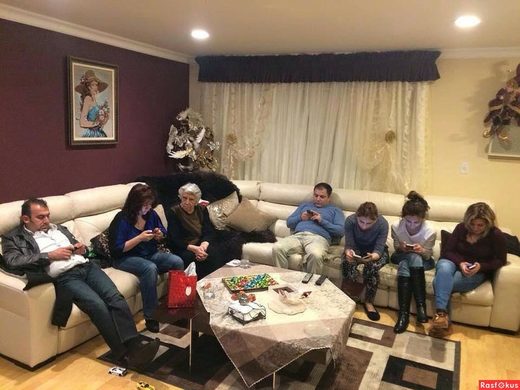
"It is possible that shared community resources that promote interaction, such as sidewalks and parks, could help bridge the neighborhood trust gap, and also promote health and well-being. Residents of all economic statuses might then benefit if community cohesion was increased."
Then the Suspicion and Fear which the Government instills among people with the "Snitching On Your Neighbor Will Keep Us All Safe" type of campaign, i.e., when practiced, among other things can't be healthy... Plus, who wants to lose the support of their local community, which may help one in a tough struggle against a psychopath or in another type of hardship by the betrayal of another human being?
Already guessed who profits from people being made weak, with large holes in awareness, misinformed, suspicious, separated and quarreling over nothing?