
© Minyanville
It looks like altruism isn't dead. At least not in Japan.
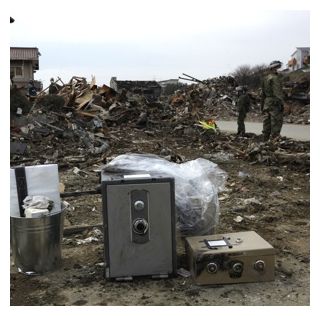
Last night, the Daily Mail ran a story reporting that since the earthquake and tsunami last March Japanese citizens have turned in nearly $78 million (2.3 billion yen) in found money. So far, thousands of wallets and purses have been turned in, along with over 5,700 safes that reportedly washed up onshore.
According to Japan's National Police Agency, most of the money found in hard hit areas has been returned to its original owners. Most people kept forms of identification in their safes, which made it easy to find the owners -- once the safes were open anyway.
At one point, so many safes had been turned into police that they had difficulty finding places to store them. The Ofunato Police Station had to hire experts to help them break into the recovered safes.
The article quotes Koetsu Saiki of the Miyagi Prefecture Police on the effort required to open and return nearly 6,000 safes. "In most cases, the keyholes of these safes were filled with mud....We had to start by cutting apart metal doors with grinders and other tools."
The Mail goes on to say that it is not unusual for Japanese to keep large amounts of money in their homes, as many local businesses prefer to handle transactions in cash. Even five months after the disaster, safes continue to trickle into many Japanese police stations.
Of course, some money lost in the tsunami and earthquake has probably been stolen, but, by and large, the Japanese people have shown an amazing amount of honesty in the wake of this disaster.
Meanwhile, on the other side of the world, the English prison population has reached a record high following last week's riots. It remains to be seen whether rioters will return any of the money they found.
Also see: Peoples' Life Savings Washing Ashore in Japan




What happens when they find an illegal item in a safe along with the money? Like an unregistered gun or something? Just curious.