
But the mystery is not quite solved. Officials with the National Oceanic and Atmospheric Administration said on Monday they don't know what species the eggs are or if they are toxic.
They have sent samples to a laboratory on the East Coast for further analysis.
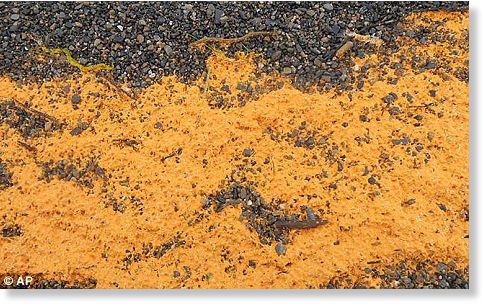
© Associated PressWhat is it? The Coast Guard says the orange substance is not man-made and might be some type of algae
Residents live largely off the land, and many are worried about the effect on the local wildlife and plants from a substance never seen there before.
The news attracted all the townspeople, keen to get a glimpse of the phenomenon that covered much of the harbour and then began washing ashore on Wednesday.
Residents found the orange matter floating on top of the rain buckets they use to collect drinking water last Thursday. It was also found on one roof, leading them to believe whatever it was, it was airborne, too.
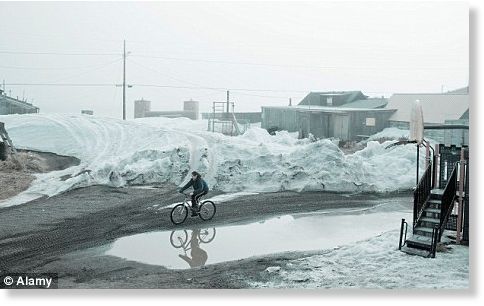
© AlamyPrecaution: The population of Kivalina Alaska has been advised to boil drinking water after a strange substance rained from the sky into the harbour
Residents, who have been left mystified by these events, have been advised to boil drinking water and to keep children away from the substance.
Village administrator Janet Mitchell voiced the main concern of the villagers, which is that the substance might be harmful: 'What will it do to fish, which villagers will soon start catching to stock up for winter, or the caribou currently being hunted, or the berries? We rely 100 percent on subsistence.'
A further complication is that reserves are running low in the city's two water tanks.
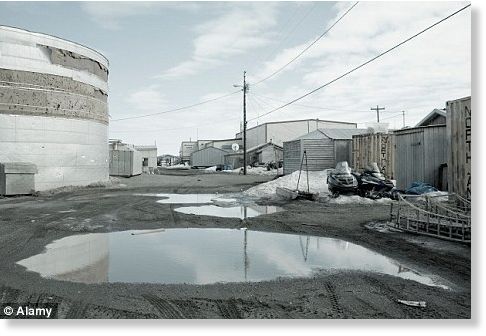
© AlamyTesting: Samples of the mysterious orange substance have been sent for analysis
Mr Swan helped collect some samples for testing, and grabbed some of the substance in his gloved hand.
'It was really light, with a powdery look to it, and it was just floating on there, all bunched up together,' he said. 'It looked like it could blow away very easily.'
Kivalina wasn't alone in reporting the strange orange substance last Wednesday.
Shannon Melton said she was boating on the Buckland River about 150 miles southeast of Kivalina, and the river was not its normal colour. 'It was orange looking.' she said.
She took the boat out again on Thursday to go berry picking, and said the river had returned to its normal colour, but some of the creeks off the river still had the orange tinge to them.



'It was really light, with a powdery look to it, and it was just floating on there"
So why do they keep calling it "goo"?
I take a wild guess and say... pollen.
Hello, climate change!