
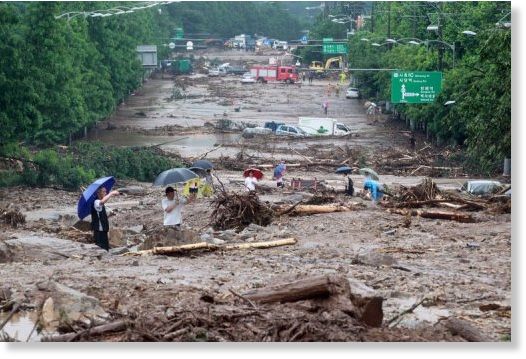
© AFP, Jang Seung-YoonSouth Korean men take pictures of a mass of mud after a landslide hit a street in southern Seoul
Among the dead were 16 killed when mudslides hit southern parts of Seoul on Wednesday and 13 who perished in a landslide in the Chuncheon region, 100 kilometres (60 miles) east of the capital.
Three others died in a landslide at Paju north of Seoul.
Experts and news media attacked Seoul city authorities, accusing them of making the situation worse through an allegedly reckless development of hills near residential areas in the south of the capital.
Some hillsides were redeveloped into public parks and hiking tracks, meaning rainwater could not be absorbed so easily, and natural waterways were changed to make artificial lakes, critics said.
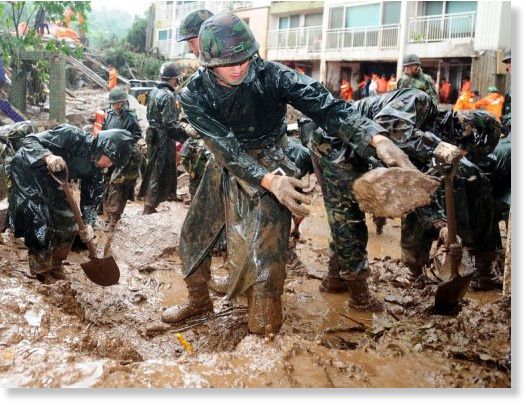
© AFP, Park Ji-HwanSouth Korean soldiers remove tons of mud after a flood hit an apartment complex in Seoul
Experts have been warning that such activities might trigger landslides, it said.
"However, administrative authorities have turned a deaf ear to them," the daily said in its editorial headlined "Showcase development triggered disaster".
Some residents living under Mount Umyeon in southern Seoul, where eight landslides occurred, believe the disaster was preventable.
A storm last September felled many trees on the mountain. But official efforts to replace the trees had been slow, they told the Korea JoongAng Daily, leaving the mountain vulnerable to landslides.
The weather agency was also criticised for failing to forecast the freakishly heavy downpour, which battered the capital city of 10 million and densely populated surrounding areas.
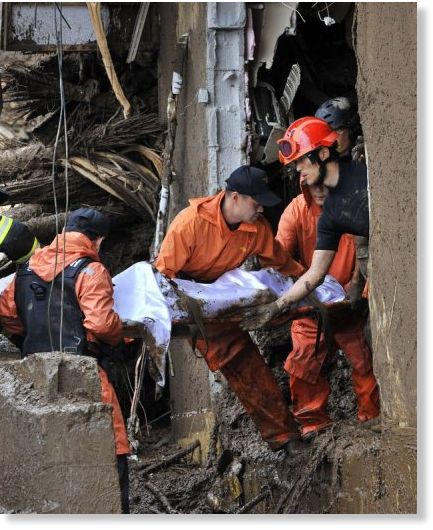
© AFP, Jung Yeon-JeRescue workers carry a dead body after a landslide hit a small Buddhist temple in Dongducheon
For three days from Tuesday, Seoul received 536 mm of rain, the most for a three-day period in July since the same year.
The rains left more than 11,000 people from 5,250 households homeless. Power supply was cut to some 130,000 houses nationwide, the disaster management agency said.
The defence ministry said 17,000 soldiers across the country, backed by construction vehicles, would be mobilised Friday to help a huge clean-up.
Heavy rains also battered North Korea, with the south and east of the country the worst-hit regions, according to state radio Thursday.
It said nearly 100 mm of rain hit the southwestern region of Haeju in just three hours early Thursday.



Reader Comments
to our Newsletter