Secret HistoryS


Blue Planet

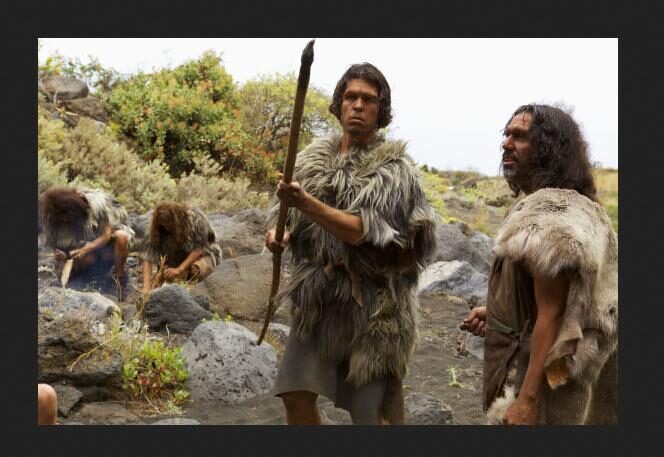
Neanderthals and Homo sapiens co-existed in France and Spain for at least 1,400 Years

Neanderthals
© University of Utah via kued.org.Neanderthals.
A new modeling study by Leiden University and University of Cambridge scientists predicts the appearance of Homo sapiens and the Protoaurignacian culture in France and northern Spain at 42,269 to 42,653 years ago, and the 'extinction' of the Châtelperronian culture and regional Neanderthals at 39,894 to 39,798 and 40,870 to 40,457 years ago, respectively — suggesting a possible overlap of around 1,400 to 2,800 years between these human groups in the region.

Between 40,000 and 50,000 years ago, the demographic landscape of Europe is transformed as Neanderthals are replaced by anatomically modern humans and disappear from the fossil record.

Recent evidence from Bulgaria, the Czech Republic, and south-eastern France indicates that the first anatomically modern humans arrived in Europe by at least 47,000-45,000 years ago and possibly as far as 54,000 years ago.

Comment: The appearance of modern humans coincides with that of Neanderthal artifacts, is that because, as some studies have suggested, Neanderthals obtained the knowledge from humans?


Star of David

Historians reveal Israel's use of poison against Palestinians

Meshaal/Haniya
© Suhaib Salem/Getty ImagesSurvivors: Hamas leaders Khaled Meshaal and Ismail Haniya
Press conference • Rafah, southern Gaza • December 7, 2012
The details of Israel's secret use of biological weapons and poison against Palestinians during the 1947/48 ethnic cleansing campaign has been revealed in a recent article by historians Benny Morris and Benjamin Kedar. The 84-year-old Kedar is professor emeritus at the Hebrew University of Jerusalem and the more well-known Morris is famed for his work as one of Israel's "New Historians". This group of Israeli scholars, including Professors Ilan Pappe and Avi Shlaim, dismantled the occupation state's official narrative about its creation in 1948 and the birth of the Palestinian refugee crisis. However, unlike his fellow historians, Morris went on to become a rather controversial figure for adopting morally questionable positions in defence of Israel's ethnic cleansing of Palestine.

"I find myself as convinced as ever that the Israelis played a major role in ridding the country of tens of thousands of Arabs during the 1948 war," said Morris in an article in the Los Angeles Times about the controversy surrounding his book, The Birth of the Palestinian Refugee Problem, 1947-1949. "For unearthing that dark side of 1948," Morris said that he was vilified by the "Zionist establishment." He was accused of shattering the founding myths of the Israeli state and lending moral weight to the Palestinian cause. Morris rejected the claim as "untrue" and explained that he "was simply a historian seeking to describe what happened."

Info

The oldest grave in northern Germany 10,500 years old

Oldest Grave
© Archäologisches Landesamt Schleswig-HolsteinArchaeologists unearth the oldest burial site to date in northern Germany.
Archaeologists have discovered the oldest known human remains in northern Germany in a 10,500-year-old cremation grave in Lüchow, Schleswig-Holstein.

The remains were discovered in the Duvensee bog, a prehistoric inland lake that contains more than 20 Mesolithic and Neolithic archaeological sites.

The bog's anaerobic environment preserves organic remains, including burned bones, but there was so little left that it wasn't until the team discovered a human thigh bone that they were able to confirm they had discovered a burial.

Burials of hunter-gatherer-fisher people who lived in Europe during the early Mesolithic period are extremely rare. Mesolithic burials have previously been discovered in northern Germany and southern Scandinavia, but only from the Late Mesolithic period (7th-6th millennia B.C.). The only burial that was comparable in time was discovered in Jutland, Denmark. It, too, is a cremation burial, an indication that cremation may have been the preferred method of burial among Mesolithic hunter-gatherers.

Archaeology

A single tiny bead can reveal a global history

ancient beads jewelry Malawi
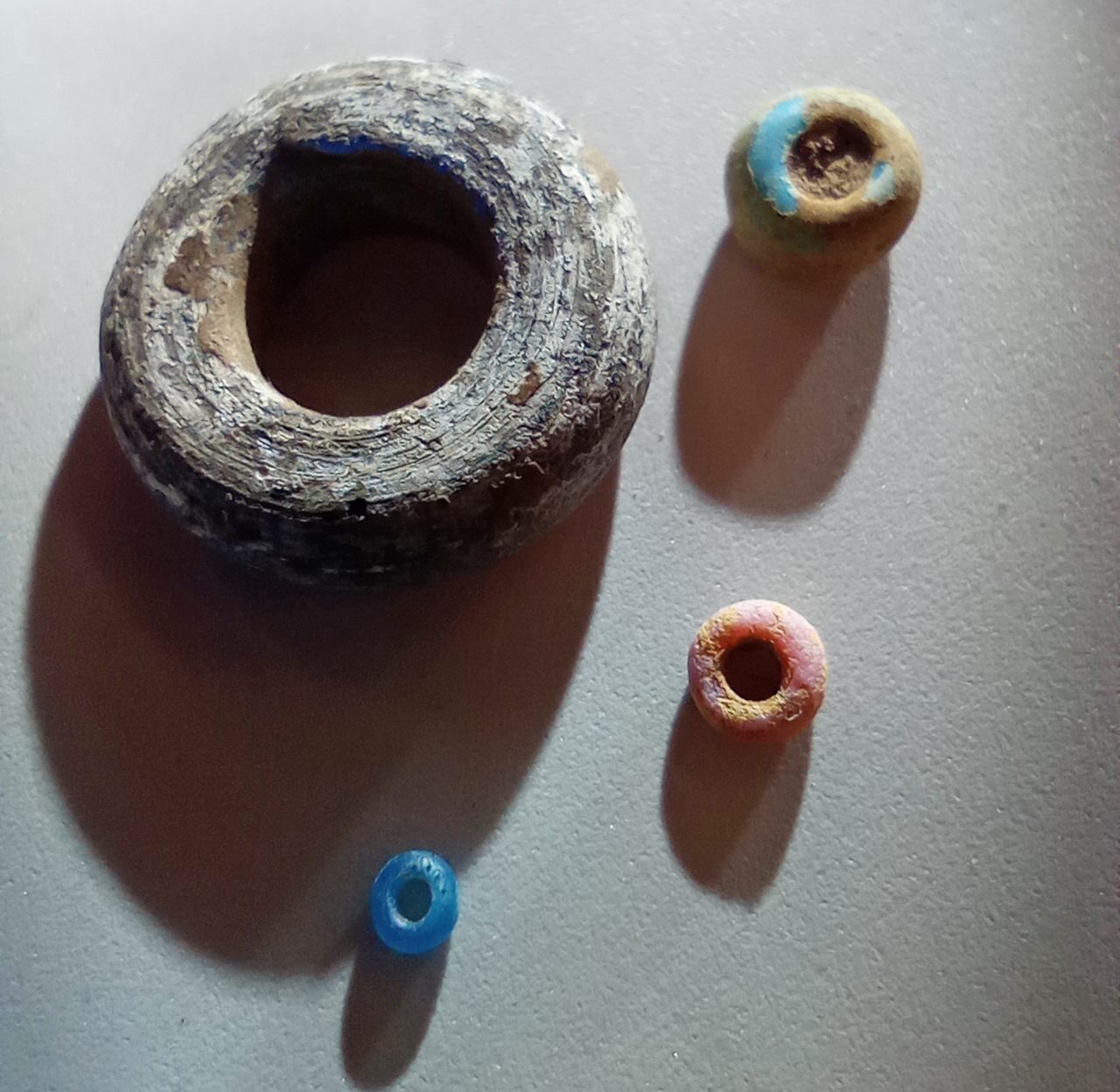
© Jessica ThompsonThese four beads were found in the Kasitu Valley in northern Malawi. The biggest is about the size of a Cheerio, while the smallest is the size of a grain of rice. Courtesy of
Hint: There is a laser involved.

Jessica Thompson was looking for bones, not beads. But as the Yale archeologist sifted through the fertile soil of Kasitu Valley in northern Malawi in the mid 2010s, she kept finding small glass orbs, many about the size of grain of rice. Some were white, others were dotted with red, and a few were either dark blue, blue-green, or turquoise. "I had not expected to really see that," she says.

These beads were part of the monetary system in northern Malawi in the 18th and 19th centuries. Then, they were used to buy goods and food, pay taxes imposed by local chiefs, and even purchase enslaved people. Today, the 29 beads Thompson discovered are part of a history that is still being written for the under-studied region. According to a paper co-authored by Thompson, the miniature spheres are evidence of direct and indirect trading that was occurring between Europeans and Africans along indigenous trade routes created at least 1,000 years before Europeans began widespread exploration in that region.

Gold Bar

Nanomaterial from the Middle Ages

nanomaterial gold
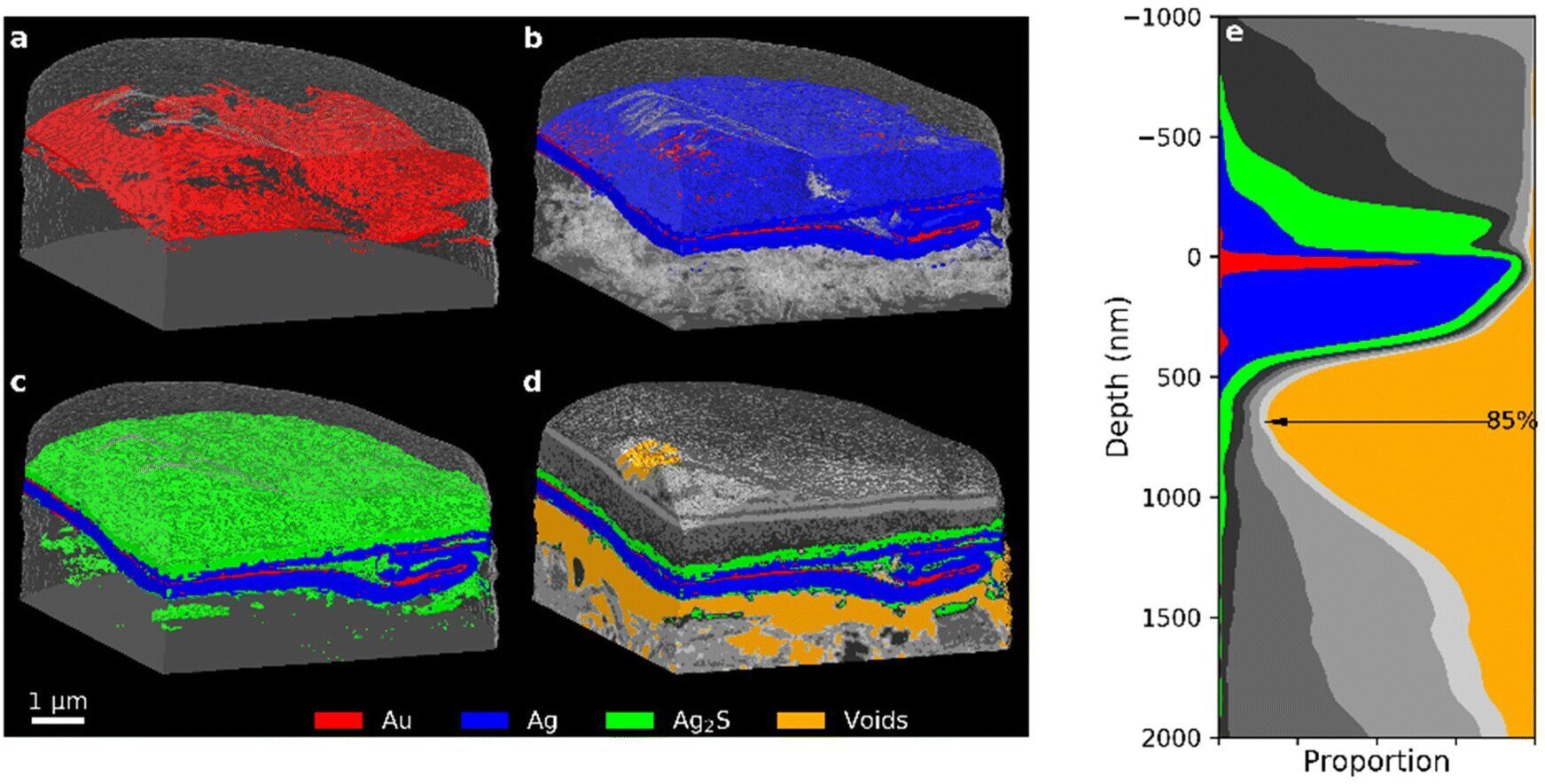
© Nanoscale (2022). DOI: 10.1039/D2NR03367DPXCT 3D images of the 35-year old Zwischgold sample showing the addition of (a) Au, (b) Ag (with transparent voids), (c) “silver corrosion products”, and (d) other segments. (e) Stack plot of the depth profile of the single-layered section of the sample, aligned to the main layer of the Au segment.
To gild sculptures in the late Middle Ages, artists often applied ultra-thin gold foil supported by a silver base layer. For the first time, scientists at the Paul Scherrer Institute PSI have managed to produce nanoscale 3D images of this material, known as Zwischgold. The pictures show this was a highly sophisticated medieval production technique and demonstrate why restoring such precious gilded artifacts is so difficult.

The samples examined at the Swiss Light Source SLS using one of the most advanced microscopy methods were unusual even for the highly experienced PSI team: minute samples of materials taken from an altar and wooden statues originating from the fifteenth century. The altar is thought to have been made around 1420 in Southern Germany and stood for a long time in a mountain chapel on Alp Leiggern in the Swiss canton of Valais.

Telescope

Researcher discovers another astronomy book written by Galileo Galilei under a pseudonym

Galileo Galilei
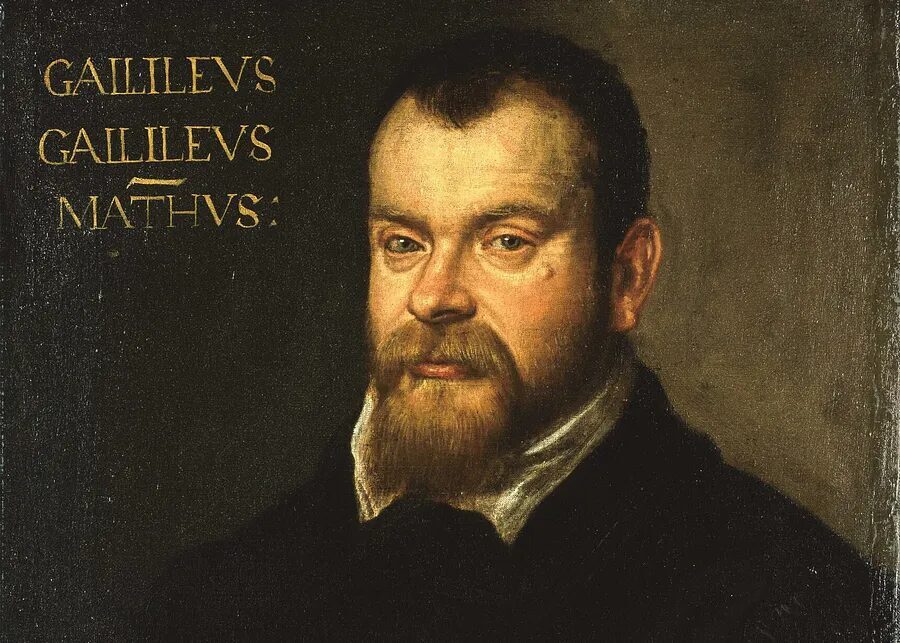
Galileo Galilei, portrait by Domenico Tintoretto
An Italian historian has discovered that an early 17th-century treatise on astronomy was actually written by Galileo Galilei under a pseudonym. He hid his name to avoid being caught up in a public dispute between the Papacy and Venice.

The process for this discovery started with the revelation that some of Galileo's documents held at the University of Michigan and at Morgan Library in New York City were in fact counterfeits made by the infamous forger Tobia Nicotra in the early 20th century. Professor Nick Wilding of Georgia State University, who discovered the counterfeit, demonstrated that the filigree of the paper that the texts were written on cannot predate the 18th century.

Dig

Tomb of deposed Han Emperor reveals a dynasty's grandeur

han dynasty
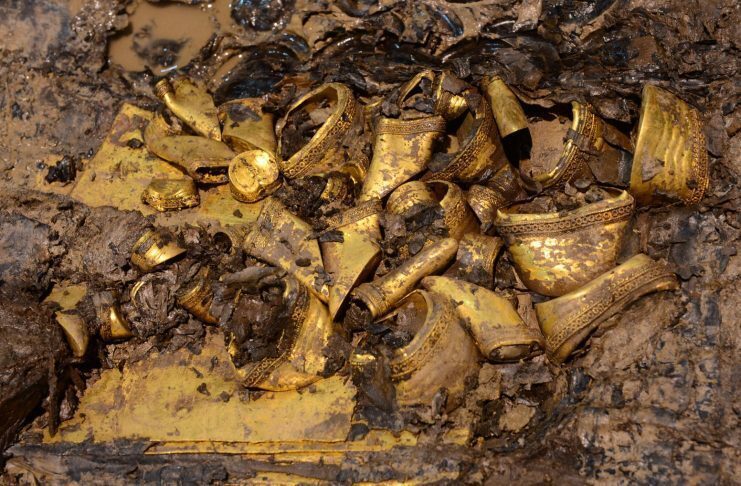
© AlamyGold items excavated from the tomb of "Haihunhou" (Marquis of Haihun)
Liu He was an emperor of the Chinese Han dynasty with the era name Yuanping. He was originally the ruler of Changyi, later installed by the minister Huo Guang as emperor in 74 BC.

Twenty-seven days later, he was deposed and omitted from the official list of emperors, with a total of 1127 examples of misconduct used as evidence in articles of impeachment by palace officials.

Liu He was banished to live in exile as a commoner, where he later died in his early thirties in 59 BC, survived by his 16 wives and 22 children.

He was buried in the tomb of the Marquis of Haihun, located in the northern part of Xinjian in Jiangxi. Archaeologists uncovered the tomb in 2011, with ongoing excavations discovering around 20,000 artefacts.

Comment: See also: New excavations of China's mysterious Sanxingdui culture reveal more exquisite & bizarre objects that hint at exchange and integration


Info

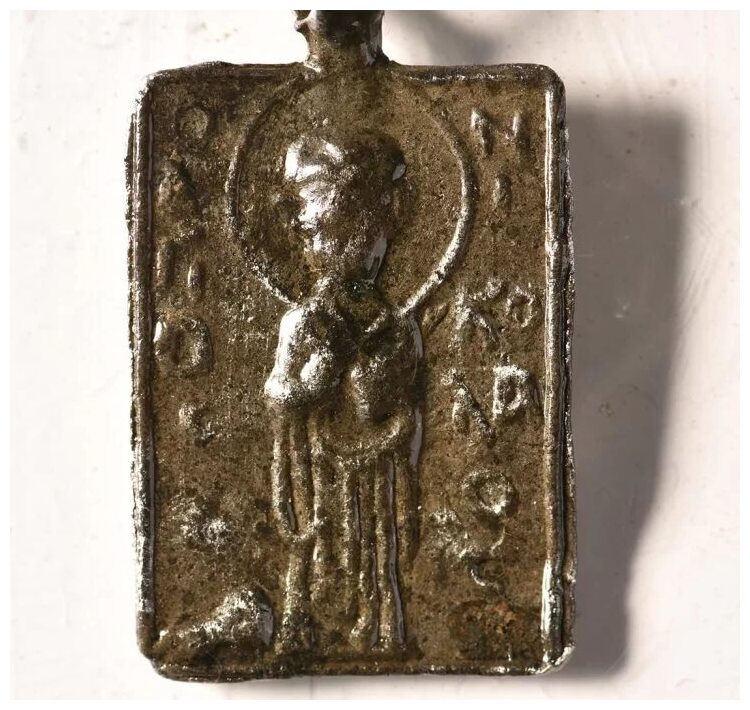
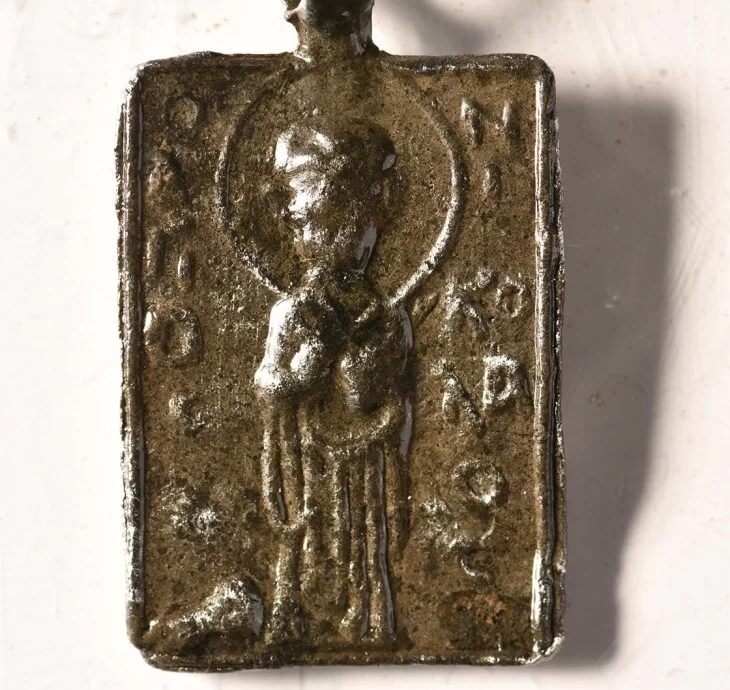
A pendant with a figure of St. Nicholas found in the ancient church hidden in Turkish lake

St Nick Pendant
© Anadolu Agency
Underwater archaeological excavations and research, which were started 8 years ago in the basilica located 20 meters off the lake shore at a depth of 1.5-2 meters in the Iznik district of Bursa, in western Turkey, continue with new discoveries.

Historically, Iznik played a significant role as a center of culture during the Byzantine and early Christian eras. These ancient roots showed themselves in 2014 when a 1,600-year-old basilica was found submerged off the shores of Lake Iznik.

In A.D. 740, an earthquake destroyed the basilica, which later sank beneath the lake's surface, leaving the ruins submerged.

Underwater excavations are continuing in Iznik Lake under the direction of Professor Mustafa Şahin, a professor at Bursa Uludağ University (BUU) Faculty of Arts and Sciences, Department of Archeology.

The research team unearthed a large number of finds and a pendant with the name and figure of St. Nicholas on it during the dives that continued since the beginning of August.

The finding of the pendant, which is thought to belong to a pilgrim, is considered as a sign that the basilica, which was named one of the 10 most important discoveries worldwide in 2014 by the American Archaeological Institute, was a pilgrim church at that time.

Colosseum

Alhambra's famous golden decor is turning purple and now researchers know why

Alhambra
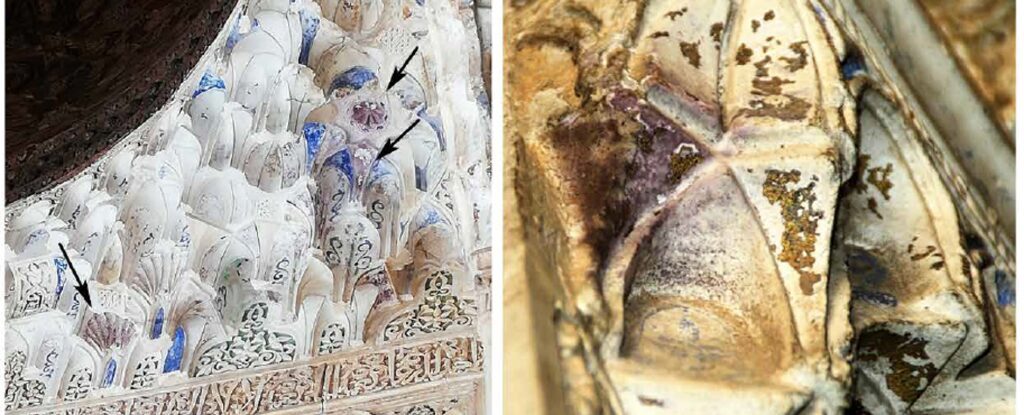
© Cardell & Guerra, Science Advances, 2022The Alhambra de Granada's oddly discolored walls.
Built by the last of Spain's Muslim rulers, the Alhambra is a regal palace that has shimmered over the city of Granada for 800 years. Throughout the day its colors seem to shift, standing out as a terracotta orange beacon under a midday Sun before giving way to red-pinkish hues in dusk's fading light.

On the inside, in the Alhambra's gilded halls, the palace has been slowly changing color too. After centuries of natural weathering, parts of the palace's golden flanks and ornate, whitewashed walls are turning a patchy, dull purple - a stain two scientists think they can finally explain.

"Its origin remained unknown until now," write University of Granada mineralogist Carolina Cardell and microscopy specialist Isabel Guerra in their published paper, which outlines how technological advances made it possible for the pair to 'peel back' the layers of the Alhambra's weathered walls.

Comment: See also: Mystery of 2,000-year-old Antikythera 'computer' may be closer to being solved


Info

Shrine discovered in Egyptian temple with evidence of previously unknown rituals

Stele of the Falcon God
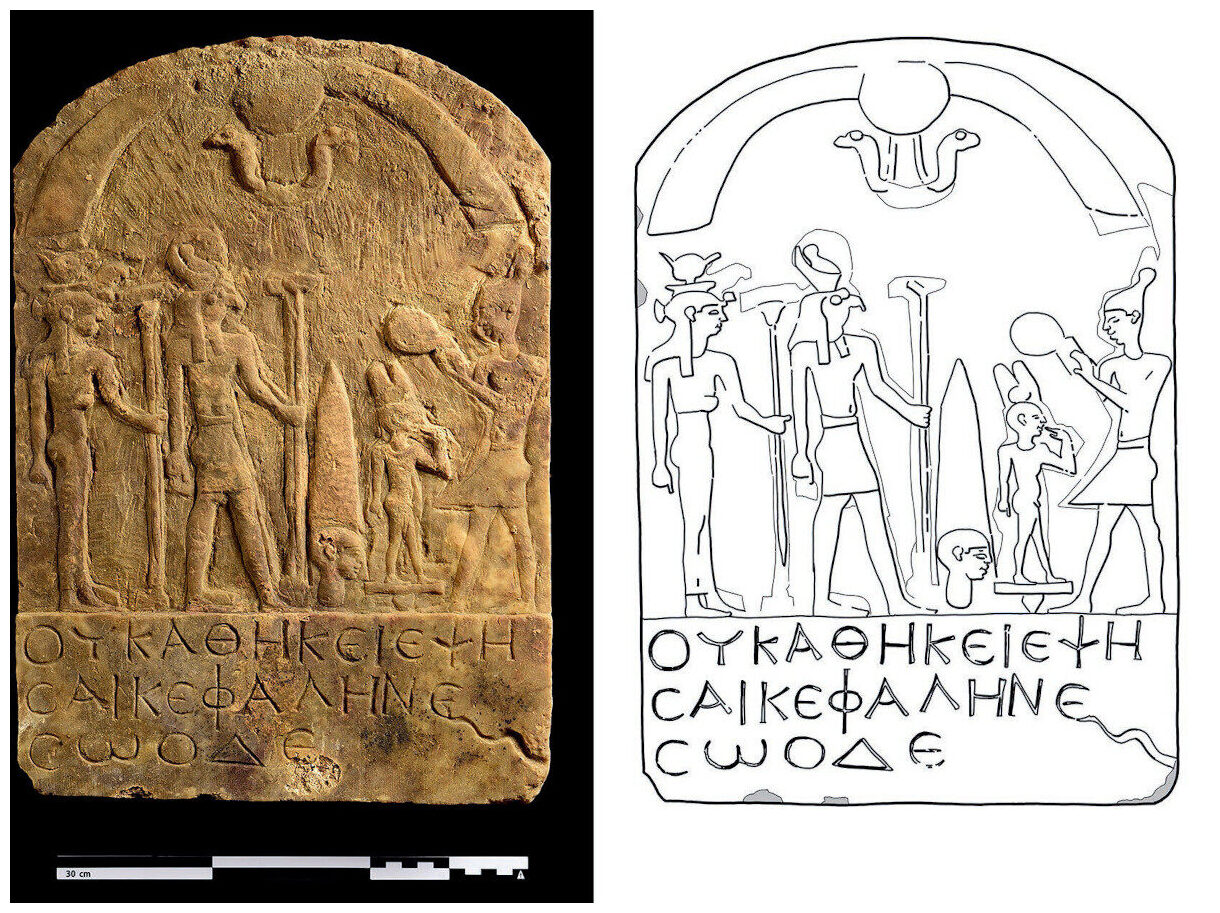
© American Journal of Archaeology (2022). DOI: 10.1086/720806Stele of the Falcon God and the Head; scale = 30 cm (K. Braulińska; drawing by O.E. Kaper).
The Sikait Project research team, directed by Professor Joan Oller Guzmán from the Department of Antiquity and Middle Age Studies at the UAB, recently published in the American Journal of Archaeology the results obtained from the January 2019 excavation season at the ancient seaport of Berenike, located in Egypt's Eastern desert.

The paper describes the archaeological dig of a religious complex from the Late Roman Period (4th to 6th centuries CE) named the Falcon Shrine by researchers, and located within the Northern Complex, one of the most important buildings of the city of Berenike at that time.

The site, which was excavated by the Polish Center of Mediterranean Archaeology and the University of Delaware, was a Red Sea harbor founded by Ptolomy II Philadelphus (3rd century BCE) and continued to operate into the Roman and Byzantine periods, when it was turned into the main point of entrance for commerce coming from Cape Horn, Arabia and India.

Within this chronological period, one of the phases yielding the most new discoveries was the one corresponding to the Late Roman Period, from the fourth to sixth centuries CE, a period in which the city seemed to be partially occupied and controlled by the Blemmyes, a nomadic group of people from the Nubian region who at that moment were expanding their domains throughout the greater part of Egypt's Eastern desert.