Secret HistoryS


Dig

1000-year-old Viking Age treasure hoard uncovered in Stockholm

Viking hoard
© Acta Konserveringscentrum AB
The discovery was made during excavations of a Viking settlement where the researchers found the remains of 20 houses and structures that date from AD 400, continuing into the Viking Age (AD 800-1050) and the early Middle Ages.

While excavating a wooden floor in one of the buildings, the team discovered a deposited ceramic pot containing a pouch made of linen holding silver coin pendants (used as jewellery), in addition to various items of jewellery such as eight high quality torque-style neck rings, two arm rings, one ring and two pearls. Excavations of the settlement also uncovered objects such as arrows, quern-stones, and ornate amulet rings.

Several of the coin pendants are European in origin, coming from England, Bohemia and Bavaria, in addition to five Arabic coins (dirhams) which suggests a far-reaching trade network.


Comment: Other archaeological evidence suggests networks that extended even further afield: 'stretching from Southeast Asia and Africa to Siberia and the northernmost corners of Scandinavia'


Comment: See also:


Attention

Vladimir Putin and Russian Sovereignism

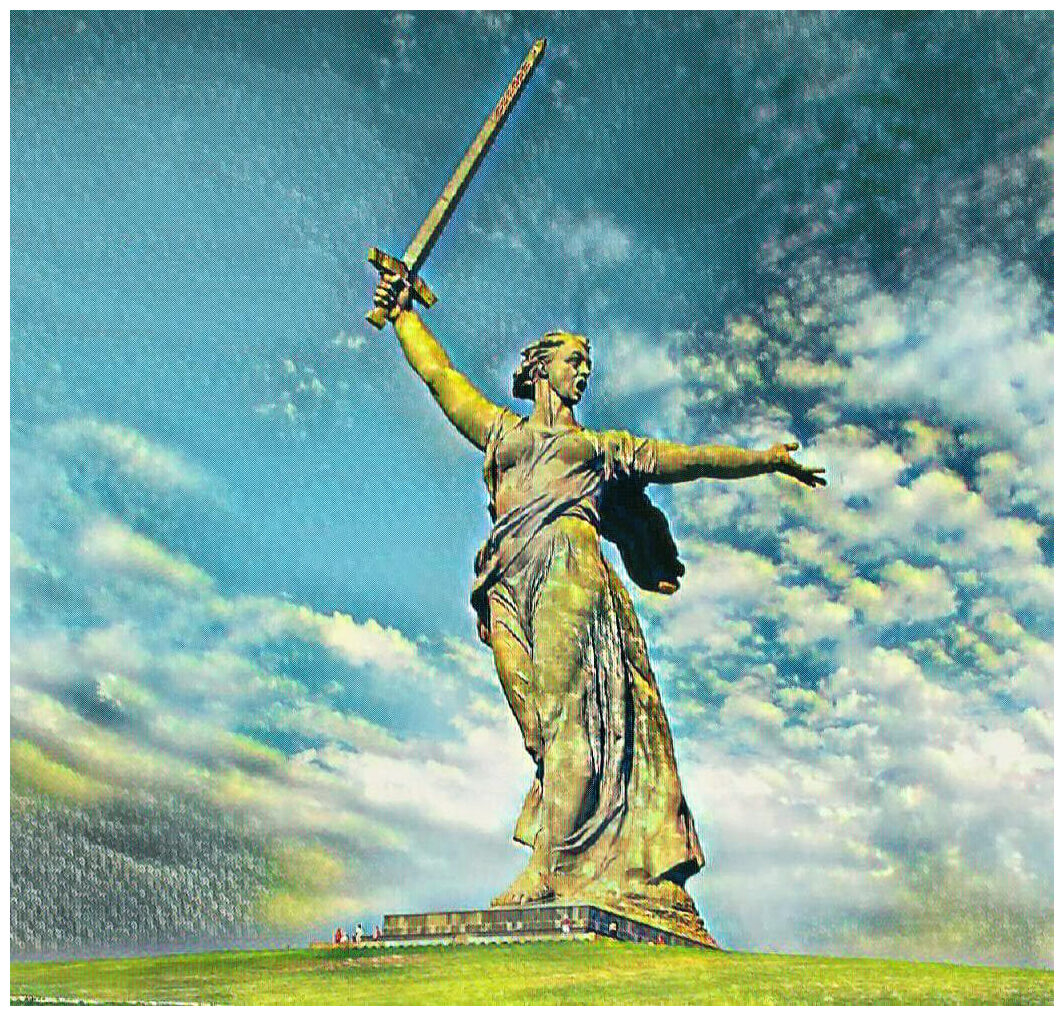
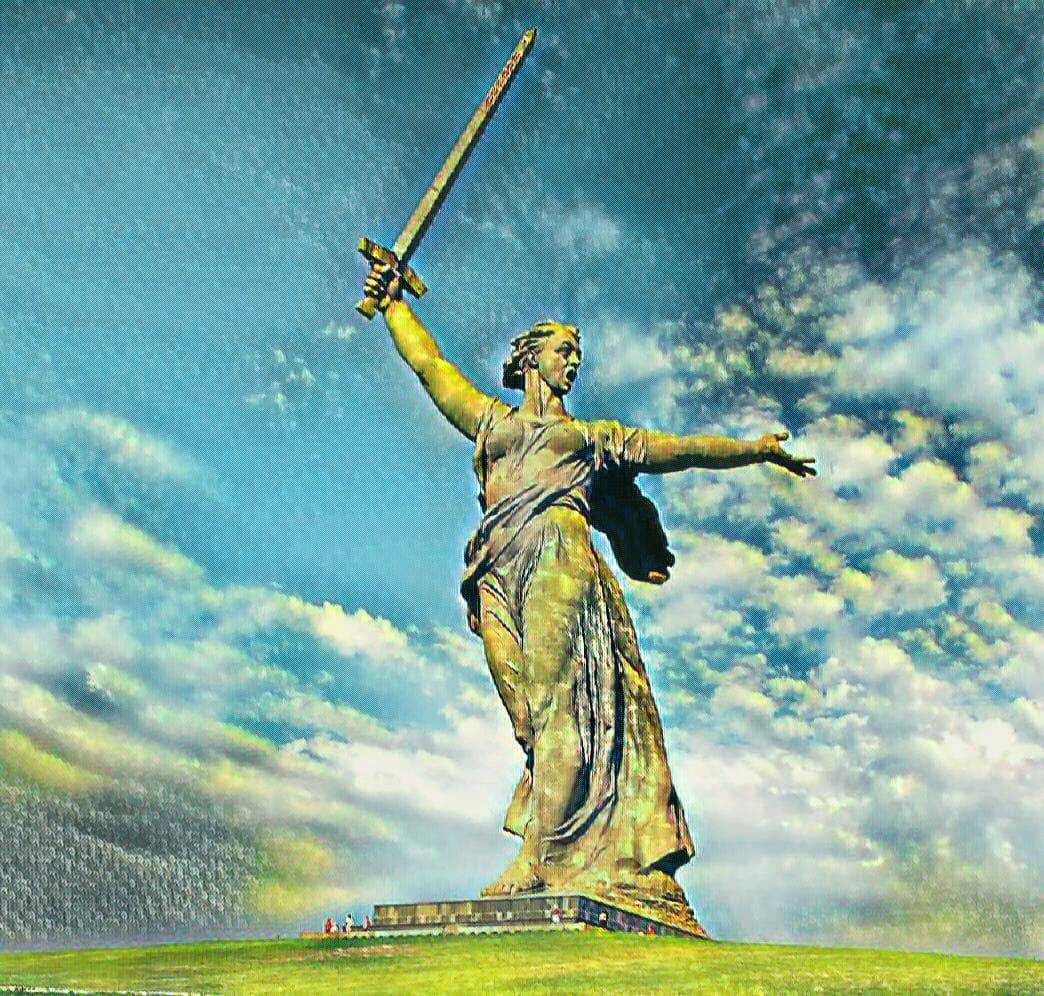
The Motherland Calls (1967).
© The Postil MagazineThe Motherland Calls (1967).
As we mentioned in a previous article, Boris Yeltsin's period of government in Russia led the country into unprecedented economic chaos and a real danger of fragmentation. The savage privatization of companies and infrastructures gave birth to the emergence of the so-called "oligarchs," former officials and politicians of the communist regime who had accumulated a great deal of power and wealth with these privatizations, wealth that contrasted with the growing misery of the majority of the Russian population.

In September and October 1993, the discontent of a large part of the population against Yeltsin's policies led to the uprising of the Duma (parliament) against the president. The previous elections had given a majority to Vladimir Zhirinovsky, a populist and nationalist leader, but the very presidentialist structure of Russian politics meant that in reality the Duma had very little power. In the uprising would converge the patriotic and illiberal forces that would form the basis of the patriotic movement that would be led by Vladimir Putin: Zhirinovsky's nationalists, the Russian communist party (actually national-communist) of Gennady Zyuganov, and tsarist and orthodox religious groups. Despite their ideological differences, these groups had in common their opposition to liberalism and Westernism, and their defense of the integrity and sovereignty of Russia.

The rebel deputies made a strong stand in the Duma building, which was shelled by military units loyal to Yeltsin. The uprising was crushed. But from this point on Yeltsin's political line began to waver. Yeltsin's eight years in power had been a truly dark period in Russian history, with an anti-national government allied to the interests of foreign powers. His policy of change towards a Western-style liberal society was based on Western foreign investment and large loans from international financial institutions. However, none of this materialized in reality — the loans from the International Monetary Fund were in dribs and drabs, immensely smaller than promised and served only to pay the interest on the foreign debt.

In a way, a certain parallel can be drawn between the Russian and Spanish transitions: Governments that respond to foreign interests, dismantling of industry, privatization of companies and danger of fragmentation due to growing nationalism. The only difference is that in Spain there has not been the patriotic reaction that took place in Russia.

Although the uprising in the Duma was crushed by force, it showed the failure of the Yeltsin project. The oligarchs, enriched by savage privatizations, and who supported liberal and pro-Western policies, withdrew their support for the president and promoted an unknown — Vladimir Putin, thinking that he would carry out a policy more in line with their interests. Yeltsin resigned on December 31, 1999, so the year 2000 was the beginning of a new era in Russia.

Blue Planet

Nazca child ingested psychoactive cactus just before being ceremonially sacrificed in ancient Peru

trophy heads
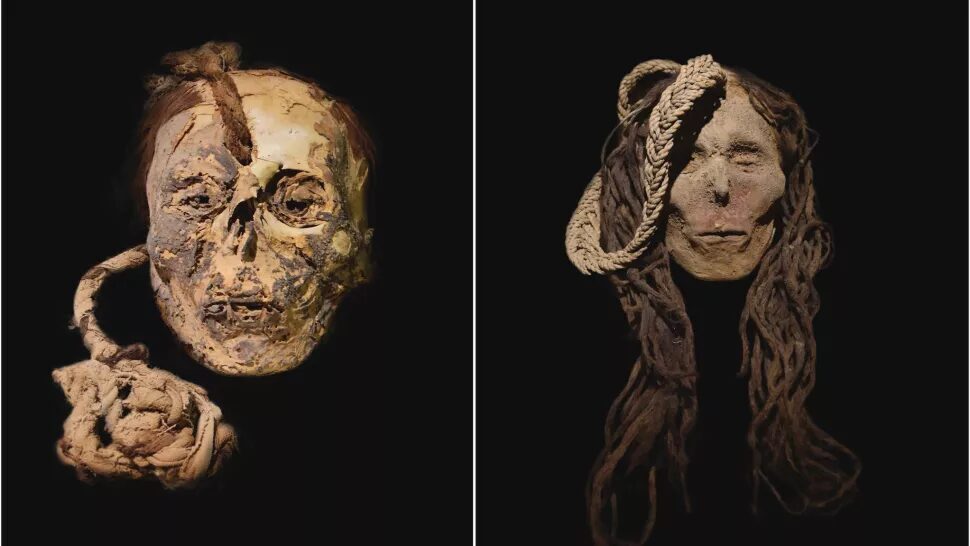
© Dagmara SochaTwo of the trophy heads, one of a child and one of a woman, were part of an ancient ceremony performed in what is now Peru.
Thousands of years ago, a child in Peru was sacrificed as part of an ancient ritual, their head severed at the neck and made into a type of trophy. A new analysis of a single hair plucked from the mummy's skull reveals that the child consumed a psychoactive cactus prior to execution, as part of the ceremony.

The child's preserved head was one of 22 human remains associated with the ancient Nazca society examined in a new study; all of these individuals lived during the pre-Hispanic era (3500 B.C. to A.D. 476) and were buried near the southern coast of Peru, where they were excavated during the Nazca Project, a long-running archaeological program that began in 1982. While scientists are uncertain of the child victim's sex and age at death, they reported that the child had ingested San Pedro cactus (Echinopsis pachanoi), a prickly plant taken for its "strong hallucinogenic properties" and used by indigenous civilizations of the Americas in traditional medicines and during rituals.

Comment: See also:


Map

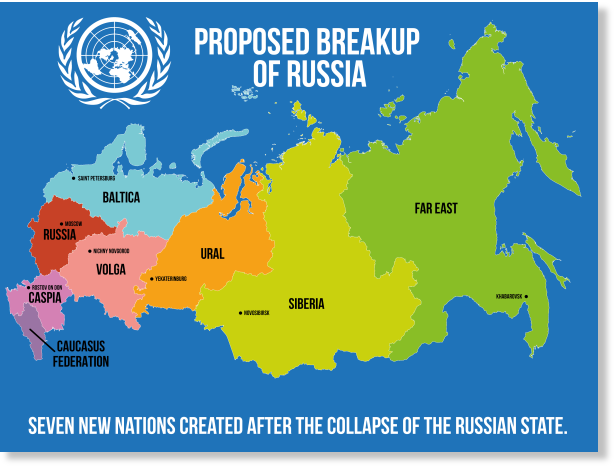
Washington's long-standing plan to break up Russia

breakup of Russia
"The Western goal is to weaken, divide and ultimately destroy our nation. They are openly stating that, since they managed to break up the Soviet Union in 1991, now it's time to split Russia into many separate regions that will be at each other's throats." Russian President Vladimir Putin
"Cheney 'wanted to see the dismantlement not only of the Soviet Union and the Russian empire but of Russia itself, so it could never again be a threat to the rest of the world.'...The West must complete the project that began in 1991 .... Until Moscow's empire is toppled, though, the region — and the world — will not be safe..." ("Decolonize Russia", The Atlantic)
Washington's animus towards Russia has a long history dating back to 1918 when Woodrow Wilson deployed over 7,000 troops to Siberia as part of an Allied effort to roll back the gains of the Bolshevik Revolution. The activities of the American Expeditionary Force, which remained in the country for 18 months, have long vanished from history books in the US, but Russians still point to the incident as yet another example of America's relentless intervention in the affairs of its neighbors. The fact is, Washington elites have always meddled in Russia's business despite Moscow's strong objections. In fact, a great number of western elites not only think that Russia should be split-up into smaller geographical units, but that the Russian people should welcome such an outcome. Western leaders in the Anglosphere are so consumed by hubris and their own blinkered sense of entitlement, they honestly believe that ordinary Russians would like to see their country splintered into bite-sized statelets that remain open to the voracious exploitation of the western oil giants, mining corporations and, of course, the Pentagon. Here's how Washington's geopolitical mastermind Zbigniew Brzezinski summed it up an article in Foreign Affairs:

Display

Early computer culture: The life and times of Clippy

clippy microsoft onscreen assistant
© Microsoft/SeattleMet'Clippy' was often the first introduction to computer use for beginners
In the '90s, Microsoft created an annoying paperclip that it quickly retired. Its developers never imagined the virtual assistant would become a cultural icon.

The blank screen was already intimidating enough. Then, out of nowhere, an incorporeal know-it-all popped up to make us feel even worse about the novel notion of word processing in the mid-'90s. "It looks like you're writing a letter," a googly-eyed, caterpillar-browed paperclip in Microsoft Word observed when we may or may not have been trying to write a letter. The metallic office supply bounced around the margins of documents and never stopped looking over our shoulders, even as it blinked back at us impatiently. "Would you like help?"

Many users found its polite but presumptuous suggestions invasive, obnoxious, and creepy. Almost immediately, computer geeks and neophytes panned it. Microsoft banished it. Time labeled it one of the 50 worst inventions ever. But nearly three decades after its genesis at the Redmond tech giant, Clippit — better known as Clippy — improbably lives on.

Take 2

The three-act tragicomedy of the Venezuelan opposition

venezuela cartoon
© Daniel Duque'Opposition'
The history of the Venezuelan opposition since the arrival of Hugo Chávez's Bolivarian Revolution has been one of gaffes, violence, infighting and shortsightedness.

While the corporate media has done its utmost to cheer on US-backed sectors and blame their failures on unsubstantiated claims that the game is "rigged," the fact is that anti-Chavismo's shortcomings spring from its very nature. The opposition's leaders stem from a well of racist elitism that saw running the country as a birthright taken away by a low-class "populist" in 1999. Add to that their eternal umbilical cord to Washington, and the result has been a constant misreading of Venezuelan reality.

Dissecting the opposition's strategies over the last 20+ years would be an interesting exercise. But for the purposes of this article we focus only on the latest chapter.

Bizarro Earth

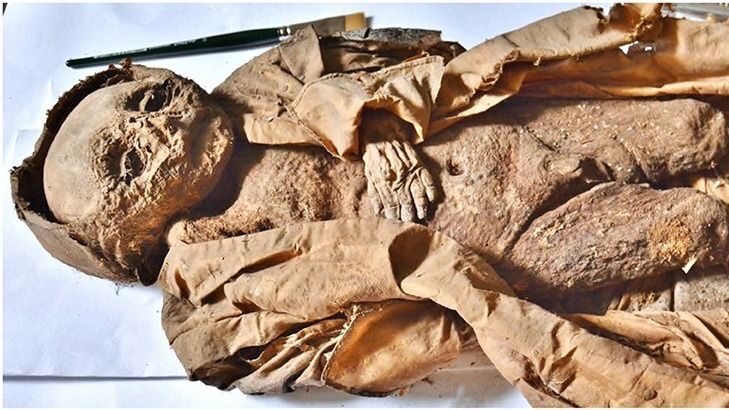
'Complete lack of sunlight' killed a Renaissance-era toddler belonging to the aristocracy, CT scan reveals

child mummy
© Nerlich et al, Frontiers, 2022 CC BY 4.0The child mummy, a member of the Austrian aristocracy, was found wrapped in a silk-hooded coat.
A "virtual autopsy" of the mummified remains of a toddler buried inside a family crypt in Austria reveals that the child died from a lack of sunlight, a new study finds.

Believed to be Reichard Wilhelm, the first-born son of a Count of Starhemberg, a prominent member of the Austrian aristocracy, the young boy lived during the Renaissance (between the 14th and 17th centuries) and died when he was just 10 to 18 months old. Yet despite his privileged upbringing, a team of scientists from Germany concluded that he experienced "extreme nutritional deficiency and a tragically early death from pneumonia," according to a statement.

Colosseum

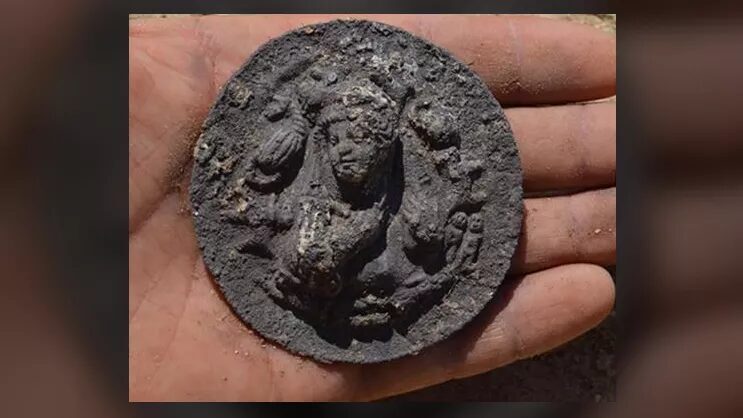
2,100-year-old burial of Aphrodite 'priestess' discovered in Russia, zodiac medallion shows just 10 signs

Aphrodite
© Nikolay SudarevThe large medallion is made of silver and shows the goddess Aphrodite in the center, surrounded by symbols portraying 10 signs of the zodiac.
Archaeologists have unearthed a silver medallion depicting the Greek goddess Aphrodite in a 2,100-year-old grave on the northeastern coast of the Black Sea.

Russian archaeologists have unearthed an intricately detailed silver medallion of the Greek goddess Aphrodite in the 2,100-year-old grave of a young woman, possibly a priestess, on the northeastern coast of the Black Sea.

The medallion also shows 10 — not the known 12 — signs of the zodiac, and gives unique insight into religious practices at that time and place.

Some researchers have proposed that the woman in the grave was a priestess of Aphrodite, the ancient Greek goddess of beauty and love, but there's no way to be sure — although there are indications that her rings, silver earrings and other grave goods were also dedicated to the goddess.

Pharoah

'King Solomon was actually a pharaoh in Egypt": Historian claims his life was rewritten by biblical scribes

King Solomon
© Wikimedia CommonsHistorian claims Solomon was not King of Israel, but an Egyptian Pharaoh Was the story of King Solomon's life whitewashed and rewritten by biblical scribes? A historian claims that this is the only logical explanation why there is no trace of his gold left in Israel.
"This is not the kind of discovery that Israeli archaeologists will be happy to hear, for political and cultural reasons, but contrary to the classical interpretations of the biblical story - King Solomon was actually a pharaoh in Egypt," claims a British historian and writer who has researched King Solomon's life story for the past twenty years and reached this stressful conclusion.

Comment: See also: Also check out SOTT radio's:


Info

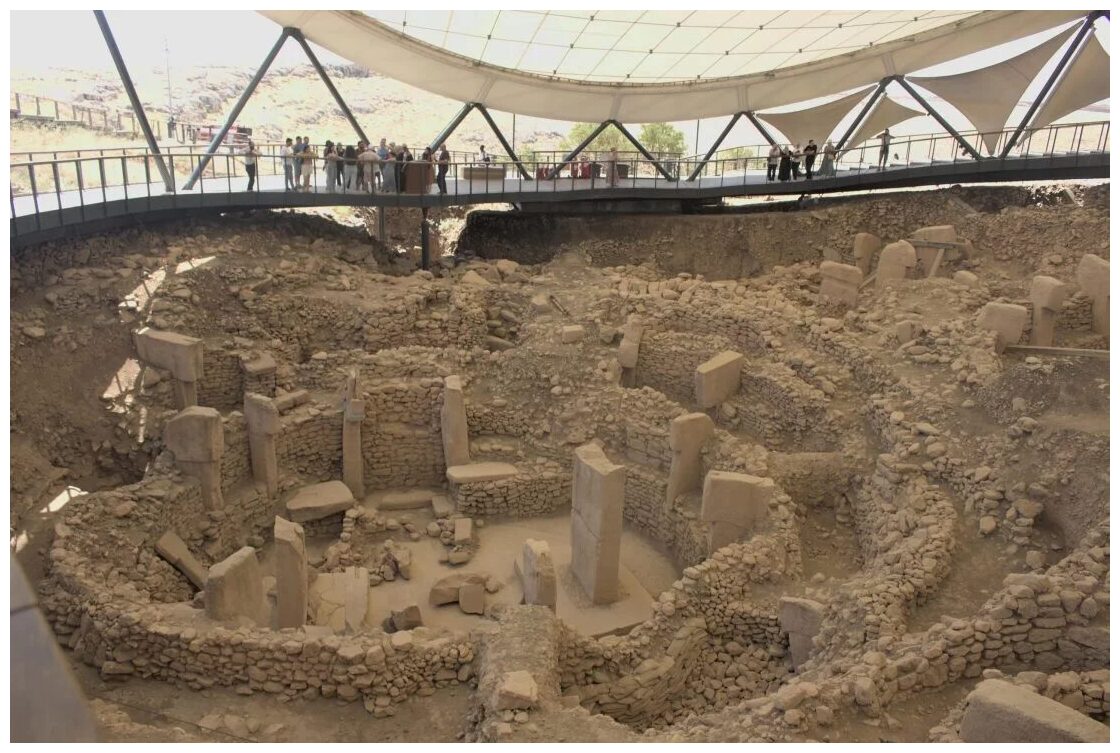
New finds at Göbeklitepe

Göbeklitepe
© Arkeonews Net
A recent discovery at Göbeklitepe, the oldest known Mesolithic temple complex, has revealed grinding stones, new finds expected to shed light on human history.

"During this year's work we made a large number of findings such as grinding stones and hammerstones indicating daily use in these places," Necmi Karul, an archeologist at the Istanbul University and leader of the excavation team, according to the news reported by Anadolu Agency.

Karul stated that the information obtained in archaeological excavations changes as new studies are conducted and data analysis is made. He said that while some of the generally accepted views on Göbeklitepe are still valid, some are likely incorrect in light of new findings from excavations.

Grinding stones were frequently used in ancient times to crush or pulp plants or animals for use in cooking. "Analysis of these findings will give us an idea of what these activities were," he said, adding that they plan to do this during the winter.

As the team began to consider other possibilities about the ancient site, he said: "One of the prominent ones is that although it has been suggested that there were only public buildings in Göbeklitepe, called temples by some, it was known that there were places in the form of dwellings and shelters."

He went on to say: "More of these (dwellings and shelters) have been found. So this has fueled debate over whether this was a gathering center or a settlement where people live at the same time."