Puppet MastersS


Quenelle - Golden

Russian diplomat: US weeps crocodile tears over 'humanitarian crisis' that isn't even happening

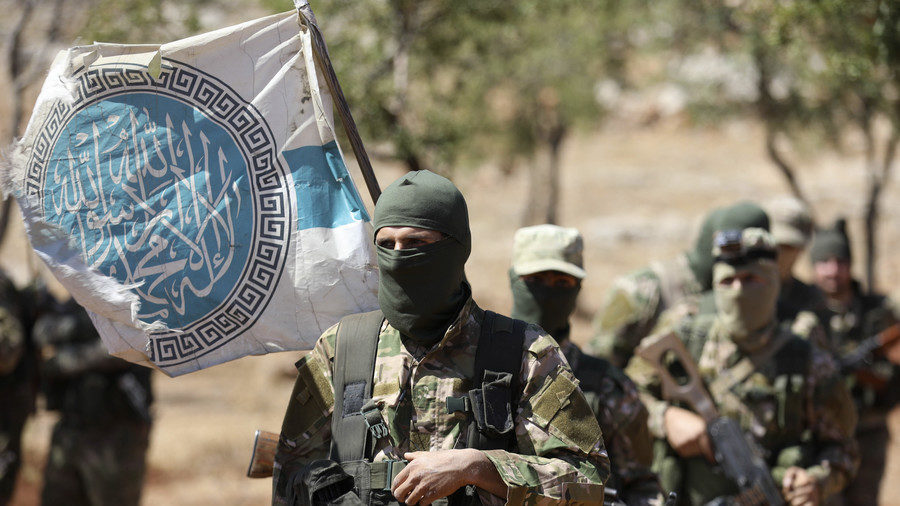
Hayat Tahrir al-Sham jihad terrorist
© Omar Haj Kadour / AFPHayat Tahrir al-Sham (HTS) militants at a camp in Syria's province of Idlib on August 14, 2018.
"Predications" made by Western media and politicians of a disaster in Idlib are unacceptable, given all the efforts of Moscow and its partners, and earlier examples of reconciliation in Syria, a top Russian diplomat says.

The situation in Idlib, Syria, which remains the last major stronghold of hardline militants and terrorists in the country, has been among the main topics of the talks in Geneva between representatives of Russia, Iran, Turkey, and UN Special Envoy to Syria Staffan de Mistura.

"The so-called peaceful co-existence with terrorists is simply impossible. Fighting until their complete eradication must continue," the Russian presidential envoy to Syria, Alexander Lavrentiev, told reporters following the talks.

Comment: Also see: Idlib: Al Qaeda's last stand in Syria


Wall Street

Russian Investment Fund boosts ruble-yuan trade with China to substitute US dollar

Chinese Yuan
© Aleksandr Demyanchuk / Sputnik
Moscow and Beijing are increasing the share of trade in local currencies, Russian Direct Investment Fund (RDIF) head Kirill Dmitriev said on Wednesday at the Eastern Economic Forum (EEF) in Vladivostok.

"The first deals will be [conducted in national currencies] in the beginning of the next year. We have an agreement with the China Development Bank on a large fund in Chinese yuan worth $10 billion," Dmitriev said.

The two countries are seeking to reduce the share of US dollars in trade. Russia and China expect trade to hit $100 billion this year, with prospects of reaching $200 billion in the mid-term.

Comment: Also see: Russia and China cooking up joint projects worth more than $100bn


Bad Guys

The Pentagon says it has spent $1.5 trillion on post-9/11 wars, experts counter that the figure is wildly underestimated

obama Bush
The Pentagon estimates that the cost of war since the fateful terror attacks on 9/11 rounds out to $1.5 trillion, yet experts maintain that this figure wildly underestimates the true financial burden of perpetual war.

"After 16 years, should the taxpayers of America be satisfied we are in a 'stalemate?' I don't think so," the late Sen. John McCain said in 2017.

The Pentagon's $1.5 trillion figure purports to cover the time period from September 11, 2001, until March 31, 2018. While this may seem like a large sum of money, it's only about twice the 2017 Pentagon budget of $700 billion. About $1.5 trillion might be a reasonable ballpark estimate for war spending in the past few years, but to suggest it as the gross cost of 17 years of bombings; costs per hour to fly military aircraft; supplies for personnel overseas; costs of lost, damaged and stolen equipment; soldier pay; and more is almost an offense to reason.

People 2

Vladmir Putin: We know who people named as suspects in Skripal case are, they are civilians

Skripal suspects
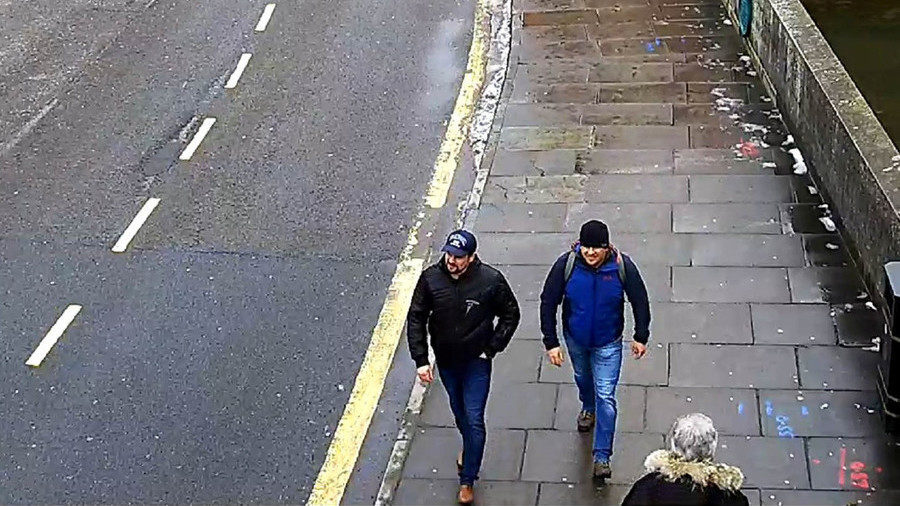
© Reuters'Alexander Petrov' and 'Ruslan Boshirov' are seen in an image handed out by the Metropolitan Police in London, Britain
Moscow is aware of who the people named as suspects in the Skripal case are, President Vladimir Putin said, adding that these people are civilians.

Saying that there is "nothing criminal" about the two, Putin also hopes that the people in question will eventually come forward and talk to the media.

"I want to address them [the suspects]... [I hope] they contact the media. I hope they appear and tell everything about themselves," he said, addressing the audience during the Eastern Economic Forum (EEF) in the Russian city of Vladivostok.

Earlier in September, UK prosecutors named two Russians they suspect of poisoning Sergei Skripal and his daughter in Salisbury this March. According to London, their names are Alexander Petrov and Ruslan Boshirov. Russia denies any involvement and accuses Britain of spinning the case to stir anti-Russian sentiment.

Beyond identifying them as Russian nationals, the prosecutors gave no indication as to who the men are.

Comment: And from Vesti news:


See also:


Sheriff

"Stage a mutiny!" Duterte dares Philippine military to act if they don't like his leadership

philipine army
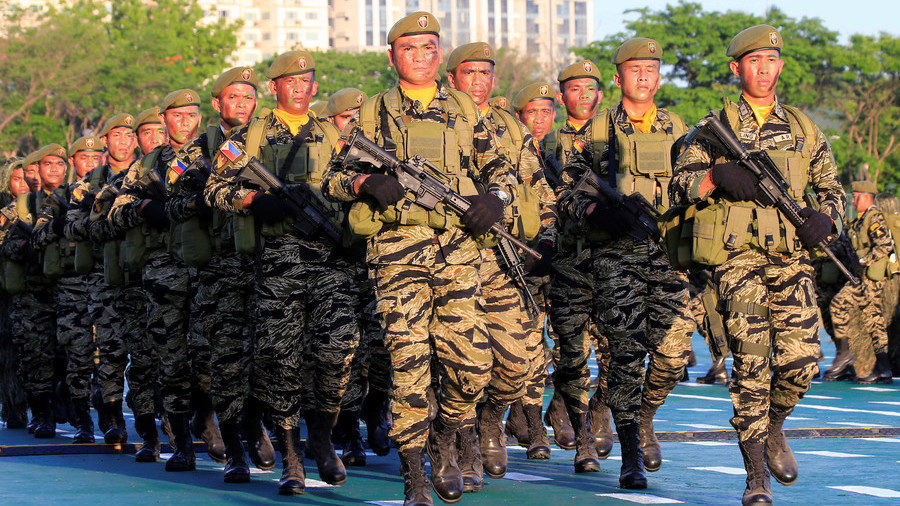
© Romeo Ranoco / ReutersSoldiers march during the 121st founding anniversary of the Philippine Army (PA) at Taguig city
Philippines President Rodrigo Duterte has dared soldiers to "stage a mutiny" if they aren't happy with his leadership, saying they're free to join the side of his fiercest critic in Congress, Senator Antonio Trillanes.

"Stage a mutiny or revolution or whatever," Duterte said in an interview with Chief Presidential Legal Counsel Salvador Panelo on Tuesday, as quoted by ABS-CBN TV. He added that if his critics believe they would be happier with his arch rival Trillanes, they can support him instead.

"You are free to do that. As a matter of fact, I'm encouraging you," Duterte said.

The president's comments came after he voided an amnesty granted to Trillanes, a former Navy officer who joined past mutinies, and ordered his arrest. He is asking the Department of Justice and the military to restart criminal proceedings against the senator, which Trillanes and some legal experts say would violate the country's constitution.

Comment: Despite the 'scandals' that surround Duterte's often surprising comments, he does appear to have support at home for the changes he is attempting to implement:


Network

Russia will ask UN to lift some North Korea sanctions - Unsurprisingly the US isn't happy

The United Nations Security Council
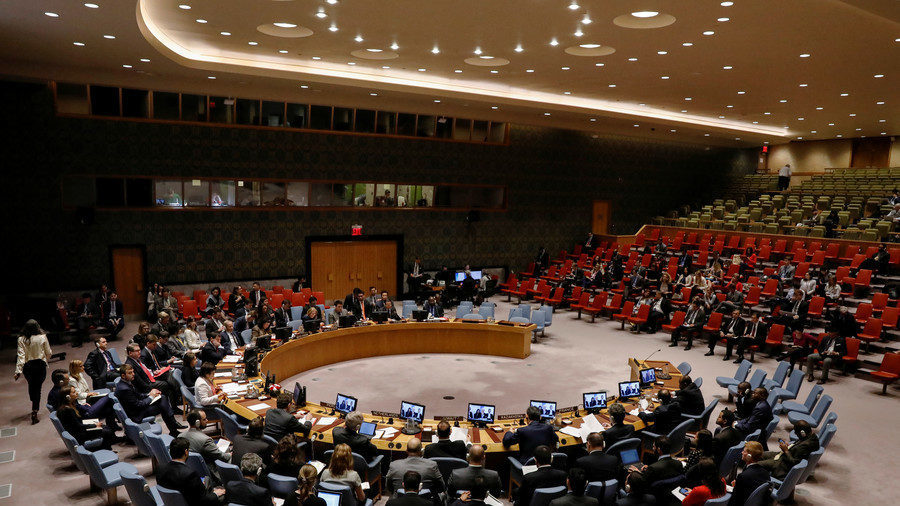
© Brendan McDermid / ReutersThe United Nations Security Council
Moscow will propose to the UN Security Council to reward North Korea with a gradual relaxing of sanctions if it takes the necessary steps towards denuclearization, Deputy Foreign Minister Igor Morgulov said.

"As North Korea takes steps on denuclearization, we believe that the UN Security Council has the authority and should address the issue of adequate easing of the sanctions against North Korea. We will raise this issue with the understanding that North Korea will also take the required steps," Morgulov said on Wednesday, on the sidelines of the Eastern Economic Forum in Vladivostok.

Morgulov is responsible for Russia's relations with East and South Asia and multilateral cooperation in the Asia-Pacific region.

Comment: North Korea doesn't pose the kind of threat the US would have us believe, otherwise why would South Korea be willing to work towards peace and unification? Why would Russia talk of relaxing sanctions? Also check out SOTT radio's: Behind the Headlines: Trump Wags the Iran Riot Dog, Kim Talks Korean Peace


Caesar

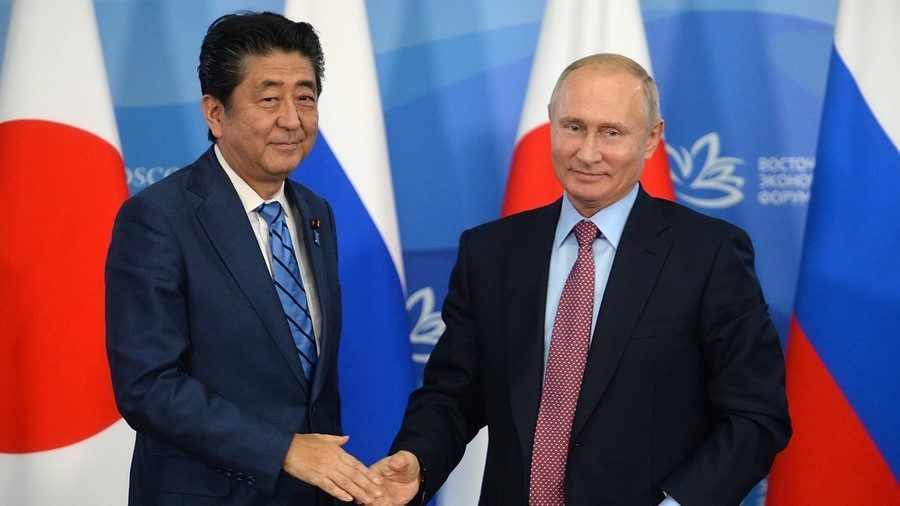
Vlad the Peacemaker offers Japan's Abe 'peace treaty with no preconditions by end of year'

Shinzo Abe and Vladimir Putin
© Sergey Mamontov / SputnikShinzo Abe and Vladimir Putin. September 10, 2018
Russian President Vladimir Putin offered Japanese leader Shinzo Abe a peace treaty between the two countries without preconditions by the end of the year.

The two leaders met on Wednesday at the Eastern Economic Forum taking place in Vladivostok in Russia's Far East.

"Let's conclude a peace treaty - not now but by the end of the year, without any preconditions," the Russian president said.

Putin's remarks were supported by the Japanese prime minister. "Let us move forward, asking ourselves the questions like, 'if we won't do it [conclude the peace treaty] now, then when? If we don't do it now, then who will do it if not us?'" Abe said.

Comment: Hail Caesar! Oops, hail Vladimir Vladimirovich!

The US should take a tip from Russia and Japan in dispute resolution: Pentagon pledges to continue belligerent operations in South China Sea

See also: Also check out SOTT radio's: Behind the Headlines: Trump Ditches Europe, Europe Bluffs, Russia and China Carry on With Eurasian Integration


Road Cone

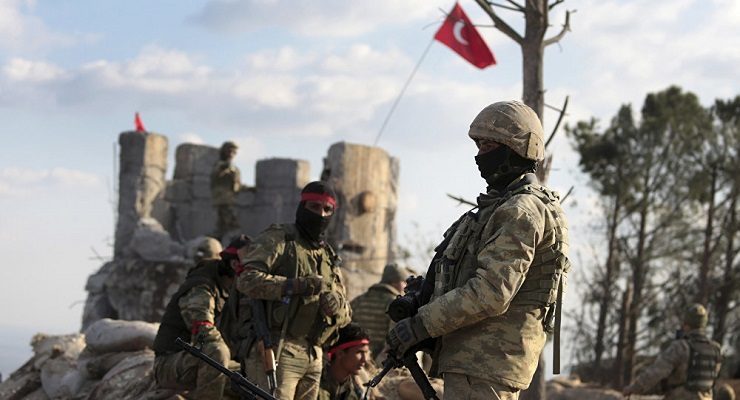
Idlib offensive - Why is Turkey freaking out?

Turkish soldiers
It seems like yesterday that Turkey, a participant in both the Astana and Sochi peace processes, carried out its own operation in Idlib to shore up the internationally brokered 'deescalation zone.' This operation, apart from paving the way for creating a supposed deescalation zone, also allowed Turkey to entrench its military in Syria, becoming a major regional player that would enjoy the ability to shape the Syrian end-game, and retain both a military presence and influence in Syria in any post-war scenario. While Russia and Iran agreed to Turkey's presence in Syria in exchange for having Turkey's support for a Russian-Iranian plan for Syria that didn't involve Assad's removal from power as a precondition, Turkey's current opposition to a full-scale offensive by Syrian forces in Idlib signals that the understanding reached by the three nations might begin unraveling.

While Turkey claims that the operation in Idlib will result in a massive loss of human life, a fact that no one can deny, this reasoning alone does not explain Turkey's rigid opposition to this step.

The actual underlying reason for Turkey's change of heart is the fear of losing its own grip on Syria. A Syrian offensive, supported as it will be by Russian and Iranian forces, will mean a more international military presence in Syria, leaving Turkey in a precarious position vis-à-vis its ability to have the final say in matters, while enabling Ankara to keep a watchful eye on the Kurdish militia. Also, if a joint Syrian, Russian and Iranian offensive comes, it may also involve a potential withdrawal of Turkish troops from Idlib; otherwise there will be a real chance of Turkish troops being caught in the crossfire. This withdrawal as Turkey's leadership seems to believe, may result in the elimination of Ankara from being a deciding factor as the conflict nears its conclusion, and prevent Turkey from influencing events on the ground.

Comment: With the Syrian Army continuing to amass troops and military hardware in southern Idlib, militants occupying the province are seemingly beginning to panic, warning Ankara against giving Damascus the greenlight to launch its long-awaited offensive in northwestern Syria.
A militant from an unspecified group stationed in Idlib has issued a threat to Turkish President Recep Tayyip, warning that militants in northwestern Syria have dug a tunnel stretching into Turkey's Hatay province.

He went on to explain that in the event of Erdogan "selling Idlib", militants will use the tunnel to cross into Turkey, to potentially carry out attacks against civilians and security forces.

"Reyhanli [a town in Hatay province] is behind me. As you know, us [militants] from Ghouta are good are digging and since you've built a 960-kilometer border barrier... We want to tell you: if you sell Idlib or other opposition-held areas, we're going to buy Reyhanli from you. I won't give you more details, but this is your warning," the militant said in video footage circulating on social media.

The video was published just days after a trilateral summit in Tehran, attended by Russian President Vladimir Putin and his Iranian and Turkish counterparts, to discuss the situation in Idlib, ahead of the Syrian Army's impending offensive.
See also:


Blackbox

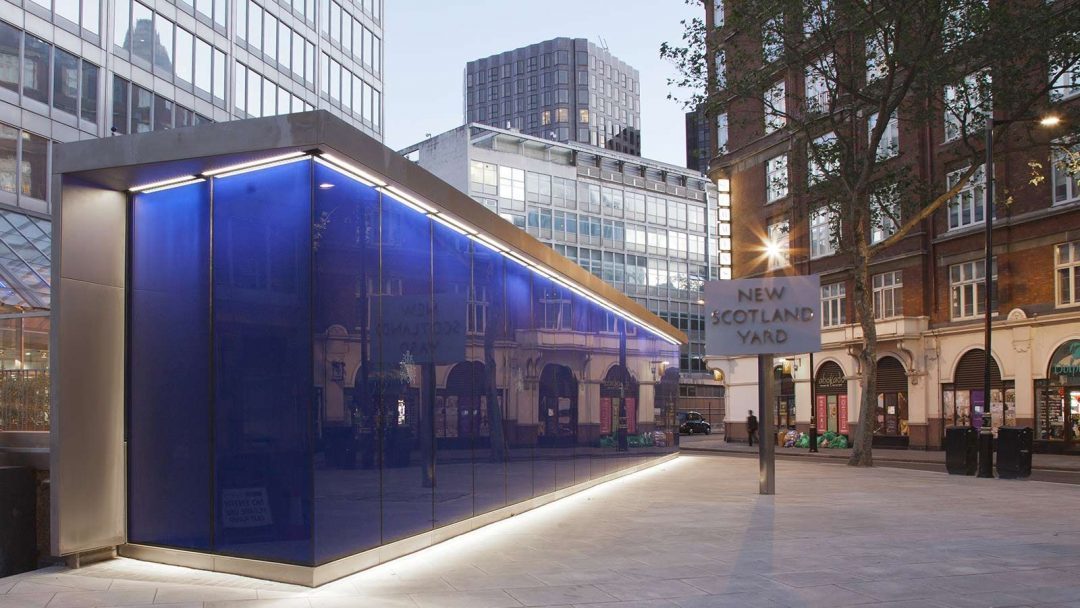
Questions for the Metropolitan Police re: Skripal suspects

new scotland yard
On 5th September, the Metropolitan Police released a series of pictures showing two men, named as Alexander Petrov and Ruslan Boshirov, along with a timeline of their movements from 2nd March to 4th March 2018, and claimed that there was enough evidence to prosecute the pair in relation to the Salisbury incident, including conspiracy to murder Sergei Skripal; attempted murder of Sergei Skripal, Yulia Skripal and Nick Bailey; use and possession of Novichok contrary to the Chemical Weapons Act; and causing grievous bodily harm with intent to Yulia Skripal and Nick Bailey.

At first glance, the claims look plausible. The two men do indeed appear to have entered the country from Moscow on 2nd March, and to have then flown back to Moscow on 4th March. And during their stay, they seem to have travelled to Salisbury, on Saturday 3rd and Sunday 4th March.

However, there are a number of general observations that begin to cast doubts on the central claim that these men were in Salisbury on an assassination mission.
  • Firstly, there is the fact that they are seen operating in broad daylight.
  • Secondly, there is the fact that they are always seen together.
  • Thirdly, there is the fact that they make no attempt to hide their identities or cover their tracks.
  • Fourthly, there is the fact that they are alleged to have traipsed across town on foot to dispose of the poison, when they could have done so in numerous places between Mr Skripal's house and the train station.
  • And fifthly, there is the fact that they seem to have been remarkably casual and spent an awful lot of time hanging around Salisbury - even after their alleged hit.
Needless to say, all of these actions are not what one would normally expect from intelligence officers carrying out an assassination attempt.

Bad Guys

Thierry Meyssan: Why the war on Syria will never really be over - even though the jihadists have lost

chart stuff
© Department of Defense
Although the White House and Russia have agreed to end the proxy war fought by jihadists in Syria, peace is a long time coming. Why?

Why is there a war against Syria?

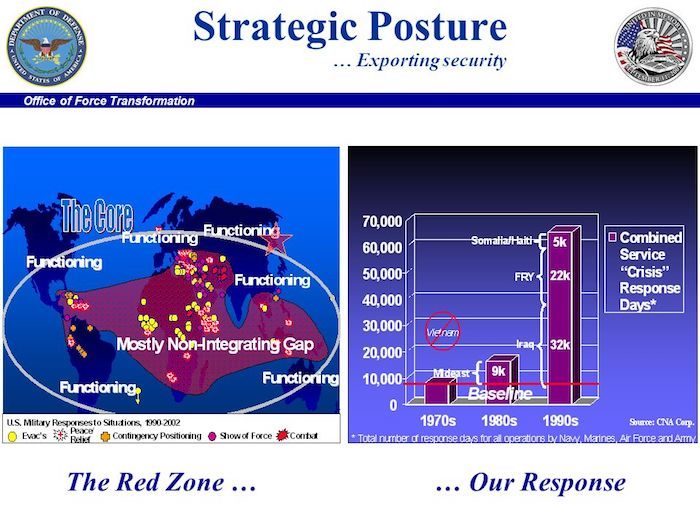
Contrary to the idea carefully sown by seven years of propaganda, the war against Syria is not a « revolution which went wrong ». It was decided by the Pentagon in September 2001, then prepared for many years, admittedly with a few difficulties.

A war in preparation for a decade

The preparation of the war is explained in depth in Thierry Meyssan's latest book. It is already available in French, Spanish, Russian and Turkish. It will be published in September in English, Arab and Italian.