Puppet MastersS

Dollars

Russia to build $1bn oil complex in Saudi Arabia and further boost investment in joint projects

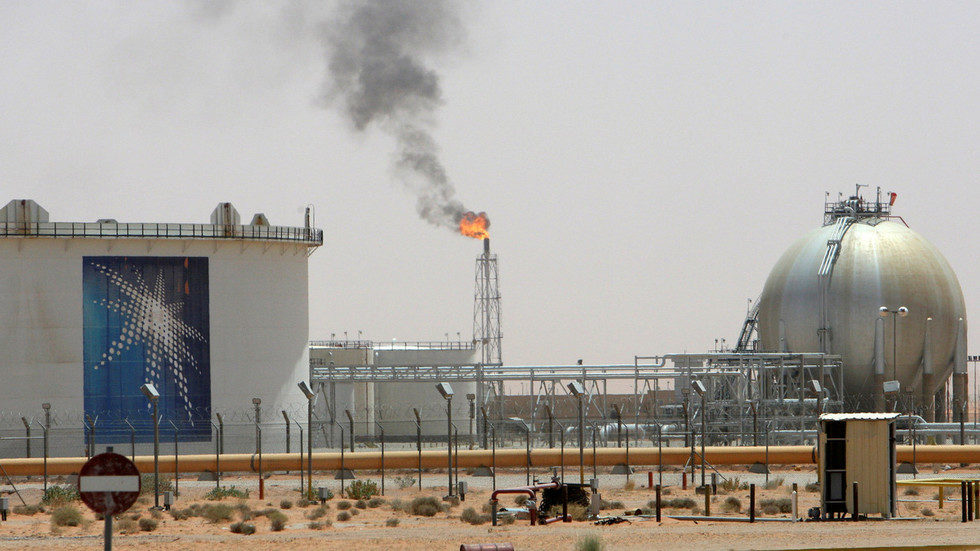
A gas flame is seen in the desert near the Khurais oilfield, Saudi Arabia
© Reuters / Ali JarekjiA gas flame is seen in the desert near the Khurais oilfield, Saudi Arabia.
Russian President Vladimir Putin has revealed plans to boost economic ties with Saudi Arabia by setting up a $1 billion oil plant there. He also reaffirmed Moscow's commitment to the OPEC agenda of keeping the oil market steady.

"There is still a lot to be done, but we have set a good pace. Last year [trade turnover] was up 15 percent. In the first six months of 2019, growth was as high as 38 percent," said Putin.

"We are considering some good joint projects. Our Direct Investment Fund and the Public Investment Fund of Saudi Arabia have jointly established a $10 billion platform. $2 billion has already been invested. Work is underway on other projects, and some promising and interesting projects have already been implemented," the Russian president said in a joint interview with Al Arabiya Sky, News Arabia and RT Arabic ahead of his visit to the Kingdom of Saudi Arabia later this month. He also noted that Russia is considering the possible construction of a petrochemical plant in the region, as well as a number of other ambitious projects.

"We also consider it possible to operate on the territory of Saudi Arabia. One of our companies is exploring the possibility of building a petrochemical facility with an investment of more than $1 billion. It is SIBUR Holding, Russia's largest company in this sector."

Info

Putin: Saudis asked Russia to probe Aramco oilfield attack, Moscow will condemn Iran if it's responsible

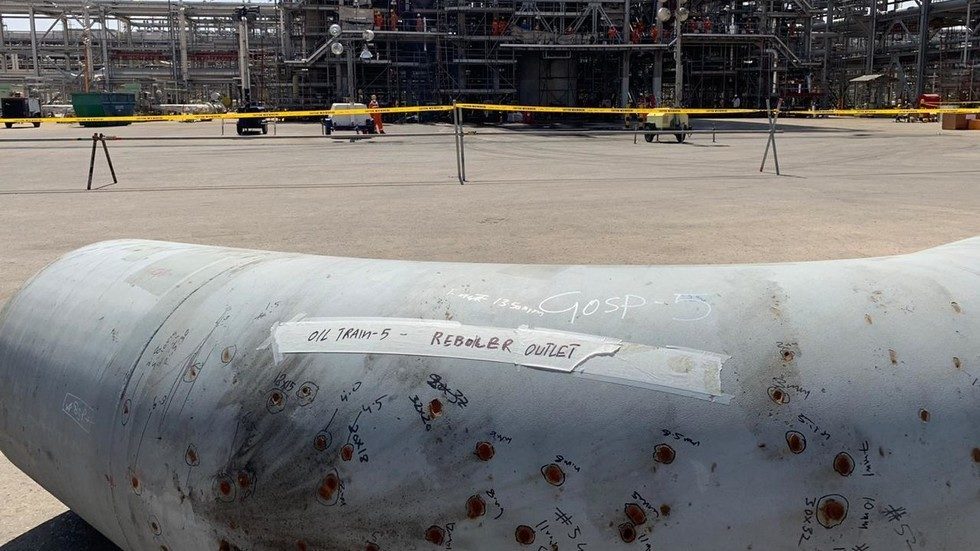
An oil pipe damaged in September 14 attack on the Saudi Aramco facility
An oil pipe damaged in September 14 attack on the Saudi Aramco facility.
Russia agreed to look into the September aerial attack on the Saudi Aramco oil facilities and will condemn whoever was behind it, but will not take sides in the feud between Riyadh and Tehran, President Vladimir Putin says.

Russia treasures its cordial ties with both Iran and Saudi Arabia, and is equally sensitive to each side's concerns, Putin told reporters from three Arabic-language broadcasters when asked for his take on the recent strike on Riyadh's oil processing facilities in Abqaiq.

On the one hand, Moscow maintains "close contacts with the leadership of Saudi Arabia, including the Crown Prince [Mohammad bin Salman]," who asked the Russian leader if his country could help establish crucial facts about the incident.

"I said yes, we are ready to share anything that might be necessary, everything we have for a thorough investigation," Putin revealed.

Gold Coins

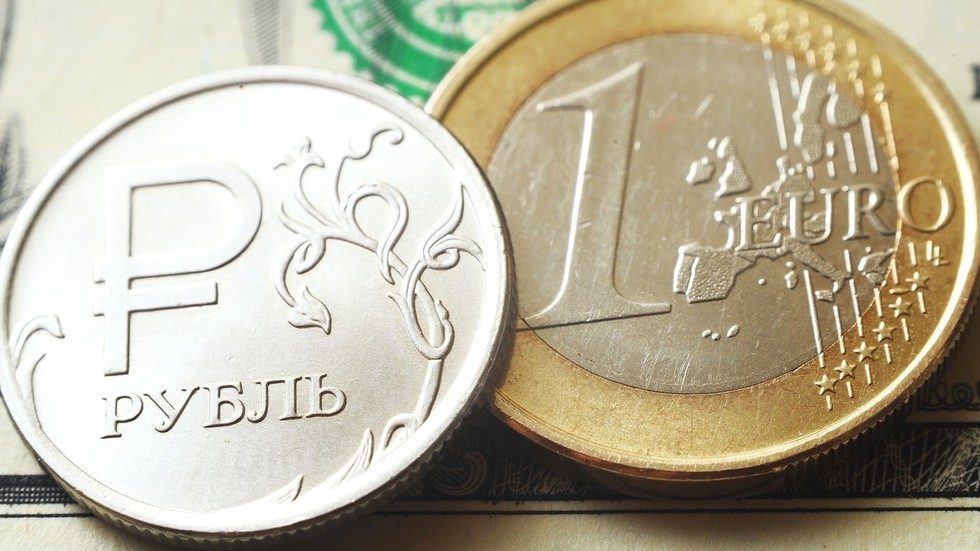
'Our currency's stable, why not use it?' Russia looks to ditch US dollar for exchanges in rubles and euro in energy exports

Russian rubles
© Sputnik / Aleksey SukhorukovThe new mechanism provides payment guarantees for Moscow, Foreign Minister Sergey Lavrov says
Russia is planning to abandon the US dollar in favor of euro and rubles for currency settlements in global energy transactions in order to minimize reliance on the American currency.

"We have a very good currency, it's stable. Why not use it for global transactions?" Economy Minister Maxim Oreshkin said in an interview with the Financial Times on Sunday. The minister noted that the only question is whether switching from the US dollar would lead to any excessive costs.

"We want [oil and gas sales] in rubles at some point. The question here is not to have any excessive costs from doing it that way, but if the broad... financial infrastructure is created, if the initial costs are very low, then why not?" the minister stated. He added that Russia will be able to sell its energy exports in local currency, given the popularity of the country's domestic bonds among foreign investors, who own roughly 29 percent of its ruble debt.

Newspaper

King Salman approves massive US military deployment for Saudi Arabia's 'defense'

US military
© FILE PHOTO Reuters/Hugh Gentry
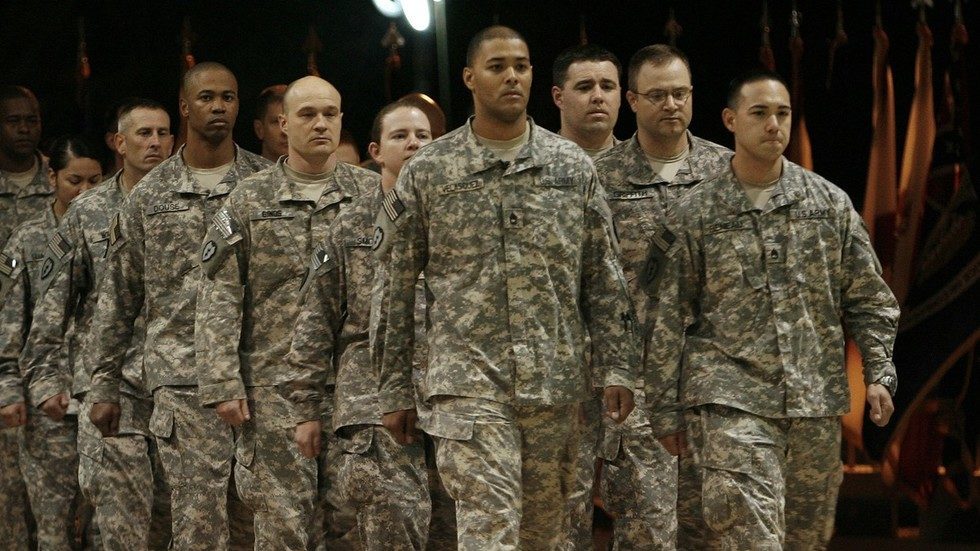
Saudi Arabia's king and crown prince have approved the deployment of around 3,000 US troops and equipment to the kingdom, as regional tensions rise and Washington and Riyadh face off against Tehran.

Saudi state news agency SPA announced the royal approval on Saturday night, reporting that the deployment takes place in line with the "historic relations and well-established partnership" between the two countries.

It also comes at a time of escalating tensions with Iran. The military bolstering was announced by the US on Friday as reports came in that an Iranian oil tanker had been struck by two projectiles in the Red Sea. Washington and Saudi Arabia have also accused Iran of a string of sabotage attempts on its own on oil tankers, and blamed Tehran for a drone strike on two Saudi oil facilities last month, albeit without providing proof.

Comment: See also:


Better Earth

Modi declares 'start of new era' in India-China relations in "heart-to-heart" talks with Xi

Modi xi
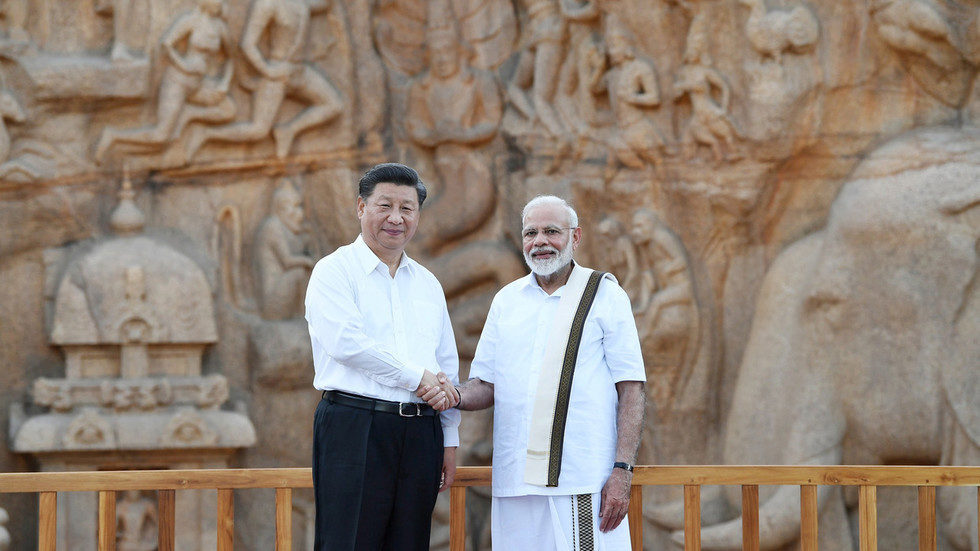
© India's Press Information Bureau/Handout via REUTERSXi Jinping shakes hand Minister Narendra Modi during their visit to the outskirts of Chennai
Chinese and Indian leaders have just begun the second day of their one-to-one exchange at a picturesque Indian resort overlooking the Bay of Bengal, trading pleasantries and trying to mitigate frictions between their nations.

The second round of the informal summit between Indian Prime Minister Narendra Modi and his Chinese counterpart Xi Jinping kicked off on Saturday morning in the state of Chennai. Their one-hour meeting started at the serene Fisherman's Cove resort and then continued on the beach washed by the Bay of Bengal, according to Indian media.

It mostly revolved around economic cooperation and struggles against extremism that plague both India and China. Modi and Xi had also apparently tried to iron out wrinkles that emerged after New Delhi revoked the autonomous status of its Jammu and Kashmir state that borders China.

Comment: RFE/RL reports:
Xi, Modi Vow To Defeat 'Radicalization' Amid Dispute Over Kashmir

The leaders of China and India vowed during an informal summit to cooperate against "radicalization" at a time of rising tensions over Beijing's support for Pakistan in its dispute with India over the divided region of Kashmir.

China has criticized New Delhi's move to revoke the special status of the Indian-administered portion of the Himalayan region of Kashmir, which is divided by India and Pakistan but claimed in full by both.

The August 5 revocation means that India's Jammu and Kashmir will be largely run by the central government as territorial autonomy has largely vanished. Both states will become a union territory and the third state of Ladakh -- part of which is claimed by Beijing -- will become a union territory.

Despite that dispute, the leaders acknowledged a common challenge, Indian Foreign Secretary Vijay Gokhale said.

"Both leaders said that these were large countries and that radicalization was a matter of concern to both, and that both would work together to see that radicalization and terrorism did not affect the fabric of our multicultural, multiethnic, multireligious societies," Gokhale told reporters..

Xi held talks with Pakistani Prime Minister Imran Khan in Beijing just two days before the meeting Modi.

Xi said he supports Pakistan's "legitimate rights" -- leading India's Foreign Ministry to respond by saying it was "not for other countries to comment on the internal affairs of India."
See also:


Network

Iran hails efforts to mediate talks with Saudis ahead of Imran Khan visit

Zarif
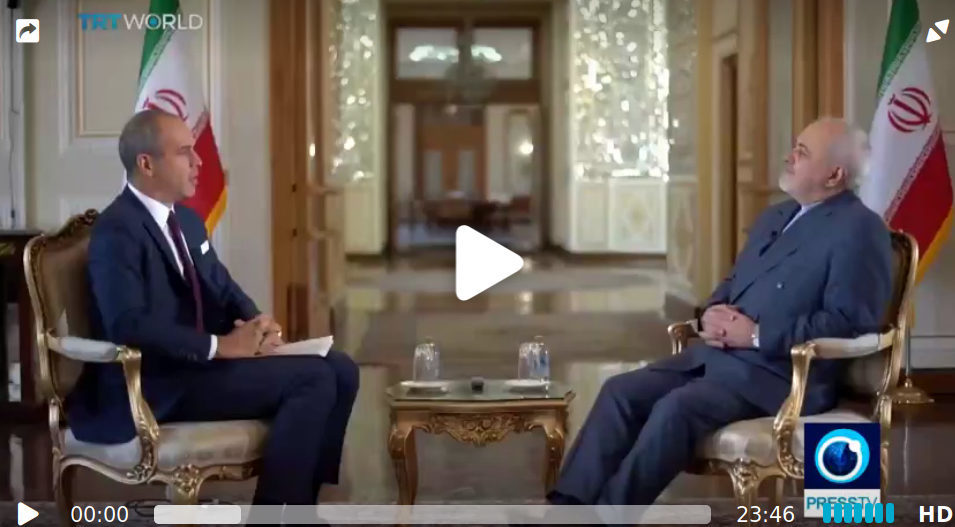
Still from video of Iranian Foreign Minister Mohammad Javad Zarif's interview with Turkey's TRT World released on Oct. 10, 2019
Iran's foreign minister says the country welcomes efforts by intermediaries to arrange talks with Saudi Arabia, including those by Pakistani Prime Minister Imran Khan who is due to arrive in Tehran on Saturday.

"We've always been open to discussing anything with Saudi Arabia. Saudi Arabia is our neighbor. We're going to be here together permanently," Mohammad Javad Zarif said in an interview with Turkey's TRT World.

"We don't have any choice but to talk to each other, and we have been open to talking to Saudi Arabia either directly or through intermediaries," Zarif noted.

"We've never rejected any intermediary... We've always been open to mediation, and we've always been open to direct talks with our Saudi neighbors," the top diplomat noted when asked about the upcoming visit of Pakistan's Imran Khan to Tehran.

Comment: As noted in Trump's latest foreign policy nightmare: Peace breaking out in the Middle East:
The talks might prove embarrassing for Trump whose entire Middle East policy has been to capitalize on instability, indeed even contribute to it, in the vain of providing business and jobs to the US arms industry. But when talks get going between the Saudis and Iran, it might just become evident that in reality, Riyadh cares little about the so-called threat of Iran's nuclear or ballistic capabilities - which it will have whether it is a pariah state or not - but more about its abilities to eclipse Saudi Arabia in time with its geopolitical ambitions and business verve.

[...]

Nuclear energy in the entire region could be the way forward for both countries and the money that the Saudis would save on defence could be ploughed into state building, jobs, start ups and the new vision of a modern economy. Probably, MBS wants a way out of the Yemen war, which is face-saving as well.
See also:


Sheriff

Syria must be free of foreign military presence, Russia should also leave if Damascus no longer needs its help - Putin

Russian
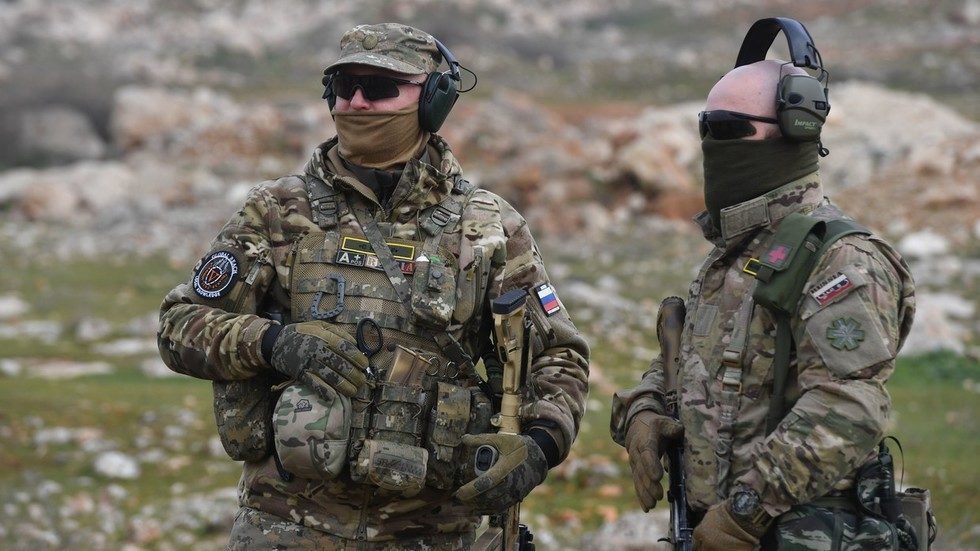
© Sputnik / Mikhail VoskresenskiyRussian instructors trains Syrian army soldiers and militia.
The territorial integrity of Syria must be fully restored and all foreign forces should withdraw, including Russia if Damascus decides it doesn't need Moscow's help anymore, according to President Vladimir Putin.

"All the forces deployed illegitimately inside any sovereign state - in this case Syria - must leave," Putin said in a joint interview with RT Arabic, UAE-based Sky News Arabia, and Saudi Arabia's Al-Arabiya broadcasters.

"This is true for everyone. If Syria's new legitimate government chooses to say that they have no more need for Russia's military presence, this will be just as true for Russia."

Comment: See also:


Alarm Clock

SOTT Focus: Yellow Peril, Sinophobia and Red Scare - USA is on a Dangerous Path

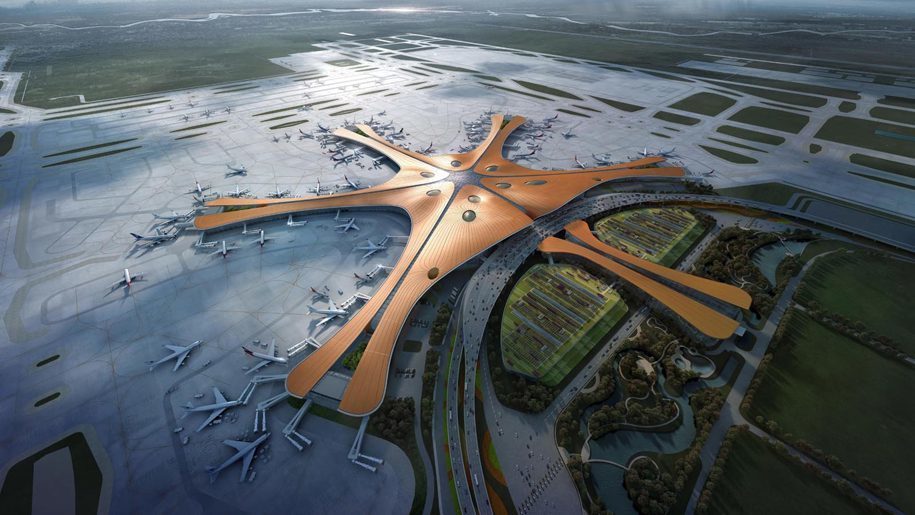
beijing daxing aiport
Beijing's new Daxing International Airport
In the 1980s, American elites feared the rise of economic powerhouse Japan, but managed to contain its competitor because Japan was at root a vassal state occupied by the US military. However, China's rise today is a different story altogether. With 1.4 billion people, the largest economy in the world (by GDP at purchasing power parity - PPP), and an independent foreign policy, China's rise heralds the beginning of a multi-polar world.

The 'American Century' is over, but Americans cannot accept the fact that they - 5% of the world's population - cannot rule the other 95% forever. American entitlement and hubris are causing many to lash out and embark on a path that is perilous both to themselves and the world.

Bomb

Turkey 'accidentally' shells US special forces in Syria - UPDATES

turkish soldiers
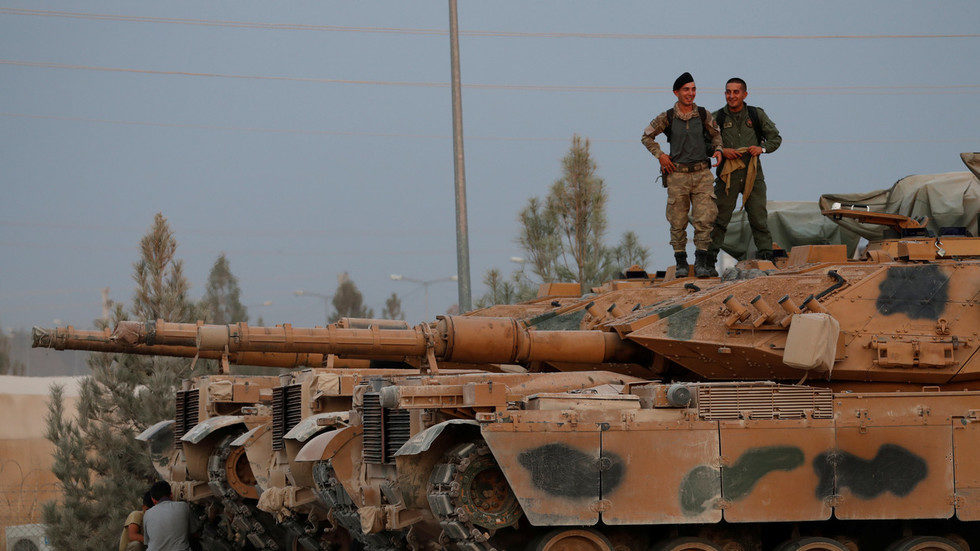
© Reuters / Murad SezerTurkish soldiers seen at the border town of Akcakale
A blast occurred near a US military base near Kobane, Syria, according to Reuters. The explosion comes alongside reports that Turkish forces shelled their US counterparts in their anti-Kurdish offensive.

No US personnel were injured in Friday's blast and the cause of the explosion is unclear, Reuters stated, citing an unnamed US official. The information on the apparent explosion coincided with a Newsweek report that Turkish forces allegedly shelled American special ops in the same area. According to the report, the shelling was accidental, as Turkish artillery targeted Kurdish fighters positioned there.

Meanwhile, the Turkish Defense Ministry said that "all measures" were taken not to hit the US base while its troops were responding to "harassment fire" originating from near the installation. A US official later told Reuters that reports its service members were attacked are "not accurate."

Comment: The Pentagon later confirmed that they had in fact come under fire from Turkish military:
Following earlier media reports of explosions near the town of Kobani, the Pentagon said US troops "came under artillery fire from Turkish positions at approximately 9 p.m. local Oct. 11" and that the explosions occurred "in an area known by the Turks to have US forces present."

The American soldiers were not withdrawn from the town, the statement noted, adding that Washington "remains opposed to the Turkish military move into Syria."
The US demands that Turkey avoid actions that could result in immediate defensive action.
Later on Friday night, the Associated Press reported an American outpost was abandoned after the shelling, citing US officials, but noted that a larger base in Kobani had not been evacuated or affected by the strike. The outpost would likely soon be reoccupied, the officials added.
Erdogan rebuked US threats to shut down Ankara's economy, saying Turkey will not stop its military campaign:
"We can't wait. As Turkey, we will never stop this fight, no matter what anyone says," Erdogan declared on Friday. "The US and Europe both say we are killing Kurds. The Kurdish people are our brothers. Our struggle is against terror groups."
Yesterday, reports had 342 SDF fighters dead as a result of the fighting (the SDF says they lost 22), in addition to 262 Turkey-backed rebels and soldiers (Turkey acknowledges 2 Turkish soldier deaths so far). Ankara upped the number of SDF killed today to 415. Approximately 70,000 people are thought to have fled the region so far. The Turks are reported to have reached the strategic M4 highway:
The strategic M4 highway in northeastern Syria is located about 19 miles (30km) south of the border with Turkey.

Spokesman Youssef Hammoud said that National Army fighters had captured 18 villages as part of the advance.

"This advance was on a new and surprise front... between Tel Abyad and Ras al Ain. On this front, they were able to cut the roads linking together Suluk, Tel Abyad, Ras al-Ain with the villages in the area," he said in a statement to Reuters.

Turkey claims that its forces took control of the town of Ras al-Ain, situated on the road, on Saturday. The SDF denies that it lost the town and says that there is still fighting in the area.

The loss of the roadway would be a major blow to the US-backed Kurdish forces that have been targeted by Turkey's Operation Peace Spring.
The Russian military has noticed an uptick in terror attacks in Syria since Turkey invaded the north:
"On 11 October, an improvised shell-free explosive device was set off on the patrol route of the Russian military police in the province of Deraa in southern Syria, about 700 meters west of the village of Anhul. None of the Russian military personnel were injured", Maj. Gen. Alexey Bakin, head of the Russian centre for Syrian reconciliation said at a daily news briefing.

The Russian centre for Syrian reconcilliation also stressed that "against the backdrop of Turkey's Operation Peace Spring in the northeast of Syria, illegal armed groups have intensified their activities in other regions of the Syrian Arab Republic".
The Arab League condemned the invasion as a violation of Syria's sovereignty. Along with France, they warned it could lead to a resurgence of ISIS. Germany has halted arms exports to Turkey.

For previous updates and analysis of the Turkish military operation in northern Syria, see:


Rocket

Putin: Russia already has weapons that penetrate any missile defense, development won't stop there

Bulava missile
© Russian Ministry of DefenseA 'Bulava' ballistic missile is launched from a submarine
Russian engineers have developed brand-new countermeasures to any foreign missile shield, Vladimir Putin has told reporters, adding that its existing weapons have also been upgraded, to meet the requirements of modern warfare.

"We will work on the type of strike weapons systems that will certainly bypass any ballistic missile defenses," the Russian President told an RT Arabic correspondent on Friday, adding "we will do it, this is obvious now."

Offering a sort of basic technology lesson, he explained that other countries' existing anti-missile systems are designed to shoot down enemy projectiles that "follow a ballistic trajectory". But Russia has done its utmost to be one step ahead of its near-peer rivals, Putin assured his interviewer. "What we did was enhance and improve [Russian] ballistic missiles significantly, and developed a new weapon that has no rivals in the world."


Comment: See also: