© cancer.maxawareness.com
Can humans really do anything to prolong life? A recent article by Christopher Wanjek in the
Washington Post said "Humans can reap no such benefits from the continuing flood of anti-aging potions and precepts, which are at best naively optimistic and at worst fraudulent and harmful. Wanjeck goes on to say that "every book, powder or pill that promises a fountain of youth..... is just plain wrong."
"There is no intervention that has been proven to slow, stop or reverse aging. Period," says Leonard Hayflick, professor of anatomy at the University of California, San Francisco, a leader in the study of aging. Even New Age physician Deepak Chopra chimed in by saying legitimate anti-aging remedies can only keep a person from dying young, but they don't increase the life span.
1Human growth hormone, widely extolled on radio infomercials across America for its anti-aging properties, may produce side effects including the elevation of growth hormones that trigger the growth of tumors. Growth hormone is more appropriate for very old adults who have lost muscle mass and can't get up out of a chair any longer, not for middle-aged adults fighting the first signs of aging.
2So is there anything that adults can do to lengthen the human life span? Scientists want you to wait (as if everybody has the time) for gene therapy. The latest breakthrough is the so-called Methuselah gene, a portion of DNA that confers healthy old age to those who carry its active form.
3 But don't wait around for genetics to prolong life. Gene therapy has yet to cure any disease, is likely to be too costly for the average person to afford and is more likely to be inserted in new genes in the offspring of the next generation.
Why wait for an antioxidant breakthrough?
Thomas Johnson at the University of Colorado-Boulder, is looking in another direction. Johnson found that by tweaking a certain gene in roundworms he could create a super antioxidant gene that would double the worm's life span.
4But while researchers conduct their antioxidant studies on roundworms, what can we do?
Actually youth seekers need look no further than the vitamin shelf at local stores for a well substantiated. anti-aging compound - vitamin C. While researchers attempt to make careers out of their research and thus delay any conclusions indefinitely, vitamin C may be the anti-aging miracle humanity can begin to use today. The story is not new, it's just not been widely told.
Comment: In a
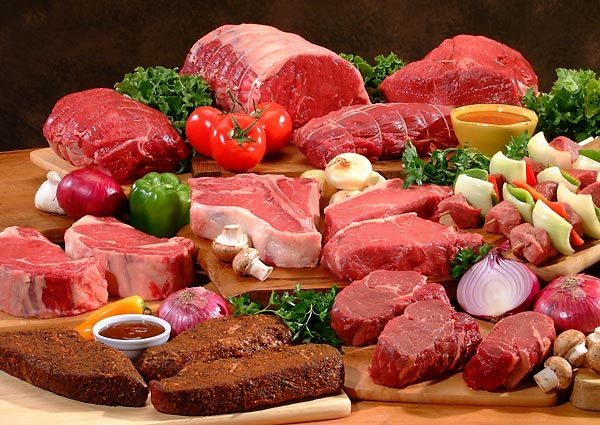
paleo-diet, you can get all vitamins and minerals from organ meats and animal sources. In fact, you get what your body really needs from eating meats to an even greater extent than when eating veggies, including the most crucial vitamins. Except perhaps for vitamin C. To be precise, there is a very small amount of vitamin C in animal foods. But perhaps that is really enough? See the
following:
Vitamin C is needed to hydroxylate the amino acids lysine and proline into hydroxylysine and hydroxyproline- connective tissue. That is why scurvy is characterized by a degeneration of connective tissue. However, unknown to most, red meat already contains hydroxylysine and hydroxyproline which is absorbed into the bloodstream when eaten. Thus, less vitamin C is needed to hydroxylate proline and lysine, because they are already present in the blood in the hydroxylated state.
However, one might ask about the role vitamin C plays in antioxidant function. Sure, a purely carnivorous diet will prevent scurvy, but will it replace the other biochemical functions of vitamin C? While those who regularly consume liver and brains do not need to concern themselves too much here, what about those carnivores who consume primarily muscle meat and eggs? Sure, they may be free from scurvy, but are there some other unseen health effects, such as excessive free radical damage from lack of vitamin C?
First of all, a ketogenic metabolism produces less free radicals than a carbohydrate-burning metabolism. Secondly, there are numerous other substances, endogenous and dietary, that act as antioxidants present on a purely carnivorous diet. But what if this is insufficient? Should meat and eggers be worried?
Fortunately, the answer no. And the answer may lie in uric acid.
Uric acid is derived from purines in meat. They are the final metabolic end-product of purine compounds. This is because the genes encoding for the production of the enzyme uricase, needed to break down uric acid, have been absent from primate DNA for millions of years.
The thing that makes ascorbate as a molecule useful is the property of being a strong electron donor. Uric acid is also a strong electron donor (1). In fact, it may even be a better electron donor than vitamin C (2). Because of this, uric acid is a powerful antioxidant, similar to vitamin C. Thus, it follows that the loss of the enzyme uricase and the consequent increase in blood levels of uric acid in primates has probably provided a substitute for ascorbate in certain biochemical functions, including antioxidant activity.
Since meat is rich in purines, uric acid is inevitably abundant in the bloodstream of someone who consumes a large amount of muscle meat and organ products. Conclusion: Even if a human carnivore does not consume vitamin C-containing animal products, a purely carnivorous diet is still sufficient to produce the biochemical functions that vitamin C is normally responsible for.
This seems to be the
case:
In humans and higher primates, uric acid is the final oxidation (breakdown) product of purine metabolism and is excreted in urine. In most other mammals, the enzyme uricase further oxidizes uric acid to allantoin.[8] The loss of uricase in higher primates parallels the similar loss of the ability to synthesize ascorbic acid, leading to the suggestion that urate may partially substitute for ascorbate in such species.[9] Both uric acid and ascorbic acid are strong reducing agents (electron donors) and potent antioxidants. In humans, over half the antioxidant capacity of blood plasma comes from uric acid.[10] The Dalmatian dog has a genetic defect in uric acid uptake by the liver and kidneys, resulting in decreased conversion to allantoin, so this breed excretes uric acid, and not allantoin, in the urine.[11]
Uric acid is created when the body breaks down purine nucleotides. Purines are found in high concentration in
meat and meat products, especially internal organs such as liver and kidney.In addition to that, vitamin C uses the same receptors as glucose to enter the cell membrane. So if we have eaten a lot of simple sugars, as in sweets, cool drink, but also complex carbohydrates which are broken down to glucose after being digested, less Vitamin C can be absorbed because the receptors are already in use.
So it seems that a mutation happened to those who were already eating meat, especially organ meats. With a meat diet, you will receive much more nutrients than you will ever get from eating fruit. Indeed, one actually needs LESS Vitamin C on a meat/fat diet.



















Comment: In a paleo-diet, you can get all vitamins and minerals from organ meats and animal sources. In fact, you get what your body really needs from eating meats to an even greater extent than when eating veggies, including the most crucial vitamins. Except perhaps for vitamin C. To be precise, there is a very small amount of vitamin C in animal foods. But perhaps that is really enough? See the following: This seems to be the case: Uric acid is created when the body breaks down purine nucleotides. Purines are found in high concentration in meat and meat products, especially internal organs such as liver and kidney.
In addition to that, vitamin C uses the same receptors as glucose to enter the cell membrane. So if we have eaten a lot of simple sugars, as in sweets, cool drink, but also complex carbohydrates which are broken down to glucose after being digested, less Vitamin C can be absorbed because the receptors are already in use.
So it seems that a mutation happened to those who were already eating meat, especially organ meats. With a meat diet, you will receive much more nutrients than you will ever get from eating fruit. Indeed, one actually needs LESS Vitamin C on a meat/fat diet.