
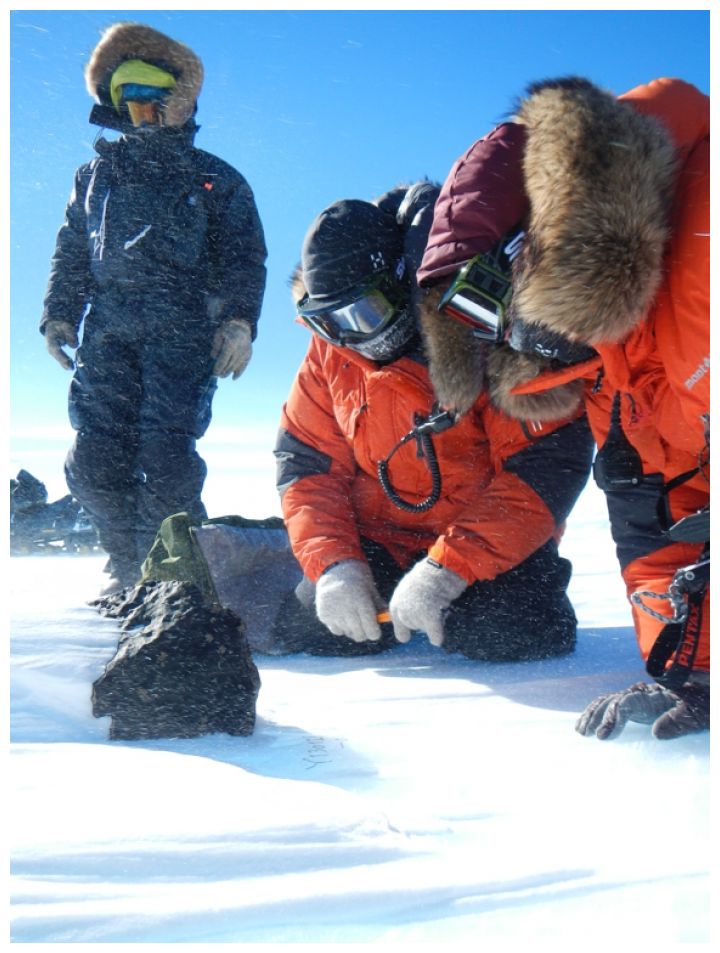
© International Polar FoundationThe fifth largest meteorite ever found in East Antarctica was discovered Jan. 28 by an international team of meteorite hunters.
A team from Belgium and Japan discovered the hefty meteorite as the members drove across the East Antarctic plateau on snowmobiles. Initial tests show it is an ordinary chondrite, the most common type of meteorite found on Earth, Vinciane Debaille, a geologist from Université Libre de Bruxelles in Belgium, said in a statement.
"This is the biggest meteorite found in East Antarctica for 25 years," Debaille said. "This is something very exceptional. When you find such a meteorite on Earth, it means that when it was in the sky, it was much larger."
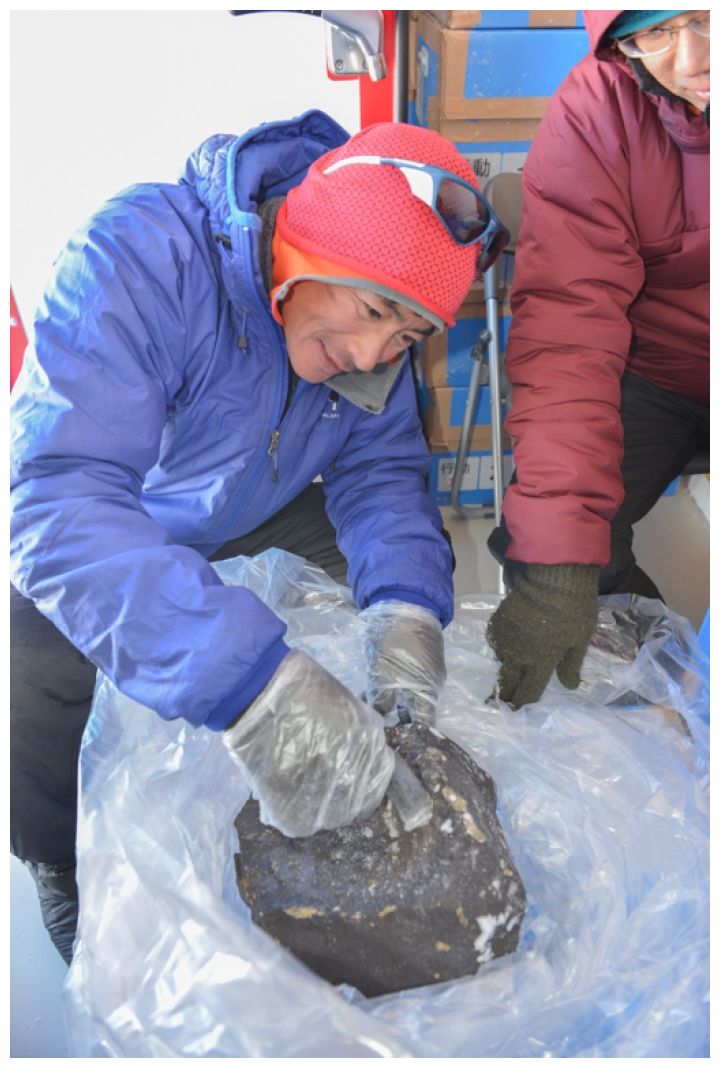
© International Polar FoundationMore than 38,000 meteorites have been found in Antarctica, but only 30 bigger than 40 pounds (18 kg). The big meteorite found in Antarctica is an ordinary chondrite.
Every year, scientists travel to Antarctica to search for meteorites. Their charred black crust stands out starkly in the white snow, and the cold, dry climate helps preserve any organic chemicals inside the rocks.
The expedition collected 425 meteorites in 40 days, with a total weight of 165 pounds (75 kg). Debaille said they may have found one Mars meteorite and one piece of the asteroid Vesta among the many discoveries.
The researchers canvassed the Nansen Ice Field, 86 miles (140 kilometers) south out of the International Polar Foundation's Princess Elisabeth station. The United States also sent scientists out on the polar ice to collect meteorites this season, from McMurdo Station on the opposite end of the continent.



Reader Comments
to our Newsletter