RTSun, 25 Aug 2024 15:50 UTC
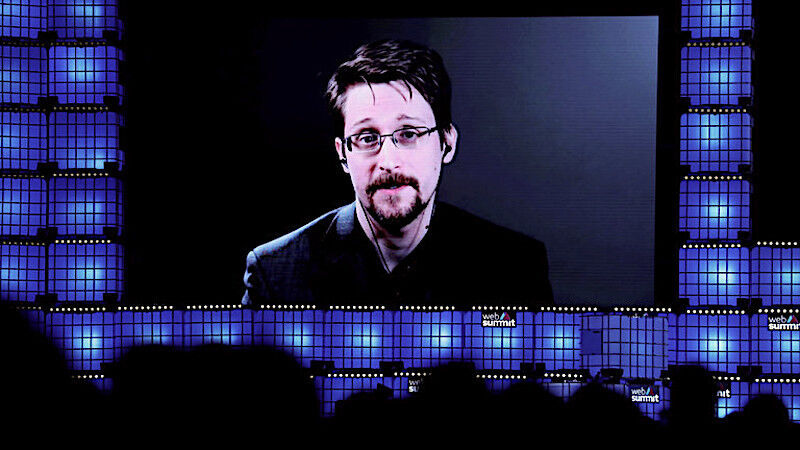
© Pedro Fiuza/NurPhoto/Getty ImagesEdward Snowden live during the annual Web Summit technology conference • Lisbon, Portugal • November, 2019
The whistleblower added that he's "deeply saddened" at the move by French President Emmanuel Macron.
The Russian tech entrepreneur, who also holds the citizenship of France, the UAE, and Saint Kitts and Nevis, was apprehended shortly after landing at Paris-Le Bourget Airport on Saturday and is set to appear before a judge on Sunday evening, according to media reports.
French authorities had reportedly issued an arrest warrant for Durov over insufficient moderation on his online platform, which
allegedly has allowed it to be widely used by criminals.
NSA whistleblower Snowden also used social media to respond, stating:
"The arrest of Durov is an assault on the basic human rights of speech and association. I am surprised and deeply saddened that Macron has descended to the level of taking hostages as a means for gaining access to private communications. The move lowers not only France, but the world."
Snowden fled the US in 2013 after he leaked a cache of files revealing systematic mass illegal spying on US citizens by the NSA. He became stranded while in transit in Moscow after Washington canceled his passport. Russia ended up granting him asylum and, reportedly, eventually citizenship.
In July, Pavel Durov announced that Telegram's number of active monthly users had reached 950 million.
Comment: Zakharova weighs in on Durov's arrest:
Russian Foreign Ministry spokeswoman Maria Zakharova has asked if international human rights groups will pressure France over the arrest of Telegram founder and CEO Pavel Durov, given the harsh criticism levied at Russia several years ago when it tried to regulate the messaging app's operations.
Zakharova, who took to Telegram on Sunday, recalled how in 2018 a group of 28 NGOs, including Human Rights Watch, Amnesty International, Freedom House and Reporters Without Borders, condemned a Russian court decision to block Telegram in the country.
Those NGOs demanded that Moscow "stop creating obstacles to Telegram's operations" at the time and guarantee the rights of users to publish and anonymously consume information online, she wrote.
They called upon the UN, the Council of Europe, the OSCE (Organization for Security and Cooperation in Europe), the EU, the US and other governments to resist Russia's move and protect the fundamental rights of freedom of expression and privacy, the spokeswoman recalled.
Zakharova reminded the NGOs that Moscow had legal issues with Telegram over the technical parameters of its encryption system, like many other countries. "Meanwhile, Durov remained free all this time, continuing to develop Telegram," she stressed.
"What do you think, will they [the NGOs] appeal to Paris this time and demand Durov's release, or will they swallow their tongues?" the spokeswoman asked her audience.
Facebook, Instagram and X (formerly Twitter) were blocked by court order in Russia after the escalation of the conflict between Moscow and Kiev in February 2022, but Telegram remains operational in the country.
Earlier, the deputy speaker of the Russian parliament, Vladislav Davankov, called upon France to release Durov. The tech entrepreneur's arrest "could be politically motivated and used to gain access to the personal information of Telegram users," which Moscow cannot allow, he wrote in a post on Telegram.





Comment: Zakharova weighs in on Durov's arrest: