Volcanoes
S


Attention

Taal Volcano near Manila, Philippines erupts, with 7 earthquakes

The eruption produced greyish plumes reaching 2,800m.
© PhivolcsThe eruption produced greyish plumes reaching 2,800m.
Taal Volcano's minor phreatomagmatic eruption on Wednesday (November 12, 2025), is part of ongoing seismic activity, with 7 volcanic quakes recorded in the past 24 hours, indicating heightened unrest.

The eruption produced greyish plumes reaching 2,800 metres, drifting northeast, consistent with the volcano's history of significant events, including a 2020 eruption that displaced over 100,000 people.

Despite the eruption, Alert Level 1 remains, signalling low-level unrest but not a return to normalcy, as the threat of sudden steam-driven eruptions persists, say government volcanologists.


Volcano

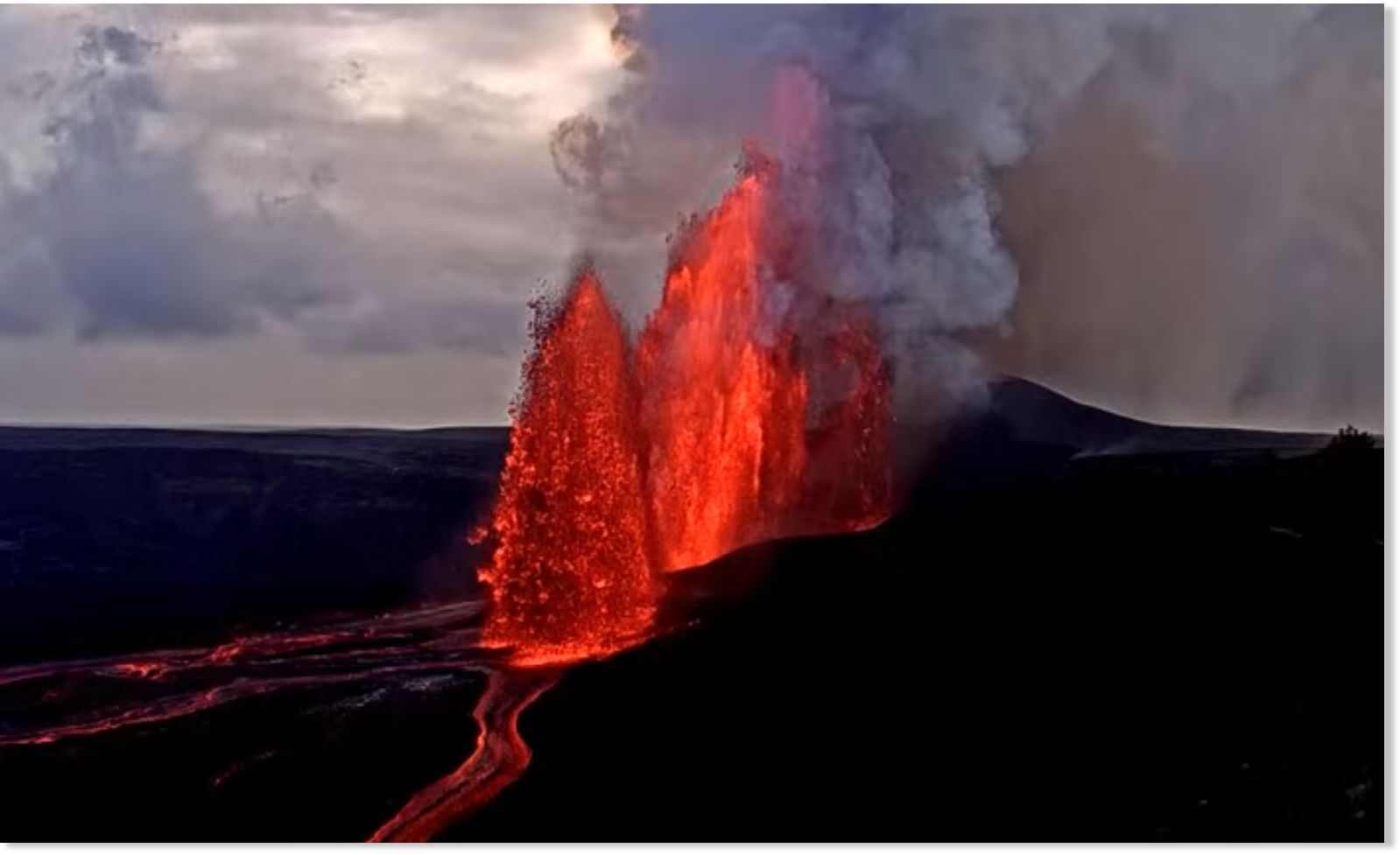
Hawaii: Kīlauea volcano eruption episode 36 - lava fountains reach 1,100 feet

mmmmm
© USGS V1 Cam
Episode 36 of the ongoing Halemaʻumaʻu eruption on Kīlauea ended abruptly at 4:16 p.m. on Sunday, after just under 5 hours of continuous fountaining.

The north vent stopped erupting at approximately 3:38 p.m. The south vent dropped from 1,000 to 500 feet around 3:48 p.m. It held stead for a little while before slowly declining and eventually stopping erupting at approximately 4:16 p.m.

Lava fountains reached a maximum of 1,000 to 1,100 feet during this episode. It produced an estimated 10 to 11 million cubic yards of lava.


Volcano

Mount Merapi, Indonesia's most active volcano, erupts

Mount Merapi erupted on Wednesday (October 29, 2025).
Mount Merapi erupted on Wednesday (October 29, 2025). Its status remains at level 4, signifying a high risk of further eruptions, prompting ongoing monitoring and preparedness by local authorities.
Mount Merapi, Indonesia's most active volcano, erupted on October 29, 2025, sending plumes of ash and smoke into the sky.

The eruption is part of Merapi's ongoing activity, which has been continuous since December 2020, with significant events including a January 2025 eruption that produced pyroclastic flows up to 2 km.

Merapi's location, approximately 28 km north of Yogyakarta, poses a constant threat to nearby populations, with historical eruptions dating back to 1548.


Volcano

Taal Volcano erupts: Multiple short-lived blasts send ash over Batangas, Philippines

Taal Volcano recorded four minor eruptions between October 25–26, 2025.
Taal's Sudden Eruptions: What Happened Over Batangas?

Over the course of 24 hours spanning October 25 and 26, 2025, Taal Volcano reminded the Philippines—and the world—why it's considered one of the most unpredictable volcanoes on the planet. Residents of Batangas Province woke to the sight of towering ash plumes and the faint smell of sulfur. At least four short-lived eruptions, classified as minor phreatic and phreatomagmatic events, rocked the northeastern portion of Taal's Main Crater. These eruptions sent dense columns of ash and steam shooting 1,200 to 2,100 meters into the sky, casting a gray pall over nearby communities in Laurel and Agoncillo.

According to the Philippine Institute of Volcanology and Seismology (PHIVOLCS), the first event began at 5:31 p.m. on October 25. A phreatomagmatic burst—a violent interaction of magma and groundwater—produced an ash-laden plume that drifted southwest. Just hours later, at 2:55 a.m. on October 26, a rapid phreatic explosion, locally known as pusngat, followed. This lasted about a minute, sending a billowing white cloud over the Main Crater Lake. The most powerful eruptions came shortly after sunrise, at 8:13 and 8:20 a.m., each lasting two to four minutes and generating shockwaves detectable by infrasound sensors.


Info

New study shifts the dating of major Bronze Age events

Santorini Eruption
© Holger Uwe Schmitt - CC BY-SA 4.0
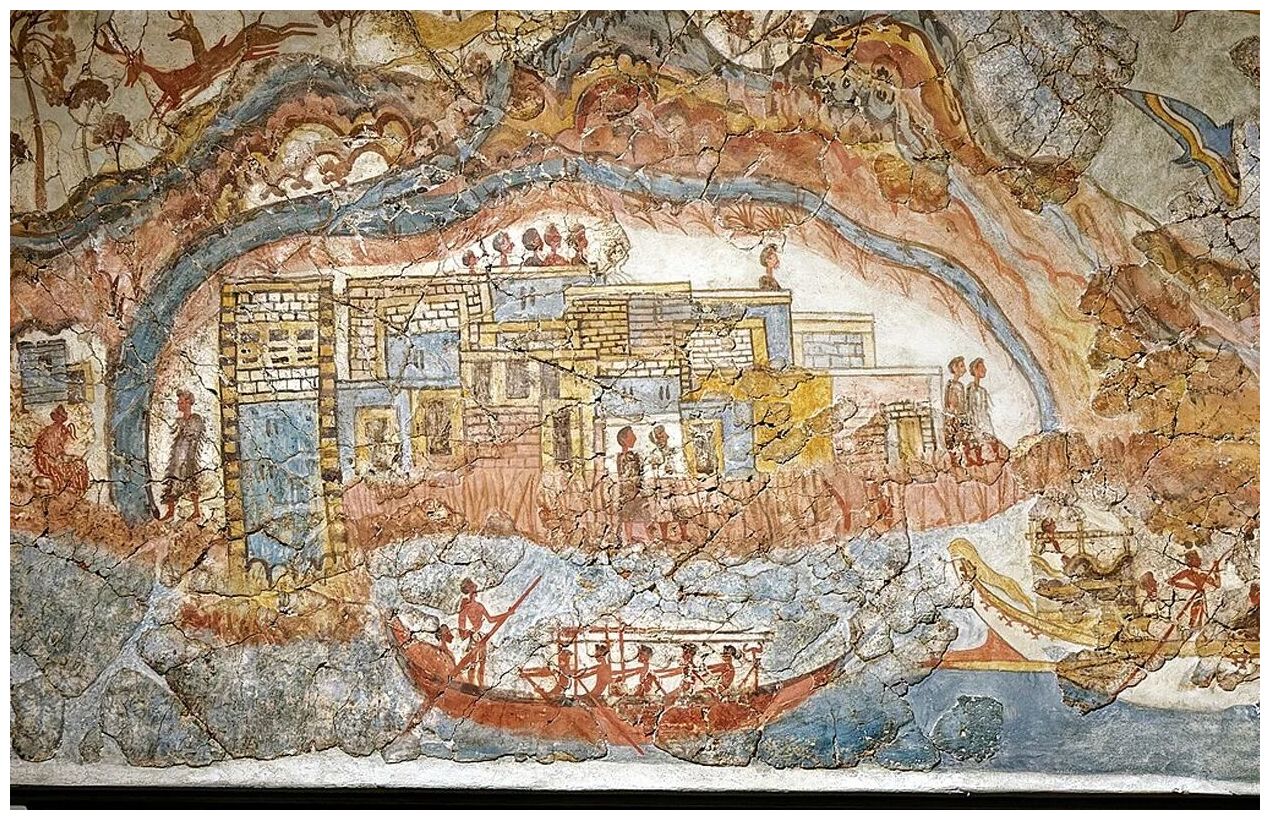
A new study published in the journal PLOS ONE presents new evidence that the volcanic eruption of Minoan Thera (modern-day Santorini) occurred before the reign of Pharaoh Ahmose I, overturning long-held views of Bronze Age chronology.

The Minoan Thera eruption has long been linked to Egypt's 18th Dynasty around 1500 BC, serving as a key reference point or chronological marker for aligning Aegean, Anatolian, and Egyptian historical timelines.

The eruption destroyed the Minoan settlement at Akrotiri, as well as communities and agricultural areas on nearby islands, and the coast of Crete with subsequent earthquakes and tsunamis.

The study authors analysed Ancient Egyptian artefacts associated with the late 17th and early 18th Dynasties, including a mudbrick stamped with Ahmose's royal name from Abydos, a linen burial cloth linked to Queen Satdjehuty, and wooden funerary figurines from Thebes.

Volcano

Kilauea volcano in Hawaii produces record-breaking lava fountains in episode 35

mmmmm
Kilauea put on a record-breaking light show with episode 35 of its current eruption.

After a couple of days of bubbling and overflows, lava fountains began spewing from the north vent in Halemaumau crater at about 8:05 p.m. Friday, according to the U.S. Geological Survey.

That was followed by fountains from the south vent, which began at about 8:50 p.m. and grew rapidly, with lava from both vents feeding large flows on the crater floor, USGS said.

At 10:11 p.m., USGS reported record-high fountains for this eruption at nearly 1,500 feet.


Bizarro Earth

An Iranian volcano appears to have woken up — 700,000 years after its last eruption

Taftan volcano near the border of Pakistan has shown signs of unrest in recent years.
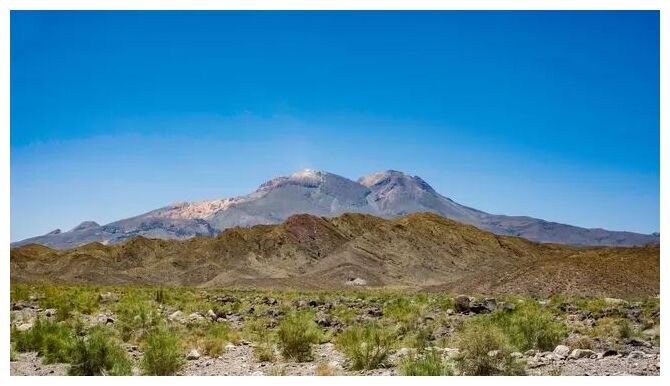
Taftan volcano
© mohammad aaref barahouei/AlamyTaftan volcano in Iran seems to be waking up after a 700,000-year-long sleep.
A volcano in southern Iran thought to have been extinct for some 710,000 years has stirred.

New research published Oct. 7 in the journal Geophysical Research Letters finds that an area of ground near the Taftan volcano's summit rose 3.5 inches (9 centimeters) over 10 months between July 2023 and May 2024. The uplift has not yet receded, suggesting a buildup of gas pressure below the volcano's surface.

The findings reveal the need for closer monitoring of the volcano, which hasn't been considered a risk to people before, said study senior author Pablo González, a volcanologist at the Institute of Natural Products and Agrobiology, a research center of the Spanish National Research Council (IPNA-CSIC). Volcanoes are considered extinct if they haven't erupted in the Holocone era, which started 11,700 years ago. Given its recent activity, González said, Taftan might be more accurately described as dormant.

"It has to release somehow in the future, either violently or more quietly," González told Live Science. There is no reason to fear an imminent eruption, he said, but the volcano should be more closely monitored.

Taftan volcano is a 12,927-foot (3,940 meters) stratovolcano in southeastern Iran, situated among a rumple of mountains and volcanoes that was formed by the subduction of the Arabian ocean crust under the Eurasian continent. Today, the volcano hosts an active hydrothermal system and smelly, sulfur-emitting vents called fumaroles, but it isn't known to have erupted in human history.

Volcano

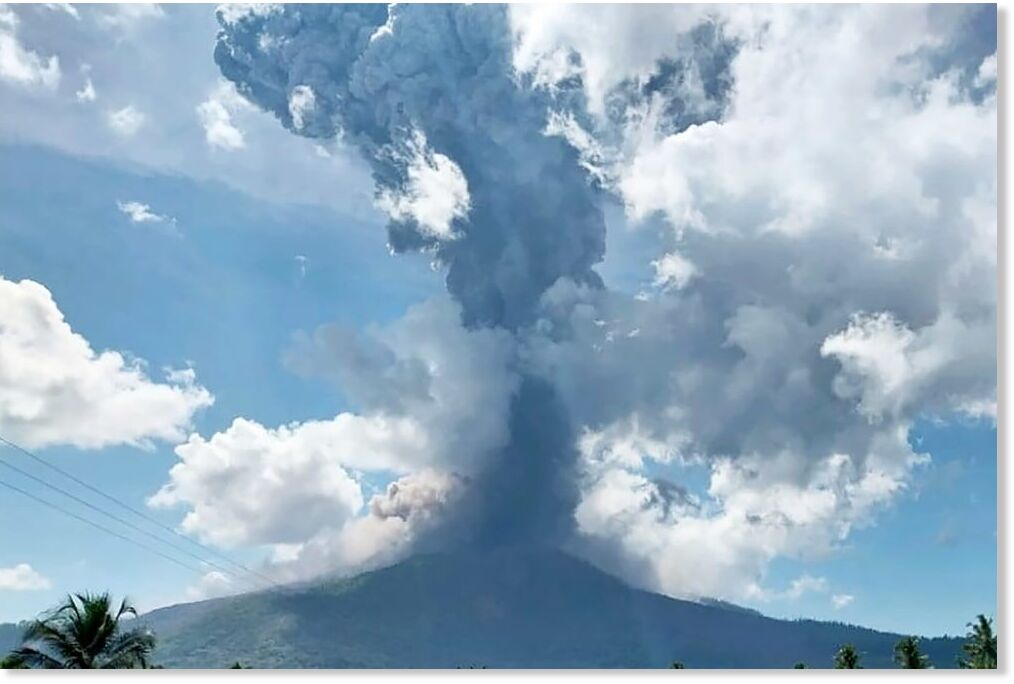
Indonesia's Mount Lewotobi Laki-Laki erupts, sends volcanic ash 10km high

Mount Lewotobi Laki Laki spewing volcanic material during an eruption in East Flores, Indonesia, on Wednesday.
© Badan Geologi / APMount Lewotobi Laki Laki spewing volcanic material during an eruption in East Flores, Indonesia, on Wednesday.
Authorities in Indonesia have raised the volcano emergency alert to its highest level after Mount Lewotobi Laki-Laki erupted, spewing volcanic ash an estimated 10km (6.2 miles) into the sky.

There were no immediate reports of casualties or damage on Wednesday, but authorities have warned residents and tourists on the eastern Indonesian island of Flores to keep away from the mountain and prepare for possible evacuation.

"The public should remain calm and follow the local government's directions and not believe issues from unclear sources," the country's Centre for Volcanology and Geological Hazard Mitigation said in an alert notice.

The volcano erupted at 1:35am on Wednesday (Tuesday 18:35 GMT) for about nine minutes, Indonesia's Geological Agency said in a statement, after also erupting two hours earlier.

Muhammad Wafid, head of the Geological Agency, said people should stay at least 6 to 7km (3.7 to 4.3 miles) from the site of the eruption, which saw volcanic materials shoot 10km (6.2 miles) into the sky above the mountain's 1,584-metre-high (5,080ft) peak.


Volcano

Mud volcano erupts near Baku, Azerbaijan

mmmmm
A mud volcano erupted on the morning of October 10 near the village of Lokbatan in the Garadagh district, approximately 15 kilometers southeast of Azerbaijan's capital, Baku.

According to the Ministry of Emergency Situations, the eruption occurred close to the Caspian Sea coastline. No injuries or casualties have been reported, Caliber.Az writes.

Emergency officials are currently on-site, monitoring the situation and assessing any potential risks. Authorities have not reported any significant damage to nearby areas.

The eruption took place near the Baku and Absheron Mud Volcanoes State Nature Reserve, a region known for its high concentration of mud volcanoes.

Azerbaijan is home to nearly half of the world's mud volcanoes, many of which are active and considered geologically significant.


Volcano

Best of the Web: Kronotsky volcano in Russia's Kamchatka ejects ash up to 9.2 km high - first eruption for 100 years

mmmmm
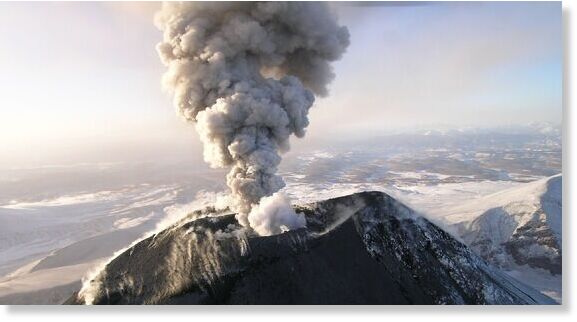
The Kronotsky volcano on Russia's Kamchatka Peninsula spewed ash to a height of 9.2 kilometres above sea level on Saturday, local authorities said.

The ash ejection occurred at 11:50 a.m. local time (2350 GMT Friday), sending an ash plume stretching about 85 kilometres to the south and southeast of the volcano, the Kamchatka Volcanic Eruption Response Team said on its Telegram channel.

A red aviation colour code has been issued, indicating a high hazard for both the local and international air traffic, reports Xinhua news agency.

The Kronotsky volcano is located about 225 kilometres from the regional capital of Petropavlovsk-Kamchatsky and 10 kilometres east of Lake Kronotskoye.


Comment: Science.mail.ru reports on Oct. 5:
A volcano in Kamchatka has erupted for the first time in 100 years.

Kronotsky Volcano, located 225 km from Petropavlovsk-Kamchatsky, ejected an ash column reaching a height of over 9 km. Scientists suspect this event may be the beginning of a more intense eruption.

On October 4, 2025, Kronotsky Volcano erupted with an ash column reaching a height of 9.2 km, according to the Kamchatka Volcanic Eruption Response Team . Scientists believe this could be the beginning of a powerful explosive eruption, with emissions potentially reaching 15 km at any moment. The volcano is currently obscured by dense clouds, preventing visual observation.
(Translated by Google)

Also back in August another volcano in Kamchatka erupted after 6 centuries of dormancy, see: Russia: Kamchatka's Krasheninnikov volcano erupts for the first time in 600 years