Otto von Bismarck once said, "People never lie so much as after a hunt, during a war or before an election." For decades, a common myth pervading the American
political arena has been that the left is anti-war. But they are as much opposed to war as Sen. Lindsey Graham (R-SC) - at least he is honest about his appetite for blood and desire for perpetual regime change, no matter who occupies the Oval Office. So, from where did this mendacity come?
In 2008, the United States was entrenched in an election battle and two major wars - Afghanistan and Iraq. The Democrats portrayed themselves as the anti-war party, promising to correct the foreign disasters of the incumbent administration. Since then, it's as if former President George W. Bush never departed.
The Democrats have championed military interventions, twiddled their thumbs under President Barack Obama, and nominated a hawk to lead the party in 2016.Progressives, the same ones who, under Republican administrations, routinely held massive anti-war rallies on days that ended in "y," have been eerily silent for the last ten years.
Today, the left has
united with the neoconservatives in opposition to President Donald Trump's
decision to bring 2,000 troops home from Syria and potential plans to
withdraw from Afghanistan. Because they loathe Trump so much and don't want him to be portrayed as a more peaceful president than his predecessor,
leftists demand that U.S. forces permanently stay in the region, facing death or serious injury.Is this a case of Freaky Friday politics, or has the left always been pro-war?
Comment: To better understand how the left has always been pro-war, one might want to look at
Liberal Fascism by Jonah Goldberg. A summary of the book can be found
here. What's important to note is that early progressives, who are now the modern left, have their roots in using war as part of their strategy to enact a 'finer order' of social control (excerpt from the book):
[...]
It is true that some progressives thought World War I was not well-advised on the merits, and there were a few progressives- Robert La Follette, for example- who were decidedly opposed (though La Follette was no pacifist, having supported earlier progressive military adventures). But most supported the war enthusiastically, even fanatically (the same goes for a great many American Socialists). And even those who were ambivalent about the war in Europe were giddy about what John Dewey called the "social possibilities of war." Dewey was the New Republic's in-house philosopher during the lead-up to the war, and he ridiculed self-described pacifists who couldn't recognize the "immense impetus to reorganization afforded by this war." One group that did recognize the social possibilities of war were the early feminists who, in the words of Harriot Stanton Blatch, looked forward to new economic opportunities for women as "the usual, and happy, accompaniment of war." Richard Ely, a fervent believer in "industrial armies," was a zealous believer in the draft: "The moral effect of taking boys off street corners and out of saloons and drilling them is excellent, and the economic effects are likewise beneficial." Wilson clearly saw things along the same lines. "I am an advocate of peace," he began one typical declaration, "but there are some splendid things that come to a nation through the discipline of war." Hitler couldn't have agreed more. As he told Joseph Goebbels, "The war ... made possible for us the solution of a whole series of problems that could never have been solved in normal times."
We should not forget how the demands of war fed the arguments for socialism. Dewey was giddy that the war might force Americans "to give up much of our economic freedom ... We shall have to lay by our good-natured individualism and march in step." If the war went well, it would constrain "the individualistic tradition" and convince Americans of "the supremacy of public need over private possessions." Another progressive put it more succinctly: "Laissez-faire is dead. Long live social control."
So when we see the left suddenly 'flipping the script' it's actually not really a surprise - they are simply embracing their roots. The only difference now is the mask is off. Once we go back and examine where their policies lie and look at the results of their actions, the idea that "the left", as broad political and social ideology, was anti-war is simply an illusion.









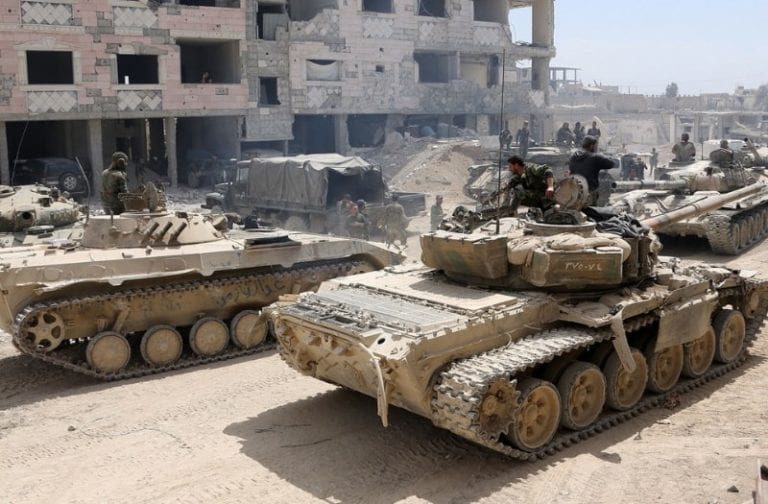





Comment: Of course not. What's a few billion agitated people when total world domination at a time of rapid development for the non-Western majority is your goal?
RT has, naturally, homed in Trump's statements about the USSR in Afghanistan, but there's a more significant point behind Trump's statements: He trailed off at that point, but what he implied was that these geographically-proximate countries should be left alone to deal with 'ISIS' and the Taliban and whatever other fundamentalist nut-jobs remain in Afghanistan and northern Pakistan.
Clearly, Trump is using the narrative of justifying US military presence in Afghanistan on the basis of terrorists being there to present the opposite policy to the deep state and permanent government: US military withdrawal.
Just the fact that he emphasizes that these other countries are physically, geographically there, and that the US - by obvious implication - is not, is anathema to the exceptionalists who HATE the man for doing his part to wake people from the spell of 'saving the world'.
Here's what Trump said at the same press conference about the US military presence in Syria. This time, he flips the narrative on the exceptionalists by claiming that the US 'killing ISIS' in Syria is helping Russia, Iran and Assad, sworn enemies of the deep state!
He's very smart. Maybe not Putin-smart in his execution, but his counter-manipulation of the manipulations the deep staters use through the terror narrative is the strongest indication yet that he's serious about ending this 'endless war', and by itself largely accounts for the elites' hatred of him.