Secret HistoryS


Info

260 Monumental tombs older than Egypt's pyramids discovered in the Sahara

stone burial monuments
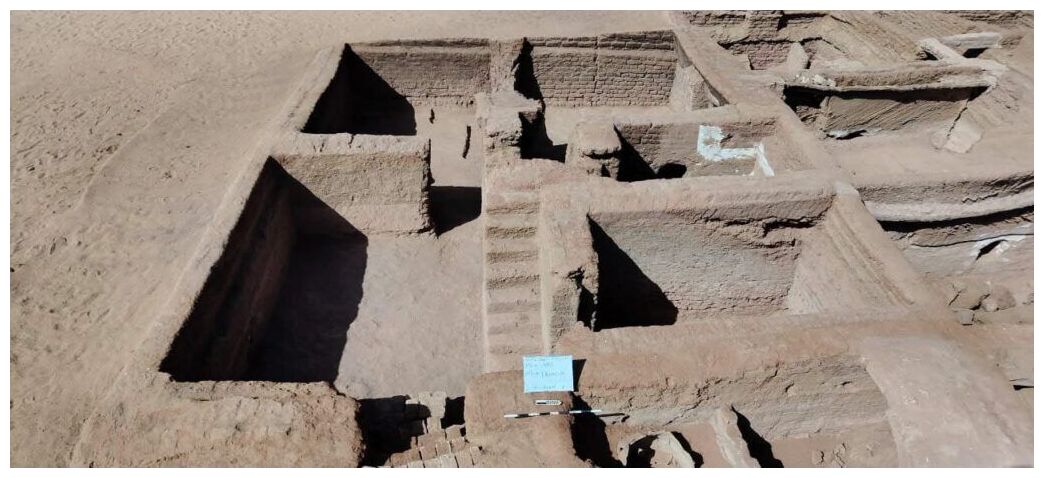
© Cooper, J., et al., 2026, African Archaeological ReviewSatellite archaeology has revealed 260 previously unknown stone burial monuments in Sudan’s Atbai Desert, opening a rare window onto life in the Eastern Sahara before the rise of pharaonic Egypt.
In the dry lands between the Nile and the Red Sea, hundreds of stone circles are rewriting what archaeologists know about life in the Eastern Sahara before the rise of pharaonic Egypt.

A new archaeological study has identified 260 previously unknown monumental tombs in the Atbai Desert, a vast and still poorly explored region stretching across eastern Sudan between the Nubian Nile and the Red Sea Hills. The structures, known as Atbai Enclosure Burials, appear to belong to a mobile pastoralist culture that flourished during the fourth and third millennia BC, with some related examples reaching back even earlier.

That makes the earliest phases of this funerary tradition older than Egypt's pyramids, built centuries later on the Nile Valley's western edge. But these were not royal tombs of stone-cut corridors and written names. They were circular monuments in the desert, built by herding communities whose wealth moved on four legs.

A desert cemetery visible from space

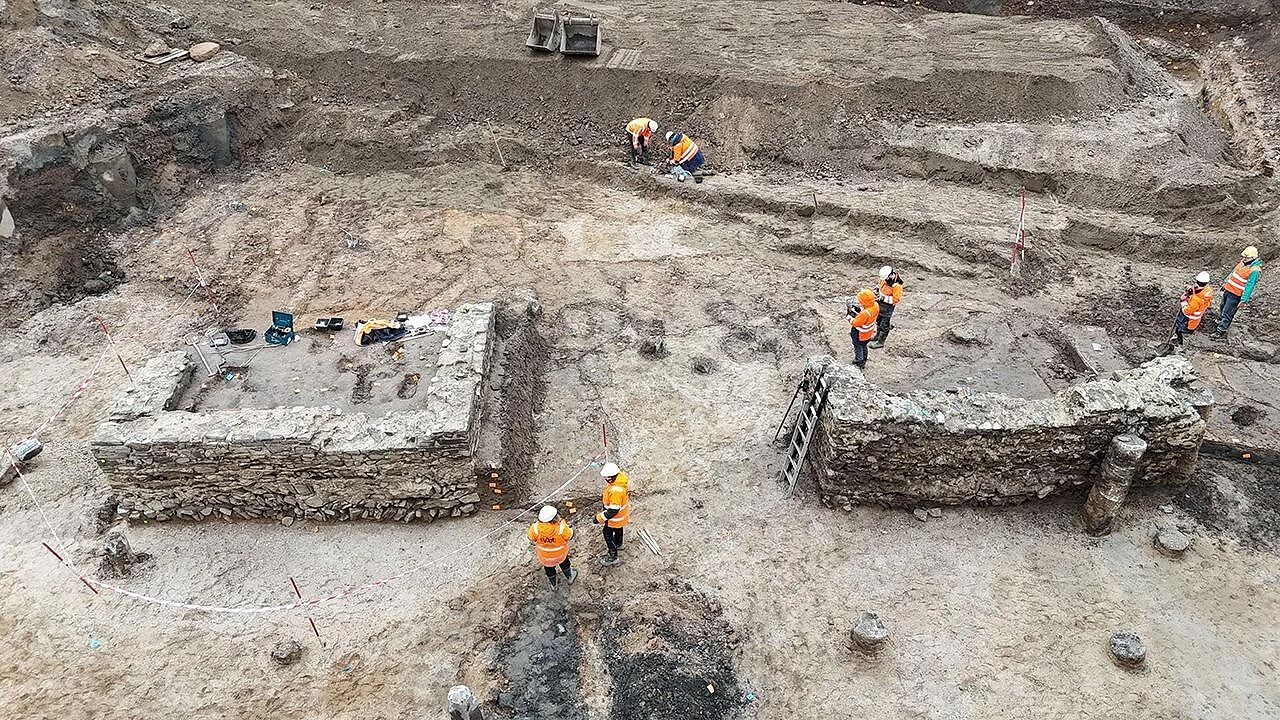
The discovery was made through systematic remote-sensing work by the Atbai Survey Project. Using satellite imagery, researchers mapped circular and oval stone monuments across an enormous desert zone from Upper Egypt toward the Eritrean borderlands.

The study recorded 280 monumental structures in total, including 20 already known from earlier surveys. The remaining 260 were newly identified through satellite analysis.

Most are large circular stone enclosures containing internal burials. Some measure only a few meters across, while the largest reach more than 80 meters in diameter. Their scale suggests that these were not ordinary graves, but central places in the social and ritual landscape of prehistoric herders.

Pyramid

Hall of Records theories explode as CIA doc mentioning 'temple under Sphinx' found

Great Sphinx
The the hidden archive, speculated to be hidden below the Great Sphinx, supposedly contained texts detailing humanity's forgotten history, advanced science and catastrophic events that destroyed earlier civilizations.
The location of an ancient library believed to lie beneath Egypt's Great Sphinx has long been one of archaeology's greatest mysteries.

Now, a resurfaced CIA document from 1952 is reigniting speculation surrounding the legendary Hall of Records after a cryptic reference to a 'temple under Sphinx' was found inside a Cold War-era photographic inventory.

The Hall of Records legend has fascinated the public for nearly a century, with some claiming the mythical archive contains ancient texts, maps and evidence of a lost civilization that predated recorded history.

The 10-page CIA file, dated November 20, 1952, is titled 'Presentation Form for Graphic Material' and appears to catalog 11 rolls of black-and-white photographic negatives taken between July and December 1950.

Pyramid

Prehistoric discovery in North America older than Egypt's Great Pyramid rewrites human history

Charcoal layers in Canada
Charcoal layers also indicate that early Indigenous inhabitants practiced controlled fire management, aligning with longstanding oral traditions.
An ancient Indigenous settlement older than Egypt's Great Pyramid by more than 6,000 years is reshaping what archaeologists thought they knew about early North American civilization.

Archaeologists uncovered the 11,000-year-old site near Saskatchewan in western Canada, saying it confirms that highly organized societies existed in the region far earlier than previously believed.

Excavations uncovered stone tools, fire pits and toolmaking materials, suggesting the area was a long-term settlement rather than a temporary hunting camp.

Charcoal layers also indicate that early Indigenous inhabitants practiced controlled fire management, aligning with longstanding oral traditions.

Bad Guys

CIA Ran MK-Ultra Experiments on Korean Prisoners of War in US Custody, Declassified Docs Confirm

mkultra
© The Intercept / Photo by Bert Hardy/Picture Post/Hulton Archive/Getty Images
Korean prisoners of war in the 1950s were subjected to early MK-ULTRA experiments while in American custody, according to recently declassified CIA documents which confirm these experiments for the first time.

The only reporting that previously referenced Koreans being used as guinea pigs for these experiments was journalist John Marks's landmark 1979 book, The Search for the "Manchurian Candidate. Using CIA documents, Marks traced the now-infamous MK-ULTRA project to its start, when it was known as Project Bluebird. In the book, Marks describes how, in October 1950, 25 unnamed North Korean POWs were chosen as the first test subjects to receive "advanced" interrogation techniques, with the overt goal of "controlling an individual to the point where he will do our bidding against his will and even against such fundamental laws of nature as self-preservation."

While MK-ULTRA is best known for its invasive experimentation — like LSD dosing and torture — the documents confirm Korean POWs were the unwitting subjects of less splashy attempts at mind control, like being subjected to polygraph tests, with plans for other invasive testing.

Family

On humanity's earliest attempts to make a home

mammoth bone house paleolithic
Reconstruction of a Paleolithic-era dwelling constructed from mammoth bones discovered in Mezhyrich, Ukraine
Stefan Al considers the architectural prowess of our prehistoric ancestors

In 1753, the Jesuit priest Marc-Antoine Laugier described the origin of dwelling by imagining a lone "savage" troubled by nature's extremes. This "primitive man," seeking refuge from scorching heat and torrential rain, initially fled to a cave but found it too dark and filled with "foul air." Upon leaving the cave, he embarks on a mission. "Resolved to make good by his ingenuity the careless neglect of nature," Laugier writes, "he wants to make himself a dwelling."

As Laugier's story continues, the man wanders through a forest, stumbles upon fallen branches, and has an epiphany. "He chooses four of the strongest, raises them upright and arranges them in a square." With surprising engineering intuition, he lays four more branches across their tops to create a frame. He then crowns it with a pitched triangle, making a roof truss, and covers it "with leaves so closely packed that neither sun nor rain can penetrate. Thus man is housed."

This tale of instant architecture became the foundation of Laugier's influential theory, championing the simplicity of a "primitive hut," a pitched roof supported by columns, over the theatrical flourishes of High Baroque architecture. While the story shaped architectural thinking for generations, it is far from the historical reality. Rather than a single stroke of genius, the story of human habitation is one of gradual evolution, unfolding over millions of years through the collaborative acts of countless generations. And this story begins not with Homo sapiens but with our distant ancestors.

Archaeology

13-year-old boy finds ancient Greek bronze coin in a Berlin field

ancient bronze coin greek troy found berlin
© Petri Berlin / Christof HannemannThis ancient Greek coin is now on view in Berlin.
Minted in Troy in the third century B.C.E., the object might have been buried as a gift to the dead. Archaeologists don't know exactly how it ended up in modern-day Germany

When a 13-year-old schoolboy discovered a small coin in a field on the outskirts of Berlin, he knew that he'd stumbled onto something special. But it wasn't until scholars analyzed the object that they realized its true significance. Minted in the third century B.C.E. in the city of Troy, located in what is now western Turkey, the bronze coin is the first ancient Greek artifact ever unearthed in the German capital.

The teenager showed his find to researchers during a November 2025 visit to Petri Berlin, an interactive archaeology lab built atop the foundations of a medieval-era Latin school.

"Nobody knew exactly what it was because it was so small," Jens Henker, an archaeologist with the Berlin Heritage Authority, tells Smithsonian magazine. "That it was something old was clear."

Info

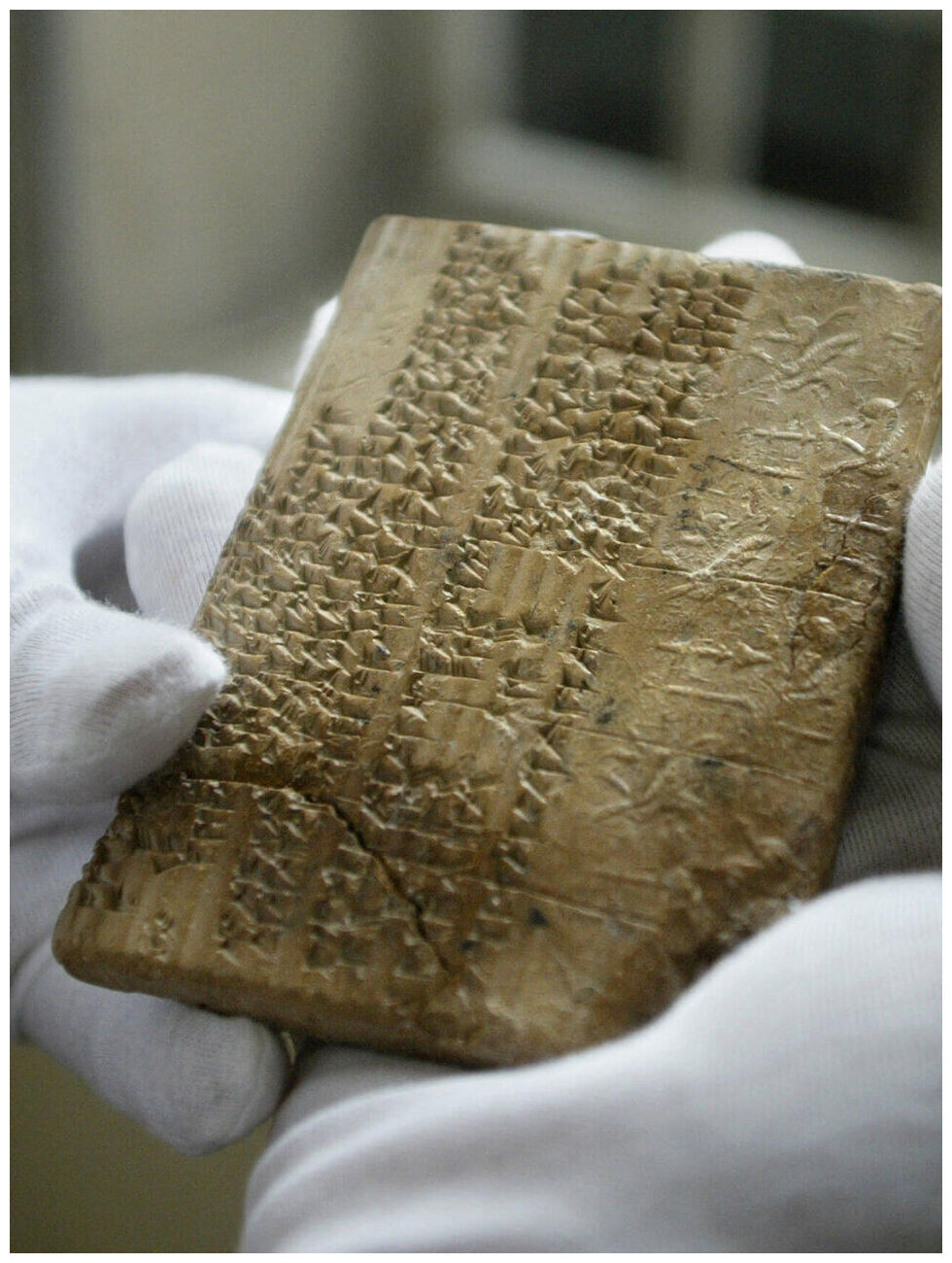
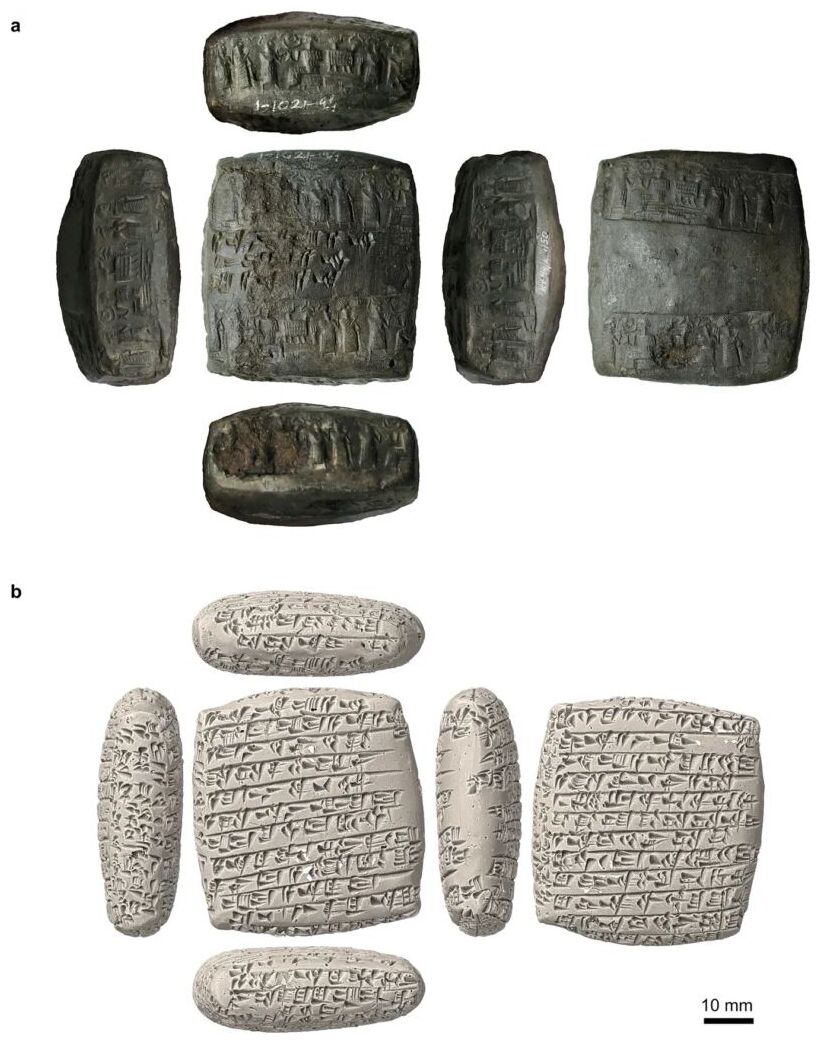
A mysterious 4000-year-old 'lost' writing system has finally been decoded, in a modern 'Rosetta Stone' breakthrough

An example of Linear Elamite
© Darafsh/Wikimedia/CC 3.0An example of Linear Elamite.
An ancient Iranian mystery has finally been solved, according to a French archaeologist who reports successfully cracking the code to an enigmatic, undeciphered writing system.

Known as Linear Elamite, the 4000-year-old script — once considered impossible to decode — has now been unlocked by François Desset, in an achievement that has drawn comparisons to Jean-François Champollion's famous deciphering of the enigmatic Rosetta Stone.

Desset, a 43-year-old archaeological researcher based at the University of Liege in Belgium, says the remarkable ancient script is the only truly "local" writing system from the country's early history, which is currently embattled. Others that have been used there over the millennia — from cuneiform to the Arabic and Greek alphabets — all have Western origins.

The Enigma of Linear Elamite

Originally discovered more than a century ago during archaeological reconnaissance at the Iranian Susa site, Desset's first encounters with the ancient script occurred two decades ago, while working in the country's southern region.

There, he and other archaeologists participated in discoveries very much like something out of an Indiana Jones film — the uncovering of ancient tablets covered in an enigmatic, undeciphered language.

Linear Elamite comprises 77 individual characters, including geometric patterns and various other shapes, making it distinct among ancient writing systems.

The scripts are attributed by scholars to the 4th millennium Elam civilization, a Bronze Age state for which Susa once served as capital. It was there that, in 1903, French missionaries first uncovered the peculiar script on ancient tablets, which remained the sole examples of what came to be known as Linear Elamite for many decades.

Info

New discoveries at 12,000-year-old Karahantepe: Human statues, animal carvings, and surprising diet uncovered

Karahantepe Artifacts
© Anadolu Agency
In southeastern Türkiye, a prehistoric landscape continues to reshape how we understand the origins of settled life. At Karahantepe, archaeologists have uncovered a growing body of evidence pointing to a sophisticated Neolithic community — one that combined symbolic art, architectural planning, and surprisingly diverse dietary practices nearly 12,000 years ago.

Recent findings from ongoing excavations indicate that the site was not only a center of ritual expression but also a place where early humans developed complex relationships with their environment. Three-dimensional human sculptures, detailed animal depictions, and new data on food consumption are now offering a more complete picture of daily life during the Pre-Pottery Neolithic period.

Monumental Architecture and Symbolic Expression

Karahantepe forms part of the broader Taş Tepeler Project, one of the most ambitious archaeological research initiatives in Türkiye's modern history. Over the past seven years, excavations in the region have identified more than 250 T-shaped stone pillars at Karahantepe alone, echoing the architectural style seen at nearby Göbeklitepe, a UNESCO World Heritage Site often described as the world's earliest known monumental sanctuary.

Yet Karahantepe is not merely a replica of its more famous neighbor. The site has yielded a remarkable range of artifacts, including life-sized human statues carved in high relief and intricate animal figures embedded into stone surfaces. These discoveries suggest a rich symbolic world, where art and architecture were deeply intertwined.

Unlike later urban settlements, these structures predate pottery, metallurgy, and even fully developed agriculture. Still, their scale and complexity indicate a level of social organization that challenges traditional narratives about early human societies.

Roses

5 ways ancient Persia has shaped our modern world

ancient persia
© Archivist / Adobe StockA frieze of the Persian Immortals, the elite royal bodyguard of the Achaemenid Persian Empire kings.
From landscaped gardens to road systems, the Persians were among the first to create many things we still enjoy today.

It's often said that history is written by the winners. But when you look back on the ancient world, it's more accurate to say that history is written by historians. Although China has a strong claim, many tend to cite ancient Greece as the birthplace of history as a discipline. In Herodotus and Thucydides, we see the origins of the historical method — a vaguely reputable attempt to document events, and not a somewhat-historical imaginarium of magical beasts, bored gods, and local heroes. And how did the Greeks use their histories? Well, to slander their enemies. In Greek "history," we see the Persian Empire as a place of dissolute, depraved, decadent demons who sought only the death and enslavement of all civilized peoples.

This vilification of the Persian Empire continued through two millennia of Eurocentric education - a "whig" historical account which went from Greece to Rome to Knights to Britain and then to America. Another issue, once historians realized the "rest of the world" might offer at least something, is that the study of Persia suffered for want of primary sources available to Western institutions. There were very few Persian translations (not to mention texts to translate). Even today, Amazon has over 20,000 books on Ancient Greece and Ancient Rome. Persia doesn't even have its own section.

Archaeology

Researcher blows lid on discovery which could PROVE Noah's Ark was real

noah's ark
© NOAH'S ARK SCANSThe ancient rocks, first discovered in 1959, lie around 6,500 feet above sea level and resemble a boat
A leading researcher has blown the lid on his work which could prove Noah's Ark was real. Andrew Jones, of Noah's Ark Scans, has been studying a rock formation on Turkey's Mount Ararat for years.

The ancient rocks, first discovered in 1959, lie around 6,500 feet above sea level and resemble a boat. They measure 515 feet long - matching the dimensions described in Genesis chapter six, using Egyptian cubits.

But "exciting" new findings, Mr Jones says, could prove the biblical accounts to be true.

After carrying out new ground-penetrating radar (GPR) scans and taking soil samples from the site, researchers have uncovered a series of "corridors" below the earth which could add further weight to the mythical boat.