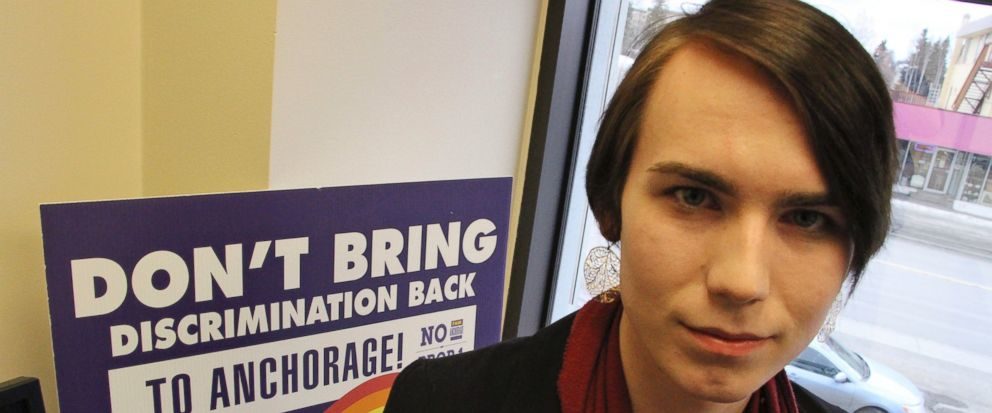
© AP Photo/Mark ThiessenIn this photo taken Monday, April 9, 2018, Lillian Lennon poses for a photo in Anchorage, Alaska. Lennon, a transgender teenager, was a field organizer who helped defeat a bathroom bill before Anchorage voters this month, the first-ever defeat of such a bill by voters in an election
Voters in Alaska's largest city are on track to becoming the first in the U.S. to defeat a so-called bathroom bill in a referendum that asked them to require people using public bathrooms and locker rooms consistent with their gender at birth.
The initiative asked Anchorage's voters to repeal part of an ordinance passed in 2015 that prevented discrimination based on sexual orientation which said people could use public bathrooms and locker rooms "consistent with their gender identity." The proposition sought to mandate that people could only use the municipal bathrooms and locker rooms that corresponded to their gender at birth.Voting by mail and in person ended on April 3 and the repeal effort was losing 53-47 percent as of Monday, with nearly 78,000 votes counted and only several hundred to be counted when tallying ends on Friday. Supporters of the referendum have conceded defeat and opponents are claiming victory.
Among those celebrating was Lillian Lennon, who was 14 when her parents sent her from Alaska to Utah for residential therapy, where conversion therapy was practiced and the transgender teen was placed in a boy's dorm.
"I was forced to go by pronouns and a name I didn't identify with, and was regularly harassed and bullied for who I was and simply not being able to be known as myself," she said.















Comment: The longer the stall-out on fact-finding and resolution, the more time the West has to rev up a frenzy for war.