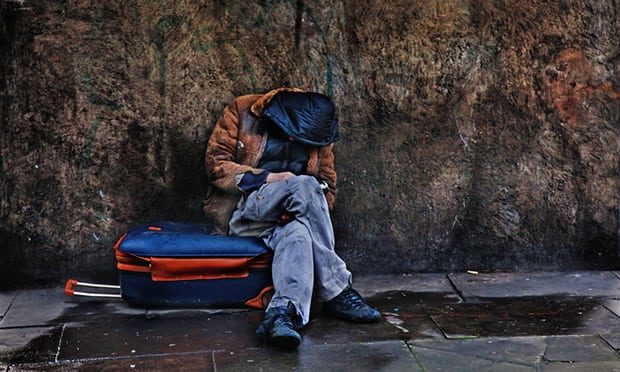
© Barry Lewis / Alamy Stock Photo/Alamy Stock Photo‘The tragedy is that it’s entirely within our power to do something about it: homelessness is not a choice.’ A homeless man in London.
The number of rough sleepers in Britain is soaring, with deaths now a weekly occurrence. It's time we got over our prejudices
"I was born in Liverpool and grew up on a council estate. I had a clean home, toys and nice meals as a kid. When I was nine years old, the sexual abuse started. My abusers made me feel special. They gave me gifts, moneys, cigarettes and sweets. When I was 13 I ran away from home and soon found myself in the murky world of prostitution on the streets. My life was out of control."
This is how it all started for Simon. I met him 23 years later at SCT, a local charity I help to run in east London that offers support to people who are homeless and face alcohol and drug addiction. He used to make me coffee every morning at the social enterprise cafe we run. In the intervening period he had spent years in and out of hostels and institutions, as well as long spells on the streets.
When I met him, Simon was sober and working for the first time in years. He said at the time that SCT "offered me the opportunity to get my life back on track. Life is worth living now. I'm looking forward to my future." Tragically, this future wasn't to be: soon afterwards he decided to return to the streets and died as a result.
I would like to be able to say that Simon's story is an exception. But in reality it is all too familiar, as new statistics published by the
Guardian showed on Wednesday. The number of homeless people dying on the streets or in temporary accommodation in the UK has more than doubled over the past five years to more than one per week. The average age of a rough sleeper when they die is 43, about half the UK life expectancy.


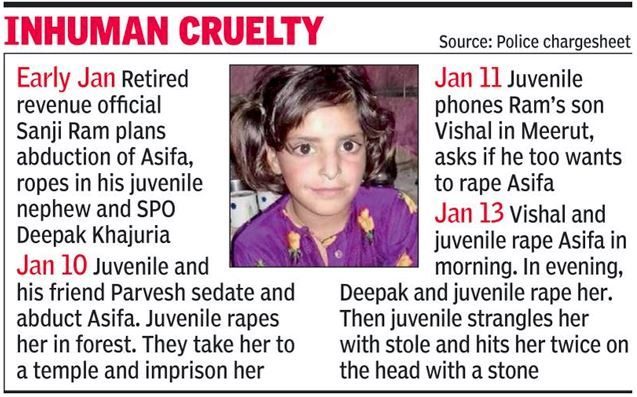










Comment: Horrific indeed, and reminiscent of the case of Pakistani girl Zainab Ansari: