Society's ChildS


Laptop

Poll finds Gen Z Americans growing more skeptical and angry about AI

artificial intelligence ai generic logo
Young Americans are using artificial intelligence (AI) regularly, but their distrust and resentment toward the technology are also growing, according to a new Gallup survey.

The survey, released Thursday, found that more than half of Generation Z respondents ages 14 to 29 said they use generative AI either daily or weekly. Younger members of Gen Z who are still in K-12 education were more likely than Gen Z adults to say they use AI at least weekly.

Yet even as usage remains widespread, optimism is fading.

Compared with Gallup's survey last year, young people are less excited about the changes AI could bring and more skeptical about its growing presence.

The share of respondents who said AI made them feel hopeful fell to 18 percent, down from 27 percent a year earlier, according to Gallup.

Comment: The kids seem to be getting cranky:
Things might be going kinetic in the backlash against data centers and AI.

On Friday, a 20-year-old suspect set on burning down OpenAI headquarters was charged and arrested following a predawn Molotov cocktail attack on OpenAI CEO Sam Altman's house in the Russian Hill neighborhood of San Francisco.

Daniel Alejandro Moreno-Gama, 20, from Texas, was arrested and booked into County Jail hours after the incident. He faces multiple felony charges including attempted murder, arson, making criminal threats, and two counts each of possession or manufacture of an incendiary device and possession of a destructive device. He is being held without bail.

"Thankfully it bounced off the house and no one got hurt," Altman wrote in a blog post.

According to police and OpenAI, the attack unfolded around 3:40-3:45 a.m. on April 10 when Moreno-Gama allegedly hurled a flaming bottle at the metal gate of Altman's home at 855 Chestnut Street in the Russian Hill neighborhood. The device ignited a small fire that was quickly extinguished by on-site security, causing only minor damage and no injuries; it reportedly bounced off the house. The suspect then fled to OpenAI's Mission Bay headquarters, where he allegedly threatened to burn down the building. Officers recognized him from surveillance footage of the residence attack and took him into custody without further incident.

OpenAI issued a brief statement confirming the events and thanking SFPD for the rapid response, noting that security had been stepped up at company offices.

Hours later, Altman published a strikingly personal blog post that has generated almost as much discussion as the attack itself. (Read Altman's full post here.) In it, he shared a rare family photo with his husband Oliver Mulherin and their child, writing: "Here is a photo of my family. I love them more than anything. Images have power, I hope... Normally we try to be pretty private, but in this case I am sharing a photo in the hopes that it might dissuade the next person from throwing a Molotov cocktail at our house."

Altman described himself as "awake in the middle of the night and pissed," admitted he had underestimated "the power of words and narratives," and linked the moment to broader anxiety about AI, including a recent critical profile. The post mixes personal apologies and reflections on past conflicts (including the Elon Musk trial and OpenAI board drama), a dramatic Lord of the Rings "ring of power" metaphor for the AGI race, and a call to "de-escalate the rhetoric and tactics and try to have fewer explosions in fewer homes, figuratively and literally."

The timing and tone of Altman's response appear to underscore a deeper reality now playing out across the country: financially strained American households are increasingly pushing back against the infrastructure demands of the AI industry. New data this week shows residential electricity prices surging in key regions, driven in large part by the explosive growth of data centers needed to train and run large language models. Communities from Virginia to Georgia to the Midwest have mounted growing resistance - through zoning fights, moratoriums, and public hearings - over electricity costs, water consumption, land use, and limited local economic benefits, marking what one analysis described as a sharp escalation in Americans starting to revolt against data centers.

In response to the pressure, Amazon, Google, Meta, Microsoft, OpenAI, Oracle, and xAI this week signed a Trump-administration-brokered "Ratepayer Protection Pledge" committing the companies to fully fund their own new power generation, transmission upgrades, and grid improvements so that ordinary ratepayers are not left footing the bill. The move follows an emergency intervention directing the nation's largest grid operator to hold a special auction shifting billions in costs away from households.

This backlash is fueled not only by soaring electricity costs but also by deep-seated fears that AI and large language models will trigger widespread job displacement. Many Americans, particularly recent graduates and white-collar workers, worry that rapid automation of cognitive and knowledge-based work will leave large segments of the labor force behind. Are we on the cusp of a new luddite revolution?

Wanna read something scary? Stanford software engineering grads aren't finding work...

"Stanford computer science graduates are struggling to find entry-level jobs" with the most prominent tech brands, according to the university's Jan Liphardt, an associate professor in bioengineering.
While the rapidly advancing coding capabilities of generative AI have made experienced engineers more productive, they have also hobbled the job prospects of early-career software engineers.

Stanford students describe a suddenly skewed job market, where just a small slice of graduates — those considered "cracked engineers" who already have thick resumes building products and doing research — are getting the few good jobs, leaving everyone else to fight for scraps.

"There's definitely a very dreary mood on campus," said a recent computer science graduate who asked not to be named so they could speak freely. "People [who are] job hunting are very stressed out, and it's very hard for them to actually secure jobs."

The shake-up is being felt across California colleges, including UC Berkeley, USC and others. The job search has been even tougher for those with less prestigious degrees. - LA Times
While the vast majority of this pushback remains peaceful and policy-focused, the Molotov incident may be the first kinetic action in the luddite revolution. Altman himself seemed to nod to that anxiety in his post, acknowledging that "the fear and anxiety about AI is justified" and calling for societal resilience, economic transition support, and democratization so that "power cannot be too concentrated."


Propaganda

Tucker Carlson slams UK's Palestine Action ban, calls Keir Starmer 'enslaved'

Tucker Carlson
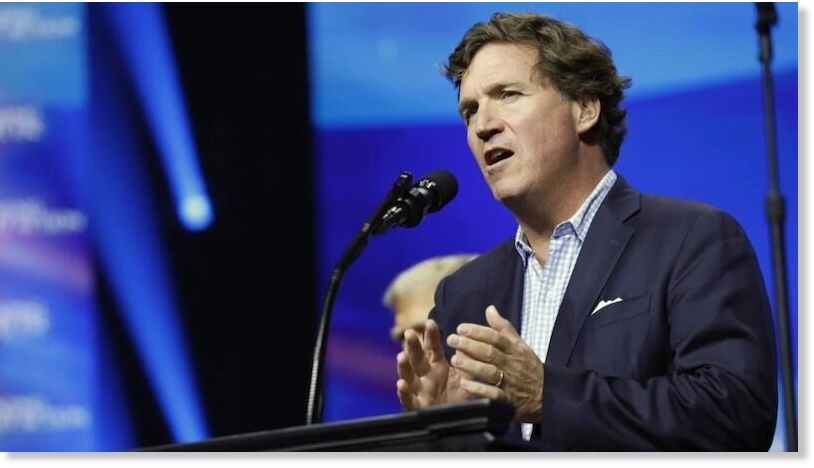
© AFPTucker Carlson speaks at a Turning Point Action rally for Donald Trump at the Gas South Arena in Duluth, Georgia, on 23 October 2024
Prominent American journalist Tucker Carlson has condemned the British government's ban on the direct action group Palestine Action in an interview with the BBC.

Speaking on Sunday morning, BBC presenter Victoria Derbyshire asked Carlson, a former Fox News host who has been a staunch critic of the US-Israeli war on Iran, whether British Prime Minister Keir Starmer made the right decision.

"I don't think Keir Starmer makes any calls about anything," Carlson replied.

"I mean, Keir Starmer's not in control of Britain."

Carlson added: "No, Keir Starmer is every bit as enslaved as Donald Trump is. It is illegal - it is a crime for which you can be arrested - in Britain right now, criticising Israel. If you say you're for Palestine Action, you can be arrested.

Comment: The unspoken truths about Israel are now be spoken of at loud. And no amount of suppression - either media-induced or legislated, will change that; and the more they try to, the louder it will be.


Arrow Down

Voters' remorse: Mamdani's first 100 days aren't getting high marks

mamdani new york
© Michael M. Santiago/Getty ImagesNew York Mayor Zohran Mamdani
Zohran Mamdani rode a wave of progressive enthusiasm and sweeping promises to become the Mayor of New York City.

Now, as he closes in on his first hundred days in office, he's learning that governing is a lot harder than campaigning, and a new poll suggests New Yorkers are starting to be skeptical about what they voted for.

Some of Mamdani's campaign promises won't be fulfilled because Gov. Kathy Hochul is refusing to subsidize them. Earlier this year, snow and trash removal problems became major issues, as residents were forced to endure eight-foot-high piles of garbage on the street and rat infestations, all while the area around Gracie Mansion was kept perfectly clean. The brutal winter also resulted in a cold-related death toll of 29. These kinds of crises test political leaders quickly, and he failed.

Comment: Mamdani keeps shooting himself in the foot with nonsense like this.


This didn't help either:


Nor does this:

NYC is getting a progressive reality check. It's not going to get any better either.


Briefcase

Musk's xAI suing Colorado over AI law, says it forces developers to promote state's woke agenda

grok on smartphone logo
© Oleksii Pydsosonnii/The Epoch TimesThe chatbot Grok is the flagship product of xAI.
Elon Musk's artificial intelligence company, xAI, filed a lawsuit on April 9 over a Colorado law it claims makes AI developers endorse "Colorado's views on diversity, equity, and inclusion or face significant compliance costs and civil fines."

The company, whose flagship product is the chatbot Grok, named Colorado Attorney General Philip Weiser as the defendant. The lawsuit states that the law's provisions "prohibit developers of AI systems from producing speech that the State of Colorado dislikes, while compelling them to conform their speech to a State-enforced orthodoxy on controversial topics of great public concern." The lawsuit says the Colorado law violates the First Amendment.

Weiser didn't respond to an email seeking comment.

The lawsuit questions the use of the term "algorithmic discrimination" in the law, calling it vague.

Fire

Mexico's "energy sovereignty" Dos Bocas Oil Refinery hit by major fire

Oil refinery
© Galeria OlmecaRefinería Dos Bocas
One of Mexico's largest refineries, with a processing capacity of 340,000 barrels per day, appears to have suffered a fire in its coke storage area, marking the second incident in less than a month.

The Dos Bocas refinery, built by Pemex in the southeastern state of Tabasco, is the crown jewel of Mexico's push to reduce dependence on imported gasoline and diesel, especially from U.S. exporters in the Gulf of America. It cost about $21 billion to build and was a major energy project under former President Andrés Manuel López Obrador.

Arrow Down

Why rent control fails: Lessons from New York to Portland

Rent control NYC
© AdobeStockNew York City Rent Control
Housing costs in New York City have reached a level that many people can no longer afford. The response has been to push for more control — limits on rent increases and expanded tenant protections. The intention is clear. However, housing markets respond to incentives, not intentions.

Under Zohran Mamdani, New York City is moving further in that direction. The focus is on limiting rent increases, expanding tenant protections, and increasing the role of government in the housing market. The policy has not fully taken effect yet. Once these rules interact with rising costs, the housing market will respond to the incentives.

Rent control keeps rents down, but it does not keep costs down for the landlord. There is no cap on insurance premiums. Property taxes can still rise year after year. Maintenance and labor costs continue to climb as well. As those costs rise, landlords are forced to adjust. Some delay maintenance. Others see their margins get too thin to justify the risk.

Arrow Down

The economic destruction of Trump's war: Much more than just high gas prices

oil refinery
For the past six weeks, as this US-Israeli war with Iran has played out, the economic impact of the conflict has gotten a lot of attention. And rightfully so.

As anyone who's consumed any news about this war knows well by now, the Strait of Hormuz is a major energy chokepoint, the Iranian government did exactly what they said they were going to do if Trump and Netanyahu ordered this attack and started blocking ships tied in any way to the government's attacking them from passing through the Strait, and the US, Israeli, or really any other government have not been able to do anything about it.

However, throughout all of this, most of the discourse about the economic impacts of the war has focused on the rising prices drivers are facing at the gas pump. That isn't surprising, as gas prices are an early cost that impact consumers directly.

But the emphasis on pain at the pump threatens to badly understate the economic damage of this war. And it helps feed the false impression that, if this new attempt at a ceasefire holds and the war ends somewhat quickly, gas prices will fall back down as fast as they rose, and then all the global economic turmoil the world's been worrying about will be avoided.

Cross

Liberals advance bill that could criminalize quoting the Bible as hate speech

Bible
© Unknown
Canadian Conservative MP warns removal of religious "good faith" defense leaves people of faith open to prosecution for scripture.

Canada is barreling toward a chilling new reality where quoting certain Bible passages could be treated as a criminal hate speech offense.

Bill C-9, the so-called Combatting Hate Act, cleared the House of Commons on March 25 and now moves to the Senate.

Critics say the legislation guts a decades-old legal safeguard that protected sincere religious expression, handing prosecutors new tools to target Christians and other believers who dare reference holy texts on topics like sexuality.

Attention

Best of the Web: Army survivors of deadly attack in Kuwait dispute Pentagon's account, say unit "was unprepared" to defend itself

damage from the Iranian drone attack that killed six U.S. service members in Kuwait
Photo obtained by CBS News shows damage from the Iranian drone attack that killed six U.S. service members in Kuwait on March 1, 2026.
Survivors of the deadliest Iranian attack on U.S. forces since the war began have disputed the Pentagon's description of events and said their unit in Kuwait was left dangerously exposed when six service members were killed and more than 20 wounded.

Speaking publicly for the first time, members of the targeted unit offered CBS News a detailed account of the attack and its harrowing aftermath from the perspective of those on the ground.

The members CBS News spoke to disputed the description of events from Defense Secretary Pete Hegseth, who described the drone as a "squirter" — in that it squirted through the defenses of a fortified unit inside Kuwait.

"Painting a picture that 'one squeaked through' is a falsehood," one of the injured soldiers told CBS News. "I want people to know the unit ... was unprepared to provide any defense for itself. It was not a fortified position."

Padlock

The only Palestinian children's rights organization closes following years-long Israeli campaign against it

Defense for Children International
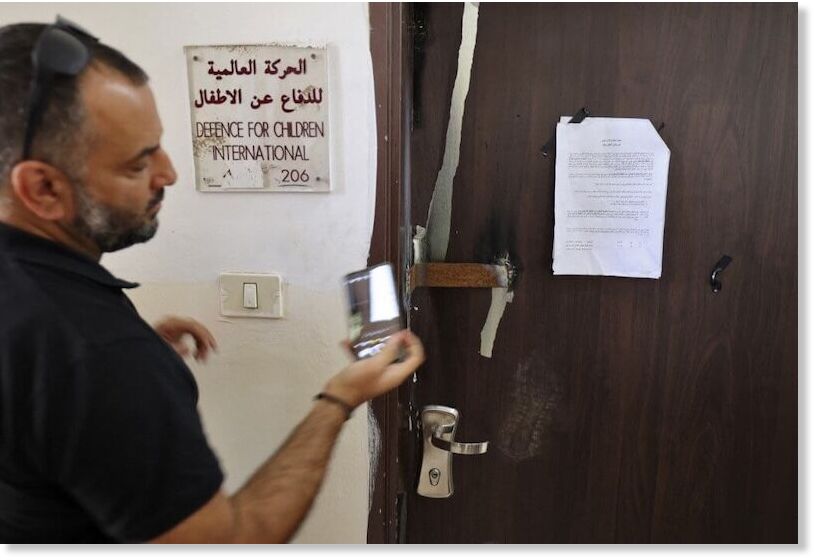
© AFP / Abbas Momani via DCIPDefense for Children International – Palestine’s office door outside Ramallah after Israeli forces conducted a raid and declared the organization closed on August 18, 2022
"After 35 years of defending Palestinian children's rights, we are not able to overcome operational challenges resulting from Israel's targeted criminalization of Palestinian human rights organizations," said DCI-P General Director Khaled Quzmar.

Defense for Children International-Palestine (DCI-P) has ended its extraordinary work with the children of Palestine as a result of unending threats from the State of Israel. Despite having been designated by Israel as a terrorist organization in 2023, DCI-P had continued its groundbreaking work of investigating, documenting and exposing human rights violations against Palestinian children as well as providing legal services to children and holding both Israeli and Palestinian authorities accountable to principles of human rights as described in international law.

But in an announcement earlier this week, DCI-P's General Director Khaled Quzmar said, "After 35 years of defending Palestinian children's rights, we are not able to overcome operational challenges resulting from Israel's targeted criminalization of Palestinian human rights organizations."

Comment: Given the very high number of children whose bodies were buried in Gaza's rubble, and therefore not officially counted as dead, the 17,000 dead number is quite probably a vast underestimation of this horror.