Best of the Web:


Eye 1

Best of the Web: Never let a crisis go to waste: US lawmakers bask in coronavirus panic while quietly building the police state of their dreams

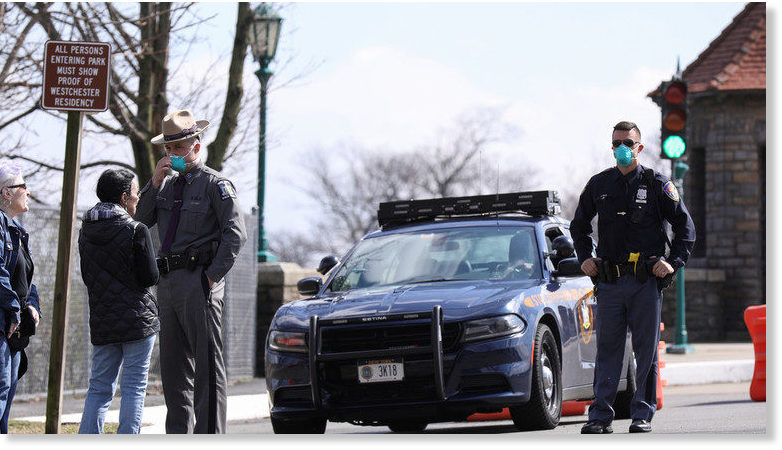
Coronavirus checkpoint
© Reuters / Andrew KellyCoronavirus checkpoint
As the coronavirus epidemic monopolizes the attention of the American people, government is taking the opportunity to sneak through all manner of restrictive legislation, including a law that could end the internet as we know it.

Killing the internet... to save the children?

The ominously-named EARN IT Act (short for "Eliminating Abusive and Rampant Neglect of Interactive Technologies Act") that quietly debuted in the Senate earlier this month is a carefully crafted weapon for crushing encryption without explicitly banning, industry professionals have warned. While this particular bill purports to be all about ending child sexual exploitation, the industry is concerned it will make their business model unsustainable - while doing nothing to protect children. So are independent media producers, who fear their speech would be declared anathema. It would in practice strip section 230 legal immunity - protection from liability for third party content - from any website that failed to comply with a set of "best practices" imposed on a supposedly voluntary basis by a 19-member "commission" run by Attorney General William Barr.


2 + 2 = 4

Best of the Web: You don't say. 'Coronavirus death rate in Wuhan 65% lower than previously thought'

Researchers calculated a 1.4 percent likelihood of dying in the city where the pandemic began. Earlier estimates ranged from 2 percent to 3.4 percent.
Tedros Adhanom
Tedros Adhanom, Director general of the World Health Organization
A new study reports that people who became sick from the coronavirus in the Chinese city where the outbreak began likely had a lower death rate than previously thought.

The study, published Thursday in the journal Nature Medicine, calculated that people with coronavirus symptoms in Wuhan, China, had a 1.4 percent likelihood of dying. Some previous estimates have ranged from 2 percent to 3.4 percent.


Comment: Eh, 3.4%. You ALL were reporting 3.4%. Which is why most people on Earth have spent the last 6 weeks bleating that figure back to each other.


Assessing the risk of death in Wuhan is instructive because it provides a snapshot of the epidemic from the beginning, when doctors were scrambling to treat people with the brand-new virus and hospitals were overwhelmed. Some experts say that such a benchmark — known as the symptomatic case fatality rate — could be lower in countries like the United States if measures like widespread business and school closures and appeals for social distancing have the desired effect of slowing the spread of the disease.

Comment: They're STILL harping on about how 'this is worse than the seasonal flu'.

But the above is only their first revision down of the mortality rate.

Also reported today, 19 March: there are no new cases in Wuhan.

The virus is done there. For this winter season anyway.

So here's what will most likely represent the global mortality rate:

Population of Wuhan = 11 million

COVID-19 deaths in Wuhan = +/-2,200

What percentage of 11 million is 2,200?

0.02%

Which is far less than the season flu mortality rate.

Damn the Fake News Media and the horses of the Apocalypse they rode in on.


Syringe

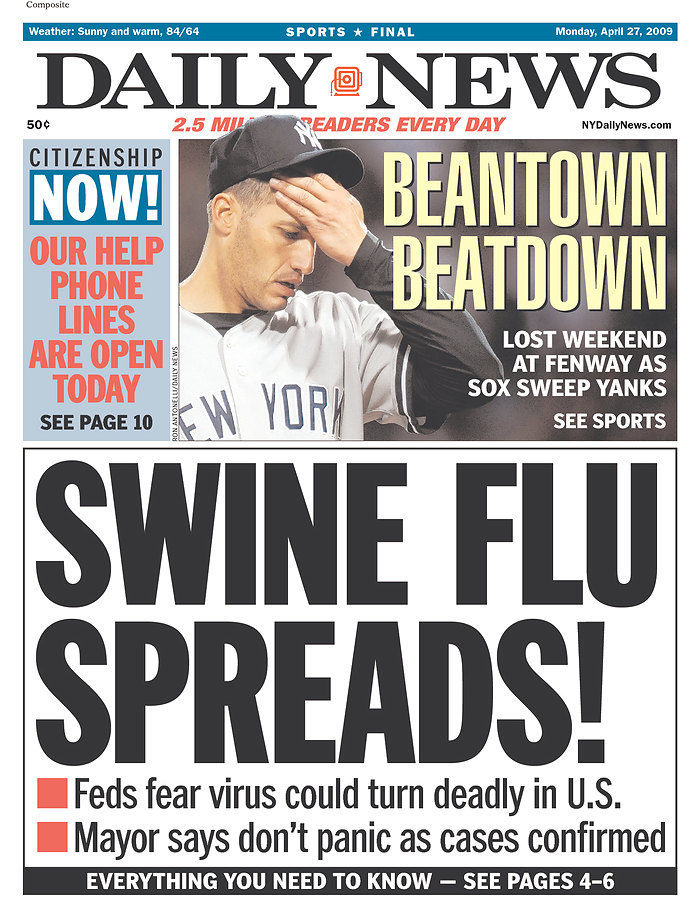
Flashback Best of the Web: Swine flu was as elusive as WMD. The real threat is mad scientist syndrome

Remember the warnings of 65,000 dead? Health chiefs should admit they were wrong - yet again - about a global pandemic
swine flu h1n1 hysteria
The media always hypes these things way out of proportion to their actual threat
Let me recap. Six months ago I reviewed the latest bit of terrorism to emerge from the government's Cobra bunker, courtesy of Alan Johnson, home secretary. Swine flu was allegedly ravaging the nation. The BBC was intoning nightly statistics on what "could" happen as "the deadly virus" took hold. The chief medical officer, Sir Liam Donaldson, bandied about any figure that came into his head, settling on "65,000 could die", peaking at 350 corpses a day.

Donaldson knew exactly what would happen. The media went berserk. The World Health Organisation declared a "six-level alert" so as to "prepare the world for an imminent attack". The happy-go-lucky virologist, John Oxford, said half the population could be infected, and that his lowest estimate was 6,000 dead.

The "Andromeda strain" was stalking the earth, and its first victims were clearly scientists. Drugs were frantically stockpiled and key workers identified as vital to be saved for humanity's future. Cobra alerted the army. Morgues were told to stand ready. The Green party blamed intensive pig farming. The Guardian listed "the top 10 plague books".

Light Saber

Flashback Best of the Web: Interview with Dr. Wolfgang Wodarg: H1N1 'Swine Flu pandemic' was one of the greatest medical scandals of the century

Image
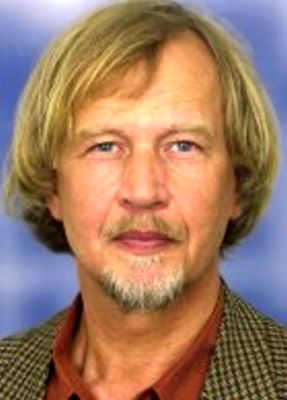
© UnknownWolfgang Wodarg
Here is my interview for the Danish 'Information' on the swine-flu pandemic:

"We have had a mild flu - and a false pandemic," says Wolfgang Wodarg, the chair of the Health Committee in The European Council. The German parliamentarian is also an epidemiologist and former health director in Flensburg. For that reason he has followed the H1N1 pandemic closely since June 11 and up to the present. He calls the pandemic "one of the greatest medical scandals of the century", and for that reason he has decided to take the case to the European Council:

"In January, we will arrange an emergency debate about the influence of the pharmaceutical industry on the WHO, and 47 parliaments all over Europe are going to be informed. Following this, we will initiate an investigation and hearings involving those responsible for the pandemic emergency," says Wolfgang Wodarg.

"The aim is that none of the pharmaceutical companies under any circumstances must be allowed to make their influence felt on pandemic emergencies," he says and adds that rules for patenting also will be checked:
"Vaccines are also an ethical issue. The pharmaceutical industry should not be allowed to get a patent to develop a preparation which is so important for our society."

Snakes in Suits

Best of the Web: Coronavirus and the Gates Foundation

bill gates
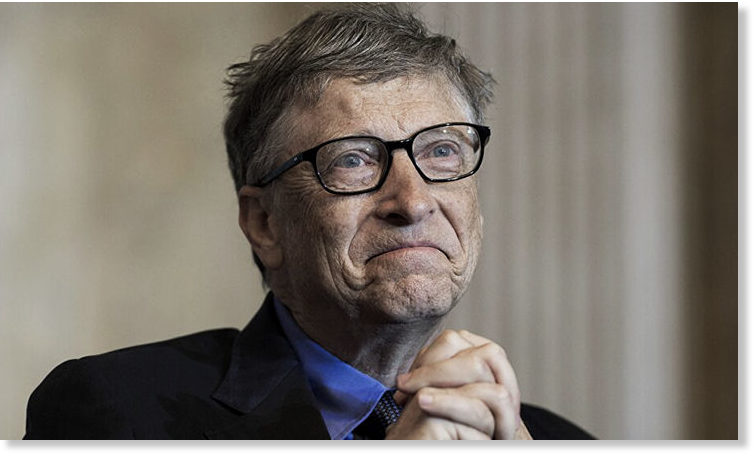
Arguably, no one has been more active in promoting and funding research on vaccines aimed at dealing with coronavirus than Bill Gates and the Bill and Melinda Gates Foundation. From sponsoring a simulation of a coronavirus global pandemic, just weeks before the Wuhan outbreak was announced, to funding numerous corporate efforts to come up with a novel vaccine for the apparently novel virus, the Gates presence is there. What does it actually entail?

We must admit that at the very least Bill Gates is prophetic. He has claimed for years that a global killer pandemic will come and that we are not prepared for it. On March 18, 2015 Gates gave a TED talk on epidemics in Vancouver. That day he wrote on his blog, "I just gave a brief talk on a subject that I've been learning a lot about lately — epidemics. The Ebola outbreak in West Africa is a tragedy — as I write this, more than 10,000 people have died." Gates then added, "As awful as this epidemic has been, the next one could be much worse. The world is simply not prepared to deal with a disease — an especially virulent flu, for example — that infects large numbers of people very quickly. Of all the things that could kill 10 million people or more, by far the most likely is an epidemic."

Corona

Best of the Web: World's leading epidemiologist John Ioannidis on COVID-19 fiasco: 'We are making decisions without reliable data'

covid-19 hospital pandemic
The current coronavirus disease, Covid-19, has been called a once-in-a-century pandemic. But it may also be a once-in-a-century evidence fiasco.

At a time when everyone needs better information, from disease modelers and governments to people quarantined or just social distancing, we lack reliable evidence on how many people have been infected with SARS-CoV-2 or who continue to become infected. Better information is needed to guide decisions and actions of monumental significance and to monitor their impact.

Draconian countermeasures have been adopted in many countries. If the pandemic dissipates — either on its own or because of these measures — short-term extreme social distancing and lockdowns may be bearable. How long, though, should measures like these be continued if the pandemic churns across the globe unabated? How can policymakers tell if they are doing more good than harm?

Comment: Here's an interview Dr. Ioannidis gave several days after publishing the above article, on 23 March 2020:


See also:


Snakes in Suits

Best of the Web: Evidence shows WHO severely overstated the fatality rate of the coronavirus leading to the greatest global panic in history

Tedros Adhanom Ghebreyesus
Director General of the WHO Tedros Adhanom Ghebreyesus
The controversial Ethiopian politician and Director General of the World Health Organization (WHO), Tedros Adhanom Ghebreyesus, claimed in a press conference in early March that the fatality rate for the coronavirus was many multiples that of the fatality rate of the common flu. This egregiously false premise has led to the greatest panic in world history.

The Director General of the WHO spoke on March 3, 2020 and shared this related to the coronavirus:
While many people globally have built up immunity to seasonal flu strains, COVID-19 is a new virus to which no one has immunity. That means more people are susceptible to infection, and some will suffer severe disease.

Globally, about 3.4% of reported COVID-19 cases have died. By comparison, seasonal flu generally kills far fewer than 1% of those infected.
This statement led to the greatest panic in world history as the media all over the world shared and repeated that the coronavirus was many, many times more deadly than the common flu.

Question

Best of the Web: Coronavirus hysteria: The Diamond Princess cruise ship does not fit the media narrative

diamond princess
The Diamond Princess
OK, here are my questions. We had a perfect petri-dish coronavirus disease (COVID-19) experiment with the cruise ship "Diamond Princess". That's the cruise ship that ended up in quarantine for a number of weeks after a number of people tested positive for the coronavirus. I got to wondering what the outcome of the experiment was.

So I dug around and found an analysis of the situation, with the catchy title of Estimating the infection and case fatality ratio for COVID-19 using age-adjusted data from the outbreak on the Diamond Princess cruise ship(PDF), so I could see what the outcomes were.

As you might imagine, before they knew it was a problem, the epidemic raged on the ship, with infected crew members cooking and cleaning for the guests, people all eating together, close living quarters, lots of social interaction, and a generally older population. Seems like a perfect situation for an overwhelming majority of the passengers to become infected.

Colosseum

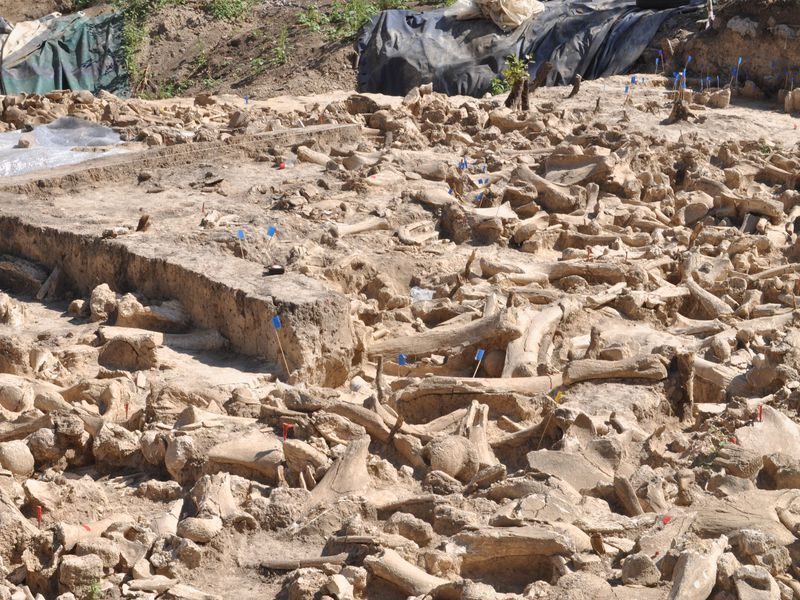
Best of the Web: Mysterious 25,000-year-old circular structure built from bones of 60 mammoths discovered in Russia's forest steppe

mammoth structure
© A. E. DudinThe purpose of such an elaborate structure remains a big open question. The remains of the newly discovered structure.
A jaw-dropping example of Ice Age architecture has been unearthed on Russia's forest steppe: a huge, circular structure built with the bones of at least 60 woolly mammoths. But exactly why hunter-gatherers enduring the frigid realities of life 25,000 years ago would construct the 40-foot diameter building is a fascinating question.


Comment: It is perhaps (a little) less perplexing when you realise that back then the area wasn't "frigid" at all and in fact its climate was temperate. See Pierre Lescaudron's Of Flash Frozen Mammoths and Cosmic Catastrophes for more.


"Clearly a lot of time and effort went into building this structure so it was obviously important to the people that made it for some reason," says Alexander Pryor, an archaeologist at the University of Exeter (U.K.). He is the lead author of a new study published this week in the journal Antiquity describing the find at Kostenki, a place where many important Paleolithic sites lie clustered around the Don River.

Comment: See also:


Guinness

Best of the Web: Shocking discovery! Scientists learn the flaming obvious: People are recovering from COVID-19 'like they would from the flu'


Comment: That's because it IS 'the flu', you morons!

(At least, it's one of the many viruses - which includes Influenza Type A and Influenza Type B - that goes into making up the millions of people who every year come down with what can only be broadly labelled 'influenza-like illnesses'.)


flu cold sick
Normal
Scientists in Australia say they have identified how the body's immune system fights the Covid-19 virus.

Their research, published in Nature Medicine journal on Tuesday, shows people are recovering from the new virus like they would from the flu.

Determining which immune cells are appearing should also help with vaccine development, experts say.


Comment: Vaccines against the flu don't work. Never have done, and probably never will.


Globally, authorities have confirmed more than 160,000 cases of the coronavirus and about 6,500 deaths.

Comment: Money down the drain.

The thousands of viruses out there essentially serve the same function as software updates in computers. The human species NEEDS these updates if it is to continue living in synch with the ever-changing environment.

'Getting sick from the flu' is the process of 'enforced downtime' to process the 'updates' - it HAS to happen. This cannot be eradicated!

All attempts to do so are merely signalling to the Universe that 'we, the humans alive today, no longer wish for software updates'. Right now, billions of people are effectively signalling to the Universe: 'Stop the world, we want off NOW!'

They better watch out what they wish for, or the Universe will send them a REAL means of 'wipe-out'.