Extreme Temperatures
S


Snowflake

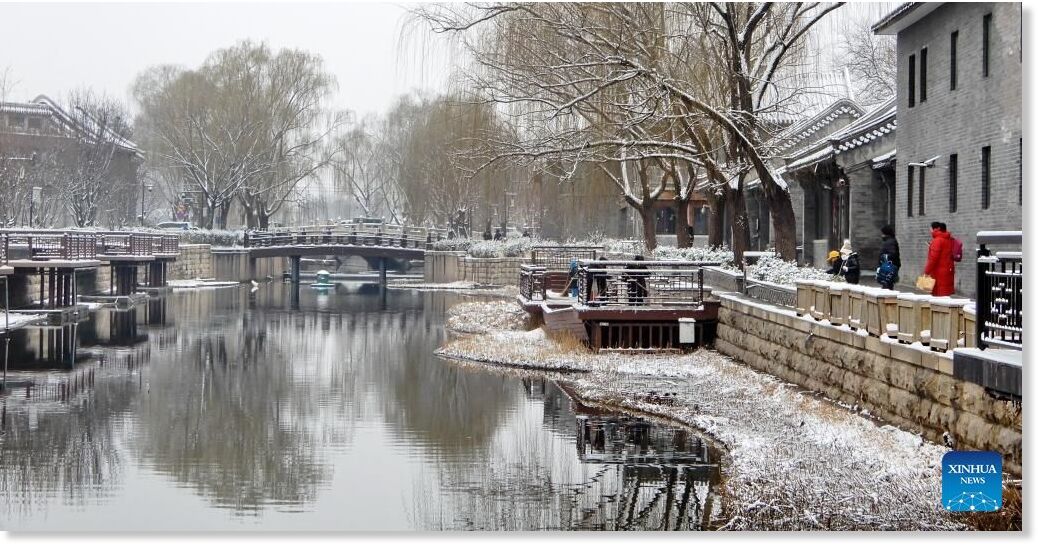
Beijing witnesses spring snowfall

This photo taken on March 5, 2026 shows a view of the snow scenery in Beijing, capital of China. Beijing has witnessed a spring snowfall from Wednesday to Thursday.
© Xinhua/Li XinThis photo taken on March 5, 2026 shows a view of the snow scenery in Beijing, capital of China. Beijing has witnessed a spring snowfall from Wednesday to Thursday.

Snowflake

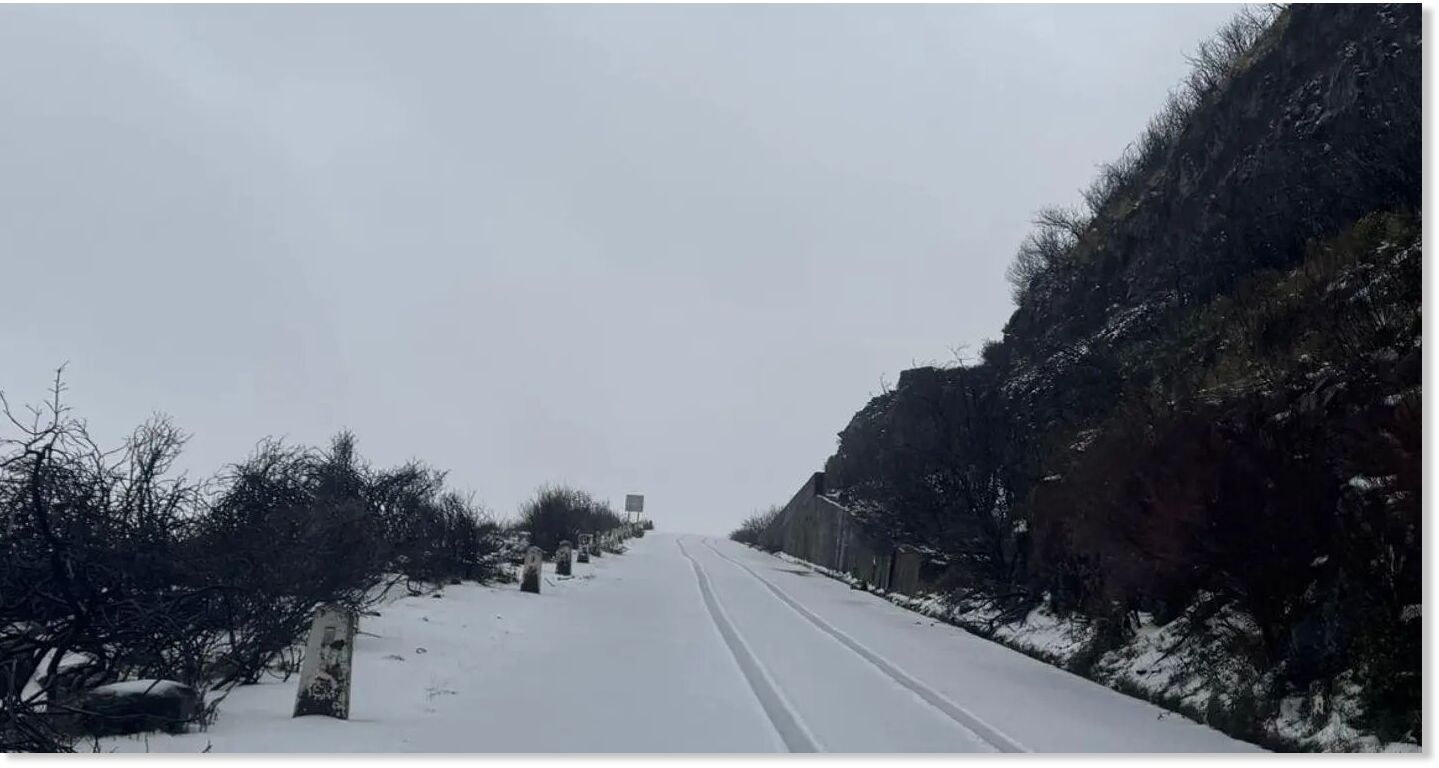
Snow has fallen on the island of Madeira

mmmmmmm
Several access roads to the mountains of Madeira are temporarily closed due to snowfall in the higher areas of the island, the Regional Government reported.

According to the Regional Secretariat for Equipment and Infrastructure, the access roads to Poiso, Pico do Areeiro, Meia Serra, Estanquinhos - Bica da Cana, Malhadinha - Paúl da Serra, Pico das Pedras - Achada do Teixeira are closed.

"The interruption of road traffic is due to adverse weather conditions, which compromise the safety of traffic," indicated the Madeiran government, adding that these roads will remain closed "until the necessary conditions to guarantee the safety of people and property are restored."

This department of the Madeiran executive appeals for compliance with the authorities' signage and instructions.

The Madeira archipelago is being affected by the Regina depression, which is expected to affect the weather until the morning of 4 March.


Snowflake

Record snowfall in Japan causes serious agricultural damage in Tohoku Region

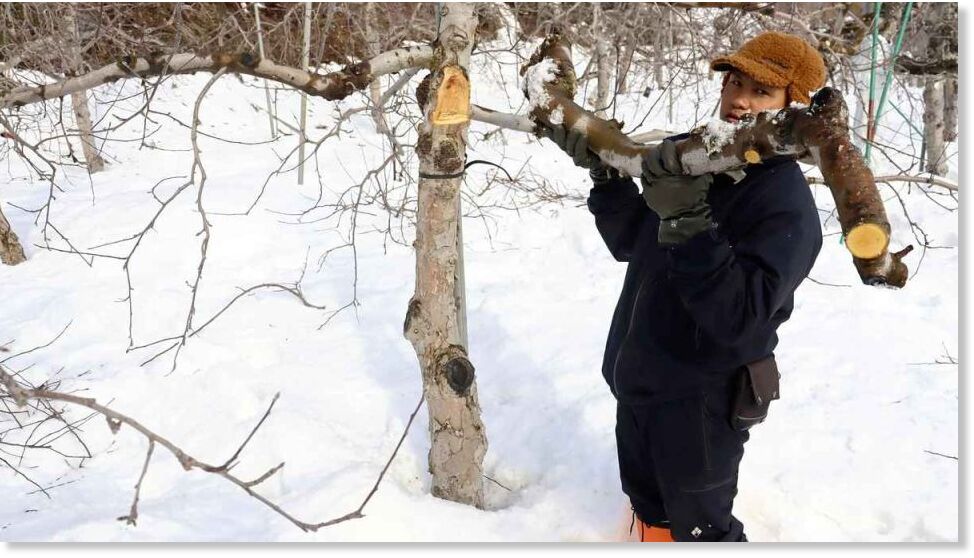
A farmer holds a branch that broke off an apple tree due to snow in Hirosaki, Aomori Prefecture, on Feb. 16. “This is useless,” he said.
© THE YOMIURI SHIMBUNA farmer holds a branch that broke off an apple tree due to snow in Hirosaki, Aomori Prefecture, on Feb. 16. “This is useless,” he said.
This winter's record snowfall that has hit the Tohoku region and Niigata Prefecture has caused serious agricultural damage such as breaking branches on fruit trees and causing vinyl greenhouses to collapse.

Because many farm roads remain buried in snow, confirming the extent of the damage done so far will take a long time, and it could be worse than in typical years.

"I can only sigh because more branches have been broken than last year," a farmer said in mid-February while carefully digging up branches buried in the snow in an apple orchard in Hirosaki, Aomori Prefecture. In January, the city saw a record snowfall of 148 centimeters.

Last winter, broken branches on apple trees alone caused more than ¥20 billion in damage in the prefecture. The yield from his 5-hectare farm dropped by nearly 10 tonnes, down over 10% from typical years. Branches have been broken over a wide area this year, and he said, "I'm afraid this year's yield will be lower than last year's."

Arrow Down

Run screaming: Rising CO2 has been detected in human blood!

Blood CO2
© CC0 Public Domain
The one-eyed science monster is here again to scare teenage girlies

No one is funded to poke holes in the CO2-octopus, so researchers can follow a silly idea for a long time. In a normal world someone would have scoffed and squashed this horror show in the tea room.

It is yet another meaningless correlation pretending to be a dangerous trend. Supposedly rising levels of carbon dioxide in the air around us is tainting our very blood, causing a public health crisis. Atmospheric CO2 is "higher than anything humans ever experienced" says Dr Phil Bierwirth, worried that current CO2 levels are beyond what we evolved to deal with, and 100% wrong.

Poor Dr Bierworth obviously doesn't realize that even though atmospheric CO2 has risen from 320ppm to 420ppm, normal indoor CO2 levels are 500 to 1,000 ppm, and the air we breathe out is 40,000ppm.

We don't need a quarter century to raise our blood CO2 levels — we can hold our breath and get there in sixty seconds.

Or we just need to go jogging.

Since he is a retired environmental geoscientist, it was cruel to set him up to fail so badly on what is a beginner medical question.
Rising carbon dioxide levels now detected in human blood

— Phys Org

Rising carbon dioxide levels are being detected within the human body, with new research warning a key blood marker for the gas could near its healthy limit within decades if current trends continue. The findings are especially relevant for children and adolescents, whose developing bodies will experience the longest cumulative exposure to rising atmospheric CO₂.

Using data from the U.S. National Health and Nutrition Examination Survey (NHANES), the team examined blood results from around 7,000 people every two years between 1999 and 2020.

Average levels of serum bicarbonate — a marker closely linked to carbon dioxide in the body — have risen by approximately 7% since 1999. Over the same period, average calcium and phosphorus levels have declined.
Snowflake

Spring snowfall reaches 37 cm depth in Shahbuz, Azerbaijan

mmmmm
Unstable weather conditions continue across Azerbaijan, with heavy snowfall reported in most regions. According to the National Hydrometeorological Service, as of 10:00 AM on March 2, the highest snow depth was recorded in Shahbuz at 37 cm.

The Operative Information Center-OMM reports that significant snow accumulation was also observed in Kishchay (Shaki) at 33 cm, Alibay (Zaqatala) at 25 cm, and Khinalig and Griz at 24 cm. Other mountainous areas saw substantial coverage, including Dashkasan (22 cm), Kalbajar (21 cm), Qusar and Gadabay (18 cm), as well as Lachin, Shahdag, and Qubadli (16 cm). In the liberated territories, Shusha recorded 12 cm, Khankendi 10 cm, and Fuzuli 6 cm of snow.


Snowflake

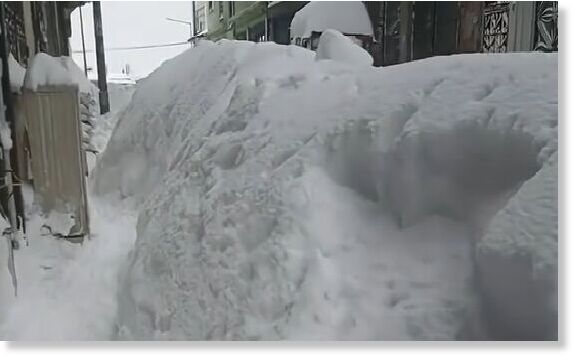
Vehicles buried under deep snow in Ordu, Türkiye

mmmmm
The expected snowfall in Ordu has intensified. In Gürgentepe district, known for its high altitude, the snow depth has reached nearly 1.5 meters. Most parked vehicles in the district center and rural neighborhoods are buried under the snow.

Vehicles were trapped in snowdrifts.

The scene that emerged in the morning after the snow that fell continuously throughout the night was striking. The roofs of houses, roads, and vehicles were completely covered in white. Some citizens had to spend a long time shoveling to clear the snow from their vehicles.


Snowflake

Over 3 feet of snow in 48 hours dumped on Vancouver Island's mountain ranges

mmmmm
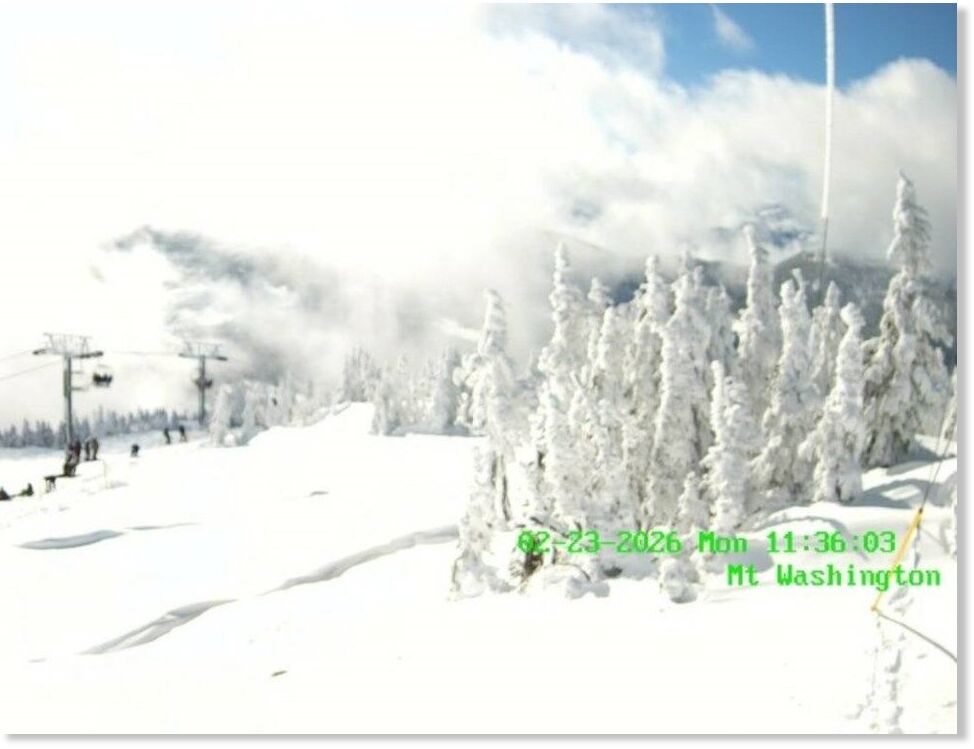
© MOUNTWASHINGTON.CAMount Washington Alpine Resort webcam image from Monday, Feb. 23. The heavy snowfall forced the resort to temporarily suspend ski operations on Sunday morning. About 108 centimetres of new snow fell on the ski hill over 48 hours, creating “safety concerns,” according to the resort.
Officials are warning anyone heading into the backcountry to use extreme caution after more than 100 centimetres of snow blanketed parts of Vancouver Island's mountain ranges over the weekend, creating a high avalanche risk.

Avalanche Canada said snow sliding was at its highest danger level on Monday and could remain there through the week, depending on conditions.

The warning was issued for the mountain terrain from Lake Cowichan to Port McNeill. Several natural and skier-induced slides have already been reported in Strathcona Provincial Park.

Avalanche Canada forecaster Martina Halik said the new snow is burying a widespread hoar frost layer, creating "touchy avalanche conditions."

She said the fine crystallized hoar frost layer isn't immediately bonding with the new snow and can break under the load of heavy snowfall, creating a high hazard.

"That's the biggest problem right now," Halik said Monday. "This slab of storm snow on top of these feathery crystals creates persistent problems. We'll have to see what happens with this layer, but it's definitely going to take a few days to get it to bond.


Snowflake Cold

Best of the Web: 5,000 flights cancelled as US east coast digs out of record 3 FEET snow - over 600,000 properties without power

A groundskeeper clears snow from the walkways inside the Trinity Church graveyard in lower Manhattan during a snow storm, Monday, Feb. 23, 2026, in New York.
© Seth WenigA groundskeeper clears snow from the walkways inside the Trinity Church graveyard in lower Manhattan during a snow storm, Monday, Feb. 23, 2026, in New York.
A major storm hit the US east coast on Monday, bringing record-breaking snow that caused disruptions for millions and thousands of flight cancellations.

Parts of Rhode Island and Massachusetts have seen nearly 37in (94cm) of snowfall, with more than 19in in New York City's Central Park, the National Weather Service (NWS) said.

Weather warnings stretched from North Carolina to northern Maine, with some in place further north in parts of eastern Canada.

More than 600,000 properties on the US east coast endured power outages, while the Boston Globe - a major US newspaper - said it will not go to print for the first time in its 153-year history due to the storm.

Travel across the region has been severely limited, with some states and cities implementing travel bans during the worst period of the storm.


Windsock

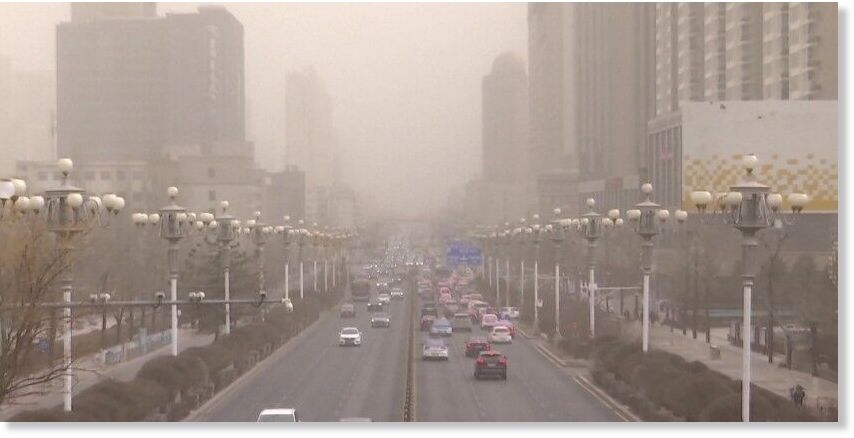
Sandstorms, strong winds sweep across northern China

mmmm
On Saturday, strong winds and sandstorms swept across multiple northern regions of China. The National Meteorological Center on Friday issued yellow warnings for strong winds and sandstorms, as well as a blue alert for a cold wave.

The Hohhot Bureau of China Railway had activated a peak-period timetable to cope with unfavorable weather conditions. In most areas of Shanxi Province, residents wore heavier clothing and masks to protect themselves from the strong winds and thick dust. Authorities had implemented active emergency measures to ensure public safety.


Arrow Down

Best of the Web: Europe's mounting avalanche death toll: 86 so far this winter with record downfalls burying ski resorts

An avalanche on Tuesday in the Zermatt region of Switzerland
Europe's avalanche crisis is escalating, with 86 people including at least four Brits killed this season as severe snowfall and unstable mountain conditions wreak havoc across the Alps and beyond.

France has recorded the highest toll so far with 25 deaths, followed by Italy with 21 and Austria with 14, while Switzerland has lost nine and Spain eight.

Slovakia reported four deaths and Slovenia three, with a single death in Andorra.

The vast majority of victims were caught in wind slab avalanches or collapses linked to persistent weak layers buried deep within the snow, often triggered after fresh downfalls.

Most were skiing off piste or travelling in backcountry terrain, with others killed while mountaineering, climbing or hiking.