Health & WellnessS


Bad Guys

Parental exposure to marijuana linked to drug addiction, compulsive behavior in unexposed progeny, rodent study finds

Image
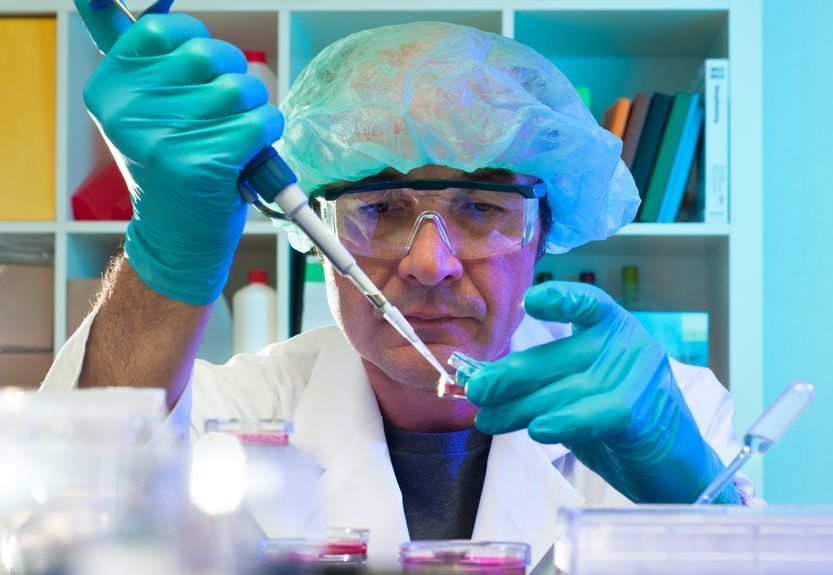
© Ondrej Hajek/Fotolia“Our study emphasizes that cannabis [marijuana] affects not just those exposed, but has adverse affects on future generations,” said Yasmin Hurd, PhD, the study’s senior author.
Exposing adolescent rats to THC (tetrahydrocannabinol) - the primary psychoactive ingredient in marijuana - can lead to molecular and behavioral alterations in the next generation of offspring, even though progeny were not directly exposed to the drug, researchers at the Icahn School of Medicine at Mount Sinai have found. Male offspring showed stronger motivation to self-administer heroin during their adulthood and molecular changes in the glutamatergic system, which is the most important excitatory pathway for neurotransmission in the brain. Damage in the glutamate pathway, which regulates synaptic plasticity, has been linked to disturbances in goal-directed behavior and habit formation.

Coffee

Working the night shift 'throws body into chaos'

London Underground  workers
© Getty ImagesOvernight maintenance on the London Underground
Doing the night shift throws the body "into chaos" and could cause long-term damage, warn researchers.

Shift work has been linked to higher rates of type 2 diabetes, heart attacks and cancer.

Now scientists at the Sleep Research Centre in Surrey have uncovered the disruption shift work causes at the deepest molecular level.

Experts said the scale, speed and severity of damage caused by being awake at night was a surprise.

The human body has its own natural rhythm or body clock tuned to sleep at night and be active during the day.

It has profound effects on the body, altering everything from hormones and body temperature to athletic ability, mood and brain function.

The study, published in Proceedings of the National Academy of Sciences, followed 22 people as their body was shifted from a normal pattern to that of a night-shift worker.

Blood tests showed that normally 6% of genes - the instructions contained in DNA - were precisely timed to be more or less active at specific times of the day.

Once the volunteers were working through the night, that genetic fine-tuning was lost.

Rose

Flashback Aloe Guts


A view from a colonic hydro-therapist and natural health practitioner of the importance of Aloe Vera and our intestinal health.
Aloe Guts explains the importance of having clean intestines for the health of your body, and how Aloe Vera may help with that job.

Question

Is the USDA really dumb enough to approve Agent Orange corn?

Image
© jeffbalke/cc/flickrCritics fear the USDA's assessment of 'Agent Orange' crops will increase the use of toxic pesticides.
Could this be the dumbest thing the USDA has ever done?

The Obama administration announced last week that it expects to approve corn and soybeans that have been genetically engineered by Dow Chemical company to tolerate the toxic herbicide - 2,4-D. They are planning this approval despite the fact that use of this herbicide is associated with increased rates of deadly immune system cancers, Parkinson's disease, endocrine disruption, birth defects, and many other serious kinds of illness and reproductive problems.

Weed ecologists are unanimous in warning that approval of these crops will lead to vast increases in the use of this poisonous chemical. Researchers at Penn State say that in soybeans alone, planting of crops resistant to 2,4-D would increase the amount of 2,4-D sprayed on American fields to 100 million pounds per year - four times the current level. The researchers predict a cascade of negative environmental impacts, and add that the increasing use of the herbicide would actually worsen the epidemic of superweeds it is intended to address, by causing weeds to become resistant to multiple herbicides.

A coalition of 144 farming, fishery, environmental and public health groups have asked the USDA not to approve the 2,4-D resistant crops. Citing studies that predict dire consequences to both human and environmental health, they add the concern among farmers that 2,4-D would drift onto their property and kill their crops, causing serious economic damage in rural communities.

Beaker

New study renews roundup 'weedkiller' toxicity concern

Image
A new study published in the January issue of International Journal of Toxicology titled, "Glyphosate Commercial Formulation Causes Cytotoxicity, Oxidative Effects, and Apoptosis on Human Cells: Differences With its Active Ingredient," raises renewed concern that formulations of the world's most popular herbicide glyphosate (e.g. Roundup), used primarily in the production of GM food, represent a serious human health threat.

Researchers studied the effects of a glyphosate-based formulation on human cells, at dilutions far below agricultural applications. The researchers discovered that while glyphosate and its amino acid metabolite, aminomethylphosphonic acid (AMPA), showed little to no observable toxic effects in isolation, a glyphosate-based formulation containing adjuvants produced a variety of adverse effects on cellular oxidative balance, including the following signs of oxidative stress:
  • Increases in reactive oxygen species
  • Increases in nitrotyrosine formation
  • Increases in superoxide dismutase activity
  • Increases in glutathione levels
The glyphosate formulation studied also triggered two 'death proteins' in human cells known as caspase 3/7, inducing pathways that activate programmed cell death (apoptosis), a clear sign of significant toxicity.

Comment: Glyphosate's extreme carcinogenic potential is explained in more detail in the following articles:

Scientist Says Flawed Science of GMOs Jeopardizing Future Generations
Dr. Huber detailed the negative impacts of glyphosate and GM crops on plants, soils, and the environment and animal and human health. He called glyphosate the "most abused chemical in the history of agriculture" and described GM crops as a "failed system."

The introduction of GM crops, Huber said, was a "betrayal of the public trust by a failure to address potential risks. The irresponsible and premature widespread use is based on flawed and unsound scientific assumptions."

Huber said glyphosate and GM crops are likely harming human health. He cited significant increases in inflammatory bowel syndrome, Crohn's disease, and certain types of cancers. Other diseases such as food allergies, autism, endometriosis, Alzheimer's, and Parkinson's may also be linked to glyphosate and GM crops, he said.

"Glyphosate has totally changed the environment; it has impacted humans, vegetables, grains, fruits, plants, feeds, and animals," Huber said.

In conclusion Huber said that our basic responsibility in agriculture is providing safe and nutritious food. Instead, with current GMO-based agricultural practices,
"we are willing to sacrifice our children and jeopardize future generations based on failed promises and flawed science just to benefit the 'bottom line' of a commercial enterprise."
Roundup Herbicide Linked To Parkinson's-Related Brain Damage
Monsanto's Infertility-Linked Roundup Found in All Urine Samples Tested
Research: Roundup Diluted by 450-Fold is Still Toxic to DNA
Monsanto to Stand Trial for Child's Death and Effects of Controversial Weed Killer
Are You Eating, Drinking & Breathing Monsanto's New Agent Orange?
The Chemical Toxin - Glyphosate drives breast cancer proliferation, study warns, as urine tests show europeans have this weed killer in their bodies


Ambulance

6 Drugs whose dangerous risks were buried so big pharma could make money

Image
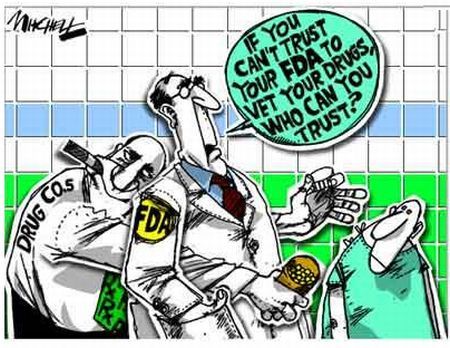
New meds are rushed to the market so industry can start making money even before safety has been determined.

When a prescription drug causes risky side effects, the word often doesn't get out for years, allowing Big Pharma to make money anyway.

The FDA and Big Pharma contend that dangerous side-effects in a prescription drug only emerge when it is used by millions instead of the relatively small group of people in clinical trials. But there is another reason the public ends up guinea pigs. Prescription drugs are rushed to market in as little as six months so industry can start making money while safety is still being determined. Both Merck's risk-laden bone drug Fosamax and painkiller Vioxx were on the market after a six-month review. In the case of Vioxx, it was because "the drug potentially provided a significant therapeutic advantage over existing approved drugs," the FDA said.

Thanks for that. And five drugs (Trovan, Rezulin, Posicor, Duract and Meridia) rushed through in 1997 because of Pharma and congressional pressure on the FDA, says Public Citizen, were subsequently withdrawn.

Here are some drugs whose risks did not did not keep them from getting their "patent's worth."

Bacon n Eggs

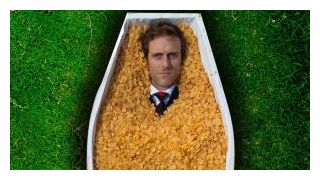
Best of the Web: 'Fat is good': the message from a man who swapped sugar for bacon and eggs

Bacon and eggs
© The Irish TimesCardiovascular disease kills some 10,000 people in Ireland each year, the equivalent of the capacity of Hill 16 in Croke Park.

Donal O'Neill's father, Kevin, had hardly put on any weight since the 1960s when he won two All-Ireland football medals with Down.

He was always fit and never drank alcohol but in January 2010 he had a heart attack. Though he pulled through, Donal, who founded the Gaelic Players' Association in 1999, was perplexed.

"I got angry," he says. "I come from a marketing background. I've worked with the big food companies. I know what they do. The more I found out how far removed we are from what works in maintaining health, the more annoyed I got.

"I started to think it was a little bit strange for a man who had been so fit and healthy - he had sailed through these stress tests for checking heart issues.

"That was my starting point and then I thought, 'Am I next?' When they moved to look at my father's brother, my uncle Seán O'Neill, who was the more famous footballer, they discovered he had type 2 diabetes; again - not a man who had abused himself in any way. The research fascinated me."

His craving led to a documentary entitled Cereal Killers, which has just been released by Yekra, the same American company that distributed Oliver Stone's movie, Looking for Fidel. It investigates cardiovascular disease, which kills 10,000 people in Ireland a year, the equivalent of the capacity of Hill 16 in Croke Park, remarks O'Neill.

Despite not having any film-making experience, O'Neill produced Cereal Killers with sports physiologist Prof Tim Noakes. O'Neill is also the focus of the film, as he undertakes a 28-day, high-fat diet monitored by Noakes and his colleagues in Cape Town, South Africa, where O'Neill lives.


Ambulance

Hospital admissions over West Virginia chem spill double even after water declared safe

Charleston Paramedics & First Responders
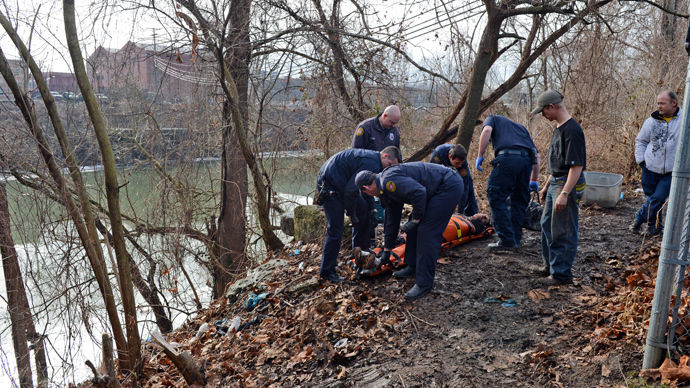
© Tom Hindman / Getty Images / AFPCharleston Paramedics & First Responders responded to a man unresponsive on the banks of the Elk River on January 10, 2014 in Charleston, West Virginia.

Despite recent declarations that the water in West Virginia is now safe to use, hospital admissions related to the Kanawha Valley chemical spill have doubled over the last week.

About a week and a half ago, a chemical mixture used to wash coal - called "Crude MCHM" - began leaking into the Elk River, contaminating the water supply used by nine counties and roughly 300,000 people.

According to a recent story by the Charleston Gazette, 411 patients have been treated for chemical-related maladies at 10 different hospitals between January 9 and January 18. That's a significant rise when compared to the numbers from just two days prior, when 317 individuals were treated for chemical exposure.

"Do not use" orders began being lifted on January 13, with all counties cleared to resume drinking and using the water by the 18th. As Think Progress noted, about 169 patients were treated and released from local hospitals as of January 12.

Red Flag

Ambien could trigger 'zombies', 'abnormal thinking' and 'strange behavior'

Image
© Shutterstock
Ambien is becoming better known for triggering bizarre behavior than it is for treating insomnia.

On March 29, 2009, Robert Stewart, 45, stormed into the Pinelake Health and Rehab nursing home in Carthage, North Carolina and opened fire, killing eight people and wounding two. Stewart's apparent target was his estranged wife, who worked as a nurse in the home. She hid in a bathroom and was unharmed. Stewart was charged with eight counts of first-degree murder; if convicted, he could face the death penalty. Even though there was evidence that Stewart's actions were premeditated (he allegedly had a target), Stewart's defense team successfully argued that since he was under the influence of Ambien, a sleep aid, at the time of the shooting, he was not in control of his actions. Instead of the charges sought by the prosecutors, Stewart was convicted on eight counts of second-degree murder. He received 142 - 179 years in prison.

Hearts

Falling in love takes one-fifth of a second

Image
It takes a fifth-of-a-second for the euphoria-inducing chemicals to start acting on the brain when you are looking at that special someone.

That's one of the conclusions of Stephanie Ortigue, who has co-authored a review of neuroscience research on love.

The brain imaging studies of love they covered also suggested that 12 different areas of the brain are involved (Ortigue et al., 2010).

When looking or thinking about a loved one, these areas release a cocktail of neurotransmitters across the brain, including oxytocin, dopamine, vasopressin and adrenaline.

The brain gets a similar 'hit' from love as it does from a small dose of cocaine.

Types of love

Of course love comes in many varieties.

One common distinction is between passionate love and the companionate kind, with the latter growing between couples over time.

This review of the research found that passionate love activates the areas of the brain involved in reward - after all we have to be motivated to overcome all the obstacles that can get in the way of love.

But it's not just about motivation: passionate love also makes us think about our body image, about how we appear socially to the other person and it makes us focus our attention.