Health & WellnessS


Health

Going organic for one week cuts pesticides in urine by 90%

Eating a mainly organic diet for just seven days can reduce pesticide exposure in adults by almost 90 per cent, a world-first RMIT University study has found.
Image
Urinary levels of six metabolites of organophosphate pesticides (known as dialkylphosphates or DAPs) were analysed on the eighth day of each phase. The mean level of total DAP metabolites after eating a diet of at least 80% organic food was 89 per cent lower than the levels after eating conventional food. .
The research is the first to compare the differences in pesticide residues in adults who consume organic and conventional food.

Published over the weekend in the journal Environmental Research, the small-scale trial found that one week of eating mostly organic food reduced organophosphate pesticide levels in urine by 89 per cent.

Lead investigator Dr Liza Oates said there had been a few studies examining how organic diets affected pesticide levels in children but no research had so far been published on adults.

"Conventional food production commonly uses organophosphate pesticides, which are neurotoxins that act on the nervous system of insects - and humans - by blocking an important enzyme," Dr Oates said.

"Recent studies have raised concerns for the health effects of these chemicals even at relatively low levels.

Heart

How to treat diabetes naturally - an MD's perspective

Image
Diet has been used to treat diabetes for several centuries. The Royal Artillery Regiment physician John Rollo (1749 - 1809) was able to demonstrate the presence of sugar in urine indirectly. He devised a low carbohydrate diet, which he tested successfully on overweight patients. He was able to show that a reduced carbohydrate diet eliminated all sugar in urine. He also observed that the sugar content in urine increased when his patients ate apple cake or drank beer.

Since that time, the basic principle for treating diabetes is to maintain the best possible glycemic control and to prevent organ damage caused by sugar. Excess sugar is always harmful, even to those who do not have diabetes. Sugar accelerates the aging process by forming compounds together with proteins. The term glycosylation describes this process. The more sugar that circulates in the body, the faster and more extensively glycosylation manifests itself.

Attention

Why eating wheat and GMOs will destroy your health

A new study indicates that wheat contributes to the growth of pathogenic bacteria in our gut, adding to growing concern that GMO foods are doing the same.
Image
A new study published in FEMS Microbiology Ecology titled, "Diversity of the cultivable human gut microbiome involved in gluten metabolism: isolation of microorganisms with potential interest for coeliac disease," has revealed something remarkable about the human gut bacteria (microbiome). Some of the extremely hard to digest proteins in wheat colloquially known as "gluten" (there are actually over 27,000 identified in the wheat proteome) were found metabolizable through a 94 strains of bacterial species isolated from the human gut (via fecal sampling).

This discovery is all the more interesting when you consider that, according to Alessio Fasano, the Medical Director for The University of Maryland's Center for Celiac Research, the human genome does not possess the ability to produce enzymes capable of breaking down gluten.

Syringe

Facilitating mutations: On the cusp of an Ebola vaccine

Image
© Marsha MillerMaria Croyle, professor of pharmaceutics, in her lab.
Half a world away in western Africa, the deadly virus Ebola stirs terror in the hearts of Guinea residents as more than 121 confirmed diagnosis and 74 resulting deaths have been attributed to the pathogen since January 2014.


Comment: Correction: 226 cases, 149 deaths.


The particular strain of the virus, known as Zaire Ebola, is one of the deadliest strains of the pathogen, with a fatality rate of approximately 90 percent. There is no known treatment or preventative vaccine - until now.

Maria Croyle, professor of pharmaceutics in the College of Pharmacy, is on the verge of a research advancement that promises to change the game in the fight against ebola. Her lab has developed a one-dose vaccine that has proven effective in both rodent and primate subjects.

Croyle's lab has partnered with Canadian researchers Heinz Feldmann and Gary Kobinger since 2007 to develop a non-injectable vaccine that is quick acting. The vaccine can be administered via the nasal passage.

Comment: This is wishful thinking at its best. There are several reasons why this might NOT be such a good idea:

1) If the vaccine fails - and vaccines have a solid track record of failure - those who were used as guinea pigs would be predisposed to infection.

2) A vaccine may exert selective pressure on the virus to produce "mutants" capable of being more pathogenic. See a perfect example here: Fail: Infant Hep B vaccines perform shamefully; time to end them? See also:

-Vaccine not virus responsible for Spanish flu
-Children Who Get Flu Vaccine Have Three Times Risk Of Hospitalization For Flu, Study Suggests.

3) The Black Death, which killed tens of millions of people around the world, was an Ebola-like virus: Black Death found to be Ebola-like virus and Finally catching up - Could the Black Death actually have been an Ebola-like virus?

4) Mother nature doesn't need our help with creating a deadly mutated virus: New Light on the Black Death: The Viral and Cosmic Connection.

5) Right now Ebola is transmitted directly, but with so many factors at stake here, it might just go air-borne in the near future. A nasal vaccine sounds like the kind of thing which might help in that regard.


Attention

MERS virus hype: Have we been down this road before?

MERS virus
© unknown
We are told the first MERS virus case has now arrived in the US. The CDC and the World Health Organization have a new potential pandemic to hype.

As I've documented in past articles, we've been down this road before. Swine Flu, West Nile, Bird Flu, SARS. All duds. All hyped to the sky...and then the case numbers are miniscule.

You could take all the deaths from these "epidemics" and put them in one small footnote of the assessment that, every year, between 300,000 and 500,000 people around the world die from ordinary regular seasonal flu.

Yes, seasonal flu, about which there is no hype.

But even, you see, with regular seasonal flu, there are gigantic lies.

Cow

Vegan to carnivore: Why those on a plant-based diet are turning over a new leaf

Image
© Tesztoszteron.hu
For five years, Claire Murray was a vegetarian, confident in her belief that she needed fruit, veggies, and whole foods for nourishment - and nothing more. But 18 months ago, as she struggled with bad eczema and difficulty concentrating, the Aussie naturopath had to cop to a hard truth: meat-free living wasn't working for her.

"I was confused as to why I wasn't a beaming, radiant goddess bursting with health," says the 23-year-old. When she switched to a Paleo diet, Murray says, she felt her energy levels increase.

She's not alone. Whether you chalk it up to the popularity of the Paleo Diet and CrossFitor the availability of better, grass-fed meat choices, many wellness experts are noticing a major return-to-meat moment.

"We're in the early stages of a trend," says nutritionist Dana James, MS, founder of Food Coach. She's seen plenty of women who went plant-based to feel better in their bodies, but "as they tuned in two to three years later, they realized, 'Maybe that was more than what I needed to let go.'"

Syringe

Straight from the horse's mouth: Vaccines can't prevent measles outbreaks

Measles in highly immunized societies occurs primarily among those previously immunized.
Image
Because different people have different genetic makeups, the vaccine is simply a dud in many, failing to provide the protection they think they’ve acquired.
The recent outbreaks of measles in Canada and the United States came as a shock to many public health experts but they wouldn't have to Dr. Gregory Poland, one of the world's most admired, most advanced thinkers in the field of vaccinology.

The measles vaccine has failed, he explained two years ago in a prescient paper, "The re-emergence of measles in developed countries." In that paper, he warned that due to factors that most haven't noticed, measles has come back to be a serious public health threat. Thankfully, in that paper and elsewhere he also spelled out in no-nonsense fashion what now needs to be done.

Comment: Take a look at just ONE of Poland's disclosures:
Dr. Gregory Poland wishes to disclose receiving honoraria from Merck for serving as Chair - eDMC and receiving honoraria from Avianax, Dynavax, Liquidia Technologies, Inc., Novartis Vaccines and Diagnostics, PaxVax Inc., and Theraclone Sciences for consulting services.
Obviously he is in deep with Big Pharma and they are having a lot of trouble keeping up the vaccine farce. See also:

-Measles: A rash of misinformation
-Vaccines Have Serious Side Effects - The Institute of Medicine Says So!
-Courts quietly confirm MMR Vaccine causes Autism
-Herd immunity: Myth or reality?
-FDA document reports autism link after tetanus, pertussis & diptheria vaccine


Pills

Shocking: 1 in 13 American children are on psychiatric drugs

child with pill
An increasing number of children in America are being labeled, diagnosed and branded

Unique personalities are being scolded and molded by drugs to adapt childhood behavior into societal norms. Children have become like sculptures, motionless, lifeless, as psychiatric drugs chisel away at their natural state of well-being.


Living under a controlled paradigm designed by Drug Companies


The emotional and behavioral differences among children are yoked into compliance, to conformity. A child's struggles aren't listened to, aren't understood. Their differences, behavior and problems are stamped into their mind as if they are a mental illness. Psychiatric drugs are driven down the throats of young people, as pharmaceutical companies expand their controlling influence.

Pills

Drugged up: Avoiding the topic of childhood trauma in psychiatry

Psychiatry is over-reliant on chemical cures. It's time to look at the facts, not the fallacies.

drugs
© unknownPrescriptions for anti-psychotic drugs handed out like candy.
If ever there were a case for an outside body to let the light in, then it's here, today, in psychiatry. If today's psychiatry is working, why are claims for mental disability going up? Why is there accumulating evidence that sufferers do better OFF the medication than on? Why is not more attention paid to the solid Swedish epidemiological evidence that 'anti-psychotic' drugs increase the risk of dementia up to 20-fold? All that known drug-induced brain damage has to show up somewhere.Why is increased suicide listed in the side-effects of the 'anti-depressants'? And worst of all, why are so many drugs being given compulsorily, overriding the patient's sensibly withheld consent - the iniquitous Community Treatment Orders (CTOs)? Even this has been shown not to work.

Blue Planet

Why Ebola isn't just Africa's problem

Image
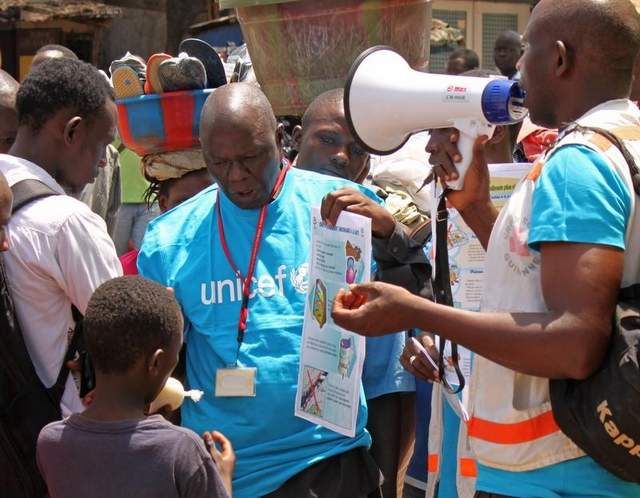
© Youssouf Bah/Associated PressHealth workers teach people about the Ebola virus and how to prevent infection in Conakry, Guinea, in March.
A Canadian man returning from Liberia recently alarmed health officials with fears that he might have the Ebola virus. Although in good health when he traveled, the man was admitted to the intensive-care unit in Saskatchewan with classic symptoms of the disease.

That health scare, and others in recent weeks, were a wake-up call to those who saw the outbreaks as an "African problem." They remind us that people - and their infections - are not bound by borders. To those who claim we can't afford foreign aid, I respond that we can't afford to think of health threats as "foreign" and "domestic."

Ebola is a deadly viral infection that many people first learned about through novels like "The Hot Zone" and the film "Contagion," which featured the specter of a deadly uncontrollable outbreak wreaking global havoc.

As a physician from Nigeria now researching infectious diseases at the University of Michigan, I'm not surprised by the Canadian scare - which turned out to be a false alarm. If anything, I'm surprised it didn't happen sooner.