Health & WellnessS


Popcorn

Best of the Web: Are GMOs promoting autism, anti-social and cannibalistic behaviors?

"It appears there is a direct correlation between GMOs and autism." --Arden Anderson, MD, PhD, MPH
Image
Jeffrey Smith summarizes research that will make you avoid GMOs like the plague!
Physician Jennifer Armstrong admits, "Twenty years ago, I didn't even know what the word autism meant. It was rare." But then something shifted. Whether it was the food, medicine, environment, or some combination, by 2008, an astounding 1 in 54 boys suffered from autism spectrum disorder (ASD) in the US [1]. What is it that is damaging the health and well-being of so many of our children? Don Huber, PhD, professor emeritus from Purdue University, has an idea.

In October 2011, Dr. Huber gave a talk in Germany about the physiological, neurological, and behavioral symptoms of pigs, cows, and rats fed genetically modified (GM) feed. After his lecture, a physician and autism specialist approached him and said, "The symptoms you describe are exactly what we are finding in our autistic children."

The animals in those studies were fed the same GM soy and corn eaten by children and adults in the US. Both crops are outfitted with bacterial genes that allow them to survive being sprayed with herbicide, which kills plants. As a result, higher residues of toxic weed killer end up inside our food. In addition, some GM corn varieties have an even more unsettling characteristic: their inserted genes produce an insect-killing poison called Bacillus thuringiensis (Bt) toxin in every cell - and in every bite. Although the biotech seed companies like Monsanto claim that their genetically modified organisms (GMOs) are harmless, that's not what the independent scientists are finding.


Newspaper

10 principles of primal living that are (finally) getting mainstream media coverage

Image
We don't take credit for everything, of course, but the fact remains that the Primal/ancestral health community has been championing principles that directly oppose the conventional wisdom for nearly a decade. And while serious researchers have been paying attention to and studying these issues individually for years, no one had really synthesized them under the evolutionary umbrella. Now that our movement is becoming more popular and the scientific case for its principles more solid than ever, denying that a bit of sun might be good for you or that sitting is killing you slowly or that eggs aren't deadly after all is no longer tenable.

Yes, Primal health principles and positions are getting mainstream recognition. Let's take a look at some of the major ones.

That sitting is bad and exercise might not be enough.

Everyone knows that being sedentary is a poor health choice. But most people figured the solution was to set aside regular times each week to exercise. Formal exercise was the answer, and movement was segregated from "normal" life. As long as you hit the gym every other day, you could do nothing for the remainder of your time and be perfectly healthy.

That's just intermittent sedentism, though, and it doesn't work. Frequent low level movement throughout the day punctuated by intermittent bouts of intense exercise is what I've prescribed for years, and the mainstream is beginning to get the hint. Articles lamenting the prevalence of sitting, its scary effect on our health, and how exercising isn't enough to counter it come out on a regular basis now.

Health

New study links Roundup herbicide to cancer of the lymph tissue

herbicide spraying
© unkown
A new review on the relationship between pesticide exposure and the risk of blood cancers in the lymph glands (lymphomas) has confirmed the existence of a link with the world's most popular herbicide glyphosate (aka Roundup).

Published in the International Journal of Environmental Research and Public Health and titled, "Non-Hodgkin Lymphoma and Occupational Exposure to Agricultural Pesticide Chemical Groups and Active Ingredients: A Systematic Review and Meta-Analysis," the paper focused on systematic reviews and a series of meta-analysis of almost 30 years worth of epidemiological research on the relationship between non-Hodgkin lymphoma (NHL) and occupational exposure to 80 agricultural pesticide active ingredients and 21 chemical groups. The review focused on 44 papers, all of which reported results from studies performed in high-income countries.

Pills

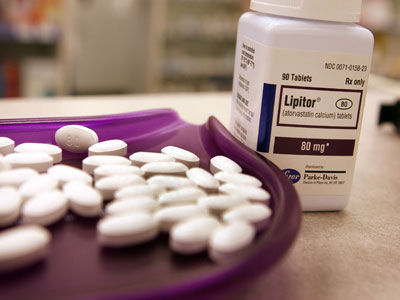
Statins make you fat!

Image
As statins promotes insulin resistance, it should not come as a surprise that people on statins put on weight, making it a useless drug to prevent chronic diseases such as heart disease.
A new study highlights the false hope that consumers place in statin drugs to lower cholesterol levels. Results of the 10-year analysis showed that individuals prescribed statins for high cholesterol levels had a larger increase in body-mass index (BMI) than those who weren't taking the drugs. These results once again call into question the wisdom of relying on statins to both reduce heart attack risk and extend life.

About 75% of the prescriptions for statins are written for people with no clinical evidence of cardiovascular disease (CVD). Statins have not been shown to increase life expectancy in these patients.

The list of statin drugs include:
  • Altoprev (lovastatin extended-release)
  • Crestor (rosuvastatin)
  • Lescol (fluvastatin)
  • Lipitor (atorvastatin)
  • Livalo (pitavastatin)
  • Mevacor (lovastatin)
  • Pravachol (pravastatin)
  • Zocor (simvastatin).
The easy conclusion is that the majority of people on statin drugs are achieving no real benefit from them. In fact, by not focusing on effectively reducing heart disease risk through diet, lifestyle, and proper nutritional supplementation the reliance is costing many people their lives.

Comment: Fat has no fattening effect. It is carbohydrates through the stimulation of the fattening hormone - insulin - that promotes obesity and fat storage. This is a fact: Why we get fat - Gary Taubes

As statins promotes insulin resistance, it should not come as a surprise that people on statins put on weight, making it a useless drug to prevent chronic diseases such as heart disease.

Vascular surgeon: Why I've ditched statins for good

Vascular surgeons write a damning report about lowering cholesterol drugs
The statin industry is the utmost medical tragedy of all times.


Video

Why we get fat - Gary Taubes

Gary Taubes spoke to Googlers in Mountain View on May 2, 2011 about his book Why We Get Fat: And What to Do About It.
Image
Gary Taubes
An eye-opening, myth-shattering examination of what makes us fat, from acclaimed science writer Gary Taubes.

Building upon this critical work in Good Calories, Bad Calories, Taubes revisits the urgent question of what's making us fat and how we can change in this exciting book. Persuasive, straightforward, and practical, Why We Get Fat makes Taubes crucial argument newly accessible to a wider audience.

Taubes reveals the bad nutritional science of the last century, none more damaging or misguided than the calories-in, calories-out model of why we get fat, and the good science that has been ignored, especially regarding insulins regulation of our fat tissue. He also answers the most persistent questions: Why are some people thin and others fat? What roles do exercise and genetics play in our weight? What foods should we eat, and what foods should we avoid?

Packed with essential information and concluding with an easy-to-follow diet, Why We Get Fat is an invaluable key in our understanding of an international epidemic and a guide to what each of us can do about it.


Syringe

Your children to be used as guinea pigs for new GMO vaccine

A US vaccine company has applied for permission to infect up to one thousand individuals, including children, with genetically modified live bacteria contained in an oral vaccine. PaxVax recently submitted their application for permission to begin the first of three international clinical trials for the new oral cholera vaccine "via oral ingestion of the GMOs". [1]
Image
© Flickr
PaxVax claims to have several safeguards in place to "restrict the spread and persistence of the GMOs and their introduced genetic material" during this clinical trial. That precaution itself should lead any parent to question the wisdom of administering genetically modified live bacteria to their child.

The problems with GMOs

Genetically modified organisms (GMOs) have earned a great deal of media attention in recent years, and rightfully so.

In a two-year research study in 2010, hamsters were fed GM soy. Most of the third-generation hamsters had lost their ability to have babies. Other disturbing findings from the study included the discovery of hair inside the hamsters' mouths, slower growth, and a higher mortality rate among offspring. [2]

Numerous other research studies have shown that GMOs pose serious health and environmental risks, including reproductive disorders, immune system disorders, accelerated aging, organ damage, gastrointestinal problems, and cholesterol and insulin problems. [3] The American Academy of Environmental Medicine (AAEM) recommends that "physicians advise all patients to avoid GM food." [4]

Health

Butter is better: Researchers urge a return to butter

Image
Have you ever suspected that the tired 'artery clogging fats' line and 'fats are bad' pieces were based on a bunch of bologna?

Well, you would be correct. Not only are many doctors trying to bust the fat myths, but new research says the old info that guided health policy and major food system changes all these years just doesn't add up.

Researchers are urging a return to butter and whole milk.

Check out the new research on saturated fat myths and heart health below. This writer and Weston A. Price support whole food, organic, unpasteurized and grassfed dairy products.

Want grassfed butter from the store? Look for Kerrygold butter and cheese. Want to look for a local farm source for fresh milk and other products? I've mapped over 20 online places to locate yours today.

PS - The papers and articles about the origin of the saturated-fat-clogs-your-arteries myth are vast. If you want an entertaining expose, I highly recommend the documentary Fat Head.

Magnify

The world's deadliest animal

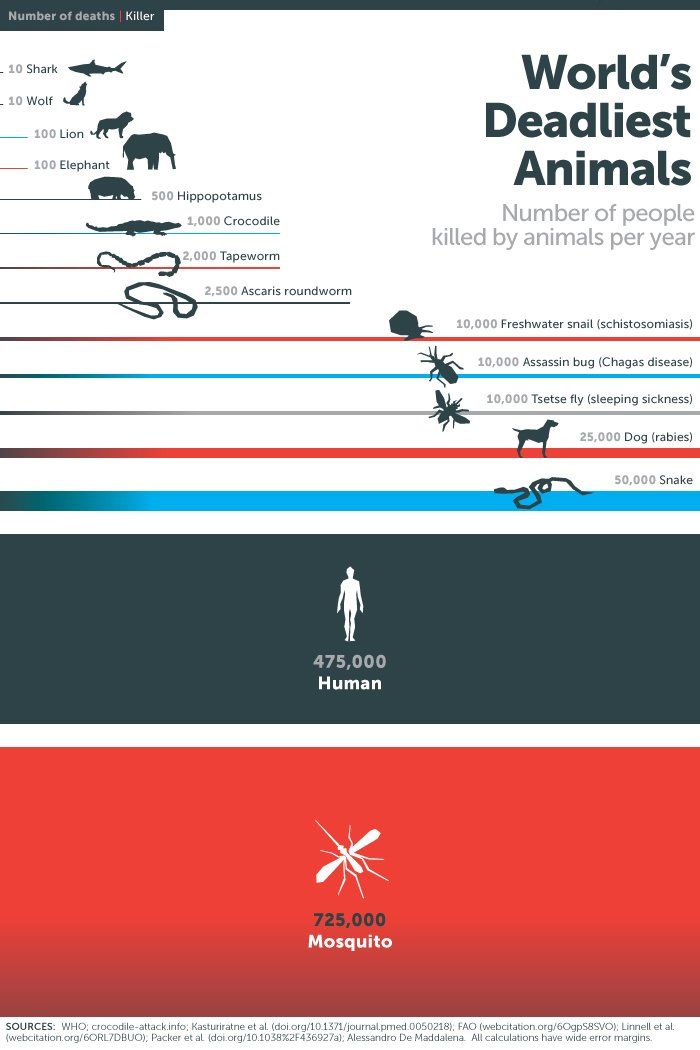
Bill Gates posted the graphic below to his blog on April 25.

It shows how many people are killed by different species of animal every year. The big red block at the bottom might surprise you:

Image
"The number of mosquito-caused deaths really is a mind-blowing thing. Other than humans killing humans during periods of war, most years, the mosquito wins," the Mosquito Week trailer says.

The reason?

Comment: Well, if Bill Gates says it "is so" it must be taken as "God's truth."

Stop, wait, hey there, isn't the Bill & Melinda Gates foundation responsible for the development of a new breed of GMO mosquito that's going to save us all from dengue and malaria? "Quantity might also be a problem. "You are going to need to produce billions of these mosquitoes if this is ever going to work," Lines said."

Hmmm, I smell money (biomedical R&D grants/contracts,) do you?

It's estimated that medical errors kill roughly 200,000 patients in the U.S. each year (I'm guessing this is a conservative estimate, too.) That does not even include deaths from pharmaceutical drug/vaccination allergies/reactions. Ponder that and decide where the focus and funds need to be directed...


Cut

Female castration in the 21st century: Hysterectomy and ovariectomy

Over half a million hysterectomies are performed each year in the United States. Approximately 60% - 74% of those hysterectomies include removal of the ovaries or 'castration'. Castration (also referred to as gelding, neutering, fixing, orchiectomy and oophorectomy) is any action, surgical, chemical, or otherwise, by which a male loses the functions of the testicles or a female loses the functions of the ovaries.So there you have it - ugly as it may be. The correct medical term for removal of women's ovaries is 'castration'.
Image
Surgical castration is a form of mutilation and therefore considered to be cruel and unusual punishment and illegal, yet nearly half a million women are castrated every year in the United States alone.
Most women do not know that when they agree to removal of their ovaries that they are agreeing to castration. They don't know because the term castration is never used. They are told they will be undergoing some far-and-away sounding thing called 'oophorectomy'. Women falsely believe they don't need their ovaries because their doctors tell them they don't. Women are purposely led to believe that their ovaries stop producing hormones once they've entered menopause anyway. They're also assured that hormone replacement therapy can replace their own natural hormones. The truth is that there is no artificial hormone of any kind that can replace a woman's own natural hormones. A woman's ovaries continue to produce hormones all of her life. There is never a time when a woman doesn't need her ovaries or the life-sustaining hormones they produce. No woman can give informed consent to ovary removal when she doesn't understand that she is agreeing to castration. Far too many women are misinformed, uninformed or not informed.

Bulb

We're constantly bathed in artificial light - Is it wreaking havoc on our health?

Image
© Andresr/Shutterstock.com
If you live in the developed world, darkness can be hard to find. Our plugged-in, 24-7 lifestyles deliver a barrage of not just technology, but also light. All the time. And this may have negative health consequences that scientists are only just beginning to understand.

We are a diurnal species, which means we are genetically programmed to do our work during the day when it's light out, and sleep when it's dark. For many thousands of generations as hunter/gathers we did just that, with the only light after dark coming from the moon, stars or firelight. With the industrial revolution and the invention of electric light, all that changed.

We went from incandescent electric light to fluorescents and neon. Now we are increasing our use of solid-state lighting, such as LEDs (light-emitting diodes).

Comment: Why we need to sleep in total darkness

Evening light exposure dangerous to health: new study
Study Says: Tot Can't Sleep? Turn Off Nighttime TV
US: Not Getting Enough Sleep? Turn Off the Technology
The importance of sleeping in total darkness: Sleeping with lights on can spur cancer
Terrible night's sleep? Blame your mobile phone: How exposure to artificial light 'fools' the brain into staying awake