
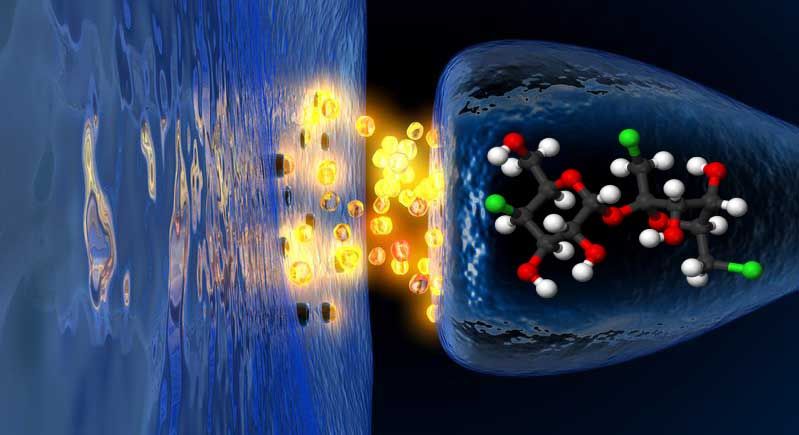
Now a new study published in the open access journal PLoS titled, "Sucralose Induces Biochemical Responses in Daphnia magna [water flea]," indicates that the artificial sweetener sucralose - sold under the trade name Splenda and approved for consumption in at least 70 countries - may have sublethal adverse effects on animal behavior and physiology due to its oxidative and possibly neurotoxic properties.
The researchers described the nature and intention of their study:
"To our knowledge, this is the first study examining biomarker responses in aquatic organisms exposed to sucralose. Based on the observed swimming abnormalities in Daphnia exposed to sucralose [7] and recent findings that correlate AChE (acetylcholinesterase) activity with oxidative stress in humans [29], [31], we hypothesized that these behavioural effects are related to alterations in AChE and oxidative status."Sucralose -- a sucrose containing three chlorine atoms -- despite being marketed initially by the manufacturer as somewhat natural (i.e. "it tastes like sugar because it is made from sugar"), is an extremely synthetic chemical compound highly resistant to biodegradation, and like other compounds within the organochloride class of chemicals, which include pesticides like DDT, it persists for a long time in the environment. [i] For instance, a recent study found it detectable in offshore waters, such as the Atlantic Gulf Stream.[ii] Indeed, it is because of its exceptional non-biodegradability that it has been proposed to be an ideal tracer for human (anthropogenic) activities.[iii]-[iv]
















Comment: As Dr. Tenpenny says: For more info, check Challenging the Theory of Artificial Immunity. There are cheap alternatives and proved-effective ways to deal wtih polio: Vitamin C and polio.