Health & WellnessS


Heart

Italian man survives heart rotation after motorcycle accident

A man has survived a motorcycle accident in Italy which caused his heart to turn around inside his body and enter the right side of his chest.
X-ray and CT scan
© New England Journal of MedicineAn X-ray and a CT scan of the man's chest show the heart has rotated 90 degrees to the right.
Doctors at the emergency department who treated the 48-year-old man discovered that his heart was in the wrong place when they tried to check his heart sounds and rhythms. An X-ray and CT scan showed that his heart had turned 90 degrees to the right.

The new report on the case in the New England Journal of Medicine revealed the anatomical finding. "This is a very interesting anatomical finding, and it's very unusual," Dr Gregory Fontana, of Lenox Hill Hospital in New York City, who wasn't involved in the case, told Live Science. "I had never seen anything like it. What's unique about this case is the way the heart rotated so far in the other direction, and the patient was still awake and alert."

X

​Deadly MERS virus reaches Lebanon

Image
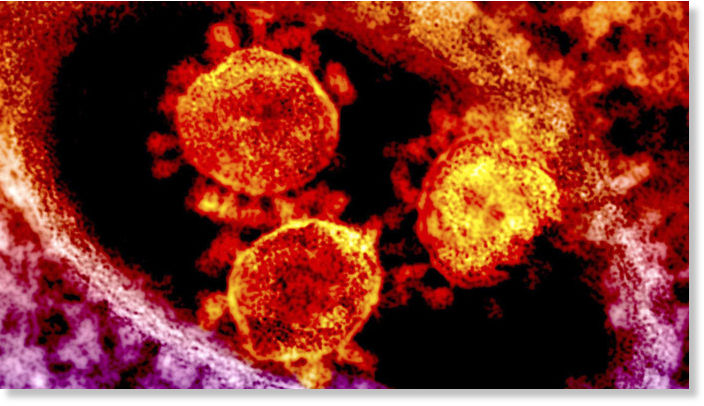
© Reuters/National Institute for Allergy and Infectious DiseasesParticles of the Middle East respiratory syndrome (MERS) coronavirus that emerged in 2012 are seen in an undated colorized transmission electron micrograph from the National Institute for Allergy and Infectious Diseases (NIAID).
Lebanese officials have confirmed that the first case of Middle East Respiratory Syndrome (MERS) coronavirus has reached the country.

Health Minister Wael Abu Faour said Thursday that all the necessary safety measures have been undertaken by the clinic which "has led to a significant improvement in the patient's health and he was allowed to leave the hospital."

Lebanese news service, Naharnet, said the health ministry officials reported that the patient had recently returned from visiting a Persian Gulf country.

Health authorities continue to monitor epidemiological investigations and surveillance to ensure the virus does not spread across the nation.

Health

The worst lies mainstream nutrition has told you

Nutrition
© Prevent Disease
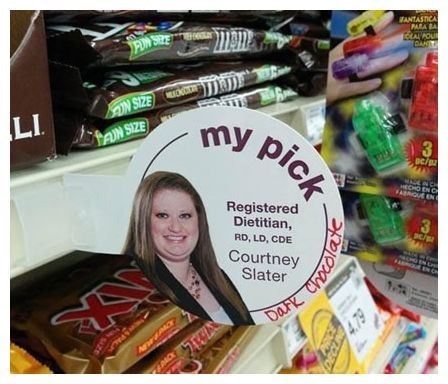
What if the 'experts' were wrong? Just the other day in a convenience store, I saw the following sign: This 'registered dietitian' can help you to choose the correct high-fructose filled, preservative-laden treat for you! Is it any surprise that a lot of 'new' science is showing that many of our commonly held beliefs about food are completely wrong.

Common sense should be the big one in regards to if food is healthy or not. Did our ancestors eat it? Would our grandparents regard it as 'food'? Has this item been on the face of the planet for 10,000 years or more?

When it comes to our food choices, I can safely say that many of us try to make the smartest decision to put healthy and nutritious foods on our plate. But when we are given so many choices, it's hard to know exactly what we should be eating.

And with clever marketing shoving so many ideas and notions and adverts down our throats, it can be enough to make us sick. Literally.

Here are the 7 biggest lies, myths and misconceptions told to us by mainstream nutrition.

Eggs Fried

10 scientific reasons you should be eating more eggs

Image
© Ralph Orlowski/Getty Images
Eggs are among the few foods that I would classify as "superfoods." They are loaded with nutrients, some of which are rare in the modern diet. Here are 10 health benefits of eggs that have been confirmed in human studies.

1. Eggs Are Incredibly Nutritious

Eggs are among the most nutritious foods on the planet. A whole egg contains all the nutrients required to turn a single cell into a baby chicken. A single large boiled egg contains (1):
  • Vitamin A: 6% of the RDA.
  • Folate: 5% of the RDA.
  • Vitamin B5: 7% of the RDA.
  • Vitamin B12: 9% of the RDA.
  • Vitamin B2: 15% of the RDA.
  • Phosphorus: 9% of the RDA.
  • Selenium: 22% of the RDA.
  • Eggs also contain decent amounts of Vitamin D, Vitamin E, Vitamin K, Vitamin B6, Calcium and Zinc.

Pills

Antidepressants appear to increase risk of suicide in children, young adults

Image
© Fluoxetineinfo.info
Children and young adults who start antidepressant therapy at high doses, rather than the "modal" [average or typical] prescribed doses, appear to be at greater risk for suicidal behavior during the first 90 days of treatment.

A previous meta-analysis by the U.S. Food and Drug Administration (FDA) of antidepressant trials suggested that children who received antidepressants had twice the rate of suicidal ideation and behavior than children who were given a placebo. The authors of the current study sought to examine suicidal behavior and antidepressant dose, and whether risk depended on a patient's age.

The study used data from 162,625 people (between the ages of 10 to 64 years) with depression who started antidepressant treatment with a selective serotonin reuptake inhibitor at modal (the most prescribed doses on average) or at higher than modal doses from 1998 through 2010.

Syringe

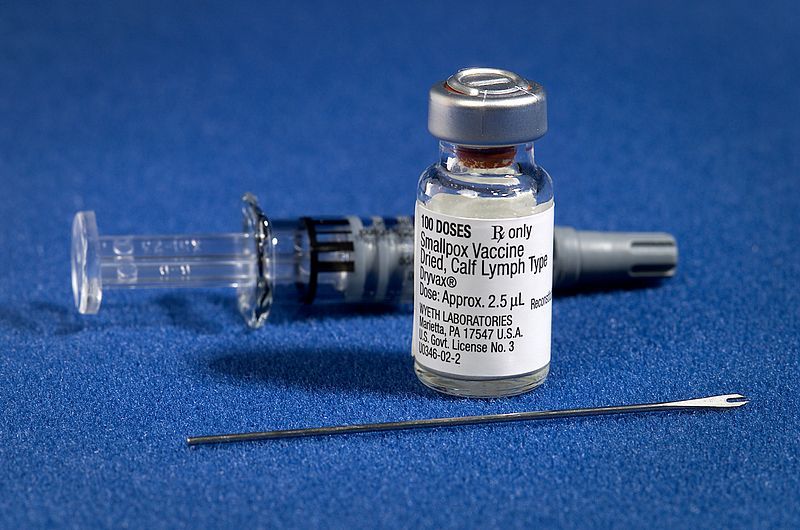
Flashback The vaccine hoax is over. Documents from UK reveal 30 years of coverup

Image
Freedom of Information Act in the UK filed by a doctor there has revealed 30 years of secret official documents showing that government experts have:

1. Known the vaccines don't work
2. Known they cause the diseases they are supposed to prevent
3. Known they are a hazard to children
4. Colluded to lie to the public
5. Worked to prevent safety studies

Those are the same vaccines that are mandated to children in the US.

Educated parents can either get their children out of harm's way or continue living inside one of the largest most evil lies in history, that vaccines - full of heavy metals, viral diseases, mycoplasma, fecal material, DNA fragments from other species, formaldehyde, polysorbate 80 (a sterilizing agent) - are a miracle of modern medicine.

Sun

Study suggests mortality rate higher for people who stay out of the sun than those who don't

Image
Public health officials to probe the results of a major survey which casts doubt on the effectiveness of avoiding the sun
Health bosses are investigating the results of a study which shows that women who avoid sunbathing during the summer are twice as likely to die than those who sunbathe every day.

The study, conducted by researchers at the Karolinska Institute in Sweden, followed nearly 30,000 women over 20 years.

They found that the results "showed that mortality was about double in women who avoided sun exposure compared to the highest exposure group".

Public Health England have said they would be considering the research carefully.

Experts behind the study say that wearing sunscreen and staying out of the sun could lead to a deficiency in vitamin D, which has been linked to more aggressive forms of skin cancer

Vitamin D is created by exposure to the sun and also protects the body against diabetes, tuberculosis, multiple sclerosis and rickets.

They also claimed that guidelines advising people to stay out of the sun and wear sunscreen could be harming the population.

Life Preserver

Dallas, Texas ends over 50 years of water fluoridation

Image
Anti water fluoridation advocates have been successful in the removal of fluoride from the water supply in Dallas, Texas. The ban comes after five decades of water fluoridation, but more and more people around the world have been gathering to put a stop to the practice over the last few years.

"We don't need it and we'd just save a million dollars that we can use for something else. We're looking into seeing what we can do immediately so we can get those funds up from now." - Sheffie Kadane, Dallas City Council Member

"Yeah, this is major big. I knew we would prevail. It only makes sense. We're spending too much money on an ineffective program." - Scott Griggs, Dallas City Council Member

The decision was made after activists continually showed up to city council meetings, providing evidence and warning them regarding the risks involved with water fluoridation. As a result, the city could save over $1 million a year that is spent on the industrial chemical, that's right, an industrial chemical.

Health

Resilient health care for a world in flux

Communities that abide book cover
© Dmitry Orlov
When I asked people to contribute content to the book on Communities that Abide, which is now nearing publication (with two chapters already at the proofreading stage), I didn't know quite to expect. The results went far beyond my expectations. This week I will highlight the chapter by James Truong, MD, who practices emergency and family medicine in rural Canada. His chapter, "Appropriate Health Care for a World In Flux: A Strategy," is a must-read for anyone thinking about founding or joining a resilient community. It is an in-depth guide to health care in a world where the Health Care System that currently exists in the developed nations of the world is inaccessible, unaffordable, or nonexistent. His subtitle reads: "Monday: feed the family. Tuesday: don't get sick." But what if you do? Dr. Truong explains the options.

Dr. Truong carefully teases apart the overwhelmingly complex subject of "health care" into elements that anyone can, and should, understand. First, he teaches us to think about health conditions, by putting them into categories: each condition is either acute or chronic, and either benign or dangerous. Each combination of these requires a different approach: acute-benign better get treated at home, acute-dangerous may require expert intervention from the community's designated health care provider(s) (whoever they may be), but with no guarantee of a positive outcome. Chronic-benign conditions (lifestyle diseases, boutique diseases such as cosmetics or gender identity) are, in this context, not handled as medical issues at all. Chronic-dangerous conditions (obesity, heart disease, hypertension, diabetes) will, to make a long story short, result in shorter lives.

Beaker

Ebola: New or old?

Ebola
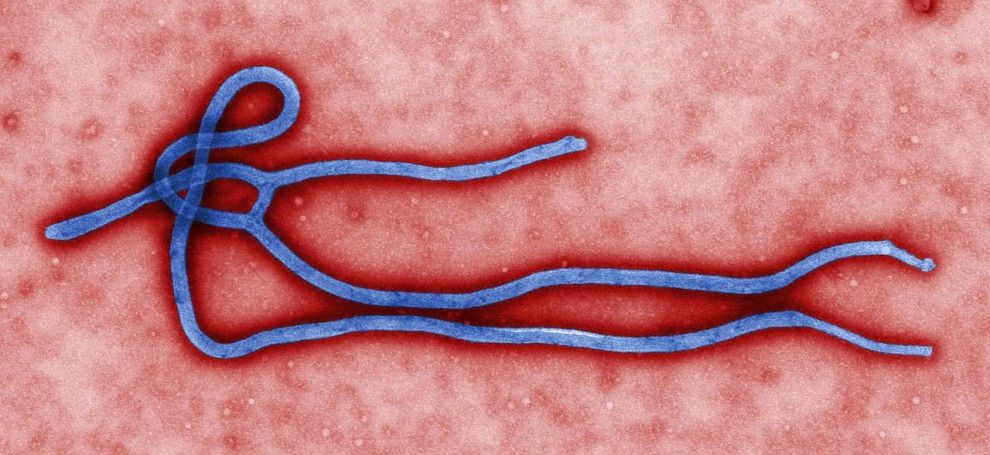
© Micrograph from CDC/Cynthia GoldsmithEbola virus
As viruses go, Ebola has a grim star power. When a new outbreak hits, Ebola kills a high fraction of its victims, causing horrific bleeding along the way. The latest outbreak started in March in Guinea. As of today, the World Health Organization reported 231 cases and 155 deaths.

In order to better treat Ebola, Pardis Sabeti of Harvard and her colleagues have been analyzing the virus's evolution. It turns out that Ebola is not some freakish new plague, but rather old. If that seems puzzling, a research scientist in Sabeti's lab, Stephen Gire, has created this animation, which I've embedded below, to explain it.


Comment: Excellent! But they forgot to add in the cosmos factor into the equation: New Light on the Black Death: The Viral and Cosmic Connection.