Health & WellnessS


Hearts

Why real salt is so important

Image
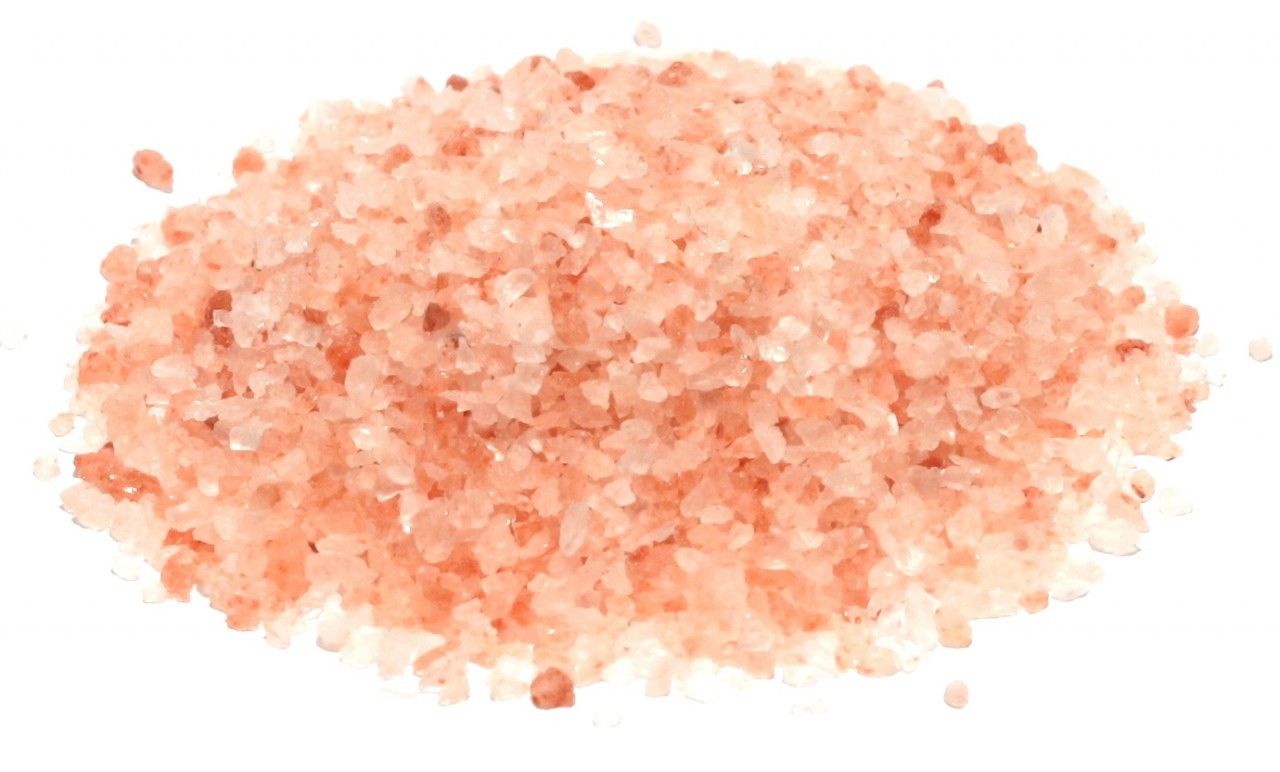
One of the diet rules we all "know" is that salt is bad for us. So why is real salt so important? Can it be a key to health recovery?

Salt was one of the earliest trade items and helped establish trade routes and villages all over the world. It was often used as money.

Salt was traditionally used to preserve food. It's value was in allowing meats and vegetables to be salted and stored for later consumption, a huge advantage over having to hunt and gather fresh food all the time. Neanderthals mined salt, as well as ancient Chinese.

Real salt is the dried mineral residue from clean ocean waters. There are deep salt deposits on most continents where oceans dried up eons ago and left huge salt deposits behind. There are also natural salt springs that come out of the earth, and the water is collected and evaporated. Both salt mines and salt springs were important in establishing trade centers.

The way to collect fresh "new" salt is to evaporate ocean water from a clean area of the ocean. Sea water is collected in everything from clay pans to vast wooden deck enclosures, where it is repeatedly turned and left to dry by the heat of the sun.

Health

First MERS virus case confirmed in the U.S.

mers virus
© NIAID/ RMLMERS virus
Health officials on Friday confirmed the first case of an American infected with a mysterious Middle East virus. The man fell ill after arriving in the U.S. last week from Saudi Arabia where he was a health care worker.

The man is hospitalized in stable condition in northwest Indiana with Middle East respiratory syndrome, or MERS, according to the Centers for Disease Control and Prevention, which is investigating the case along with Indiana health officials.

The virus is not highly contagious and this case "represents a very low risk to the broader, general public," Dr. Anne Schuchat told reporters during a CDC briefing.

The federal agency plans to track down passengers he may have been in close contact with during his travels; it was not clear how many people may have been exposed to the virus.

Arrow Up

What's going on? UK has one of the highest death rates for children in western Europe

Image
The UK has one of the highest rates of death for children under five in western Europe, according to new research published in The Lancet.

The findings come from a new study coordinated by the Institute for Health Metrics and Evaluation (IHME) at the University of Washington, Seattle, USA. Their figures provide a comprehensive new analysis of global progress towards reducing child mortality.

Although, by international standards, the UK has very low rates of deaths in children, the figures show that within western Europe, the UK has a higher rate of deaths in children than nearly every other country in the region. The mortality rate in the UK for children under five is 4.9 deaths per 1000 births, more than double that in Iceland (2.4 per 1000 births), the country with the lowest mortality rates. 3800 children under five died in the UK in 2013, the highest absolute number of deaths in the region.

In addition to calculating overall mortality rates for children under five, the researchers also analysed mortality rates for subdivided age categories. The UK was shown to have the worst outcomes compared with nearly every other western European nation for early neonatal deaths (death between 0 and 6 days), post-neonatal deaths (death between 29 and 364 days), and the worst outcomes of any country for childhood deaths (death between 1 and 4 years).

Syringe

Canadian milestone: First healthcare worker fired for refusing flu vaccine

Image
© global news
While Ukraine, the NBA, and Cliven Bundy dominated the headlines in North America, the Canadian press reported on a major milestone that was quietly reached - the first firing of a Canadian healthcare worker for refusing a vaccine, and the public shaming effort that comes with the "option" of wearing a face mask which took place in December.

Although the few reports surrounding the firing were published only days ago, the Boundary Hospital employee from British Columbia, Canada, Arnold Hoekstra, was fired in December of 2013. His case was only announced by the Health Ministry on Wednesday in order to "wrap up the flu season."

Hoekstra, who is 49, held a permanent part-time position at the hospital as an adult day program worker. However, when he was instructed to submit to a flu vaccination, he refused to be injected with the toxic cocktail of chemicals and viruses that have been demonstrated to cause a number of adverse health effects in both children and adults. Short of agreeing to be injected with a vaccine that has been shown to be ineffective at preventing the flu (at best), Hoekstra's only other option was to wear a face mask at all times while at work.

Health

UK has second-worst child mortality rate in Western Europe, study finds

Child Mortality
© The Independent, UKLeading doctors and midwives accuse Government of 'failing to protect' British children.

The UK has the second-worst child mortality rate in Western Europe, a major new study has revealed, as leading doctors and midwives accuse the Government of "failing to protect" British children during the financial crisis.

In findings which were described as "shocking" by children's charities, and which caused surprise among the researchers themselves, the UK ranked behind much poorer countries such as Cyprus and Greece and for prevention of mortality in under-fives.

The under-five mortality rate for the UK was 4.9 deaths for every 1,000 births. Only Malta, a country which ranks well behind the UK in terms of wealth, performed worse in the Western European region.

The UK mortality rate was more than twice as high as the best-performing country, Iceland, and 25 per cent higher than the Western European average.

The findings come from one of the most comprehensive international studies of child mortality to date, co-ordinated by the University of Washington in Seattle, USA, and published in The Lancet medical journal today.

Dr Christopher Murray, the study's senior author said that he and fellow researchers had been "surprised" at such high mortality rates in a country which has spearheaded public health advances over the years.

Info

MERS deaths over 100 in Saudi Arabia

Image
© AFPThe number of recorded infections of the MERS coronavirus in the kingdom has risen 339
Riyadh announces eight new deaths from coronavirus, bringing total fatalities since its discovery in 2012 to 102.

Saudi Arabia has announced eight new deaths from the MERS coronavirus, taking the kingdom's death toll from the disease since it was discovered in 2012 to 102.

The Saudi health ministry reported that a nine-month-old infant had died on Sunday, raising this month's fatalities to 39.

The ministry said the number of recorded infections had risen to 339, with 143 cases announced since the start of April, representing a 73 percent jump in total infections.

Among the latest infections were four medical staff at a single hospital in Tabuk in the country's northwest.

Panic over the spread of the virus among medical staff in the western city of Jeddah led to the temporary closure of a main hospital's emergency room.

Health

Newly arrived virus gains foothold in Caribbean

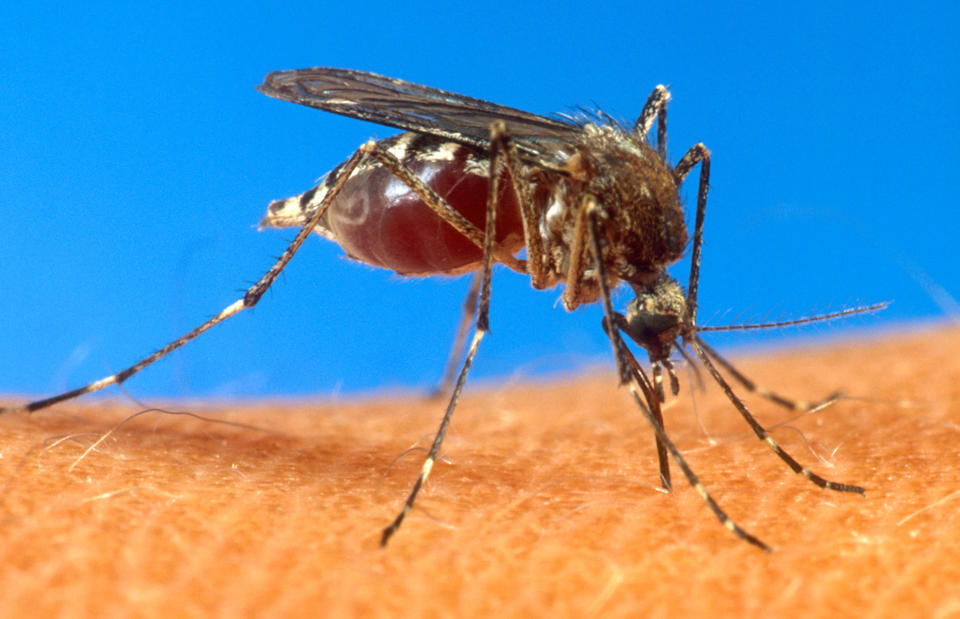
A recently arrived mosquito-borne virus that causes an abrupt onset of high fever and intense joint pain is rapidly gaining a foothold in many spots of the Caribbean, health experts said Thursday.
Image
© AP Photo/USDA In this undated file photo provided byt he USDA, an aedes aegypti mosquito is shown on human skin. Health officials in the Dominican Republic said this Tuesday April 29, 1014, that the mosquito-borne chikungunya virus has spread widely since making its first appearance in the country. According to the Centers for Disease Control the chikungunya virus is most often spread to people by Aedes aegypti and Aedes albopictus mosquitoes. These are the same mosquitoes that transmit dengue virus. They bite mostly during the daytime.
There are currently more than 4,000 confirmed cases of the fast-spreading chikungunya virus in the Caribbean, most of them in the French Caribbean islands of Martinique, Guadeloupe and St. Martin. Another 31,000 suspected cases have been reported across the region of scattered islands.

The often painful illness most commonly found in Asia and Africa was first detected in December in tiny St. Martin. It was the first time that local transmission of chikungunya had been reported in the Americas. Since then, it has spread to nearly a dozen other islands and French Guiana, an overseas department of France on the north shoulder of South America.

It is rarely fatal and most chikungunya patients rebound within a week, but some people experience joint pain for months to years. There is no vaccine and it is spread by the pervasive Aedes aegypti mosquito that transmits dengue fever, a similar but often more serious illness with a deadly hemorrhagic form.

Ambulance

'Devastating' implications of drug-resistant superbugs now a reality

Deadly antibiotic-resistant superbugs are a 'serious threat' to world health and no longer merely a prediction for the future, according to a new report by the World Health Organization (WHO). Previously treatable illnesses can now once again kill.
Image
© Reuters/Leonhard Foeger
"The world is headed for a post-antibiotic era, in which common infections and minor injuries which have been treatable for decades can once again kill," said Keiji Fukuda, the WHO's assistant director-general for health security.

The new resistance has the capacity to strike anyone, of any age, on a global scale according to the WHO report, entitled 'Antimicrobial resistance: global report on surveillance', released on Wednesday. It's the organization's first ever global report on antibiotic resistance.

"The implications will be devastating," stated Fukuda.

Data spanning 114 different countries was utilized in the study and superbug resistance was found in all regions of the world. The infections were even resistant to a class of antibiotic which fall into a category known as carbapenems - a broad-spectrum beta-lactam antibiotic considered one of the last resorts in the treatment of infectious bacterial diseases.

Bad Guys

GMO plants, GMO people, and cancer

Image
© deliciousliving.com
There is an extraordinary parallel between what biotech corporations are doing with food plants, and what cancer researchers are trying to do with humans.

The comparison is not only instructive, it reveals what the future holds.

The war against cancer has painted a picture of hope: genetic solutions, genetic modifications.

This, despite the fact that there are no successful genetic treatments for any form of human cancer.

The focus on genes is a diversion from obvious causes of cancer in the environment: industrial chemicals, pollutants, pesticides, food additives, and even pharmaceuticals.

Coffee

Caffeine use disorder

Image
You want to cut back on caffeine, but you can't - even if your doctor says you have to.

Now, new research is saying that dependence on caffeine is not just a physical issue. As CBS 2's Roseanne Tellez reports, it could be affecting us psychologically.

Jessica Hayes starts her day with a jolt of java and often refuels throughout the day.

"I feel like it helps me be more productive," she says.

The problem is Jessica has acid reflux, and her doctor has been telling her to cut back on caffeine. She knows it's not good for her, but she can't stop going back to her coffee.

"It's definitely something that I fight with myself all the time," she says.

A caffeine researcher, Professor Laura Juliano, says that may be because for some people the need for caffeine could be a psychological problem. It's being called Caffeine Use Disorder.

Comment: Obviously one can have an unhealthy relation with caffeine products, but the DSM manual and reasoning behind it proves to be vastly more unhealthy, i.e: The greed of BigPharma and an uncritical stance towards a growing totalitarian mindset :

"Oppositional defiant disorder": Psychiatrists in aid of totalitarian rule with fictional mental illnesses

Why Anti-Authoritarians are Diagnosed as Mentally Ill

Religious fundamentalism could soon be treated as mental illness

Meet the DSM: Big Pharma's Psychiatric Bible

Hoarding, skin picking and temper tantrums now classified as mental disorders in controversial revision of 'psychiatric bible', DSM-5

Scientists: Creativity part of 'mental illness'